Geometry Vibes
- 62.00
- 3.6
- Installs
- 1.00M
- Price
- Free

Screenshots
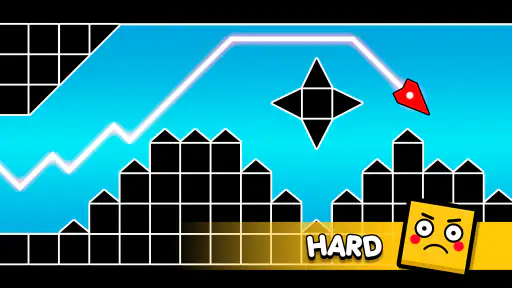
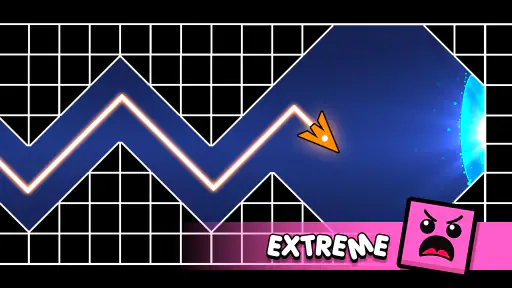
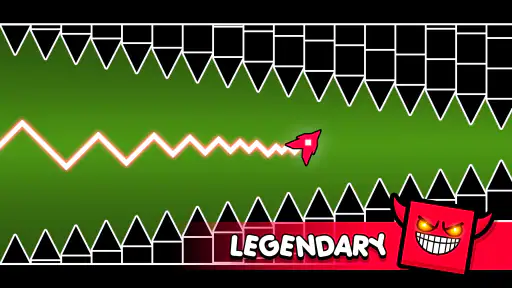
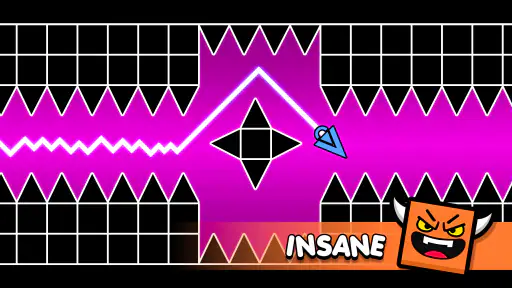
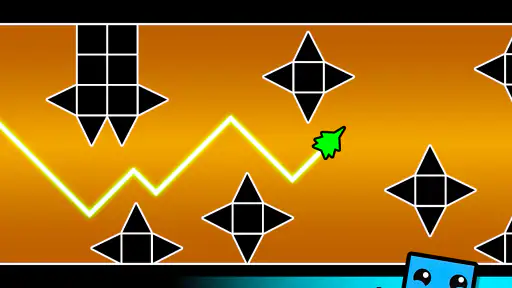
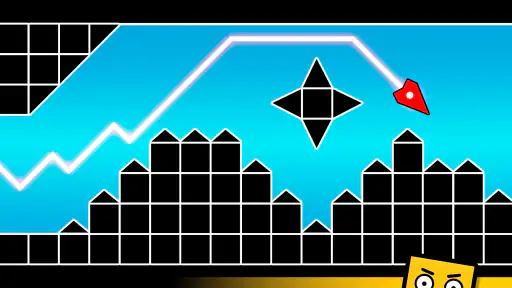
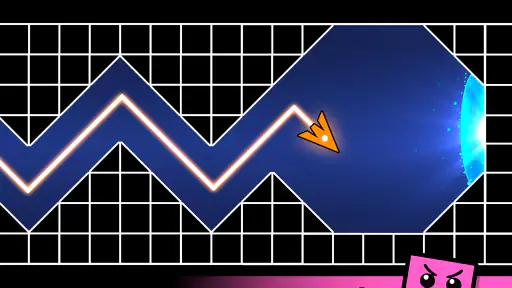
Analysis by Reviewed
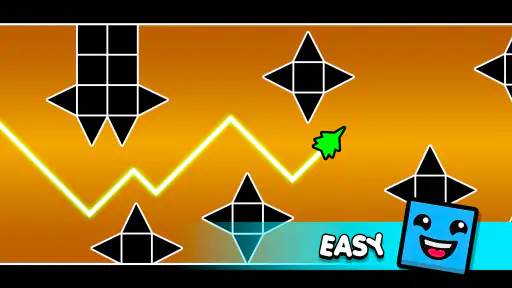
Geometry Vibes is the kind of arcade game I open when I want a quick test of attention rather than a long story, a complicated control system, or a large progression tree. Its entire appeal comes from reading what is coming, reacting at the right moment, and trying again when a small mistake ends the run. That sounds simple, but the clean idea gives each attempt a surprisingly focused rhythm.
After spending time with it, I see the game as a compact reflex exercise with an arcade personality. It is free, suitable for Everyone, and developed by gameVgames. The current release is version 2.0.1, and it runs on Android devices using 8.0 or later. Those details make it easy to approach, but the real question is whether its direct obstacle-avoidance format will keep you interested after the first few attempts.
How the basic run feels in everyday play
The baseline workflow is straightforward: start a run, watch the moving hazards, guide your shape through the available space, and react before the next obstacle reaches you. There is no need to learn a long tutorial or remember a large collection of commands. The challenge begins almost immediately, which is useful when I have only a few minutes available.
I found the best way to begin was to treat the first attempts as observation rather than competition. Instead of trying to survive for as long as possible straight away, I watched how quickly the screen demanded a response and whether I was reacting to the obstacle itself or to the opening beside it. That small change in attention matters. Looking at the safe route gives me more time than staring at the hazard I am trying to avoid.
A realistic use case is a short break between tasks. If I have a few minutes before leaving home or while waiting for an appointment, I can play a handful of runs without needing to reconstruct a complicated game state. The restart-friendly structure suits that situation well. It also makes the game easy to share casually with someone nearby: one person plays, the other watches the increasingly difficult movement and suggests a different timing approach.
The trade-off is that this simplicity leaves nowhere to hide. In a role-playing game, a weak attempt can sometimes be balanced by better equipment or a different strategy. Here, my result depends much more directly on timing and concentration. When I am tired, distracted, or rushing, the game exposes that immediately. For some players, that honesty is satisfying; for others, it can feel repetitive.
I would not approach it expecting a deep arcade campaign. Its value is in the small loop of attempt, mistake, adjustment, and retry. That loop works best when I accept that failure is part of the activity rather than evidence that the game is unfair. The first few runs teach the visual rhythm, while later runs become a test of whether I can remain calm when the pace feels less comfortable.
Settings and habits that make the experience easier to read
Before settling into longer sessions, I recommend checking the available in-game settings rather than assuming the default arrangement is ideal for every device. The most useful habit is not to change options constantly, but to find a presentation and control setup that lets the obstacles remain easy to read. A screen that is too dim, cluttered, or awkwardly held can turn a timing mistake into a comfort problem.
I also prefer playing with the phone held in the same position every time. Consistent grip and posture sound unimportant, yet reaction games punish small changes in finger placement. If my hand is covering part of the screen or I am switching between one-handed and two-handed play, I spend attention on the device instead of the path ahead. Establishing one comfortable hold makes later attempts more comparable.
Sound can also affect concentration. If the game provides audio controls, I would test both with sound and without it, then keep the option that helps me notice the visual movement most clearly. I would not assume that louder audio means better timing. In a busy room, muted play may be more dependable; in a quiet room, sound may help create a repeatable rhythm. The important point is to choose deliberately rather than letting the environment decide.
Another practical check is display responsiveness. If movement feels inconsistent, I first clean the screen, remove anything that makes the phone awkward to hold, and close distractions before blaming my timing. A reaction-based game is sensitive to small interruptions. Notifications, accidental touches near the edge, and a changing grip can all make a short session feel less precise.
These are not secret advantages or hidden mechanics. They are repeatable habits that help me judge the game fairly. When the setup stays stable, I can tell whether I am improving or simply having a better moment. That distinction is especially useful here because a single lucky run can otherwise make progress feel more dramatic than it really is.
Faster patterns for surviving longer
The first useful pattern is to look ahead instead of following the shape with my eyes. I try to identify the next safe opening early, then make one controlled movement toward it. Last-second corrections are tempting, but they often create a second problem immediately after the first. Planning one obstacle ahead gives my reactions a little structure.
I also avoid making constant tiny movements when a larger, deliberate adjustment will do. Nervous tapping or repeated direction changes can make me lose track of where I am relative to the next gap. A calmer movement pattern is easier to repeat. Once I find a comfortable position, I try to preserve it until the upcoming obstacle genuinely requires a change.
A second advanced habit is separating recognition from action. I first identify the shape of the danger and the route through it, then move. Beginners often combine those steps into one rushed response. Creating even a brief mental pause helps me avoid reacting to the wrong visual detail. This is particularly useful when several obstacles appear close enough to make the screen feel crowded.
When I fail, I try to name the exact reason instead of simply calling the run bad. Did I notice the opening too late? Did I move too far? Did I look at the object rather than the space around it? Did my grip shift? This turns a retry into a small experiment. Without that habit, repeated attempts can become automatic and teach me very little.
Short practice blocks are better for me than playing until frustration takes over. After several failed runs, my eyes start chasing movement and my hand becomes less precise. Taking a brief pause resets attention more effectively than forcing another attempt. The game’s compact format makes this approach easy: I can stop after a clear mistake and return later without a long commitment.
Experienced players may also benefit from using a personal consistency rule. Rather than celebrating only a new best result, I look for several runs that reach a similar point. That shows whether the improvement is reliable. A single strong attempt proves that the route is possible, while repeated solid attempts show that my timing is becoming dependable.
Where the arcade design reaches its limits
The main limitation is the narrow range of activity. If I want exploration, character development, puzzles with multiple solutions, or a reason to return beyond improving my own performance, Geometry Vibes may feel lightweight. The obstacle-avoidance loop is clear, but clarity is not the same as variety. Players who need frequent new systems may lose interest once the basic rhythm becomes familiar.
It can also be demanding in a way that is not always relaxing. I would not choose it when I want something passive to play while watching television or listening to a podcast. The game asks for visual attention, and dividing that attention makes the experience worse. A slower puzzle game is a better choice for multitasking or for winding down.
Compared with endless runners, this game feels more stripped back. A typical runner may offer lanes, collectibles, upgrades, characters, or changing environments that create several goals at once. Geometry Vibes puts more weight on the immediate reaction itself. That makes it easier to understand and quicker to start, but it also means there are fewer distractions from the central challenge.
Compared with rhythm games, it has a different kind of timing. Rhythm games usually encourage the player to follow an audible or visual beat, while this experience is more about reading space and responding to approaching obstacles. Someone who enjoys music-driven precision may find the lack of a strong musical structure less engaging. On the other hand, players who prefer visual concentration may appreciate the cleaner focus.
It also differs from casual puzzle games because a failed attempt is usually about execution rather than finding a clever solution. If I am stuck on a puzzle, I can rethink the answer. Here, I often know what I should have done but failed to do it quickly enough. That makes improvement rewarding, though it can be frustrating for anyone who prefers problems solved through planning alone.
The game’s broad age rating helps explain its accessibility, but accessibility should not be confused with universal appeal. The rules are easy to understand, yet high performance still demands patience and repeated practice. I would happily recommend it to a younger player who enjoys reflex challenges, while also warning that the simple presentation does not mean every run will feel easy.
Who should download it and who should skip it
I think it is a good fit for players who like short arcade sessions, quick restarts, and the satisfaction of gradually improving a physical skill. It is especially suitable for someone who wants a game that can be understood almost immediately and played without learning a large set of systems. The free price also makes it a low-risk choice for testing whether this style of challenge suits you.
It is less suitable for anyone looking for a substantial single-player journey. If your ideal mobile game includes a story, a large collection of unlocks, strategic character building, or long-term goals beyond personal performance, this may not hold your attention. I would also steer away from it if repeated failure quickly makes you angry, because the central loop depends on accepting mistakes and trying again.
The game has already attracted a sizeable audience, with over one million installs, and its average rating is 3.6 from around two thousand ratings. I read that as a sign of a recognizable but not universally loved experience: enough players find the reaction loop worthwhile, while others likely want more depth or variety. That matches my own view. Its strengths are clear, but they are concentrated in a specific type of arcade play.
For a new player, I would begin with a short session and focus on control comfort rather than chasing a high result. Keep the phone steady, watch the next opening, and review each failure in one sentence. If that process feels satisfying, the game has a good chance of becoming a useful little time filler. If it feels like repeating the same mistake without learning, a puzzle game or a more varied runner will probably be a better match.
My verdict after building a repeatable routine
What I like most is the direct relationship between attention and outcome. There is very little unnecessary structure between me and the obstacle course, so improvement feels personal. When I change my grip, look farther ahead, or stop making frantic corrections, I can feel the difference in my play. That makes the game more rewarding than its minimal concept might suggest.
What holds it back is the same minimalism. Once the basic loop is understood, the experience depends heavily on whether I enjoy repeating it for better execution. There is no need to pretend that this is a broad arcade package. It is a focused reaction game, and its success depends on how much pleasure I get from refining a narrow skill.
My final recommendation is positive but specific: try it if you want a free, immediate obstacle-dodging challenge that fits into short breaks. Use a consistent setup, make deliberate movements, and treat failed runs as feedback rather than wasted time. Skip it if you need story, variety, or a relaxed game that can run in the background. Its best quality is focused replayability, not breadth.
With gameVgames behind it and version 2.0.1 available for compatible Android devices, Geometry Vibes is easy to approach and simple to explain. I would recommend giving it a fair test over several calm sessions instead of judging it after one rushed attempt. For the right player, that small routine of watching, reacting, and refining can become an enjoyable daily arcade habit.
Pros
- Fast-paced levels make each session exciting and engaging.
- Simple controls are easy to learn
- even for new players.
- Bright geometric visuals give the game a distinctive style.
- Short stages work well for quick gaming breaks.
- Increasing difficulty provides a satisfying challenge for skilled players.
Cons
- Frequent failures may feel frustrating for casual players.
- The gameplay can become repetitive after extended sessions.
- Some levels require precise timing and quick reactions.
- Limited variety may reduce long-term appeal for some users.
- Ads may interrupt the experience in the free version.

- Category
- Arcade
- Version
- 2.0.1