Fruit Merge: Juicy Drop Game
- 4.55K
- 3.8
- Installs
- 10.00M
- Price
- Free

Screenshots






Analysis by Reviewed
Have you ever found yourself itching for a game that's both addictive and relaxing at the same time? Well, let me introduce you to Fruit Merge: Juicy Drop Game. This is one of those games that seems simple at first glance, but once you dive in, it's a whole different story. It's all about merging fruits, and trust me, it's more engaging than it sounds!
Who will enjoy this kind of puzzle?
I’d recommend this fruit-merging puzzle to anyone who likes an easy-to-understand activity with a little planning behind it. It suits short breaks because the basic idea is quick to grasp, but it can also hold the attention of someone who enjoys thinking a few moves ahead. If you usually prefer word puzzles, logic grids, or games with a clear answer to each level, this is a looser alternative: you’re managing combinations and space rather than solving a fixed question.
A realistic use is opening it while waiting for a bus or taking a quiet pause between tasks. I’d go in with a small goal, such as making a useful merge or improving a score, rather than expecting every session to feel like a fresh campaign. That makes it easier to stop when the break is over. If you want a story, a competitive multiplayer match, or a puzzle with a definite endpoint, this style may feel repetitive instead.
How it compares with other casual puzzles
Fruit merging sits between a classic match puzzle and a number-merging game, but its main tension comes from placing pieces and managing the room they occupy. In a word game, I can often pause over a clue; in a fixed logic puzzle, I’m working toward a defined solution. Here, a useful decision is usually about keeping future combinations possible. That makes the game less exact than a grid puzzle and more strategic than a simple tap-to-match activity, but it also means a run can feel shaped by the changing board rather than by a neatly completed level.
If you enjoy watching small choices build into a larger result, that uncertainty is part of the appeal. If you prefer every move to have a clearly right answer, or want a steady sequence of distinct puzzles, I’d steer you toward a conventional logic or word game instead. This is best approached as a casual spatial puzzle, not as a test with one correct solution.
Gameplay That Keeps You Hooked
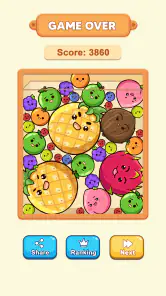
So, what's the deal with Fruit Merge: Juicy Drop Game? At its core, the game is about combining fruits of the same kind to create a new, juicier fruit. The more you merge, the bigger the fruits get, and you rack up points while doing it. Sounds simple, right? But here’s the twist – the game keeps introducing new challenges and obstacles that make the journey more thrilling. You’ll find yourself strategizing to make the best moves possible, which is both fun and mentally stimulating.
Planning moves and keeping the board manageable
The useful habit here is to think beyond the next match. A merge can make room, but it can also leave larger fruit in an awkward position, so I’d watch where pieces are gathering before making a move just because it scores. When the board starts to feel crowded, favor combinations that open usable space; a slightly less exciting move can preserve options for later. This kind of small decision-making is what separates a satisfying run from one that feels like random dropping.
More From Our News Desk

Clash of Clans Is Won Between the Battles

Android Auto Makes the Case for Quieter Car Software

MobiOffice: Transforming Mobile Productivity with Seamless Integration

EA SPORTS FC™ Mobile Soccer: Redefining Mobile Sports Gaming

How Microsoft OneDrive Became a Mobile Productivity Giant

How Google Translate Breaks Language Barriers Effortlessly
One practical way I keep the play area manageable is to notice where similar pieces tend to collect, then avoid scattering new drops across every open gap. That does not guarantee a better run, but it can make later combinations easier to spot. I’d also resist the urge to chase the largest possible merge every time: keeping a flexible patch of space can be more valuable than creating a big fruit in a difficult spot. The trade-off is simple—an immediate score can feel rewarding, while a move that preserves room may pay off only after several drops.
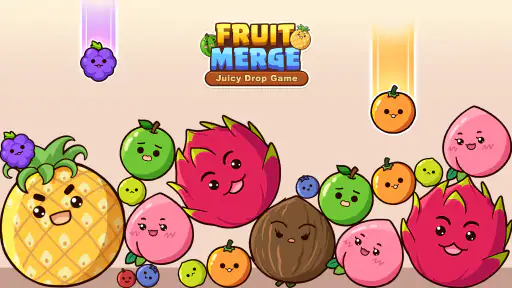
The vibrant graphics are a feast for the eyes. Each fruit looks good enough to eat, and the animations are smooth and satisfying. The sound effects add an extra layer of fun, making every merge feel rewarding. It's a perfect game for those quick breaks during the day or for unwinding after a long day.
Readability, controls, and sensory comfort
The fruit-focused visuals make the main idea immediately recognizable, which helps when I want to start playing without studying instructions. Still, bright colors and animated movement are part of the appeal, so they may be tiring for someone who is sensitive to busy visuals. I’d try a brief session first and see whether the pace and effects feel comfortable. The game’s simple concept lowers the learning barrier, but that does not automatically make every screen or interaction equally easy for every player.
Because this is a game built around placing and merging pieces, it asks for repeated touch input and attention to where a move will land. That can be enjoyable on a phone during a calm moment, but less convenient if you’re using a small screen one-handed, have limited dexterity, or are trying to play while moving. I’d save it for when I can hold the device securely and tap deliberately; a turn-based board puzzle with less time pressure may be a better fit when precise touch is difficult.
Making a session easier to manage
For someone who finds the visual activity tiring, I’d treat the first few minutes as a test rather than assuming a bright, playful presentation will feel comfortable for a long session. Taking a pause between runs is a sensible way to check whether the animations and repeated attention remain pleasant. The same goes for touch control: playing while seated, with the phone supported in a comfortable position, gives me more control over placement than trying to tap in a hurry.
That makes the game more suitable for a quiet waiting room or a break at home than for a crowded commute where I’m standing and holding a bag. It may also be less comfortable for someone who needs larger targets or relies on a particular accessibility setting; I would not assume that a simple premise means every interaction will be easy to operate. If touch precision or visual motion is a barrier, a slower puzzle with less movement is the more sensible choice.
Features That Stand Out
One of the standout features of the game is its simplicity. You don’t need a manual to start playing, and yet, it offers enough depth to keep you coming back. The levels are thoughtfully designed to gradually increase in difficulty, ensuring that you never get bored. Plus, there are daily challenges and events that offer rewards and keep the game fresh.
For a more deliberate session, I’d treat those challenges as optional prompts rather than a reason to keep playing when I’m short on time. They can give a familiar merge loop a different aim, but anyone who dislikes recurring objectives may prefer to ignore them and play at their own pace. Compared with a standard number-merging game, the fruit theme makes the objects more playful and approachable; compared with a traditional logic puzzle, the outcome is less exact and depends more on managing the evolving play area.
When time is tight, I’d choose one small aim before starting—such as making a helpful combination—and stop once that break is over instead of treating every challenge as a checklist. That keeps the game from turning a spare moment into a longer commitment. Players who enjoy recurring goals may welcome the extra direction, while those who want a completely self-contained puzzle each time can simply focus on the merge decisions and leave the prompts aside.
Another feature worth mentioning is the offline mode. Not everyone has constant internet access, and it’s great that you can still enjoy the game without being connected. This makes it a great companion for those long commutes or while waiting in line.
When and where it works best
Offline play makes the game handy for a commute, though I’d use it only when I’m seated or safely waiting rather than trying to focus on drops while walking. It also suits a quiet moment at home when I want a small, self-contained diversion. If I’m looking for something to play with friends or a game that rewards fast reactions, I’d choose something else; the appeal here is solitary, casual decision-making, not social competition or action.
A particularly good everyday fit is a short wait when I can sit down, give the board my attention, and put the phone away when my turn comes. The offline option can make that kind of pause less dependent on a connection, but it does not turn the game into a good distraction in every setting. I would skip it while walking, during a conversation that needs my attention, or whenever I cannot comfortably hold the phone and make deliberate taps.
Practical details and remaining trade-offs
Brave HK Limited makes this free puzzle game, which is rated for Everyone. It has an average rating of 3.8 from around 54,000 ratings, and it has been installed over 10 million times. The current version is 2.20, with Android 7.0 as the minimum system requirement. Those details make it easy to judge whether it fits an older device, while the modest average rating suggests it may not click with every player.
Although it costs nothing to start, in-app purchases range from $1.99 to $23.99 per item. I’d decide before playing whether I’m comfortable with optional spending and avoid treating a purchase as necessary to enjoy the basic puzzle. If you prefer games with no in-app purchases at all, a paid one-time puzzle may suit you better. I also wouldn’t choose this for a long, structured progression experience: its strength is dipping in and out, not necessarily providing a substantial narrative or a fixed conclusion.
For a free game, the low-commitment format is an advantage: I can try the core idea without first deciding that it deserves a purchase. The other side of that choice is that players who want an entirely purchase-free environment may feel more comfortable with a paid puzzle that asks for a single upfront payment. I’d also keep expectations focused on the short-session merge loop rather than expecting a story-driven journey or a carefully finished campaign.
Who should try it, and who may prefer another game?
I’d recommend it to someone who likes casual puzzles, enjoys planning around limited space, and wants an activity that can be picked up without learning a complicated rule set. It is also a reasonable option for a person who wants to play alone and does not need a story or a competitive opponent to stay interested. The fruit theme gives the pieces an approachable look, while the growing combinations give each move a little more weight than a basic matching game.
I’d pass if I were looking for a social game, a fast reflex challenge, a campaign with a clear ending, or a puzzle where each stage has one exact solution. I’d also be cautious if animated color, repeated tapping, or the need to place pieces precisely tends to make phone games uncomfortable. In those cases, a calmer turn-based puzzle or a paid logic game with fixed boards may be a better match than trying to force this format to fit.
Why You Should Download It
If you're someone who enjoys casual games that require a bit of thinking, then Fruit Merge: Juicy Drop Game is definitely worth a download. It's one of those games where you can lose track of time, trying to beat your high score or complete a challenging level. The combination of strategy and relaxation makes it unique, and it’s a refreshing break from the fast-paced nature of many mobile games today.
In conclusion, Fruit Merge: Juicy Drop Game offers a delightful blend of fun and challenge. Whether you’re a casual gamer or someone who loves a good puzzle, this game has something to offer. So, why not give it a try and see how many fruits you can merge? Happy gaming!
My inclusive verdict
For me, the game’s clearest strength is that its central activity is understandable without a steep learning curve, and offline access makes it practical in more than one setting. Its colorful presentation and repeated touch actions are also real considerations, not details everyone will experience the same way. I’d suggest trying it in a comfortable setting first; if the visual activity and placement controls feel good, it can be a pleasant little puzzle break. If they don’t, a slower, less animated puzzle with larger, more deliberate interactions is likely the kinder choice.
Fruit Merge: Juicy Drop Game Frequently Asked Questions
Is Fruit Merge: Juicy Drop Game easy to pick up for someone new to merge puzzles?
Yes. Fruit Merge: Juicy Drop Game has a straightforward central idea: drop fruit and merge matching pieces to create larger ones. That makes the basic goal easy to understand, even if you have not played this kind of puzzle before. The challenge comes from choosing where to drop each fruit and planning merges, so there is room to think beyond simply matching pieces.
What kind of game is Fruit Merge: Juicy Drop Game?
Fruit Merge: Juicy Drop Game is a puzzle game centered on dropping and merging fruit. Its short description is simply “Fruit Merge,” while its main appeal is the aim of combining fruits to create giant ones. If you enjoy casual puzzle games with a clear, repeatable objective, its fruit-merging concept may be a good fit.
Is Fruit Merge: Juicy Drop Game suitable for children?
Fruit Merge: Juicy Drop Game is rated Everyone, which makes it suitable for a broad audience, including children. Its fruit-themed puzzle format is easy to understand, while combining fruits gives players a simple goal to work toward. Parents should also be aware that the game includes optional in-app purchases, so device purchase settings may be useful if children play.
Who makes Fruit Merge: Juicy Drop Game, and is it popular?
Fruit Merge: Juicy Drop Game is developed by Brave HK Limited. It has attracted over 10 million installs, with an average rating of 3.8 from around 54,000 ratings and roughly 4,600 written reviews. Those figures suggest that many players have tried it, though individual enjoyment will depend on whether you like casual fruit-merging puzzles.
What is Fruit Merge: Juicy Drop Game all about?
Fruit Merge: Juicy Drop Game is a vibrant and engaging puzzle game where players merge similar fruits to create new ones and score points. The game offers a refreshing twist to traditional match-3 games by introducing unique mechanics that require strategic thinking and quick decision-making. With colorful graphics and a delightful soundtrack, it's designed to provide hours of entertainment.
Pros
- Engaging and colorful graphics.
- Simple and intuitive gameplay.
- Challenging levels keep players hooked.
- Frequent updates with new content.
- Suitable for all ages.
Cons
- Contains in-app purchases.
- Ads can be intrusive.
- Requires constant internet connection.
- Limited storyline depth.
- Can drain battery quickly.

- Category
- Puzzle
- Version
- 2.20