Flashback: Tricky Fun Riddles
- 3.86K
- 4.8
- Installs
- 50.00M
- Price
- Free

Screenshots
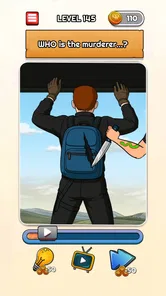
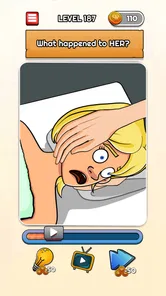


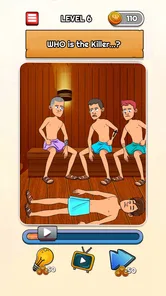

Analysis by Reviewed
I judge a riddle game less by how clever its hardest question is than by whether I can settle into a satisfying rhythm: read carefully, test an idea, and learn from a wrong turn. Flashback: Tricky Fun Riddles is built around that kind of short-form puzzle solving. It suits a spare few minutes when I want something more active than scrolling, though it is not the best fit if I’m looking for a long story, a strategy campaign, or a calm game that asks very little attention.
A practical rhythm for solving each riddle
The most useful habit I’ve found is to pause before tapping and separate what the puzzle actually shows from what I’m assuming it means. A clue that looks obvious at first can send me down the wrong path if I treat it too literally. I try one interpretation, check whether it explains all the clues, and only then move on. That small routine makes the game feel less like random guessing and more like a series of manageable reasoning problems.
When I do get stuck, I use a hint as a nudge rather than a shortcut to the finish. I read it, put the screen down for a moment, and try to finish the reasoning myself. That keeps the sense of solving intact. If I’m playing with someone else, we take turns explaining our guesses instead of shouting answers; hearing another person’s interpretation can expose an assumption I had missed, without turning every puzzle into a competition.
Good moments for a quick puzzle break
This is easiest to enjoy in a short, interruption-friendly window: while waiting for a ride, taking a break between tasks, or sharing a few riddles with family. In a noisy commute, I would focus on the visual clues and keep the sound low or off if the phone’s controls allow it; the puzzle itself is the point, not the audio. I also avoid starting a new riddle when I have only a few seconds, since being interrupted mid-thought can make a clever clue feel needlessly frustrating.
It works best for people who enjoy wordplay, lateral thinking, and the small satisfaction of revising a first guess. If you prefer puzzles with a large board, elaborate rules, or a story that unfolds over a long session, a traditional logic game or narrative puzzle may be a better match. Flashback’s appeal is the quick mental detour, not a deep campaign.
What to check before settling in
I’d check the device’s sound level and the game’s available settings before a session, especially if I’m playing around other people. I don’t assume that every setting or shortcut exists across devices, so I rely on the controls actually shown in my copy rather than expecting hidden options. Keeping the phone comfortable to hold and the screen easy to see matters too: these riddles reward noticing details, and rushing through a small or distracting display can spoil that advantage.
There is also a sensible trade-off around hints and purchases. The game is free to start, with optional in-app purchases priced from $0.99 to $7.99 per item. I would first see how far I get using my own reasoning and the help already available in play, then decide whether spending anything would genuinely improve my experience. A purchase is not a substitute for enjoying the puzzle style, and anyone who wants a completely hands-off, no-decision experience may find the need to think through each clue less relaxing than expected.
More From Our News Desk

Weather by Xiaomi Review: Clear at a Glance, Less Clear Up Close

X Under Pressure: Can It Recover When Posting Goes Wrong?

Clash of Clans Is Won Between the Battles

Android Auto Makes the Case for Quieter Car Software

MobiOffice: Transforming Mobile Productivity with Seamless Integration

EA SPORTS FC™ Mobile Soccer: Redefining Mobile Sports Gaming
Radiant Cat Studio’s puzzle game has a 4.8 average from around 403,000 ratings, with over 10 million installs. It is rated Teen, was released on June 8, 2022, and version 1.8.8 requires Android 7.0 or later. Those details make it easy to judge basic fit, but the more important question is whether you like being challenged to rethink a clue. I’d recommend it to curious players who enjoy quick riddles and don’t mind occasionally slowing down; I’d skip it if I mainly wanted action, a lengthy narrative, or puzzles with a more formal logic-grid structure.
Building a repeatable solving habit
For a faster, repeatable approach, I read the whole prompt once, identify the detail that seems unusual, and test one explanation at a time. If it fails, I change one assumption rather than tapping through possibilities at random. That method is especially useful when playing in short bursts, because I can return to the central clue instead of trying to remember a chain of guesses. It also makes sharing the game more enjoyable: each person can offer a distinct interpretation, and the group can compare reasoning rather than simply race to answer.
Compared with familiar match-three or number-placement puzzles, this is less about building a board state and more about interpreting a prompt. That makes it easier to pick up for a brief break, but less appealing if you want a predictable sequence of moves or a clear, methodical system to master. The challenge can also feel subjective when a riddle depends on spotting an unexpected reading. When that happens, I treat a hint as a way to reset my perspective, not as proof that I should have guessed the answer immediately.
When a different puzzle style is a better fit
I’d choose a grid-based logic game when I want to track several conditions and build a solution step by step. That kind of puzzle rewards keeping notes and checking constraints; here, the satisfying move is more often a fresh interpretation of the prompt. Likewise, a match-three game is a better pick when I want quick visual play that doesn’t depend as much on reading carefully. The distinction matters if I’m choosing something for a particular mood: this game asks me to think about language and clues, not to optimize a board or plan a chain of moves.
For a realistic everyday session, I might open it during a lunch break, solve a riddle or two, and stop before I’m pressed to return to work. If a clue catches me, I’ll give it a focused minute rather than trying random answers while distracted. That is a useful boundary: the game can make a short break feel engaging, but it is not ideal for moments when I need to keep checking messages or listening for announcements. I get more from it when I give each puzzle a little uninterrupted attention.
Small adjustments that protect the fun
One practical way to keep the game from turning into a guessing contest is to say your reasoning out loud before submitting an answer. I ask myself which visible clue supports the guess and whether another clue contradicts it. If I can’t explain the connection, I wait or use a hint to redirect my thinking. This is especially helpful when playing with a child or a friend: it makes the shared activity about interpretations, not just who taps first. The Teen age rating is also worth considering when choosing a game for younger family members.
I would also set a personal limit for hint use before starting, rather than deciding in frustration after several failed attempts. For example, I might try a couple of interpretations first, then accept a nudge if I’m no longer making progress. That is not a rule the game imposes; it is a way to keep help from taking over the part I enjoy. The optional purchases make that distinction worth thinking about: I’d only spend if the available choices clearly improve how I want to play, not simply because one riddle has temporarily stalled me.
A Sneak Peek into the Puzzling World
The moment I launched Flashback: Tricky Fun Riddles, I was greeted with a vibrant and colorful interface that immediately caught my attention. It feels like stepping into a carnival of conundrums, where each riddle is more intriguing than the last. The app promises to deliver a mix of fun and challenge, and it does not disappoint.
The Gameplay
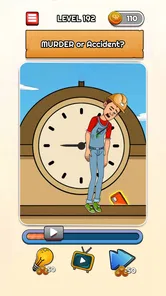
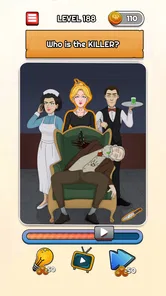
The gameplay is straightforward yet incredibly engaging. Each level presents you with a riddle, and your task is to solve it using the clues provided. What I love about this game is its ability to make you think outside the box. It’s not just about finding the right answer, but also about understanding the logic behind it. The riddles range from easy to mind-boggling, keeping you on your toes the entire time.
Another thing that stands out is the hint system. If you’re stuck, the app offers hints that guide you without giving away the answer. It’s the perfect balance of help and challenge, ensuring that you’re not left frustrated but also not spoon-fed.
Visuals and Sound
A game is not just about the puzzles, right? The visuals in Flashback are a feast for the eyes. The developers have done a fantastic job creating a lively and engaging environment. Each riddle comes with its own theme, adding an extra layer of fun to the experience. As for the sound, it’s subtle yet impactful, enhancing the overall gaming experience without being overpowering.
One of my favorite things is how the sound effects change with each riddle, keeping the atmosphere fresh and exciting. It’s little details like these that make a game stand out from the rest.
How I’d decide whether to keep playing
The rating and install figures suggest that many players have found a reason to try it, but popularity alone would not persuade me to keep a puzzle game on my phone. My test is simpler: after a session, do I remember a clue that made me reconsider my first answer, or do I mainly remember tapping until something worked? When the former happens, the short format has done its job. When I’m repeatedly guessing without learning how the clue fits together, I’d take a break rather than push through out of habit.
That also answers the question of whether it suits a longer session. I can imagine playing several riddles in a row when I’m in the right mood, but I wouldn’t choose it as a substitute for a deep, continuous puzzle campaign. Its best use is flexible: a compact challenge between other activities, or a small shared game where people can talk through competing readings. Players who want a highly structured difficulty curve or a large puzzle environment should look elsewhere.
Why You Should Try It
If you’re a fan of puzzles and brain teasers, Flashback is a must-try. It’s a game that challenges your intellect while keeping you entertained. Whether you’re looking to kill time during your commute or want a mental workout, this app has got you covered.
Moreover, Flashback is perfect for all ages. It’s not just a game; it’s a brain exercise that stimulates critical thinking and problem-solving skills. Plus, it’s a great way to bond with friends and family. You can take turns solving riddles or work together to crack the toughest ones.
In conclusion, Flashback: Tricky Fun Riddles is more than just an app; it’s a journey through the land of enigmas. It’s a delightful mix of fun, challenge, and creativity. So, if you’re ready to give your brain a workout, download Flashback and dive into the world of tricky fun riddles. Trust me, you won’t regret it!
Flashback: Tricky Fun Riddles Frequently Asked Questions
What kind of puzzles should I expect in Flashback: Tricky Fun Riddles?
Flashback: Tricky Fun Riddles is a puzzle game built around riddles and visual problem-solving. Its store summary invites players to slide and find solutions, so expect to look closely at each scene and think beyond the most obvious answer. It is a good fit if you enjoy short challenges that ask you to notice details and work out what to do next.
Is Flashback: Tricky Fun Riddles free to download, and what might cost extra?
Flashback: Tricky Fun Riddles is free to download, so you can try its puzzle gameplay without an upfront purchase. Optional in-app purchases are available, with prices ranging from $0.99 to $7.99 per item. Those purchases may suit players who want extras, but they are separate from the free download. Check purchase settings before handing the game to a younger player.
What is Flashback: Tricky Fun Riddles about?
Flashback: Tricky Fun Riddles is a brain-teasing puzzle game that challenges players with a series of clever and tricky riddles. The game is designed to test your problem-solving skills and creativity as you navigate through various levels. Each riddle requires out-of-the-box thinking and attention to detail, making it a fun but challenging experience for puzzle enthusiasts.
Is Flashback: Tricky Fun Riddles suitable for all age groups?
Yes, Flashback: Tricky Fun Riddles is designed to be enjoyed by players of all ages. The game offers a range of puzzles that can be challenging yet accessible, making it a fantastic brain exercise for both young players and adults. However, younger children might need some guidance to solve more complex riddles. Its Teen age rating is worth considering when deciding whether the game is appropriate for a particular child.
Are there any in-app purchases in Flashback: Tricky Fun Riddles?
Yes, Flashback: Tricky Fun Riddles offers in-app purchases. While the game is free to download and play, players can purchase hints or remove ads to enhance their gaming experience. These purchases are optional, and players can still enjoy the full game without spending any money, although some levels might be more challenging without hints.
Pros
- Engaging and challenging riddles.
- Stimulates critical thinking skills.
- Visually appealing interface.
- Regular updates with new content.
- Suitable for all age groups.
Cons
- Contains ads between levels.
- Some riddles may be too difficult.
- Requires internet for full features.
- Limited hints available.
- Can be repetitive over time.