Flappy Dunk
- 25.52K
- 4.5
- Installs
- 10.00M
- Price
- Free

Screenshots
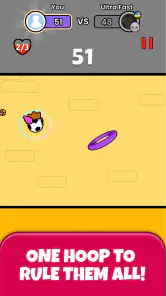
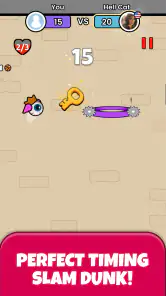
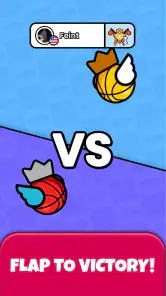

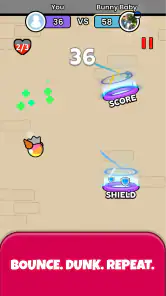
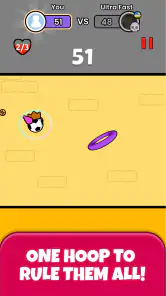
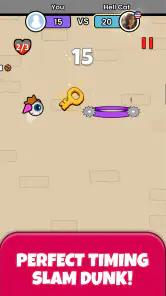
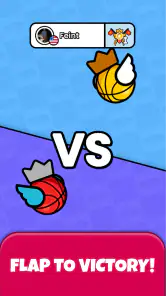
Analysis by Reviewed
When I have a spare minute and want something that asks for my attention right away, I reach for a game with a clear action and a reason to try again. Flappy Dunk fits that mood: I tap to keep a winged basketball moving and guide it through hoops. The basic idea is easy to understand, but reliable timing takes practice. A quick attempt can turn into several more before I notice how much time has passed.
The skill at the centre of the game
There is no complicated control scheme to learn here. Each tap sends the ball upward, so the real challenge is judging the timing and pace of your inputs while it travels toward a hoop. That direct connection gives the game its particular appeal: I can see the effect of a tap immediately, then adjust on the next attempt.
The one-touch design also sets a firm limit on what the game asks of me. It is not a basketball simulation, and I do not need to plan a play or manage a team. I am working on one small skill: maintaining control well enough to pass through hoops. That makes it approachable, but it also means the experience depends heavily on whether I enjoy repeating and refining the same action.
What’s the Deal with Flappy Dunk?
Flappy Dunk is all about guiding a basketball with wings through a series of hoops. Sounds simple, right? Well, not so fast! The game takes a page out of the Flappy Bird playbook, demanding precision, timing, and a bit of luck to master the art of flapping your way to glory. Every tap of the screen sends your winged basketball soaring upwards, and it's up to you to navigate it through the hoops without crashing.
How One-Touch Play Feels in Practice
The appeal is the direct connection between a tap and the ball’s movement. You do not have a long set of controls to learn; instead, your attention goes into judging when to tap and how regularly to keep the ball on course. That makes the first attempt easy to start, while the need for precise timing gives each run its own small test.
My practical tip is to resist frantic tapping. A steadier rhythm makes it easier to read the ball’s movement and decide whether the next tap is needed, rather than reacting only after it has drifted too far. If a run ends quickly, I treat it as a chance to adjust my timing, not as proof that the controls are impossible. That small change in approach makes the challenge feel more learnable.
Gameplay and Features
What makes this game incredibly addictive is its simplicity paired with a gradually increasing difficulty level. The core mechanic is easy to grasp, but the challenge ramps up as you progress, keeping you on your toes. You’ll find yourself in different environments, each presenting new challenges that require you to adapt your flapping strategy.
More From Our News Desk

Clash of Clans Is Won Between the Battles

Android Auto Makes the Case for Quieter Car Software

MobiOffice: Transforming Mobile Productivity with Seamless Integration

EA SPORTS FC™ Mobile Soccer: Redefining Mobile Sports Gaming

How Microsoft OneDrive Became a Mobile Productivity Giant

How Google Translate Breaks Language Barriers Effortlessly
And let’s not forget the cool customizations! As you accumulate points, you can unlock new skins for your basketball and hoops, giving the game a personalized touch. Whether you want a flaming ball or a sleek golden hoop, Flappy Dunk offers a variety of options to keep things fresh and exciting.
Reading the run, not just reacting
One small adjustment that helps me is to watch the space around the ball rather than fixating only on its centre. The hoop is the immediate target, but I also need to leave myself enough room to make the next correction. If I wait until the ball looks badly off course, I am already reacting late; noticing its movement earlier makes each tap feel more deliberate.
This is also why I would not treat every failed attempt as a reason to tap faster. More input is not automatically better when the task is timing. I try to notice whether I tapped too early, too often, or too late, then change one thing on the next run. That makes practice more useful than simply repeating the same rushed pattern.
For a short session, this distinction matters. I can stop after a few tries with a clearer sense of what I was testing, even if I have not reached the score I wanted. Players who prefer progress that comes from collecting resources or following a checklist may find this less satisfying; here, improvement is chiefly about developing a better feel for the action.
Why You’ll Love It
One of the standout features of Flappy Dunk is its ability to keep things light and entertaining. The graphics are simple yet charming, and the sound effects add an extra layer of enjoyment to the gameplay. Plus, there’s something undeniably satisfying about nailing those perfect swishes through the hoop.
If you’re a fan of competing with friends, this app has got you covered with its leaderboard feature. Challenge your pals to beat your high score, or try to climb the global ranks yourself. It’s all about bragging rights after all!
When a quick game fits—and when it doesn’t
A realistic use for me is a brief wait for a drink or a few minutes before an appointment. I can begin a run without setting aside a long stretch of time, and the score gives me a simple reason to make another attempt. It also works for a short break when I want something active rather than a passive scroll. I would avoid opening it when I need to stay focused on a conversation or when I am somewhere that makes precise screen taps awkward.
It is not my choice for winding down. The repeated need to judge a tap and correct the ball keeps me engaged, which is part of the fun but can make the game feel tense if I am already tired. Someone looking for a slow, forgiving pastime may be happier with a puzzle game that allows pauses between moves. This one is better when I have a little attention to spare and actually want to test my reactions.
Where It Fits in an Ordinary Day
I can see this working well while waiting for a coffee, sitting through a short break, or riding a commute where I only have a few minutes to spare. A run is easy to begin without committing to a long session, and the score gives me a clear reason to try again. It is less suited to a moment when I want a calm game: the need to correct each tap keeps my attention on the screen.
Compared with arcade games built around long levels, complex upgrades, or a sequence of missions, this is deliberately narrower. Its one-touch control is the whole point, not a gateway to a deeper set of systems. That focus makes it a handy choice when I want a quick skill test, but anyone looking for a story, strategic planning, or slower progression will probably get more from another kind of game.
How it compares with familiar arcade choices
Many arcade games ask me to move a character in several directions, avoid hazards, or learn a pattern across a level. This one pares that down to a tap and a moving ball. That makes the first few seconds easier to understand than a game with multiple controls, yet it does not necessarily make a strong run easier: the challenge is concentrated in timing rather than spread across different actions.
That trade-off is useful if I want a clean test of consistency, but less appealing if I need variety to stay interested. A level-based platform game offers more kinds of decisions and a clearer sense of reaching new places. A casual puzzle game is usually a better fit if I want to think without reacting quickly. I would choose this basketball game when the appeal is trying to make one action more reliable, not when I want a broad arcade adventure.
A Few Tips for New Players
Start slow and get a feel for the game’s physics. It might take a few tries to get the hang of it, but don’t get discouraged! Focus on timing your taps to maintain a steady flight path through the hoops. And remember, practice makes perfect! The more you play, the better you’ll get at anticipating the game’s quirky twists and turns.
One useful habit is to focus on the next hoop rather than trying to rescue every awkward moment at once. Looking ahead helps me make a deliberate tap instead of stacking several hurried ones. I also find it sensible to treat customization as a bonus, not the main objective: a different look can make a session feel personal, but it does not replace learning the timing that carries a run.
Small decisions that make practice more useful
If I have only a minute, I keep the goal modest: pay attention to one part of my timing rather than expecting a personal best every time. On a longer break, I can compare a few attempts and see whether a calmer rhythm changes how well I handle the hoops. This is a simple way to make short play feel purposeful without pretending that each run unlocks a major new skill or system.
I would also decide in advance whether I am playing to improve or just to pass a moment. Chasing a score can make the replay loop enjoyable, but it can also make me keep going after I have stopped having fun. Because a run is easy to start again, setting a natural stopping point—such as finishing after a few attempts—helps keep the game in the role of a quick diversion.
The visual customization is a nice extra for players who like making a game feel more personal, but I would not choose this title solely for collecting looks. The main payoff remains the challenge of steering the ball through hoops. If that core action does not click, cosmetic variety is unlikely to change the fit for you.
Who Should Give It a Try?
Flappy Dunk is an arcade game from VOODOO, and its average rating of 4.5 across around 218,000 ratings reflects a sizeable audience for this kind of quick challenge. It has passed 10 million installs, costs nothing to download, and is rated for Everyone. The current version is 2.11.8b, and it runs on Android 7.0 or later. Optional in-app purchases range from $0.99 to $79.99 per item, so I would check the purchase prompts and settings if I want to keep play strictly free.
The simple control scheme makes it easy to understand what to do, but it does not guarantee that every player will find the timing comfortable. If tapping precisely is difficult or frustrating for you, the core mechanic may be a poor match rather than something you can solve by learning more controls. Likewise, anyone who wants multiplayer action, a story, or substantial strategic choices should look elsewhere; the score-chasing loop is the main reason to stay.
I’d recommend it to someone who enjoys chasing a personal best and is comfortable learning through short attempts. It is also a reasonable pick for casual play because the central action is straightforward to understand. I would skip it if repeated retries feel irritating, if precise taps are uncomfortable, or if you want a game that rewards exploration more than timing. The main question is whether you enjoy refining one simple action; if you do, the loop has a clear purpose.
The questions I would settle before downloading
Is it free to try? Yes, the game is free to download, while optional purchases are available. If you prefer not to spend, pay attention to any purchase choices rather than assuming that every item is included at no cost. The presence of paid items does not change the central appeal for me: the reason to play is the tap-based hoop challenge.
Is it suitable for a quick session? That is one of its strongest uses. The action is easy to enter, and I do not need to remember a long chain of controls before making an attempt. Is it relaxing? Not especially for me. It is light in presentation, but the moment-to-moment timing can make a run feel demanding, so I would choose a calmer game when I want something low-pressure.
Will it suit someone who does not care about leaderboards? It can, provided that improving a personal score is enough motivation. Competition with friends or other players can give repeated attempts an extra goal, but I would not make that the only reason to download it. If I do not enjoy refining the basic movement on its own, a leaderboard is unlikely to make the game satisfying for long.
My final take on the fit
I’d recommend it to a friend who likes a clear, repeatable challenge and is happy to improve through short attempts. It is a good match for small pockets of free time, particularly when the simple control is a plus rather than a limitation. Someone who wants a deeper basketball game, a calmer puzzle, or steady progress through varied objectives should pick a different type of title instead.
In conclusion, Flappy Dunk is a must-try for anyone looking to kill some time with a fun and challenging game. It’s perfect for those short breaks or long commutes, offering a quick gaming fix that’s both entertaining and rewarding. So go ahead, give it a shot, and see how many hoops you can swish through before your basketball takes a dive!
Flappy Dunk Frequently Asked Questions
Who developed Flappy Dunk, and what kind of game is it?
Flappy Dunk is an arcade game developed by VOODOO. Its appeal comes from a simple idea—using one-touch controls to guide a basketball through hoops—but getting a clean run takes timing and concentration. If you enjoy short, reflex-based games that are easy to understand and challenging to master, its straightforward format may suit you.
How much storage space does Flappy Dunk need?
Before downloading, it is sensible to check that your device has enough free storage for the game and any updates. The amount of space an app needs can vary with its version and device, so use the size shown on your phone’s app store when deciding whether to install it. Leaving some extra room can also help keep your device running smoothly.
Does Flappy Dunk have a high level of difficulty?
The controls are easy to learn, but keeping the ball on course and passing through hoops consistently takes practice. That contrast is central to the game: a tap is simple, while timing each one well can be demanding. It may be a good choice if you like retrying short challenges, though players looking for a relaxed game with little pressure may find it frustrating.
Is Flappy Dunk suitable for a quick game when I only have a few minutes?
Yes. Flappy Dunk is built around one-touch controls, so it is easy to pick up for a short arcade session without needing to learn a complicated control scheme. Each attempt focuses on guiding the ball through hoops, making it a natural fit for brief breaks as well as longer stretches of trying to improve your score.
What is Flappy Dunk and how does it work?
Flappy Dunk is an addictive mobile game that combines the mechanics of flapping and basketball. Players control a basketball with wings, guiding it through hoops to score points. The challenge lies in maintaining the ball's flight and navigating through increasingly difficult levels without missing a hoop. The game tests your reflexes and timing, offering a fun and engaging experience for users of all ages.
Pros
- Simple one-touch controls
- Addictive gameplay
- Challenging levels
- Customizable skins
- No internet required
Cons
- Can be repetitive
- Ads can be intrusive
- Limited game modes
- No multiplayer option
- Steep difficulty curve
- Category
- Arcade
- Version
- 2.11.8b













