Draw To Smash: Logic puzzle
- 824.00
- 4.6
- Installs
- 10.00M
- Price
- Free

Screenshots
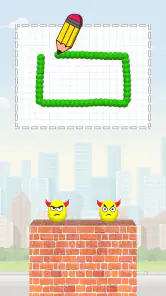
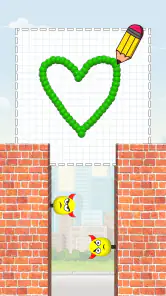
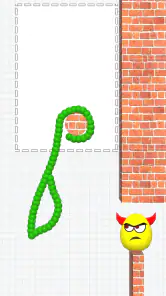
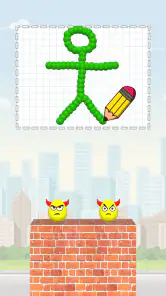
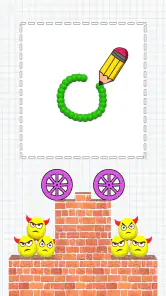
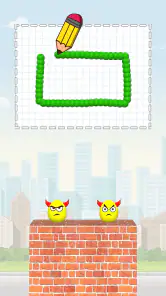
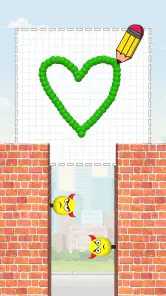
Analysis by Reviewed
When I’m deciding whether a mobile puzzle is worth keeping on my phone, I look for a clear idea, room to learn, and levels that work in short sessions. Draw To Smash: Logic Puzzle makes the drawing itself part of the problem: I have to consider how a line may move through a scene and use that interaction to deal with the eggs. It feels different from word searches, number grids, or matching games, where the challenge is more often finding a pattern or choosing a tile.
What to consider before you start
The key question is whether you enjoy experimenting. A level can look straightforward, but a line that seems sensible may not produce the result you expect. I find the appeal is in testing an idea, noticing what happened, then adjusting the shape or placement on another try. If you prefer puzzles with one clear deduction and no trial and error, this style may feel less satisfying.
It is a free puzzle game from HYPERCELL, rated for Everyone, and it has a 4.6 average from around 135,000 ratings. That broad response suggests it has found an audience, but the more useful point for me is that the basic premise is easy to understand without needing a long explanation. The current version is 1.22.69, and it runs on Android 7.0 or later.
Why drawing changes the puzzle
In many logic games, I can pause and compare several options before tapping an answer. Here, the thing I draw becomes part of the solution, so shape matters as much as the initial idea. I’ve found it helps to ask what the line is likely to do after it is drawn rather than focusing only on where it begins. A compact stroke can be more useful than an elaborate sketch if it nudges the scene in the right direction.
That makes the game especially good for short, low-pressure sessions. I can try a level while waiting for a kettle to boil, then put my phone down without needing to remember a complicated story or set of rules. The trade-off is that a failed attempt can feel like a small interruption when I’m in a hurry; it works better when I have enough time to make a second attempt instead of treating every level as a one-tap task.
When another puzzle style may suit you better
If I want a quiet, methodical challenge, a classic grid-based logic puzzle is a better fit. If I want rapid rewards and familiar matching mechanics, a casual tile game may be easier to dip into. This one sits between those options: it is approachable like a casual game, but its outcomes depend on spatial judgement and the effects of what I draw. That mix is its strongest distinction, though it also means the game may not click for someone who dislikes physics-driven surprises.
It is also worth thinking about how you like to learn. Because the game lets you discover the logic by playing, I would give each level a moment of observation before drawing: look at the arrangement, decide what you want to happen, and make one deliberate attempt. When I get stuck, I try changing one part of my approach rather than making a completely different drawing at random. The hint system can help, but using it too quickly takes away the satisfaction of working out why a solution succeeds.
How it fits into everyday play
For a realistic example, I might open it during a short wait at a café, solve a level or two, and close it when my order arrives. That is a more natural use than expecting it to replace a long-form game night. The simple premise makes it easy to return after a break, while the need to judge each drawing gives me a reason to pay attention instead of tapping through automatically.
Unleashing Your Inner Artist
First things first, let’s talk about how this app works. The premise of Draw To Smash: Logic Puzzle is delightfully simple yet mind-bending. You’re given a scenario where you must draw a line to solve a puzzle. It sounds easy, right? But as you progress, it becomes clear that you’ll need more strategy than just doodling.
The interface is clean and intuitive, making it easy for anyone to jump right in. I loved how the app doesn’t bombard you with unnecessary tutorials, letting you learn through play. As someone who appreciates minimalistic design, I found the layout refreshing and user-friendly.
Challenges That Keep You Hooked
Each level presents a unique challenge that tests your logic and creativity. Some puzzles had me scratching my head for longer than I’d like to admit! The satisfaction of finally cracking a tough level is akin to finishing a gripping novel—you just can’t wait to see what happens next.
The developers have done a stellar job in ensuring that the puzzles are diverse, keeping monotony at bay. Whether you’re a novice or a seasoned puzzle enthusiast, Draw To Smash has something for everyone. Plus, there’s a hint system for when you’re really stuck, but trust me, try not to rely on it too much. The real joy is in the eureka moments!
Play Anywhere, Anytime
What I love most about this app is its portability. Whether you’re on a commute, waiting for a friend, or just chilling at home, you can whip out your phone and dive into a puzzle. It's perfect for those short breaks or long winding sessions when you want to challenge your mind.
Another highlight is that it doesn’t require an internet connection, which is a huge plus for those of us who are always on the move. So, no more pesky "no signal" messages interrupting your flow!
Moreover, the app’s performance is smooth as butter—no lags or crashes, which is often a concern with mobile games. The developers clearly put in the work to ensure a seamless experience.
Choosing it over other casual games
What sets this apart from the usual quick-play puzzle is that a solution is not just a correct answer selected from a menu. You are making a physical mark in the scene and relying on the result, so the puzzle asks for a small prediction as well as an idea. That makes it a good choice when I want to feel involved in solving something, rather than simply recognizing a familiar pattern.
There is a useful trade-off here. A grid puzzle tends to reward careful deduction and steady concentration; a matching game tends to keep the pace moving with repeated, familiar actions. This drawing-based format can be more playful, but the outcome may feel less exact if I expected my line to behave differently. I would choose it for spatial trial and error, not as a substitute for a precise, pencil-and-paper logic challenge.
A better way to approach a tricky level
When a first attempt fails, I try to treat the result as information. I look at what the drawing actually changed, then alter one choice—its length, shape, or placement—rather than replacing the whole plan. That makes the next try easier to judge and helps me learn the level’s logic instead of relying on luck. It is a small habit, but it turns retries into part of the puzzle rather than a string of guesses.
I also avoid drawing more than the situation seems to need. A complicated line can be tempting when I am stuck, yet a simpler mark is easier to reason about: I can see which part of my plan may have helped or failed. This is not a promise that every level has one neat answer; it is just a practical way to keep the experimentation understandable and the eventual success satisfying.
Who will enjoy it, and who may not
I’d recommend it to someone who likes casual brain teasers, enjoys visual problem-solving, and is comfortable trying again after an imperfect result. It can suit a mixed-age household too: the Everyone rating and immediately understandable drawing idea make it approachable, while the need to predict a scene gives older players something to think through. The game has passed 10 million installs, and its large audience is understandable given how quickly the central idea makes sense.
I would steer away if you want a long narrative, a competitive puzzle format, or a challenge that can always be solved by applying a fixed set of formal rules. It is also not my first pick when I have only a few distracted seconds and no patience for a retry. If you prefer puzzles where every move is fully predictable, a traditional logic app is likely to feel more comfortable.
Questions worth considering before installing
Is it suitable for a quick break? Yes, that is one of its strongest use cases: I can attempt a small puzzle without setting aside a long stretch of time, though a stubborn level may take more than one go. Do I need drawing skills? No artistic ability is the point; the useful skill is thinking about how a line might affect the scene. Is it free? Yes, it is offered as a free game. Those answers make it easy to try, while the trial-and-adjust style is the bigger question of personal fit.
For Android users, the minimum requirement is Android 7.0, and the current version is 1.22.69. The game is also available on iOS, so it is not limited to one mobile platform. Its free entry point reduces the commitment, but I would still choose it for the specific kind of hands-on puzzle it offers, not just because it costs nothing.
Final Thoughts
In a sea of mobile games, Draw To Smash: Logic Puzzle stands out as a gem. It’s more than just a game; it’s a test of wit and creativity. Whether you’re a casual gamer or a puzzle aficionado, this app promises hours of engaging fun.
So, if you’re ready to stretch those brain muscles and unleash your inner artist, give Draw To Smash a try. Who knows, it might just become your next favorite app. Happy puzzling!
Draw To Smash: Logic puzzle Frequently Asked Questions
Can I play Draw To Smash offline?
Draw To Smash is built around self-contained drawing puzzles, so its basic appeal is easy to understand: sketch a line or shape and see how it affects the scene. Whether a particular feature works without an internet connection can depend on the game and device setup, so check the app’s behavior after installation if offline access matters to you. The core puzzle idea is focused on solving each challenge through drawing and physics.
What kind of puzzles should I expect in Draw To Smash?
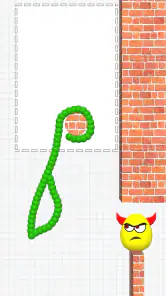
Draw To Smash is a puzzle game centered on physics-based challenges and brain teasers. Each level asks you to draw a line or shape that sets objects in motion and helps smash the bad eggs. The fun comes from considering how your drawing will interact with the scene, then adjusting your approach when a first attempt does not work as intended. It suits players who enjoy experimenting as well as logical problem-solving.
Does Draw To Smash work on my Android device?
Draw To Smash: Logic Puzzle is a puzzle game from HYPERCELL, and its Android version requires Android 7.0 or later. If your phone or tablet meets that requirement, you can consider installing it and drawing solutions directly on the screen. The game’s central appeal is its simple idea: use lines and shapes to set physics-driven actions in motion and smash the bad eggs.
What is Draw To Smash: Logic Puzzle?
Draw To Smash: Logic Puzzle is an engaging mobile game that challenges players to solve puzzles by drawing lines or shapes to smash obstacles. It combines elements of creativity, logic, and physics-based challenges, offering a unique and stimulating experience. Players must think strategically and use their drawing skills to complete each level successfully. Its store description captures the basic premise: draw a line to smash bad eggs, with physics puzzles and brain teasers built around that goal.
How does the gameplay work in Draw To Smash?
In Draw To Smash, players must draw lines or shapes on their screens to trigger actions that will smash or eliminate obstacles in each level. The game incorporates physics principles, requiring players to think critically about how their drawings will interact with the game environment. Each level presents new challenges, encouraging players to develop creative solutions using minimal resources. The hands-on drawing makes experimentation part of the puzzle: a small change to a shape can alter how objects move and whether the plan succeeds.
Articles Related to Draw To Smash: Logic puzzle
Clash of Clans Is Won Between the Battles
Its raids are quick; its community is a long-term project of coordination, teaching, rivalry, and shared responsibility—with all the friction that entails.
Android Auto Makes the Case for Quieter Car Software
The car interface is no longer judged by how much it can do, but by how quietly it helps. Android Auto shows what drivers now expect—and what still gets in the way.
MobiOffice: Transforming Mobile Productivity with Seamless Integration
MobiOffice: Word, Sheets, PDF is redefining mobile productivity with a surprising blend of functionality and innovation.
EA SPORTS FC™ Mobile Soccer: Redefining Mobile Sports Gaming
Dive into EA SPORTS FC™ Mobile Soccer, where immersive gameplay and strategic depth transform mobile sports gaming.
Pros
- Simple and intuitive controls
- Variety of challenging puzzles
- Engaging graphics and sound
- Stimulates creative thinking
- Frequent updates with new levels
Cons
- Contains in-app purchases
- Ads can be intrusive
- Requires internet connection
- Limited hints available
- Occasional bugs in gameplay

- Category
- Puzzle
- Version
- 1.22.69