DOP 4: Draw One Part
- 2.75K
- 4.4
- Installs
- 100.00M
- Price
- Free
Screenshots
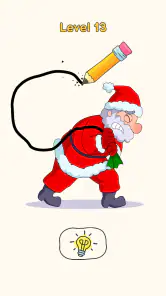
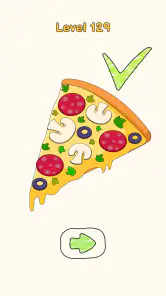
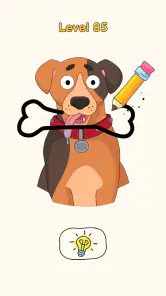
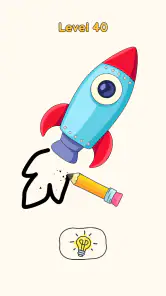
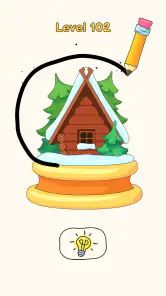
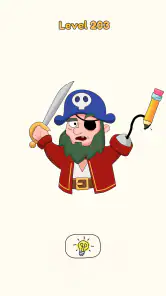
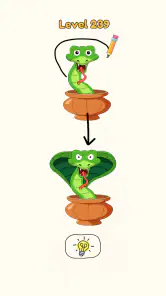
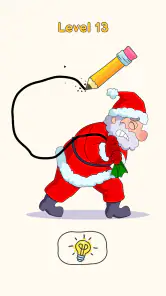
Analysis by Reviewed
When I want a phone game that gives me a small puzzle to think about without asking for a long session, I reach for DOP 4: Draw One Part. Its basic idea is to look at an incomplete drawing and work out what belongs in the empty space. That sounds like a simple drawing exercise, but the fun is in interpreting the picture: the missing piece may be less obvious than the first thing that comes to mind.
How the game fits into a quick break
I find this format particularly useful when I have a few spare minutes and don’t want to start a story-driven game or commit to a complicated challenge. A puzzle gives me one small problem to focus on, then I can put the phone down when I need to. It suits the pause between errands, a quiet moment at home, or a short break when I want to engage my attention without turning leisure into a project.
The drawing is part of the answer, not a test of artistic skill. I don’t need to make a polished illustration; I need to recognize what the picture is asking for and sketch a sensible missing part. That distinction matters if you’re hesitant about games involving drawing. The appeal is the little act of reasoning behind the line, rather than producing something attractive.
For a better first guess, I look at the whole scene before drawing. I ask what would make the image feel complete, then consider whether the puzzle is inviting a literal answer or a playful one. A few seconds of looking can be more useful than repeatedly tracing the same shape. When a guess doesn’t work, changing the idea is usually more productive than trying to make the line neater.
A playful kind of problem-solving
First off, let’s talk about the concept of DOP 4: Draw One Part. The game is all about using your creativity to solve puzzles. You’re presented with an incomplete picture, and your task is to draw the missing part. Sounds simple, right? But the trick lies in figuring out what’s missing. It’s not always as straightforward as it seems, and that’s where the fun kicks in.
What I love about this game is that it encourages you to think outside the box. You’re not just solving puzzles; you’re adding your own touch to them. It’s a great way to flex those creative muscles without getting too stressed out.
What happens when a guess misses
When you fire up the game, you’ll find it super user-friendly. The interface is clean and intuitive, which is a big plus for any mobile game. You’re greeted with various levels, each with its unique challenge. As you progress, the puzzles get a tad trickier, but they never feel impossible to solve.
More From Our News Desk

Weather by Xiaomi Review: Clear at a Glance, Less Clear Up Close

X Under Pressure: Can It Recover When Posting Goes Wrong?

Clash of Clans Is Won Between the Battles

Android Auto Makes the Case for Quieter Car Software

MobiOffice: Transforming Mobile Productivity with Seamless Integration

EA SPORTS FC™ Mobile Soccer: Redefining Mobile Sports Gaming
Drawing the missing parts is as easy as swiping your finger across the screen. The game does a fantastic job of recognizing your doodles, even if you’re not the next Picasso. Sometimes, the solutions are hilariously unexpected, which adds a nice touch of humor to the whole experience.
That forgiving feel is helpful, though it changes what kind of puzzle game this is. I wouldn’t choose it for precise sketching or for the satisfaction of mastering a demanding drawing tool. Instead, I treat each attempt as a visual clue: make a readable mark, see whether it fits the scene, and rethink the missing object if it doesn’t. If a puzzle leaves me uncertain, I try to identify the simplest shape that could complete the image rather than adding decorative detail.
There’s also a small trade-off in the way this kind of play rewards intuition. A quick answer can feel clever and funny, but a puzzle that depends on guessing what the designers had in mind may not satisfy someone who wants a single logically airtight solution. I enjoy the lightness, yet I wouldn’t mistake every level for a deep brainteaser. It’s better as a succession of compact visual prompts than as a rigorous test of drawing ability.
Bright scenes, easygoing presentation
The art style in DOP 4: Draw One Part is bright, colorful, and downright adorable. It’s got this cartoonish vibe that’s both charming and inviting. Each level feels like a little comic strip, which is a refreshing change from the usual hyper-realistic graphics we often see in mobile games.
Sound-wise, the game keeps it simple. The background music is light and cheerful, which complements the gameplay perfectly. It’s not too distracting, letting you focus on solving the puzzles. Plus, the sound effects add a nice touch whenever you solve a puzzle or make a mistake.
This presentation makes the game approachable for people who don’t usually seek out puzzle apps. The pictures give you something concrete to inspect, so the challenge doesn’t begin with a blank board or a set of unfamiliar rules. I can imagine handing the phone to a family member and explaining the task in a sentence. The Everyone 10+ age rating is a useful guide for families considering it, while the simple drawing premise can appeal to adults too.
Who will enjoy it—and who may not
If you’re someone who loves puzzles but doesn’t want to feel bogged down by overly complex mechanics, this game is right up your alley. It’s perfect for those moments when you have a few minutes to spare and want something light yet engaging. Plus, it’s a great way to unwind after a long day.
I also found that it’s a fantastic game for all ages. Kids will love the colorful graphics and simple gameplay, while adults will appreciate the subtle challenge each level presents. It’s a win-win in my book!
For example, I might open it while waiting for a meal to arrive: I can try a puzzle, enjoy the reveal if my drawing works, and stop without needing to remember a complicated sequence of actions. That makes it a more natural fit for fragmented spare time than a long campaign. It can also work as a low-pressure shared activity: one person studies the picture while another suggests what seems missing, then they compare ideas before drawing.
I’d steer away from it if I were looking for a competitive score chase, elaborate progression systems, or a puzzle game that rewards careful planning across a large board. Someone who prefers word puzzles, number logic, or precise drag-and-drop challenges may find the drawing premise too dependent on visual interpretation. And if repeated short puzzles aren’t your thing, the light structure may feel slight rather than relaxing.
Compared with familiar mobile puzzle alternatives, this one puts the act of sketching at the center. A match-style puzzle asks you to spot patterns and make moves; a word game asks you to retrieve language; a classic logic puzzle usually expects a chain of deductions. Here, I look at a picture, form a hypothesis, and communicate it with a quick line. That makes it more tactile and playful, but less suited to anyone who wants detailed rules or a clearly measurable difficulty curve.
Where it stands now and what to expect
I look at this section as a way to separate what can be said about the game today from what would only be a guess about its future. The current version gives returning players a clear reference point, but I’d judge any later change by whether it brings fresher visual reasoning rather than simply more prompts. For now, the useful expectation is a compact, draw-to-answer puzzle experience, with its appeal resting on how well that format continues to suit your breaks.
A simple format that remains the main attraction
In a world where mobile games often try to do too much, DOP 4: Draw One Part keeps it simple and fun. It’s a delightful little game that combines creativity with problem-solving in a way that’s both refreshing and entertaining. Whether you’re a seasoned gamer or just looking for something new to try, give this game a whirl. You might just find yourself hooked, drawing your way through one charming puzzle after another.
The game is a free puzzle title from SayGames Ltd, and it has an average rating of 4.4 from around 283,000 ratings, with more than 100 million installs. Those figures show that this straightforward format has reached a broad audience, but they don’t tell me whether every individual puzzle will land for every player. I’d use them as context, not as a substitute for deciding whether picture-based, quick-session play suits me.
The current version is 1.1.61, following its release on December 14, 2021. That gives existing players a concrete point of reference for the version available now, while the release date places it among mobile games that have been around for a while. I wouldn’t infer a particular feature history from those details alone. What matters in practice is whether the current experience still delivers the concise drawing puzzles that make the game appealing.
If you already play, the best way to approach a new session is to treat the picture as a prompt rather than assume every missing part will be obvious at a glance. I’d pause before drawing, check the edges and objects in the scene, and keep the first attempt simple. That habit can make the game feel more like a visual riddle and less like trial and error. If you’re introducing it to someone else, letting them explain their guess before you draw can make the odd answers part of the fun.
Practical trade-offs before you install
The game is free to download, with in-app purchases priced from $0.99 to $24.99 per item. I’d keep that in mind if I’m installing it for a child or sharing a device: the core appeal is the puzzle itself, but purchase options are still part of the experience to consider. The listed minimum operating system is Android 8.0, so I’d check that against the device before trying to install it.
One question a new player might reasonably have is whether artistic talent is necessary. In my experience, the premise is about communicating the missing idea with a basic doodle, so I wouldn’t let shaky drawing put me off. Another is whether it works for a very short session: that’s exactly how I’d use it, because each prompt can be approached on its own rather than requiring me to settle in for a long stretch.
The more important question is whether the humor and interpretation will suit your taste. If you like looking at a scene and testing a playful guess, the simple controls help you get to the point quickly. If you prefer puzzles where each answer follows from strict rules and can be proven step by step, you may be happier with a more traditional logic game. That’s not a flaw so much as the trade-off built into drawing as the way to respond.
What I would keep an eye on
When deciding whether to keep playing, I’d pay attention to variety rather than expecting the controls to become more elaborate. The format works best when each incomplete image gives me a fresh reason to look twice. If I start feeling that I’m repeating the same kind of guess, the short-session design makes it easy to take a break and return later instead of pushing through out of obligation.
I’d also judge the game by how well it fits my routine, not by whether it replaces every other puzzle app. For a quick, cheerful distraction that asks me to interpret and draw, it has a clear place. For a long evening of demanding strategy, a competitive challenge, or a game built around precise artwork, I’d pick something else. Knowing that difference helps set fair expectations before downloading.
My closing take
Overall, I see this as an easygoing choice for anyone curious about visual puzzles and comfortable making quick, imperfect sketches. It doesn’t need a complicated setup to make a small break feel engaging, and the cartoon presentation keeps the task friendly rather than intimidating. The main caveat is that its charm depends on enjoying short prompts and occasionally unexpected interpretations; players who want depth or strict logic should look elsewhere.
Ready to put your drawing skills to the test? Head over to the download links and start playing! Trust me, you won’t regret it.
DOP 4: Draw One Part Frequently Asked Questions
What kind of drawing do I need to do in DOP 4: Draw One Part?
The drawing is part of solving each picture puzzle: you look for what seems to be missing and sketch the shape that would complete the image. The game is not presented as a general-purpose art tool, so the focus is on recognizing the visual clue rather than producing polished artwork. It may suit players who enjoy simple, observation-based puzzles.
Is DOP 4: Draw One Part suitable for short play sessions?
DOP 4: Draw One Part is built around individual picture puzzles, which makes its format easy to approach in brief sessions as well as longer stretches of play. You can focus on a puzzle, work out what the image needs, and draw the missing part. That straightforward loop may be appealing if you want a casual game to pick up when you have a little time.
What does the age rating mean for DOP 4: Draw One Part?
DOP 4: Draw One Part has an Everyone 10+ content rating, so it is intended for a broad audience that includes players aged ten and older. Parents may want to consider that rating alongside a child’s preferences and maturity before downloading. The game’s core activity is solving picture puzzles by drawing missing parts, which offers a simple premise for family members to understand.
Is DOP 4: Draw One Part free to download?
DOP 4: Draw One Part is free to download, so you can try its drawing puzzles without paying upfront. It also offers optional in-app purchases, with prices ranging from $0.99 to $24.99 per item. Those purchases are not required to play, but it is worth checking purchase settings if children will be using the game.
What is the main objective of DOP 4: Draw One Part?
DOP 4: Draw One Part challenges players to solve puzzles by drawing the missing parts of an image. The game tests both creativity and critical thinking as players figure out what needs to be drawn to complete each picture. It's a unique twist on puzzle games that keeps users engaged with its innovative gameplay.
Pros
- Engaging puzzle mechanics
- Simple and intuitive controls
- Frequent updates with new levels
- Visually appealing graphics
- Encourages creative thinking
Cons
- Ads can be intrusive
- Limited hints available
- Repetitive level designs
- Occasional bugs and glitches
- Can be too easy for some players
- Category
- Puzzle
- Version
- 1.1.61