Criminal Case: Supernatural
- 2.11K
- 4.7
- Installs
- 1.00M
- Price
- Free

Screenshots


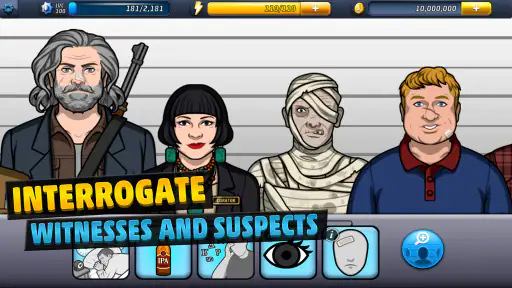
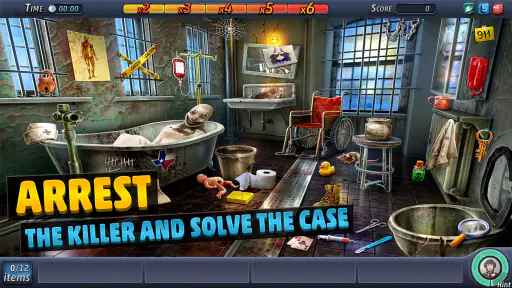
Analysis by Reviewed
I approached Criminal Case: Supernatural expecting a light mystery game, but its supernatural setting gives the familiar investigation formula a different mood. You examine scenes, follow clues, and work through murder cases while the story adds strange, otherworldly elements. It is free to start, easy to understand at first, and best enjoyed in short sessions rather than as a nonstop action game.
The game comes from Pretty Simple and sits in the adventure category. Its store summary points directly to the central idea: solving murder cases. That description is simple, but it captures the main appeal well. I spend most of my time looking carefully, making deductions, and moving the investigation forward instead of controlling a character through fast combat or complicated exploration.
That makes it a comfortable choice for someone who enjoys detective stories but does not want a demanding control scheme. The Teen age rating also gives a useful indication of the tone: this is not a cheerful hidden-object game with a mystery pasted on top. The cases involve murders and supernatural subject matter, so the atmosphere can feel darker than the basic search mechanics suggest.
What the first investigation feels like
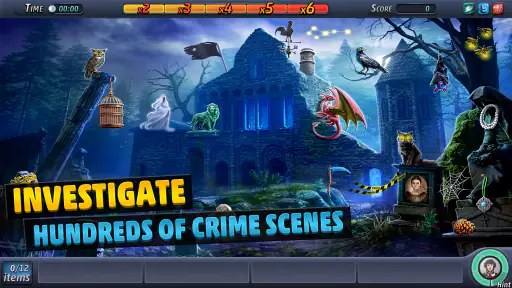
The opening is designed to get me into the investigation quickly. I am not asked to learn a large collection of systems before seeing the point of the game. Instead, the early case establishes the rhythm: inspect a location, identify relevant objects, gather evidence, and use the results to decide where the story should go next.
The most important adjustment for a first-time player is to treat each scene as an observation exercise, not a race. I initially found it tempting to tap rapidly across the screen, especially when a location looked crowded. A slower sweep works better. I move from one side of the scene to the other, check unusual shapes and familiar objects, and avoid spending the whole attempt tapping randomly.
That habit matters because the fun is not simply in finding something hidden. The satisfaction comes from connecting a discovered item with the case. The supernatural theme helps here: an ordinary clue can sit beside something that feels impossible, so the investigation constantly asks me to reconsider what I thought I understood.
For a new player, the first meaningful success is not necessarily reaching the end of a case. It is completing a scene cleanly enough to understand the loop. Once I have found the required evidence and seen how it contributes to the investigation, the rest of the game becomes much less intimidating.
How I would begin after installing it
After launching, I recommend taking the first case at its own pace rather than trying to optimize immediately. Read the dialogue, follow the available investigation step, and notice which actions consume time or resources. The game explains its basic flow through play, so skipping every piece of story text can make the next objective less obvious.
I also keep the first session short. That sounds minor, but it is useful with a case-based game. A brief session lets me learn how the investigation progresses without turning the search scenes into a repetitive chore. If I have only a few minutes, I can complete a focused task and return later instead of beginning a long play session with no clear stopping point.
There is no need to approach the game as if it were a traditional role-playing adventure. The main pleasure is not building a complex combat setup or mastering reflexes. It is recognizing patterns, completing investigative tasks, and seeing how the supernatural mystery develops. Players who understand that from the start are less likely to wonder why the game feels slower than an action adventure.
The current version is 2.45.1, and the game supports devices running Android 7.0 or later. That makes it accessible to people using older compatible Android phones, although the experience will still depend on the individual device and how comfortably its screen displays detailed scenes.
The first successful action: search with a plan
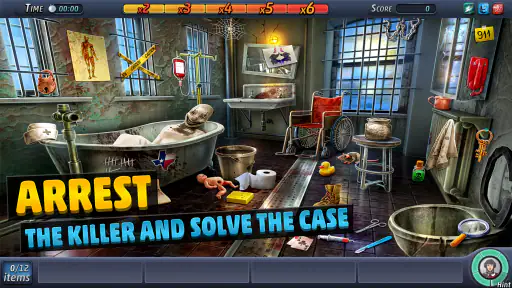
My most useful early technique is to divide every hidden-object scene into zones. I scan the upper area first, then the center, then the lower edges, checking corners and areas partly covered by other objects. This is more reliable than tapping wherever my eye happens to land, and it reduces the frustration of overlooking a clue that blends into the background.
I also pause after finding an item instead of immediately searching for the next one. That short pause helps me remember the visual style of the scene and spot similar shapes. If the game presents a list of targets, I use the list as a guide to what deserves attention, not as a reason to search the entire picture randomly.
The key beginner lesson is to improve your observation before spending anything. A player who learns the scene-reading rhythm will usually get more value from the free experience than someone who immediately tries to rush through every investigation.
When a case moves from scene searching to story progression, I pay attention to the connection between the evidence and the next objective. This is where the game feels more like an investigation than a collection of unrelated puzzles. The individual searches are straightforward, but their placement inside the case gives them purpose.
Where new players can become confused
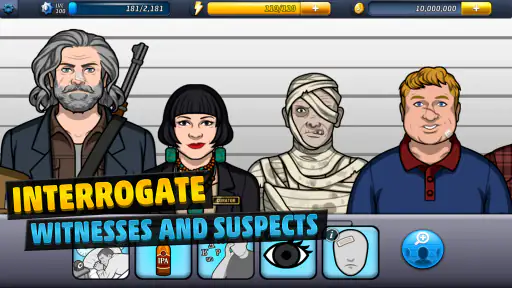
The biggest possible confusion is expecting every clue to be solved through deduction alone. In practice, the game’s core interaction is strongly tied to finding objects in prepared scenes. If I arrive expecting a fully open investigation where I can question anyone in any order, the structure may feel restrictive. The game guides the investigation rather than giving complete freedom over it.
Another point of friction is pacing. Energy or progression limits can make the experience feel stop-and-start, particularly when I want to continue a dramatic case immediately. I see this as part of the free-to-play design rather than a technical problem, but it affects whether the game suits you. If you dislike waiting or being encouraged toward purchases, the interruptions may become more noticeable over time.
In-app purchases range from $0.99 to $99.99 per item. I would not recommend treating those options as necessary during the opening investigation. First, learn whether the search-and-story loop is enjoyable for you. Spending before understanding the pace can turn a pleasant mystery into a pressured one, especially if you are the kind of player who wants to finish a case in one sitting.
The game is free, which makes trying it straightforward, but “free” does not mean every part of the experience is equally unrestricted. My advice is to decide on a personal limit before playing. That is particularly helpful if younger members of a household use the device, since the Teen rating and optional purchases make supervision sensible.
How the supernatural setting changes the formula
There are many hidden-object mystery games, and some focus on cozy locations, historical puzzles, or realistic police work. This one separates itself through its supernatural identity. The cases are not merely ordinary crimes decorated with spooky artwork; the unusual premise shapes the questions I am asked to consider and keeps the story from feeling like a standard detective worksheet.
That theme will appeal most to players who enjoy paranormal fiction and episodic investigations. It is less suitable for someone looking for a realistic procedural or a game built around deep logical puzzles. The supernatural angle creates atmosphere and curiosity, but it does not turn the game into a free-roaming horror experience. The core remains a guided case investigation with search-based interactions.
Compared with a conventional adventure game, the controls are much lighter. I do not need to learn a large button layout or manage real-time movement. Compared with a pure hidden-object title, the case structure gives my searches a stronger reason to exist. The trade-off is that players wanting broad exploration may find the guided format too narrow, while players wanting a relaxing, story-led mystery may appreciate its clarity.
Practical ways to make progress without frustration
I get better results by playing when I can give the screen my full attention. Public transport, a short break, or a quiet evening can all work, but I avoid opening a detailed search scene while distracted. Missing several objects in a row is usually not evidence that the game is unfair; it often means I am scanning too quickly or looking for the wrong visual detail.
When I am stuck, I do not immediately restart the whole scene. I first change my viewing strategy. I check the edges, look for items that match the target list in color rather than meaning, and inspect areas where several objects overlap. This is a useful distinction: an item may look obvious once identified but be difficult to notice when I am searching for its name.
I also let the narrative determine my stopping point. Completing a small objective and closing the game can feel more satisfying than exhausting every available action. Because the game is organized around cases, returning with a fresh eye often makes the next scene easier to read.
For players sharing a device, I would make sure the intended account or game profile is being used before investing serious time. Case progress matters more once the story has become engaging, and it is frustrating to discover that a session was started under the wrong profile or device arrangement. I would also check purchase controls before handing the phone to a child.
Who will enjoy it, and who should skip it?
I recommend it to people who like mystery television, paranormal stories, and casual games that can be played in manageable pieces. It is especially approachable for someone who wants an adventure game without complicated movement. The combination of crime scenes and supernatural clues gives the familiar search format enough personality to keep the early cases interesting.
It is also a reasonable choice for a player who wants a free trial of a story-driven game before deciding whether the format suits them. The title has passed one million installs, and its average rating is 4.7 from around 36 thousand ratings, which suggests that the core concept has found a substantial audience. I still treat those figures as a sign of popularity rather than a guarantee that its pacing will match my own preferences.
I would skip it if I wanted uninterrupted progression, intense action, or completely open-ended detective work. Someone who dislikes hidden-object scenes may also lose patience, because the search mechanic is not a small side activity. It is central to how the investigation advances.
Players who prefer to solve every mystery through their own theories may find the guided structure limiting. The game gives me a clear route through each case, which is helpful when I want direction but less satisfying when I want to accuse suspects freely, revisit every location, or create a personal solution.
What the ratings and audience suggest in practice
The game has around 2.1 thousand written reviews alongside its broader rating count. I find that distinction useful: a high average can tell me that many players enjoy the general experience, while written reactions often reveal whether the real issue is pacing, monetization, story tone, or repetition. For this title, I would focus less on the headline score and more on whether I personally accept the energy-based rhythm and search-heavy structure.
The Teen content rating is equally important for setting expectations. The murder investigations and supernatural subject matter make this a better fit for older children and adults than for a young child seeking a harmless object-finding game. The rating does not mean the game is relentlessly frightening, but it does indicate that the themes should be considered before installing it for someone else.
Pretty Simple has built the game around an accessible entry point, and that is one of its strengths. I can understand the first objective without reading a manual. The deeper question is whether the repeated investigation cycle stays enjoyable after the novelty of the first supernatural case fades. My answer is that it works best when I play for the story and atmosphere, not when I treat it as a speed challenge.
The next step after the opening case
Once I understand the basic search pattern, I pay closer attention to how each case is divided into smaller objectives. Instead of thinking only about the final culprit, I focus on the immediate task: find the evidence, complete the scene, follow the new lead, and then reassess the situation. This prevents the larger mystery from feeling overwhelming.
A useful personal rule is to reserve optional spending for a moment when I have already decided that the game deserves long-term attention. The purchase range is wide, so there is a meaningful difference between trying the game for free and committing money to faster progression or convenience. I would rather discover my natural playing rhythm first and only then decide whether an optional purchase improves it.
I also recommend keeping expectations realistic about replay value. The appeal comes primarily from progressing through cases and discovering their stories. If you need a game that remains fresh through endless mechanical variety, this may not be the best match. If you enjoy a sequence of guided mysteries and like returning for another short investigation, its structure is easier to appreciate.
On Android, the minimum operating-system requirement is 7.0. Before installing, I would make sure the phone has enough comfortable screen space for detailed scenes and that the device is suitable for the person who will play it. A small or dim display can make object searches more tiring, even when the game itself is running correctly.
After spending time with it, I see Criminal Case: Supernatural as a focused casual adventure rather than a fully simulated detective game. Its strongest qualities are the approachable investigation loop, the supernatural twist, and the way individual searches feed into a larger case. Its main weaknesses are the guided structure, the possibility of interrupted pacing, and the temptation to pay when progress slows.
My final recommendation is simple: try it free, play the opening investigation patiently, and decide based on how much you enjoy searching scenes and following a paranormal crime story. If that combination clicks, the game offers a comfortable way to unwind with a mystery. If you want real-time danger, unrestricted detective choices, or no free-to-play friction, another adventure style will serve you better.
For the right player, Criminal Case: Supernatural works because it makes the first step clear and gives every discovered object a place in the case. I would recommend it to a friend who enjoys supernatural mysteries and short, guided sessions, with one honest warning: the story may pull you forward, but your patience with the pacing will determine whether the journey remains enjoyable.
Pros
- Distinctive supernatural crime cases with a darker atmosphere
- Short investigation sessions work well for casual play
- Many locations and characters give cases visual variety
- Hidden-object scenes are easy to understand for new players
- Regular events can add extra objectives beyond the main cases
Cons
- Energy limits can interrupt investigations at inconvenient moments
- Some clues require repeated searches rather than careful deduction
- Progress may feel slow without spending premium currency
- Dialogue and case outcomes offer limited player choice
- Ads and purchase prompts can become noticeable during longer sessions

- Category
- Adventure
- Version
- 2.45.1