Codenames
- 297.00
- 4.7
- Installs
- 10.00K
- Price
- $4.99

Screenshots
Analysis by Reviewed
At our place, a good shared game has to be easy to bring out and interesting enough that people stay at the table. Codenames works best when a few friends or relatives can split into teams, listen to one another’s reasoning, and enjoy the occasional spectacularly wrong guess. I like that it turns a handful of words into a lively group activity rather than asking everyone to learn a long set of rules first.
A shared game that depends on the room
The fun comes from the people playing as much as from the puzzle. One person’s harmless clue can lead teammates to a surprisingly bold interpretation, while another group may play cautiously and debate every choice. That makes it a natural fit for a relaxed evening at home, especially when you want something more participatory than taking turns with a solo puzzle game.
A useful household habit is to agree on who is giving clues and who is guessing before starting. The spymaster role asks for a different kind of attention from the rest of the team, so rotating it between games gives quieter players a chance to contribute without making every round feel the same. If the group is mixed in age or experience, I’d also encourage people to explain their reasoning after a guess; that keeps the discussion welcoming instead of making a missed clue feel like a test.
Making a shared-device session work
For a household using one device, the easiest approach is to treat the phone or tablet as the center of the table rather than as one person’s private game. Let the person holding it handle the immediate turns, then pass it along or set it where everyone can see when the group is discussing a clue. This keeps attention on the team’s reasoning and reduces the chance that one eager player taps through while someone else is still thinking.
I would also agree on a simple boundary before starting: who is operating the device, whether players can offer suggestions outside their team’s turn, and when the group is ready to commit to a choice. These are not complicated rules, but they help when younger relatives and adults have different ideas about pace. They also keep the game from becoming a contest over who gets to hold the screen.
What to expect before settling in
This is a word-association puzzle game from CGE digital, and the mobile edition costs $4.99. It has a 4.8 average from around 1,600 ratings, with over 10,000 installs. It was released on September 10, 2024, and version 1.52.3562 requires Android 8.0 or later. The age rating is Everyone, which makes it broadly suitable as a game choice, though I’d still match the session to the players’ reading comfort and patience.
Because the clues are spoken and interpreted socially, a shared-device session still benefits from clear turn-taking. I would not assume that a household gets separate progress or account boundaries just because several people can gather around one game; instead, decide together who is handling the device and keep the focus on the group’s choices. For a family, that simple routine can prevent one person from rushing ahead while others are still working through the clue.
More From Our News Desk

Weather by Xiaomi Review: Clear at a Glance, Less Clear Up Close

X Under Pressure: Can It Recover When Posting Goes Wrong?

Clash of Clans Is Won Between the Battles

Android Auto Makes the Case for Quieter Car Software

MobiOffice: Transforming Mobile Productivity with Seamless Integration

EA SPORTS FC™ Mobile Soccer: Redefining Mobile Sports Gaming
Age, reading comfort, and trust
An Everyone rating is a helpful starting point, not a guarantee that every child will find the session equally comfortable. The game asks players to read a set of words, recognize possible connections, and tolerate disagreement when teammates interpret a clue differently. I’d make the first round collaborative and low-pressure, especially if someone is still building confidence with reading or tends to take a wrong answer personally.
For mixed-age groups, I find it useful to let the clue-giver explain the thinking after a turn rather than judging the guess as simply right or foolish. That turns an unexpected association into a conversation about how people connect ideas. It also gives adults a chance to notice when a clue depends on a reference that younger players may not know. In that situation, a clearer clue is usually more welcoming than asking the child to catch up.
Getting Started with the Game
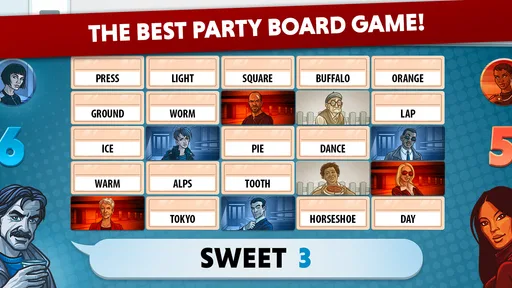
First off, let's talk about what Codenames is all about. It’s a simple yet strategic word game that involves two teams and a board of words. The main objective is for each team to guess their respective words on the board based on clues given by their spymaster. Sounds easy, right? Well, there’s a twist: some words are associated with the opposing team, and there’s even an assassin word that ends the game instantly if picked!
The Gameplay Experience
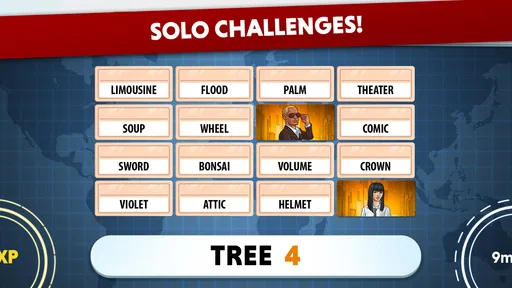
Jumping into the gameplay, I was immediately hooked by the strategic depth. Each round, the spymaster gives a single-word clue and a number indicating how many words on the board relate to that clue. The rest of the team has to use their deduction skills to figure out which words the spymaster is hinting at. The tension builds as you try to avoid picking the assassin word or the opponent's words. It’s like walking a tightrope, but way more fun!
For a smoother first session, I’d have the spymaster pause long enough for teammates to say what they think a clue connects. That tiny bit of coordination can reveal whether a word has an obvious alternate meaning before anyone commits. It also makes the game more inclusive for people who need extra time to scan the board. The trade-off is that extended discussion can slow the pace, so a group that prefers quick turns may want to keep its deliberations brief.
A small but useful coordination trick is to ask each teammate for one interpretation before the group settles on a guess. It helps surface a hidden second meaning without letting the loudest voice decide immediately. I would not make every choice a formal vote, though: that can turn a playful round into a meeting. A quick pass around the team works best when people are new, while a group that already understands one another can keep the discussion loose.
One of the aspects I love most about this game is its replayability. No two games are ever the same, thanks to the random setup of words each time you play. Plus, the game’s format encourages creative thinking and teamwork, making it a great way to bond with friends and family. You’ll find yourself laughing, debating, and occasionally facepalming at some of the guesses. Trust me, it’s all part of the fun!
Choosing it for your kind of gathering
Compared with a typical solo word puzzle, this is less about quietly finding the right answer and more about communicating a thought in a way teammates can decode. That social element is its main strength, but also the reason it won’t suit every occasion. If people are tired, reluctant to speak up, or simply want a game they can play alone for a few minutes, a solitary word puzzle is likely a better choice. It also relies on everyone being comfortable with word meanings and associations, so a group with very different language skills may need to take the clues at a slower pace.
A realistic use is a short after-dinner session: one person gives clues while the others compare interpretations, then the teams switch roles for another round. I’d avoid turning the spymaster into the household “expert” every time. Rotating that responsibility changes whose associations guide the team and gives the group a better sense of how much a clue depends on shared context, not just cleverness. If your group wants a calmer, less conversational activity, this is not the one I’d reach for.
How it compares with other word games
Among word games, this sits in a different space from a crossword or a word-search puzzle. Those are usually about finding or solving answers on your own; here, the central challenge is getting another person to make the connection you intended. That makes it a stronger choice for a group that enjoys talking through ideas, but a weaker one for someone who wants a quiet brain teaser or a clearly individual result.
It also differs from a quick guessing game where speed is the main attraction. A cautious team can take time to weigh a clue’s possible meanings, while a more adventurous group can make a bold call and accept the risk. I like that the same table can choose either mood, but the game does not remove the need for people to agree on how much discussion feels fun. If your friends dislike debating or interpreting ambiguous language, a more direct party game may be a better fit.
Why You Should Try Codenames
If you’re someone who enjoys games that challenge your brain and require a bit of strategy, then Codenames is right up your alley. It’s not just about knowing words; it’s about understanding your teammates and thinking outside the box. The game is perfect for parties, game nights, or even casual gatherings. It’s easy to learn, quick to set up, and provides endless entertainment.
One practical trade-off is that the spymaster’s clue has to work for the team, not merely make sense in the clue-giver’s head. Before choosing a clue, I’d mentally check whether it could point toward a dangerous or opposing word as well as the intended ones. That quick risk check encourages more measured play. It can feel less exciting than a daring clue, but it is often the difference between a satisfying inference and a round-ending mistake.
For a first visit, I’d keep the spymaster’s clues conservative and choose clarity over trying to link many words at once. Once teammates learn how one another think, they can take bigger interpretive swings. This is a useful way to make the learning curve feel fair: new players get time to understand the logic of clues, while experienced players still have room to test subtler connections. It also makes it easier to spot whether the group enjoys cautious deduction or prefers riskier play.
Moreover, the game is available in various editions, including a Disney version and a Duet edition for two players. So, whether you’re a fan of classic word games or looking for something new to try, Codenames offers something for everyone.
Who will get the most from it
I’d recommend this edition to households and friend groups that already enjoy talking, teasing out meanings, and giving one another room to make mistakes. It can work well when a few people have gathered after dinner or when relatives want an activity that gives everyone a reason to join the conversation. It is especially rewarding when players have enough shared language to understand one another but still bring different associations to the same words.
I’d skip it for a solo commute, a brief break when nobody wants to speak, or a gathering where people would rather watch than participate. It is also not my first choice for a group with a wide gap in reading confidence unless someone is willing to slow down and make the session supportive. The app’s price makes most sense if you expect to bring it out repeatedly; if you only want a one-off distraction, a free solo puzzle may be the more sensible option.
My household verdict
I’d choose this when the household wants a shared challenge and has enough time for people to talk through their ideas. Its Everyone age rating makes it an approachable option, but the better guide is whether each player can comfortably read the words and enjoy the back-and-forth. It is not automatically the right pick for a very young child, a distracted group, or anyone hoping for a private, account-based solo experience. The game’s strongest feature is the conversation it creates, so that is also the condition it needs.
Before buying, I’d ask one practical question: will the people in your home actually want to play together, rather than simply share the device? The app is most valuable when the group is ready to take turns, listen, and accept that a clue can be interpreted in more than one way. If that sounds like your household, the one-time purchase can support a repeatable shared activity. If everyone prefers separate, private play, this particular style is unlikely to justify the cost for you.
To wrap things up, I’d say give Codenames a shot if you haven’t already. It’s a fantastic way to test your wit and enjoy some quality time with friends. Just remember, the key is to balance between being ambitious with your clues and playing it safe. Happy guessing!
Codenames Frequently Asked Questions
What is Codenames, and who developed it?
Codenames is a puzzle game built around word association and secret-agent teamwork. It is developed by CGE digital, and its premise is to give players a lively way to connect words through clues and deduction. If you enjoy games that reward communication and careful thinking, its straightforward concept makes it easy to understand before you decide whether it suits your group.
How much does Codenames cost, and what device does it require?
Codenames costs $4.99, so it is a paid download rather than a free game. Before purchasing, check that your device runs Android 8.0 or later, the stated minimum operating-system requirement. Considering the price and compatibility in advance can help you avoid surprises at checkout and determine whether the game will work on the phone or tablet you plan to use.
What is the main objective of the Codenames app?
Codenames is a word association game where players are split into two teams. Each team has a spymaster who provides one-word clues to help their teammates guess the correct words on the board. The primary objective is to identify all the words belonging to your team before the other team does, while avoiding the assassin word that ends the game immediately.
Is Codenames suitable for all age groups?
Codenames is generally suitable for ages 14 and up, as it involves strategic thinking and a good grasp of vocabulary. However, many families enjoy playing with younger children by simplifying the rules or assisting them with clues. The app version may have content suitable for a wider range of ages, depending on the settings and modes chosen.
Can Codenames be played offline, or is an internet connection required?
The Codenames app offers both online and offline modes. You can enjoy the game with friends in person using the offline mode, which doesn't require an internet connection. However, for playing with friends or other players remotely, you will need an internet connection to access the online multiplayer mode.
Pros
- Engaging word-based gameplay
- Encourages teamwork and strategy
- Multiple difficulty levels
- Available in multiple languages
- Suitable for all ages
Cons
- Requires at least 4 players
- Not ideal for solo play
- Limited replayability with same group
- Can be challenging for beginners
- Relies heavily on communication skills