Churchill Solitaire Card Game
- 731.00
- 3.5
- Installs
- 10.00K
- Price
- Free
Screenshots
Analysis by Reviewed
I went into Churchill Solitaire expecting a familiar patience game with a historical theme, but its appeal is more demanding than that. This is a card game built around Winston Churchill’s name and a notably tougher style of solitaire, so it suits players who enjoy planning several moves ahead rather than simply clearing cards at a relaxed pace. I found it most interesting in short sessions, when I wanted something quiet but still mentally active.
The game is free to download, and its Everyone 10+ rating makes it broadly approachable, although the difficulty can be less welcoming than the age label suggests. It comes from WSC Solitaire, LLC and has passed the early novelty stage: it was released on June 20, 2016, and the current version is 2.3.09. That combination tells me this is an established title rather than a brand-new experiment, but it also means new players should judge it by the way it feels today, not by its age alone.
How the current version feels to play
A harder take on a familiar card format
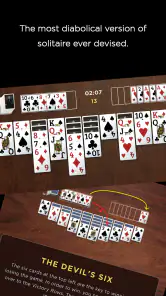
The central attraction is the Churchill variation itself. Instead of giving you the gentle rhythm associated with ordinary solitaire, the design pushes you to think about card order, future access, and the cost of using a move too early. I regularly found that an apparently useful play could create a problem several turns later. That tension is what gives the game its identity.
For me, the best comparison is not with a fast matching game but with traditional Klondike played by someone who has removed some of the safety rails. Standard solitaire often lets me settle into a predictable routine: expose hidden cards, build sequences, and gradually send cards to the foundations. Here, the same broad card-game vocabulary feels more severe. A move that would be harmless in a usual solitaire layout may leave the next decision awkward or force me to rethink the whole position.
That makes each deal feel less like busywork. I have to pause before moving a card simply because it is available. The useful question is not only “Can I make this play?” but also “What does this play prevent me from doing later?” Players who enjoy logic puzzles will probably appreciate that extra layer. Someone looking for a soothing game that can be played almost automatically may find it unnecessarily unforgiving.
Why the Churchill theme matters
The Winston Churchill framing gives the game a distinct personality without changing its basic role as a card game. It suggests determination and difficult decisions, which fits the experience better than a purely decorative historical label would. I would not choose it as a history app, though. Its value is in the mood and identity surrounding the solitaire format, not in teaching a detailed biography or recreating a historical event.
That distinction is useful when deciding whether it is right for you. If you want a recognizable theme wrapped around a serious solitaire challenge, the presentation has a clear reason to exist. If you prefer minimalist cards with no character attached, a conventional solitaire app may feel cleaner and more direct.
Short sessions work better than marathon play
I think the game fits naturally into small gaps in the day. A single attempt can give me something to focus on while waiting for an appointment, taking a break from work, or winding down before bed. The mental effort is enough to keep the session engaging, but the card format does not require the commitment of a story game or a long multiplayer match.
There is a trade-off, however. Because the difficulty can make a failed attempt feel personal, repeated losses may become tiring rather than relaxing. My practical advice is to treat each round as a compact puzzle, not as a test that must be conquered immediately. If I keep replaying while frustrated, I start making impulsive moves and enjoy the game less.
How I approach a difficult deal
My most useful habit is to delay the first attractive move until I have looked across the layout. In ordinary solitaire, I often react to the most obvious open space. In this version, I try to identify which cards are blocking access and which moves might preserve several options at once. That small pause makes the game feel more strategic and reduces the number of turns that are made purely out of habit.
I also try to distinguish between progress and activity. Exposing a card can look productive, but it is not always the best result if it closes another route. When two moves appear equally legal, I prefer the one that leaves more cards available for later decisions. This is not a guaranteed solution to every deal, but it gives the game a repeatable method instead of making every round feel like guesswork.
A second useful approach is to avoid treating the foundations as an automatic destination. Sending a card away can be satisfying, yet the timing may matter more than the immediate gain. I watch whether removing that card changes the sequence of moves I can make elsewhere. That habit is one of the clearest differences between playing Churchill Solitaire thoughtfully and simply tapping every available action.
What existing players may notice in the current release
The current version number, 2.3.09, shows that the game has continued beyond its original release. I see that as evidence of ongoing maintenance, but not as proof that the design has been radically rebuilt. The core appeal remains the demanding solitaire format, and returning players should expect continuity rather than a completely different game.
That is good news for people who already like the way it plays. A familiar layout and established identity mean there is less risk of returning to find the original challenge replaced by something unrelated. On the other hand, players hoping for a modern reinvention should keep expectations measured. The version history alone does not turn a classic card concept into a new genre.
For someone installing it now, the important point is that the title has had time to settle into its particular style. It is not trying to be every kind of card game at once. The focused design is a strength when the Churchill variation is exactly what you want, but it also makes the game less flexible than a broad solitaire collection containing many rulesets.
How it compares with ordinary solitaire apps
The most obvious alternative is a standard Klondike game. That is the better choice if you want a familiar ruleset, a gentle learning curve, or a session where the cards can almost fade into the background. Churchill Solitaire is more suitable when you want the layout itself to challenge your planning. I would choose the ordinary option for casual repetition and this one when I want to concentrate.
Another alternative is a large solitaire collection. Collections usually win on variety because they let players switch between Spider, FreeCell, Klondike, and other formats. This game wins on focus. Its identity is easier to understand: install it for the Churchill-style challenge, not for a menu of unrelated card modes. If you regularly lose interest after several rounds of one ruleset, a collection may offer better long-term value.
Fast card games are different again. They reward quick recognition, rapid taps, or competition against another player. This title is slower and more reflective. I would not recommend it to someone who wants constant action or a social match. Its strongest use case is a solitary player who enjoys thinking through consequences without time pressure from an opponent.
Where the game still has friction
The difficulty is both the reason to install it and the main reason to leave it alone. A player who is new to challenging solitaire may not immediately understand why a legal move creates a worse position. Without patience, the experience can feel less like a fair puzzle and more like a sequence of traps. I would give it several attempts before deciding, but I would not insist that every solitaire fan will enjoy its approach.
The free entry point is helpful, yet in-app purchases range from $0.99 to $29.99 per item. That matters because the initial download does not tell the whole cost story. I would start with the free experience and decide whether the game earns a purchase through regular use, rather than paying simply because I like the theme. Players who want a completely unrestricted, no-cost card game should examine the purchase prompts carefully before committing.
The rating sits at an average of 3.5 from around 2.1 thousand ratings, with roughly 731 written reviews. I read that as a mixed signal rather than a verdict. It suggests the game has found an audience but does not satisfy everyone, which matches my experience: the focused, difficult design can be compelling for the right player and frustrating for the wrong one. Its audience is narrower than the broad label “solitaire” might imply.
Who should install it, and who should skip it
I would recommend it to experienced solitaire players who want a more demanding variation, puzzle fans who like making reversible-looking decisions with lasting consequences, and anyone who enjoys quiet games with a strong theme. It also works well for people who prefer playing alone and want a compact mental challenge rather than a long narrative.
I would skip it if your ideal card game is almost meditative, if you dislike replaying difficult layouts, or if you expect several different solitaire modes in one download. I would also look elsewhere if you want multiplayer competition, because the appeal here is the private contest between your planning and the layout.
The Everyone 10+ label makes it accessible to a wide audience, but younger or inexperienced players may still need time to understand the strategy. The age rating should not be confused with a beginner rating. The cards are approachable; the decisions are where the challenge lives.
What to watch before making it a regular game
If you are considering a long-term installation, I would watch three things in your own use. First, notice whether the difficulty motivates you to improve or merely makes you restart. Second, see whether the free version gives you enough enjoyment before any purchase becomes tempting. Third, pay attention to whether you want one carefully defined solitaire style or a broader collection after the novelty wears off.
The install count is over 10 thousand, which places it in the company of a smaller, more specialized mobile audience rather than the biggest mainstream card apps. That is not automatically a weakness. In this case, the narrower reach fits the focused concept, but it does mean I would choose it for the rules and mood, not because it feels like the default solitaire everyone is playing.
Device compatibility is also straightforward for many Android users: the game requires Android 6.0 or later. That makes it usable on a wide range of devices, although the experience will still depend on how comfortable you find the card layout and controls on your particular screen. I would test the basic play before considering any optional spending.
My recommendation after playing
Churchill Solitaire is a specialized card game with a clear personality and a sharper edge than everyday solitaire. I like that it asks me to plan instead of tapping through an established routine, and I appreciate how well it fits short, focused breaks. The same qualities can make it frustrating, especially when I want relaxation rather than resistance.
My recommendation is simple: try it if you want a difficult solitaire variation and are willing to learn through failed attempts. Start slowly, preserve options, and judge the game by whether its challenge feels satisfying after several rounds. If you want variety, instant accessibility, or a softer pace, a standard solitaire app will probably serve you better. For the right player, though, this free card game offers a distinctive reason to return: every layout asks not just what can be played now, but what kind of position you are creating for the next decision.
Pros
- Easy to learn
- with clear rules and helpful in-game guidance.
- Short rounds make it convenient for quick breaks or casual play.
- Challenging AI provides a satisfying test for experienced solitaire fans.
- Smooth card controls make dragging and placing cards feel intuitive.
- Progress tracking encourages players to improve their strategy over time.
Cons
- Higher difficulty levels can feel frustrating for new players.
- Some features may require in-app purchases or premium access.
- Ads can interrupt the experience
- especially between matches.
- The card layout may feel crowded on smaller phone screens.
- Limited variety outside the core mode may reduce long-term appeal.
- Category
- Card
- Version
- 2.3.09