Bus Out
- 4.86K
- 4.7
- Installs
- 10.00M
- Price
- Free

Screenshots
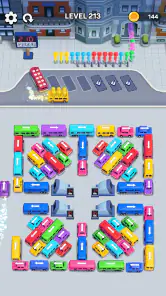







Analysis by Reviewed
When I want a quick puzzle that asks me to think a move ahead without demanding a long session, Bus Out is the kind of game I’m curious to pick up. It’s a free puzzle game from iKame Games - Zego Studio, built around sorting passengers onto buses. The idea is easy to understand, but the challenge comes from deciding which bus to fill and when: a move that looks convenient can leave the passengers who need another bus waiting in the wrong order. I find that simple setup appealing for short breaks, though it won’t suit everyone looking for a deeper strategy game.
Cost, value, and the sort of puzzle it offers
The game is free to download, and optional in-app purchases are available, with individual items ranging from $0.49 to $89.99. That distinction matters: I can start playing without paying, but I would not assume that every item is necessary or that a purchase automatically improves the experience. If you’re cautious about spending, treat the free access as the way to judge whether the puzzles hold your interest before considering any paid item. The game is rated for Everyone, and it has a 4.7 average from around 810,000 ratings, with over 10 million installs. Those figures suggest that its straightforward puzzle premise has reached a large audience, but they don’t tell me whether its particular style will click for you.
What makes the sorting puzzle satisfying
The pleasure here comes from turning a crowded-looking situation into a clear sequence of choices. Rather than relying on complicated rules, the game asks me to pay attention to the relationship between passengers and the bus that can take them. That creates a useful little tension: I want to make progress quickly, but a rushed choice may make the next move harder. I enjoy puzzles that let me understand the task at a glance and then make me pause over the best order, and this setup is aimed squarely at that kind of player.
A practical way to approach a tricky board is to scan the waiting passengers before committing to the first bus that seems available. I try to identify which group has the fewest obvious options, then avoid blocking that group with a decision that only helps someone else. This is not a guarantee of a solution, but it’s a better habit than tapping through on impulse. The small trade-off is that a puzzle based on orderly matching can feel repetitive if you want each level to introduce a substantially different kind of problem. Its appeal depends on enjoying variations on one central logic challenge rather than expecting a broad collection of puzzle modes.
How it fits into an ordinary day
I can imagine using it while waiting for an appointment, taking a quiet break, or filling a short stretch between errands. In those situations, the appeal is that the basic goal is immediately understandable: I don’t need to learn a long set of rules before deciding whether I want to play. A useful personal rule is to start a level only when I have enough attention to think through a few moves, rather than treating every idle second as a reason to tap quickly. The puzzle is most enjoyable when I give it a moment of focus; if I’m distracted, I’m more likely to make a careless choice and blame the game for a mistake I made myself.
That also helps answer whether it works for a younger player or a family setting. Its Everyone age rating makes it broadly suitable from a content-rating perspective, and the matching idea is easy to explain. I would still set expectations around optional purchases, especially if a child can access them, because free entry and paid items are both part of the package. For adults, it can be a low-commitment way to exercise planning; for someone who wants a story, character development, or a long-term campaign, the core sorting task may not provide enough variety by itself.
Where it sits beside other puzzle games
Compared with word puzzles, Bus Out places less emphasis on vocabulary and more on visual organization and move order. Compared with match-three games, the appeal is less about spotting a cluster of identical pieces and more about working out which bus should be filled first. That makes it a reasonable alternative if you want a puzzle that feels like arranging a queue rather than chasing a score through repeated tile matches. On the other hand, players who prefer open-ended logic problems, number puzzles, or levels with very different rules may find those alternatives more rewarding over time.
There is a useful trade-off in that focused design. A single central mechanic is easier to pick up during a short break, but it can also make a long session feel samey. I would use the game as a small puzzle snack rather than expect it to replace a varied puzzle collection. If I were deciding between this and a more involved strategy game, I’d choose based on how much mental commitment I wanted: this is better for a quick sorting challenge, while a deeper game is a better fit when I want systems to master across a longer session.
Small habits that make a difference
My first tip is to resist filling a bus just because it is ready to go. Before making that move, I look at the passengers still waiting and ask whether clearing this group will open space or make the remaining order more awkward. The point is not to calculate every possible outcome, which would make a casual puzzle feel like homework, but to notice when one choice could close off a useful option. That brief pause is often the difference between a satisfying plan and a string of reactive taps.
My second tip is to treat a failed attempt as information. If a decision leaves passengers stuck, I try to remember which choice created the bottleneck instead of restarting and repeating the same sequence. This makes the game feel more like a small logic exercise and less like trial and error. It also gives me a sensible stopping point: if I’m no longer interested in reconsidering the order, I’d rather take a break than keep tapping out of frustration.
A third consideration is attention. The premise looks simple enough to play while doing something else, but planning passenger groups and bus order rewards at least a little focus. I wouldn’t choose it when I need to monitor a conversation or handle another task at the same time. For someone who enjoys focused, compact puzzles, that demand is part of the fun; for a player seeking something almost automatic, a casual idle game may be a better match.
What to know before spending or settling in
The key cost question is whether the free version already gives you the kind of puzzle experience you want. Since the game can be downloaded for free and offers in-app purchases, I’d play first and decide later whether any paid item is worth it to me. Prices vary substantially, so I would check the particular item and its cost carefully rather than assume there is one standard purchase. I also wouldn’t spend just because I had become impatient with a difficult puzzle: if the appeal is the satisfaction of finding the right order, taking a pause and trying a different approach is part of the value.
The game’s current version is 1.167, and it requires Android 7.0 or later. Those details can help an Android user check basic compatibility before installing. The game is also available as a puzzle title for people who simply want a clear premise and a short mental challenge, rather than a transit utility or a tool for planning real journeys. Despite the name, I would approach it as a passenger-sorting game, not as an app for checking actual bus routes.
One question I’d ask before choosing any puzzle game is whether I can enjoy its central mechanic after the initial novelty wears off. Here, the answer depends on how much I like sequencing and clearing groups. If I enjoy spotting the order that keeps a board manageable, the repeated focus can be relaxing. If I need each stage to introduce a new system or a substantial change in format, the same focus may become a limitation. That is a more useful way to judge its staying power than expecting every casual puzzle to offer the breadth of a full strategy game.
Who is likely to get the most from it
I’d recommend giving it a try if you like compact visual puzzles, enjoy planning one or two steps ahead, and want something approachable without a lengthy tutorial. It also makes sense for people who prefer a clear task over a story-heavy game, or who want to spend a short break making decisions rather than passively watching a screen. With a 4.7 average and a large audience, it has clear appeal, but I would use those numbers as a sign of popularity rather than a promise that every player will enjoy its pacing.
I’d skip it if your main reason for downloading is to plan public transportation, since this is a puzzle game, not a route planner. I’d also look elsewhere if you dislike sorting mechanics, find repeated rule sets dull, or want a game whose main draw is narrative or competitive play. A more varied puzzle collection would be a safer choice if you want different types of challenges in one place. And if purchases are a concern, the free download is a sensible low-risk way to see whether the core activity works for you, provided you keep the optional spending in mind.
A balanced verdict
What I like most is the clarity of the central idea: match the right passengers to the right bus, but think about the order before acting. That gives the game an easy entry point and a reason to pause and plan. Its most meaningful limitation is also that focus: if this particular sorting challenge doesn’t hold your interest, the simple premise may not provide enough variety to change your mind. I’d choose it for a short, deliberate puzzle session, not as a substitute for a deep strategy game or a broad library of different puzzle types.
Overall, I think Bus Out is worth trying if you want a free-to-start puzzle and like the satisfaction of organizing a crowded situation one decision at a time. I’d keep purchases optional in my own mind, try the basic experience first, and pay attention to whether I still enjoy thinking through the bus order after several sessions. If that small planning loop feels rewarding, it can be a pleasant way to use a spare moment. If I find myself tapping without interest or wishing for entirely different mechanics, I’d move on without spending.
First Impressions
Upon downloading and opening the app, I was greeted with a sleek and user-friendly interface. It didn’t take long to realize that this app was designed with the user in mind. Navigating through the features was a breeze, and I could easily find my way around. The first feature I tested was the route planner, which, to my delight, was both fast and accurate. I simply entered my starting point and destination, and Bus Out instantly provided me with multiple route options, complete with estimated travel times. It was like having a personal travel assistant right in my pocket!
Features That Stand Out
One of the standout features of Bus Out is its real-time tracking system. I can’t tell you how many times I’ve been left in the dark, wondering when my bus would arrive. With Bus Out, those days are over. The app provides live updates on bus locations and arrival times, so I’m always in the know. It’s such a relief to be able to plan my trips without the usual guesswork.
Another feature worth mentioning is the app’s offline functionality. For those moments when I’m in an area with spotty internet, Bus Out has got my back. I can download routes and access them offline, ensuring that I’m never left stranded. This is particularly useful for frequent travelers who might find themselves in unfamiliar territories.
The User Experience
Using Bus Out feels intuitive and seamless. The app’s design is clean, and the colors are easy on the eyes, which is important when you’re quickly trying to check schedules on the go. I appreciate the app’s attention to detail, such as the ability to save favorite routes and receive notifications for any service changes or delays. It’s these little touches that make a big difference in the overall user experience.
Final Thoughts
In conclusion, Bus Out has proven to be an indispensable tool for navigating public transportation. Its combination of real-time tracking, offline access, and user-friendly design make it a standout choice among transit apps. Whether you’re a daily commuter or an occasional traveler, having Bus Out in your arsenal will undoubtedly enhance your travel experience. I wholeheartedly recommend giving this app a try; it just might become your new favorite travel companion.
Bus Out Frequently Asked Questions
What is the current version of Bus Out, and when was it released?
Bus Out was released on September 27, 2024, and its current version is 1.167. These details can help you identify the game when comparing it with other apps or checking whether an installed copy is up to date. It is a puzzle game from iKame Games - Zego Studio, centered on matching buses with passengers and filling the buses.
Who is Bus Out designed for, and what is its age rating?
Bus Out is rated Everyone, making it suitable for a broad audience interested in puzzle games. Its central task is matching buses to passengers and filling each bus, so the appeal comes from working through colorful challenges rather than using public-transport services. Parents can also keep in mind that the game includes optional in-app purchases when deciding whether it is appropriate for a child.
Is Bus Out suitable for quick play sessions, and what kind of game is it?
Bus Out is a puzzle game built around matching buses to passengers and filling each bus. Its colorful, challenging format makes it a fit for players looking for a straightforward game to pick up and play. The game is free to download and is rated for Everyone, so it is presented as a puzzle option for a broad audience.
What devices and software does Bus Out support?
Bus Out is available for Android devices running version 7.0 or later. Before downloading, check that your device meets this minimum requirement so the game can be installed. The game is listed as Bus Out, and its developer is iKame Games - Zego Studio. It is categorized as a puzzle game, rather than a public-transport information service.
What is Bus Out and what does it offer to users?
Bus Out is a comprehensive mobile application designed to simplify public transportation for users. It provides real-time updates on bus schedules, routes, and availability, ensuring that users can plan their journeys more efficiently. The app offers features such as route optimization, live tracking of buses, and notifications for delays or changes in routes, making it a reliable tool for daily commuters.
Pros
- User-friendly interface for easy navigation.
- Real-time tracking of bus locations.
- Multiple payment options available.
- Supports offline usage for planned routes.
- Frequent updates with new features.
Cons
- Occasional bugs causing app crashes.
- Limited coverage in rural areas.
- Sometimes inaccurate arrival times.
- High battery consumption when in use.
- Ads can be intrusive at times.

- Category
- Puzzle
- Version
- 1.167