Bricks breaker ace
- 91.00
- 4.1
- Installs
- 500.00K
- Price
- Free

Screenshots
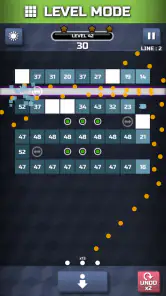
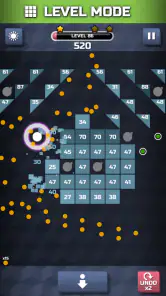
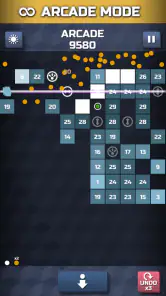
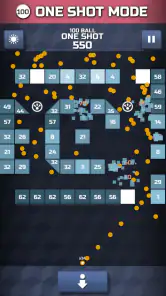
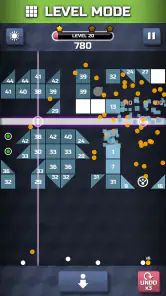
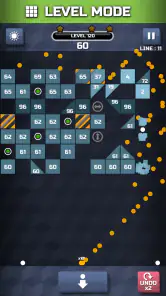
Analysis by Reviewed
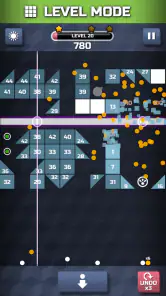
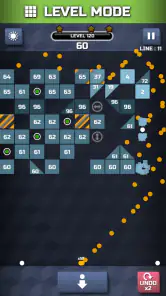
Bricks breaker ace is a free arcade game from PalebluedotStudio built around a familiar but satisfying idea: launch a ball, hit blocks, and clear the screen. I found it easiest to understand within seconds, yet it still rewards better aiming and thoughtful shot selection once the opening novelty wears off. That combination makes it a natural choice for short breaks rather than a game I would reserve for long, story-driven sessions.
The basic appeal is immediate. You do not need to learn a complicated control system, study a backstory, or prepare a team before playing. The focus stays on the next shot and the way the ball will travel through the remaining blocks. For anyone who enjoys classic brick-breaking games but wants something quick to pick up, this is a straightforward option with a low barrier to entry.
How the game feels in everyday play
A simple loop that works best in short sessions
My first impression was that the game understands the strength of arcade design: the action begins quickly, and the objective remains clear. I can open it when I have a few spare minutes, make progress through a handful of attempts, and close it without feeling that I have abandoned a complicated task. That makes it suitable for a commute, a waiting room, or a short pause between chores.
The central challenge is not merely firing the ball at the nearest block. The useful question is where the ball should go after the first impact. A shot that reaches several blocks can be more valuable than one that removes a single easy target. I found myself looking for angles that kept the ball active and created more opportunities on its return. This gives the simple premise a small layer of planning without turning it into a strategy game.
That balance is important. Players who want a relaxed arcade diversion can play by instinct, while players who enjoy improving their decisions can pay attention to rebounds and the order in which blocks disappear. The game does not need a long tutorial to communicate this. The physics and visible layout do most of the teaching.
Why aiming matters more than speed
One practical lesson is to avoid rushing the launch. In a brick breaker, the first contact often determines the rest of the attempt, and a poor angle can leave the ball doing very little before returning. I got better results by pausing briefly, identifying a narrow opening, and choosing a line that could create several contacts rather than simply targeting the closest block.
This is also where the game separates casual familiarity from useful skill. Someone can understand the controls immediately and still improve through repeated play. I recommend treating each shot as a small puzzle: look at the gaps, consider the likely rebound, and choose the route that gives the ball the most productive movement. That habit adds depth without requiring complicated instructions.
A second useful approach is to think about cleanup rather than only immediate destruction. Leaving isolated blocks in awkward positions can make later shots less efficient. When I had a choice between a dramatic-looking angle and a safer route through a dense area, the safer route often produced more consistent progress. It is a modest insight, but it makes the difference between random tapping and deliberate arcade play.
What the presentation communicates
The store summary describes the experience in very direct terms, and that simplicity matches the way I played it. This is an arcade title first, not a narrative adventure or a social platform. The game’s identity comes from its compact action loop, so people should approach it expecting repeated attempts and gradual improvement rather than a large collection of unrelated activities.
Its age classification is Everyone, which fits the accessible premise. I would still separate age suitability from personal preference: a game can be appropriate for a broad audience and still feel too repetitive for someone who needs constant novelty. Younger players may appreciate the easy-to-understand objective, while adults looking for a quick distraction may value the fact that the rules are not demanding.
Cost and what “free” means here
The game is free to download and play, so there is no purchase required before trying the core experience. That is the most important value point for a cautious player: you can decide whether the brick-breaking loop suits you without committing money at the start.
There are in-app purchases ranging from $0.99 to $99.99 per item. Because the available purchase options can affect how a person evaluates a free game, I would approach them carefully rather than assuming every optional item improves the basic experience. The sensible workflow is to play first, decide whether you genuinely enjoy the game, and only then consider spending. Free access makes experimentation easy; it does not automatically make every purchase good value.
For families, the purchase range is also worth remembering. If the game is used on a shared device, checking the device’s purchase controls is a practical precaution. The age rating may make the subject matter comfortable for a broad audience, but spending settings are a separate issue from content suitability.
What you receive for the price
The value comes from accessibility and replayability, not from a large premium package. I can return to the game repeatedly because the challenge is based on making better shots, not on completing a lengthy one-time story. That is a good fit for players who enjoy refining a familiar skill and a weaker fit for anyone expecting a substantial campaign or a wide range of game modes.
Compared with a paid arcade title, the free entry point lowers the risk of disappointment. Compared with a typical ad-supported or purchase-supported mobile game, the important question is whether the fundamental play remains enjoyable without spending. My recommendation is to judge that directly during a few normal sessions. If the ball-and-block loop already feels rewarding, the free version has a clear purpose. If it feels repetitive immediately, optional purchases are unlikely to solve the underlying mismatch.
Trade-offs that become clearer over time
The same simplicity that makes the game approachable can also become its main limitation. There is a narrow focus here: launch, rebound, break, and repeat. I liked that the game does not bury the central action under unnecessary complexity, but players who need character development, exploration, or changing genres may run out of reasons to continue.
Another trade-off is the difference between a good short-session game and a good all-evening game. I think Bricks breaker ace works better in the first role. After several attempts, I wanted a break because the basic interaction remained familiar. That is not a flaw for a pick-up-and-play arcade title, but it matters when choosing what to install. If you want a game that can occupy a long uninterrupted session, a more varied arcade collection may be a better choice.
The purchase range creates another point of judgment. Free access is attractive, yet a very broad optional spending range means users should not confuse availability with necessity. I would not recommend buying anything simply to make the game feel more worthwhile. The game should already be enjoyable on its own terms before money enters the decision.
Small habits that improve the experience
The first habit I recommend is taking a moment before every launch, especially when the layout offers a narrow passage. Quick reactions are less useful than a considered angle. The second is to watch where the ball returns, not just where it first lands. That return path often reveals whether the chosen shot created a useful chain of contacts or merely produced a visually satisfying collision.
A third habit is to use short sessions intentionally. Playing for a few minutes, stopping, and returning later can keep the game from feeling like a repetitive obligation. It also makes the title a better companion for everyday gaps in the schedule. I found that I paid more attention to shot quality when I was not trying to force a long session.
Finally, I suggest separating progress from spending. Try to improve your aim first. If the game remains enjoyable while you are learning its angles, it is delivering value as a free arcade experience. If the fun depends on purchasing something, that is a sign to reconsider whether this is the right game for you.
Who is likely to get the most value
This game is a strong match for fans of classic brick breakers, casual players who prefer immediate controls, and anyone who wants a lightweight arcade distraction. It is also suitable for people who enjoy small improvements: finding a better angle, clearing a difficult arrangement, or making a shot last longer than expected. The broad Everyone rating supports its accessible presentation, while the simple rules make it easy to hand to someone who has not played it before.
It may also work well for a player who dislikes large downloads or complicated onboarding, although the most important benefit is the focused design rather than the device footprint. I would recommend it to a friend who says, “I want something I can understand instantly but still play better with practice.” That description captures its strongest use case.
Who should skip it
I would point story-focused players elsewhere. There is no reason to choose this as a substitute for a role-playing game, a puzzle adventure, or a competitive title with deep progression. Someone who needs frequent changes in objectives may also find the repeated brick-breaking loop too limited.
I would be cautious about recommending it to players who dislike physics-based uncertainty. Even with careful aiming, rebounds can make a shot unfold differently from what you expected. That unpredictability is part of the appeal for arcade fans, but it can feel frustrating if you prefer precise, fully controlled outcomes.
It is also not the best choice for someone who wants to spend money once and receive a clearly defined premium package. The game is free, and optional purchases sit within a wide range, so the value decision is different from buying a conventional paid game. I would rather install it at no cost, test the core loop, and keep spending optional.
How it compares with familiar alternatives
Against traditional brick-breaker games, this feels like a more convenient mobile diversion: the objective is immediately recognizable, and the session structure suits quick play. The trade-off is that a more feature-rich alternative may offer greater variety, stronger progression, or more elaborate presentation. Whether that matters depends on what you want from the genre.
Compared with endless arcade games that rely mainly on reflexes, this title gives aiming and rebound planning more importance. You are not simply reacting to a constantly changing stream; you are choosing a launch that can shape the next sequence. On the other hand, players who prefer rapid movement and constant visual change may find a brick-breaking format calmer than they want.
Compared with premium puzzle games, the free entry point is its clearest advantage. A paid alternative may feel more polished or more complete, but it asks for a commitment before you know whether its style suits you. Here, I can test the fundamental mechanic first. That makes the game easier to recommend as an experiment, even if I would not call it a universal replacement for more ambitious arcade releases.
Device details and long-term expectations
PalebluedotStudio released the game on February 12, 2018, and the current version is 1.7.1. It requires Android 8.0 or later, so compatibility should be checked before installation if you are using an older device. These details matter less to the gameplay decision than the control style, but they help set realistic expectations: this is an established arcade game rather than a newly launched experiment.
The game has passed 500K installs and holds a 4.1 average from around 2.1K ratings, with 91 written reviews. Those figures suggest that it has attracted a meaningful audience, but I would still treat them as context rather than a guarantee. A rating cannot tell me whether the game matches my preferred session length, tolerance for repetition, or attitude toward optional purchases. My own recommendation remains based on the focused loop and the free opportunity to try it.
My final recommendation
I recommend Bricks breaker ace to anyone who wants a free, uncomplicated arcade game with a little more thought than simply tapping at targets. Its best quality is the way a very small rule set can encourage better decisions: aim through useful gaps, anticipate rebounds, and choose consistency over flashy but wasteful shots.
I would install it for short breaks, casual practice, or a quick change of pace. I would not choose it as my main game if I wanted a story, extensive variety, or a premium experience with a single clear purchase. The optional spending range also means I would keep the free version as the benchmark and avoid paying until the core gameplay has already proved its value.
My verdict is simple: try it for free if focused brick-breaking sounds appealing, but skip it if repetition or optional purchases are likely to bother you. For the right player, the game delivers a clean arcade distraction and enough aiming strategy to make repeated attempts feel purposeful. For everyone else, its narrow design is likely to become apparent quickly, which is precisely why the no-cost starting point is such an important part of its appeal.
Pros
- Simple controls make it easy to start playing immediately.
- Short levels are well suited to quick gaming sessions.
- Brick-breaking gameplay offers a relaxing
- low-pressure experience.
- Progression provides a clear reason to keep completing levels.
- Runs smoothly on most modern Android and iOS devices.
Cons
- Later stages can feel repetitive without much gameplay variety.
- Some levels may depend heavily on favorable ball bounces.
- Ads can interrupt the experience
- especially between stages.
- Limited strategic depth may not satisfy experienced arcade players.
- Progress can feel slow if upgrades or bonuses require repeated play.

- Category
- Arcade
- Version
- 1.7.1