Baseball Super League: 3D Game
- 12.00
- 4.5
- Installs
- 50.00K
- Price
- Free

Screenshots

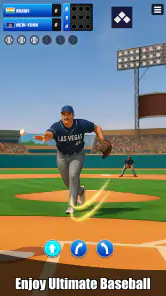
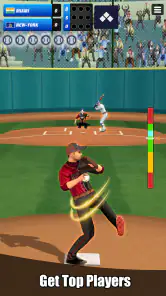
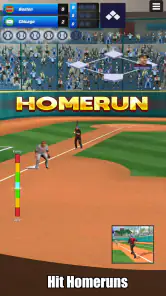
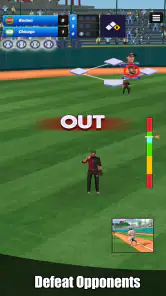
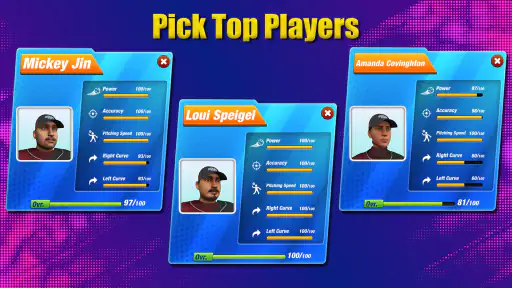

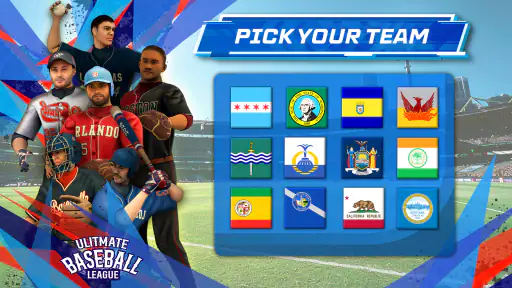
Analysis by Reviewed
Baseball Super League: 3D Game is the kind of sports title I can open for a quick break without needing to learn a complicated control system first. It puts the focus on baseball action in a three-dimensional setting, with the basic appeal of timing your hits, building momentum, and chasing a championship. After spending time with it, I see it as a compact choice for players who want accessible baseball rather than a detailed management simulator.
Gamebee Studio presents it as a free game in the sports category, and its audience is broad enough for an Everyone content rating. The game has reached over fifty thousand installs and holds a 4.5 average from around one hundred sixty ratings, which suggests that its straightforward approach has found an audience. I would still treat those figures as a useful signal rather than a guarantee: baseball games can feel very different depending on whether you prefer quick arcade play or a more authentic recreation of the sport.
How Baseball Super League feels during ordinary play
Quick sessions work better than long commitments
My first impression is that the game is built around immediate participation. The attraction is not spending a long time arranging a club before seeing the field; it is getting into the rhythm of a baseball moment and trying to make the right decision when the ball arrives. That makes it suitable for a short commute, a waiting room, or a few minutes after work when I want something more active than scrolling.
The most important skill is patience. A rushed swing can turn an apparently good delivery into a weak result, while waiting for the right moment gives the game a more satisfying sense of control. I found that the difference between simply tapping and actually watching the pitch is noticeable. Players who treat every delivery as an invitation to react immediately may become frustrated, but those who slow down and read the timing have more room to improve.
The real strength is its low entry barrier, not an overwhelming amount of baseball simulation. That distinction matters. Someone looking for a deep recreation of pitching strategy, defensive positioning, player development, and season administration may find the experience too focused. Someone who wants a recognizable baseball loop with a three-dimensional presentation can get to the enjoyable part much faster.
Perceived speed and the value of rhythm
The game feels most responsive when I keep my attention on the next play instead of trying to force a result. Baseball naturally creates pauses between important actions, and that gives the experience a different rhythm from a constant-motion sports game. The pauses are useful because they let me reset after a missed opportunity, but they can also make a session feel less energetic for anyone expecting nonstop arcade action.
For a better session, I recommend treating a short run as a focused exercise in timing. I do not try to play while switching repeatedly between other apps, because the value of the game is concentrated in those brief moments when a decision matters. A stable connection and a device with enough free working space are sensible precautions for any three-dimensional game, although I would not assume that every phone will behave identically.
One practical trade-off is that accessible controls can make early progress feel comfortable, while later improvement depends more on consistency than on discovering a large collection of complicated commands. That is good for casual players, but it may leave experienced sports-game fans wanting more ways to influence a match. The game rewards attention, yet it does not necessarily offer the same strategic range as a full console-style baseball experience.
What happens during heavy-use moments
The most demanding moments are likely to be extended play sessions, repeated three-dimensional action, and any point where the phone is already busy with other tasks. I noticed that the experience is best approached with unnecessary background activity closed, especially on an older device. This is not a claim about a specific benchmark; it is simply a sensible way to give a mobile sports game the clearest opportunity to run smoothly.
If a session begins to feel less comfortable, I would first lower the workload around the game rather than immediately blaming the title. Closing video apps, avoiding a nearly full storage drive, and allowing the phone to cool down can help any game maintain a steadier feel. A long baseball session can also be harder on a battery than a simple puzzle game because the presentation is built around three-dimensional action, so short bursts are a more practical habit for modest hardware.
There is another kind of heavy use that is easy to overlook: repeated attempts after a disappointing inning. I have found that frustration encourages premature swings, which makes the game feel faster and less controllable than it really is. Taking a brief pause between attempts is not just good advice for concentration; it also keeps the experience from turning into a cycle of rushed decisions and unnecessary retries.
Reliability in a normal mobile routine
Baseball Super League is currently listed as version 2.6, and it was released on January 30, 2025. Those details place it in a relatively recent part of its life, so I would keep the installed version current when updates are available. Staying updated is especially sensible for a game that may be played in short, repeated sessions, because small interruptions become more noticeable when I only have a few minutes to play.
I would describe its reliability in practical rather than absolute terms. A game can feel dependable when it starts promptly, accepts input consistently, and lets me return to play without unnecessary friction. It can also feel unreliable if the phone is under pressure, the battery is low, or the player moves rapidly between apps. Since those conditions vary from one device to another, I prefer to judge the experience after trying it in the same circumstances in which I normally play.
Recovery is an important part of that judgment. If I leave a session and return later, I want the game to be easy to pick up again rather than demanding a long preparation routine. Baseball Super League suits that expectation because its central appeal is a direct sports session, not a lengthy setup process. Still, I would avoid force-closing it in the middle of an important moment and would give the game time to finish any transition before switching away.
For players who care about dependable everyday use, the best test is simple: install it on the phone you actually intend to use, play a short session while the device is cool, then try another session after ordinary daily use. That will tell you more about comfort and stability than assuming that the same experience will appear on every Android phone.
Device constraints and installation choices
The game supports Android 7.0 and later, which covers a wide range of devices. That broad operating-system reach is helpful if you are using an older phone, but it should not be confused with a promise that every compatible device will deliver the same visual smoothness. Operating-system compatibility is only one part of performance; processor age, available memory, heat, and battery condition can all influence how pleasant a three-dimensional sports game feels.
I would choose a newer or better-maintained phone for longer sessions, particularly if I care about steady input during batting. On a modest device, I would keep expectations realistic and use the game in shorter bursts. The title is more appealing when the controls feel predictable, so any device that becomes hot quickly or struggles with other modern games may not be the best home for it.
Storage habits also matter. I prefer leaving comfortable free space before installing a game, then restarting the phone if the system has been running for several days without a break. These are not special requirements unique to this title, but they are useful steps when judging whether a performance issue comes from the game or from a crowded, heavily loaded device.
The free download makes trying it low risk, while optional in-app purchases range from nineteen cents to nine dollars and ninety-nine cents per item. I would approach those purchases as optional spending rather than part of the basic reason to install the game. Anyone sharing a phone with children should review purchase controls beforehand, even though the age rating is Everyone. That small preparation avoids turning a casual baseball session into an unexpected account problem.
Where it fits among baseball alternatives
Compared with a deep baseball management game, this title is easier to approach because it emphasizes playing rather than administering every part of a club. I would choose it when I want direct interaction and a quick route to the field. A management-focused alternative is better if my favorite part of baseball is drafting, building a roster, analyzing statistics, or planning a season away from the action.
Compared with a more demanding simulation, Baseball Super League is also likely to appeal to people who do not want a long tutorial or a large set of controls. The compromise is depth. Players who want every pitch type, defensive adjustment, and tactical choice represented in detail should look elsewhere. The game’s identity is clearer when I judge it as an accessible mobile sports experience rather than as a complete substitute for a major console baseball simulation.
It also has a different purpose from a purely casual tapping game. The three-dimensional presentation and baseball timing give me more to concentrate on than a simple score-chasing toy, but the focused design may not satisfy someone who wants a broad collection of modes. In other words, its middle ground is useful: more involved than a disposable tap game, less demanding than a full sports simulation.
Who will enjoy it, and who should skip it
I would recommend it to a player who likes baseball but prefers short mobile sessions, wants a free starting point, and enjoys improving through timing. It is a reasonable choice for someone introducing a younger player to a sports game, provided that purchase settings are handled first. It also suits a fan who wants a simple way to return to baseball without committing to a large roster-building system.
I would skip it if my priority were detailed tactical control, realistic long-term administration, or a highly competitive online-style environment. I would also be cautious if my phone already struggles with three-dimensional games or becomes uncomfortable during extended play. The title can be accessible without being universally ideal, and recognizing that distinction will prevent disappointment.
One useful everyday scenario is a short break between appointments. I can play a focused stretch, concentrate on making cleaner contact, and stop without feeling that I have abandoned a complicated management plan. Another is playing at home with sound lowered and attention divided; in that situation, the game becomes less attractive because successful timing benefits from watching the action rather than treating it as background entertainment.
My performance verdict after using it
My overall view is that Baseball Super League: 3D Game works best as a lightweight, approachable baseball option with a clear emphasis on immediate play. Its perceived speed depends heavily on concentration and device condition: when I give it a cool, reasonably free phone and a few uninterrupted minutes, the experience feels more controlled and enjoyable than when I multitask or play through frustration.
The current version, broad Android support, free entry point, and Everyone rating make it easy to try. The 4.5 average from around one hundred sixty ratings is encouraging, while the presence of optional purchases means I would still set sensible spending limits. Gamebee Studio has aimed at accessibility rather than maximum simulation depth, and that choice is both the game’s strongest advantage and its clearest limitation.
My recommendation is simple: install it if you want quick baseball timing on a compatible Android phone, but choose a deeper alternative if strategy and realism matter more than convenience. I would keep sessions focused, avoid judging performance while the device is overheated or overloaded, and treat improvement as a matter of patience rather than frantic tapping. For the right player, that makes the game an enjoyable short-form sports companion rather than a replacement for every other baseball experience.
Pros
- Quick matches are ideal for short gaming sessions.
- Simple controls make batting and pitching easy to learn.
- 3D stadiums give games a more immersive presentation.
- Multiple teams add variety and encourage replaying matches.
- Offline play is useful when you have no internet connection.
Cons
- Ads may interrupt gameplay or appear frequently between matches.
- Progression can feel repetitive after playing several games.
- Advanced strategies are limited compared with full baseball simulations.
- Some upgrades or content may require in-app purchases.
- Device performance may affect graphics and loading times.

- Category
- Sports
- Version
- 2.6