Angry Birds Transformers
- 115.15K
- 4.7
- Installs
- 50.00M
- Price
- Free

Screenshots
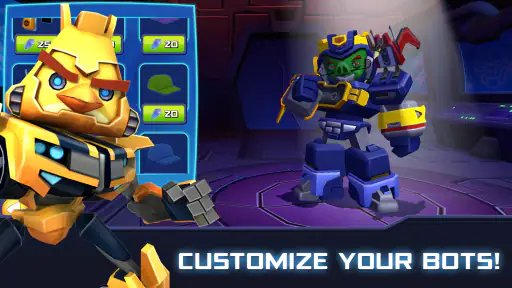
Analysis by Reviewed
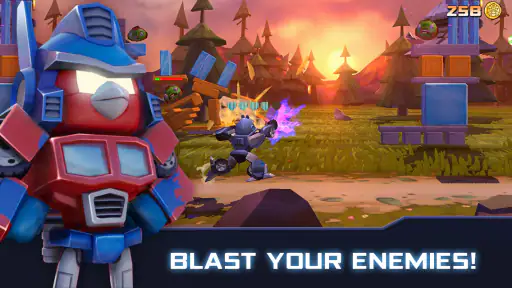
I picked up Angry Birds Transformers expecting a familiar Angry Birds spin, but it plays more like a fast, side-scrolling arcade shooter with a playful robot theme. The basic idea is easy to understand: aim, fire, move through a level, and deal with structures and enemies while switching between the recognizable bird and vehicle forms. What makes it interesting is the way the game turns the usual slingshot rhythm into something more active and continuous.
That difference matters in a household where several people use the same phone or tablet. One person can enjoy a short action session without needing to learn a complicated control scheme, while another can spend longer improving movement, timing, and upgrades. I found it especially suitable for casual play in short bursts, although it is not the best choice for someone looking for a calm puzzle game or a deep story-driven adventure.
How it feels in everyday shared-device use
In my experience, the game works well when a device is passed around during ordinary downtime. A child can play a few minutes while waiting, a parent can try a level later, and an older player can focus on getting through tricky sections more efficiently. The controls are built around direct action rather than long menus, so handing the device to someone else does not require a lengthy explanation.
A realistic example would be a family sharing one tablet after dinner. One player may prefer simply moving forward and firing at whatever appears, while another may pay closer attention to positioning and the timing of transformations. The game supports that informal handoff because the core loop is immediately visible on screen. You can usually tell what to do by watching the action, even if you have never played it before.
That convenience comes with a trade-off. Shared play is less comfortable when several people want to maintain separate progress, because a single device does not automatically make every player’s experience distinct. Before treating it as a household game, I would agree on who is using which save or progression path and avoid casually starting over. The game is easy to pass around, but the social arrangement around the device still needs a little care.
The arcade format also makes it a good fit for players who dislike committing to long sessions. I can start it with a simple goal in mind—clear a section, test a different character approach, or just play until I get interrupted. That flexibility is one of its strongest household qualities. It does not demand that everyone be available at the same time, and it does not turn a short break into a major time commitment.
What to settle before handing over the device
The first boundary I would establish is progression. If several people share one profile, everyone should understand that their actions may affect the next person’s experience. This is less about a complicated rule system and more about avoiding frustration: do not spend resources or change a preferred setup without asking the person who usually plays that run.
You May Like

Clash of Clans Is Won Between the Battles

Android Auto Makes the Case for Quieter Car Software

MobiOffice: Transforming Mobile Productivity with Seamless Integration

EA SPORTS FC™ Mobile Soccer: Redefining Mobile Sports Gaming

How Microsoft OneDrive Became a Mobile Productivity Giant

How Google Translate Breaks Language Barriers Effortlessly
The second boundary concerns purchases. The game is free to download and play, but it includes optional in-app purchases ranging from $0.99 to $99.99 per item. That is a wide enough range that adults should discuss purchasing expectations before a child uses the device. I would not rely on the colorful presentation to communicate financial consequences clearly; the person responsible for the device should handle the account and payment decisions.
Because the game is rated Everyone, it is approachable for a broad audience, but an age label does not replace supervision or conversation. Younger players may understand the shooting as cartoon action while still needing help with spending choices, screen-time limits, or shared progress. I see the rating as a useful starting point for suitability, not as a promise that every household will have the same experience.
A practical routine is to let one player finish a level before passing the device on, rather than swapping during an active sequence. That keeps the handoff fair and makes it easier to remember what changed. It also reduces the chance that someone accidentally uses a special ability, enters a menu, or spends a resource while trying to understand the controls.
Coordination between different kinds of players
The game has enough action to reward coordination, even when people are not playing together at the same moment. One player can explain which sections felt difficult, another can suggest slowing down and watching enemy patterns, and a third can simply enjoy the spectacle. I like this because it creates conversation without requiring everyone to have the same skill level.
For a shared device, I would encourage players to describe decisions rather than criticize results. Saying “try staying near the middle until the next opening” is more useful than saying someone played badly. The constant movement and shooting can become hectic, so clear advice helps younger or less experienced players learn without turning the session into a competition.
One less obvious strength is that spectators can understand the action quickly. The visual language is exaggerated, and the distinction between moving, firing, and transforming is easy to follow from the side. That makes it suitable for a parent or sibling who wants to help without taking over. Watching one attempt can often reveal more than reading instructions.
I also found that short demonstrations work better than long explanations. Show the basic movement, let the player try a safe section, and then discuss one improvement at a time. Giving too many instructions at once makes the screen feel busier than it already is. This is particularly important when the player is young or when the device is being passed around in a noisy room.
Players who want a shared challenge should agree on a simple goal, such as reaching a particular point or improving a previous attempt, rather than assuming the game provides a complete family competition structure. That approach keeps expectations realistic and still gives the household a reason to compare progress. It also avoids inventing a multiplayer experience that is not central to what this game offers.
Age, trust, and the role of the adult
The cartoon presentation makes the game approachable, and its Everyone rating reflects that broad accessibility. Still, the action is not completely passive. The player is repeatedly aiming, firing, reacting, and making quick choices. Some children will find that exciting, while others may become frustrated when the screen fills with movement and targets.
I would introduce it to a younger player by playing beside them at first. That gives the adult a chance to see whether the pace feels comfortable and whether the child understands what is happening. It also creates a natural moment to explain that optional purchases are separate from ordinary play. Trust works better here when the rule is stated plainly before the first session.
The same principle applies to older children and teenagers. They may not need help with the controls, but they can still benefit from clear expectations around spending and shared progress. A player who is trusted to use the device should also know which actions require permission. That is a household agreement, not a feature I would assume the game itself provides.
Another useful distinction is between access and ownership. If the device belongs to the household, one person should not treat all progress or purchases as entirely private without discussing it. Conversely, a child who has earned time to play should not have every attempt interrupted by someone else. A little coordination prevents the game from becoming the source of arguments.
From a trust perspective, I prefer the game as a supervised or openly discussed activity rather than something handed over with no context. The entertainment is straightforward, but free-to-play design can still make spending decisions relevant. Adults should know how the device’s account is used and should make sure the player understands when the game is offering an optional purchase rather than requiring it to begin.
Controls, pacing, and the arcade trade-off
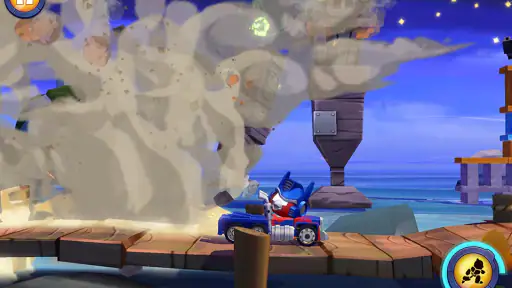
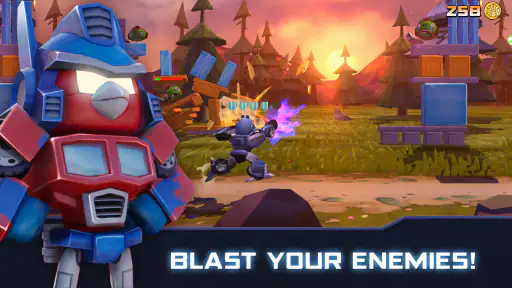
The biggest appeal is the conversion of the familiar Angry Birds identity into a more active 3D-styled shooting adventure. Instead of carefully setting one launch angle and watching a single projectile, I am responding continuously. That gives the game more momentum and makes each short session feel energetic.
The downside is that the pace can feel less thoughtful than the classic puzzle entries. If what you love most about Angry Birds is studying a structure, planning a precise shot, and enjoying a clean chain reaction, this may feel like a different genre wearing the same family name. I would choose the original puzzle style for quiet problem-solving and this game for immediate arcade action.
One useful habit is to resist firing constantly just because the game encourages movement. Taking a brief moment to read what is ahead can make a section feel more manageable. When I focus on positioning first and shooting second, I make fewer rushed mistakes. That is a small adjustment, but it helps distinguish deliberate play from simply holding the attack button whenever something appears.
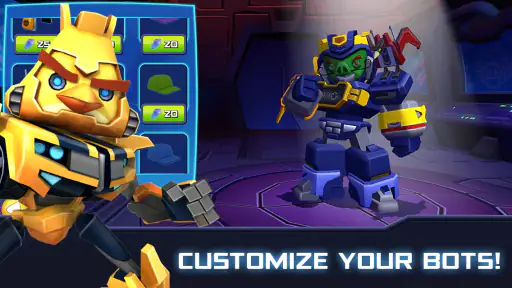
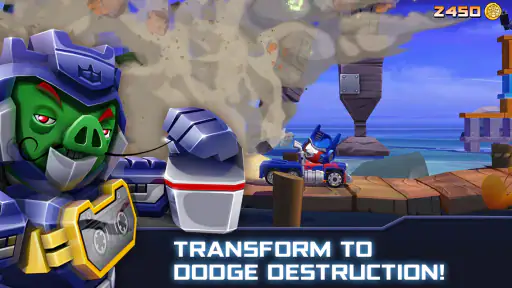
Transformation is another part of the appeal, and I found it more useful when treated as a response to the environment rather than a button to press automatically. Switching forms can change how a moment feels, so I pay attention to whether I need movement, access, or direct damage. The best results come from using the form that solves the immediate problem instead of changing just because the option is available.
The game is also more enjoyable when I accept that repetition is part of the arcade structure. A difficult section may require another attempt to understand its rhythm. That can be satisfying for players who like gradual improvement, but it may annoy anyone expecting a smooth, story-first ride. In a shared household, it helps to explain that failure is part of learning the route rather than evidence that the game is broken.
Progression, optional spending, and practical expectations
The free entry point is a genuine advantage for households that want to test the game without committing money immediately. You can see whether the action suits your family before deciding whether any optional purchase is worthwhile. I recommend treating purchases as convenience or customization decisions, not as part of the basic cost of trying the game.
The in-app purchase range deserves attention because the upper end is substantial compared with the casual nature of a quick arcade session. I would keep purchasing under adult control, especially on a shared device. If several people play, agreeing that no one spends without permission is more important than debating which item looks useful in the moment.
A second practical issue is progression ownership. If one person invests time in improving a run and another person uses the same device casually, the household should decide whether that is acceptable. Some families will enjoy the shared history; others will prefer one dedicated player. Neither approach is automatically better, but pretending there is no difference can create avoidable conflict.
The current version is 2.41.0, and the game requires at least Android 6.0. That makes checking the device’s operating system worthwhile before planning a shared installation, particularly if the tablet is older. On supported hardware, I would also leave enough free space and close unrelated apps if the action feels less responsive, although I would not treat that as a guaranteed fix for every device.
Rovio Entertainment Oy is the developer, which gives the game a clear connection to the larger Angry Birds identity. Even so, I would judge this particular release on its own terms. Familiar characters may attract someone to download it, but the real question is whether that person enjoys a continuous arcade shooter more than the series’ traditional physics puzzles.
Who will enjoy it, and who should choose something else
I think it is a strong match for players who want recognizable characters, quick controls, cartoon action, and sessions that can be stopped without much ceremony. It is also a good shared-device option when family members have different skill levels, because beginners can understand the basic loop while more experienced players can refine timing and movement.
It is less suitable for someone seeking a peaceful game to play slowly. The constant action can become tiring, and the shooting focus may not appeal to players who prefer construction, exploration, or narrative choices. I would also steer away from it for a household that wants a fully separate profile for every player unless the device and account arrangement already make that simple.
Compared with traditional Angry Birds puzzle games, this feels more immediate and less dependent on one perfect launch. Compared with endless runners, it offers more direct aiming and a stronger character-driven identity rather than simply dodging obstacles for distance. Compared with larger action games, it is easier to pick up but does not offer the same depth or scale. Those comparisons explain its best position: a compact arcade alternative, not a replacement for every type of mobile game.
One concrete use case I would recommend is a short after-school session with an adult nearby, where the player gets a fixed amount of time and then hands over the device. Another is a sibling challenge based on completing the same section with fewer mistakes, provided everyone agrees that the goal is improvement rather than ridicule. For a solo commuter or a person waiting for an appointment, the quick-action format is convenient, but headphones and a comfortable grip may make the experience easier to enjoy.
My household verdict
After spending time with it, I see this as a lively, accessible arcade game that works best when the household treats it as shared entertainment rather than an unattended account activity. Its familiar cast lowers the entry barrier, while the shooting and transforming keep it distinct from the usual slingshot puzzles. I like that a new player can understand the appeal quickly, yet a returning player still has reasons to improve.
The main cautions are practical: agree on progression, keep purchases under control, and remember that the Everyone rating does not remove the need for age-appropriate guidance. Those points are especially important on a family tablet or any phone used by several people. The game itself is easy to pass around; the responsibility for how it is shared belongs with the adults and players.
Its 4.7 average from around two million ratings and more than 50 million installs suggest that the format has reached a broad audience. I would read that popularity as reassurance that the concept is approachable, not as proof that every Angry Birds fan will prefer it. The game’s identity is firmly arcade-focused, and that is exactly why it works for some players and misses the mark for others.
For me, the final recommendation is simple: try it if you want a free, fast-moving action game that can fit into short household sessions. Skip it if your priority is precise physics puzzling, deep cooperative play, or a completely quiet experience. With sensible boundaries around shared progress and optional spending, it is an enjoyable choice for a family device and a colorful way to turn a few spare minutes into a playful challenge.
Angry Birds Transformers Frequently Asked Questions
Can I transfer my progress if I change phones?
If you are planning to move to a new phone, consider whether your game progress is connected to a supported account or cloud feature before switching devices. Angry Birds Transformers may use online or cloud-related functions, but progress transfer can depend on your device, platform, and how the game is set up. Keep the game updated and check its in-game account or settings options before uninstalling it from your old device.
How much storage space should I have available?
It is sensible to leave free space on your device before installing Angry Birds Transformers, since a game may need room for its initial files and later updates. The amount required can vary with the version and device, so check the download page on your platform for the current installation size. Keeping additional space available can also help avoid interruptions while the game downloads or updates.
Can I play Angry Birds Transformers with friends?
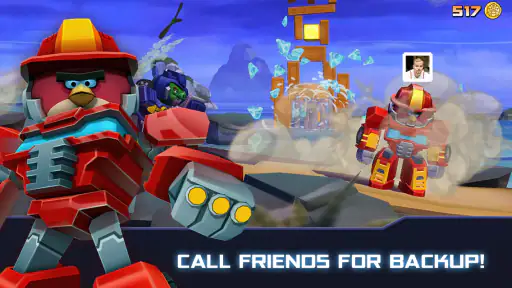
Angry Birds Transformers is primarily an arcade action game built around controlling characters through shooting stages, transforming, and collecting resources. Online or promotional features may be available, but the main experience is not described as a traditional multiplayer game. If playing with friends is important to you, review the current in-game options after installing and look for any social or online activities that suit your preferred way to play.
Is Angry Birds Transformers easy to control?
The game is designed around fast arcade action, with side-scrolling movement, shooting, and character transformations rather than the aiming-and-release controls of classic Angry Birds puzzles. Its colorful presentation and straightforward premise make it approachable, though reacting to enemies and choosing when to transform can take practice. Players who enjoy short action stages may find the controls easy to pick up, while younger players may benefit from parental guidance at first.
Does the game contain advertisements?
Advertisements may appear during play, and online features can affect when or how they are shown. This is worth considering if you prefer an uninterrupted experience or are setting up the game for a child. You can review the available settings on your device and in the game, and use appropriate parental controls where needed. Optional in-app purchases are separate from advertisements, so check both before handing over the device.
Pros
- Fun mix of Angry Birds characters and Transformers action
- Easy-to-learn controls suitable for quick gaming sessions
- Many characters to unlock
- each with different abilities
- Bright graphics and lively animations make levels enjoyable
- Offline play is available for gaming without an internet connection
Cons
- Frequent upgrades can make progress feel slow without spending money
- Some missions become repetitive after extended play
- Device storage use may grow with updates and downloaded content
- Energy or waiting systems can interrupt longer gaming sessions
- Older devices may experience lag or reduced visual performance

- Category
- Arcade
- Version
- 2.41.0