Words of the World
- 314.00
- 4.6
- Installs
- 100.00K
- Price
- Free
Screenshots
Analysis by Reviewed
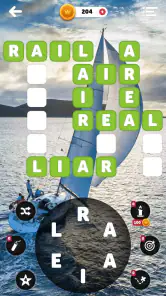
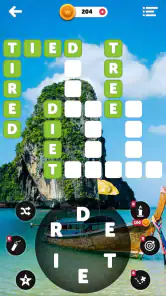
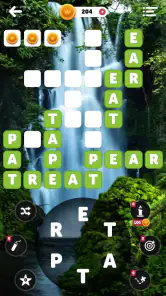
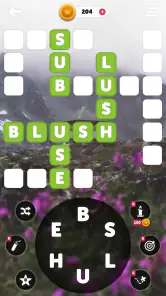
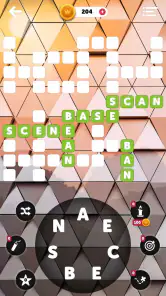
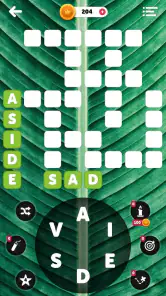
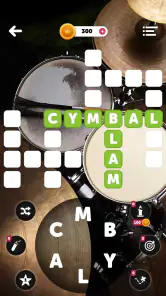
I enjoy word games most when they give me a reason to keep looking at the next puzzle without turning every round into a stressful test. Words of the World fits that space well. It is a free word game from Random Logic Games, LLC built around anagram puzzles, with short pieces of general knowledge appearing as part of the experience. The result feels less like a traditional crossword and more like a quick routine: rearrange letters, find the answer, learn something small, and decide whether you have time for another round.
After spending time with it, my view is that this is best for players who like vocabulary challenges but do not want a complicated interface or a long commitment. It is easy to pick up, suitable for an Everyone audience, and available for Android devices running at least version 7.0. The game is free to start, although optional in-app purchases range from $0.99 to $19.99 per item. That makes the basic experience approachable, while also giving players who use hints or other paid conveniences a reason to watch their spending.
How the current puzzle experience feels
A simple loop with a useful extra layer
The central idea is straightforward: you receive a group of letters and work out the word they can form. That simplicity is the main attraction. I do not have to learn a map, manage a character, wait for energy, or understand a complicated scoring system before enjoying the game. I can open it, focus on the letters, and make progress almost immediately.
The knowledge element gives the puzzles a little more personality than a plain anagram exercise. Solving a word is not only about recognizing a familiar arrangement of letters; it can also lead to a fact connected with places, people, ideas, or subjects from different parts of the world. I found that this changes the rhythm in a pleasant way. The puzzle supplies the active challenge, while the knowledge content gives the answer a reason to stay in my memory.
That combination is particularly useful when I want something more engaging than endlessly scrolling through short videos but less demanding than a full reading session. A few puzzles can fit into a break, a commute, or the quiet minutes before bed. The game does not require me to prepare a notebook or remember a complex objective. The mental effort is concentrated on spelling, pattern recognition, and recalling words I may have seen before.
Where it works best in everyday life
A realistic use case is a short waiting period at a clinic, station, or café. I can start a puzzle, spend several minutes testing letter combinations, and stop without feeling that I have abandoned a large mission. If I return later, the appeal comes from the same small challenge rather than from having to reconstruct a complicated story or strategy.
It also works for a shared session with a family member. One person can rearrange the letters while another suggests possible answers. Because the game is based on recognizable words rather than fast reflexes, different ages can take part at their own pace. The Everyone rating makes that broad audience easier to understand, although individual vocabulary levels will still determine how comfortable each player feels.
More From Our News Desk

Clash of Clans Is Won Between the Battles

Android Auto Makes the Case for Quieter Car Software

MobiOffice: Transforming Mobile Productivity with Seamless Integration

EA SPORTS FC™ Mobile Soccer: Redefining Mobile Sports Gaming

How Microsoft OneDrive Became a Mobile Productivity Giant

How Google Translate Breaks Language Barriers Effortlessly
For language learners, I see a more limited but still useful role. The game can encourage spelling awareness and expose players to words they might not use every day. However, I would not treat it as a complete language-learning tool. An anagram can show the correct arrangement, but that does not automatically explain pronunciation, grammar, or how a word behaves in a sentence. It is better as a light supplement than as a structured course.
The practical advantages of the format
One strength that is easy to overlook is how naturally the game supports different solving styles. I can begin with the shortest-looking fragments, search for common endings, or identify a likely vowel pattern before trying the whole word. When I am stuck, I can step away briefly instead of forcing random guesses. Returning with a fresh view often helps because the letters have stopped looking like an unchangeable block.
Another useful habit is to read the knowledge material carefully after solving rather than treating it as a reward to dismiss. The information can act as a memory hook. If a new word is tied to an interesting subject, I am more likely to remember its spelling than if I had simply seen it in a list. This is one of the reasons the game feels more purposeful than a bare anagram generator.
I also recommend using the game as a vocabulary check rather than assuming that unfamiliar answers are mistakes. An unusual word may be valid even when it is not part of my everyday speech. That mindset prevents frustration and makes the knowledge component more valuable. At the same time, players who prefer only common, immediately recognizable words may find some puzzles less satisfying.
How it compares with familiar word-game alternatives
Compared with a daily guessing game, Words of the World offers a different kind of satisfaction. A daily guessing format usually emphasizes deduction from feedback and often creates a strong once-per-day ritual. This game is more flexible because its appeal comes from solving anagrams and moving through knowledge-based content when I choose. If I want one carefully framed challenge, a daily game may feel cleaner. If I want several short sessions, this format is more convenient.
Compared with crossword puzzles, the entry barrier is lower. Crosswords ask me to interpret clues, understand crossings, and often manage a larger grid. Here, the letters are already present, so the challenge is more focused on rearrangement and vocabulary. That makes it friendlier when I am tired, but it can also feel less rich for players who love layered clues and a large puzzle structure.
Compared with word searches, the mental work is more active. I am not scanning a grid for a visible sequence; I am constructing the answer from mixed letters. Players who enjoy visual pattern hunting may prefer a word search, while those who like anagrams will probably find this more rewarding. The knowledge material further separates it from a purely visual word game.
What the current release tells me
The current version is 1.0.111, and the game has been available since November 10, 2020. Those details suggest a product that has had time to establish its basic identity rather than appearing as a brand-new experiment. I would not interpret the version number alone as proof of a particular feature or redesign, but it does give existing players a clear reference point when checking whether their installation is current.
The game has an average rating of 4.6 from around 3.9 thousand ratings, with 314 written reviews, and it has passed 100 thousand installs. I read those figures as evidence that the concept has found a real audience, not as a guarantee that every player will enjoy every puzzle. Word games are unusually personal: one player may appreciate an unfamiliar answer, while another may see it as an unnecessary obstacle.
For someone deciding whether to try it now, the important point is that the current experience should be judged as a focused anagram game with a global knowledge angle. I would not download it expecting a large adventure, a competitive multiplayer environment, or a deep progression system. Its value is in the small loop and the way it turns word solving into a compact learning moment.
How existing players may experience updates
Players who have used the game for a while will probably care most about consistency. In a puzzle title, a change to navigation, hint behavior, or the presentation of information can affect the feel of every session, even if the central anagrams remain familiar. My advice is to judge the current version by three practical questions: Can I understand the puzzle quickly, can I recover from being stuck without excessive friction, and does the knowledge content still feel connected to the answer?
New players should give themselves a few sessions before deciding whether the pace suits them. The first impression may be dominated by easy word recognition, while the longer-term question is whether the mix of familiar and less familiar vocabulary remains enjoyable. Existing users may already have developed their own solving routine, and that personal method is part of the appeal. I prefer experimenting with letter clusters before using assistance, because it keeps the answer feeling earned.
The free entry point also matters for returning players. It allows me to revisit the game without making an immediate purchase decision. Optional items costing from $0.99 to $19.99 can be convenient for someone who regularly wants extra help, but I would set a personal limit before buying anything. A hint can rescue a frustrating moment; repeated purchases can also remove the productive struggle that makes an anagram game satisfying.
Where the experience still has limits
The biggest limitation is inherent to the format: anagram solving can become repetitive if I want a constantly changing gameplay structure. Rearranging letters is satisfying, but it does not offer the same variety as a game that combines clues, timed rounds, word building, and strategic choices. The knowledge layer adds context, yet it does not completely change the basic action.
Vocabulary difficulty can also create an uneven experience. A player with a broad word bank may move quickly, while someone who knows the subject but not the spelling may feel blocked. This is especially noticeable when the answer is technically familiar but not immediately available in memory. I think the game is strongest when players accept that occasional uncertainty is part of the challenge; it is less suitable for anyone who wants every round to feel effortless.
The free-to-play structure deserves attention as well. I appreciate being able to start without paying, but players who rely heavily on optional assistance may find that the overall cost grows through repeated small decisions. The sensible approach is to use the free experience first and decide whether the game earns a purchase for your own habits. Someone seeking a completely purchase-free word game may prefer an alternative with no optional spending at all.
There is also a difference between learning a fact and retaining it. The global knowledge theme makes the answers more memorable, but a brief piece of information cannot replace deeper research. I would enjoy it as a prompt for curiosity: if a topic catches my attention, I can explore it elsewhere. I would not use the game as an authority for serious study or assume that a puzzle session provides a complete understanding of any subject.
Who should install it, and who should skip it
I would recommend Words of the World to casual word-game fans, families looking for a calm shared activity, and players who enjoy learning small facts while solving puzzles. It is also a good fit for people who prefer self-paced sessions and want something that can be opened for a few minutes without a long setup. The free price makes trying it low-risk, provided optional purchases are handled deliberately.
I would be more cautious about recommending it to competitive players who need leaderboards, head-to-head matches, or detailed performance systems. It is not the right choice for someone who wants a story-driven adventure or a constantly changing set of mechanics. Players who dislike unfamiliar vocabulary may also become frustrated, especially if they expect every answer to be obvious from common conversation.
If I were choosing between this and a crossword app, I would pick this game when I wanted a quicker, more direct challenge. If I had a quiet hour and wanted layered clues, I would choose the crossword. If I wanted a daily ritual with a single carefully limited attempt, I would choose a daily guessing game instead. That distinction is important: this title succeeds by being accessible and repeatable, not by replacing every other type of word puzzle.
What I would watch as the game continues
For future development, I would pay attention to how the balance between puzzle solving and knowledge is maintained. More variety in the way information is presented could keep the educational side from feeling like an interruption, while careful control of word difficulty would help prevent the game from becoming either too easy or unnecessarily obscure.
I would also watch how the current version serves both newcomers and long-time players. New users need a smooth introduction to the solving rhythm, while returning users need enough freshness to justify opening the game again. Any improvement should preserve the quick, readable nature of the experience rather than burying the anagrams under extra menus or systems.
My final judgment is favorable, with a clear qualification: this is a focused word game, not an all-purpose puzzle platform. I like the way it turns a familiar anagram mechanic into a small journey through worldwide knowledge, and I value the fact that it fits naturally into short breaks. Its repetition, uneven vocabulary difficulty, and optional purchase structure mean it will not suit everyone. For me, though, the free starting point, calm pace, and combination of spelling challenge with curiosity make it worth trying. If you want a relaxed word puzzle that gives your answers a little context, this is a thoughtful choice; if you need deep strategy or competitive variety, look elsewhere.
Words of the World is available as a free game from Random Logic Games, LLC, with an Everyone content rating. Its current version is 1.0.111, and the Android requirement begins at version 7.0, making it accessible on a broad range of devices that meet that requirement.
Words of the World Frequently Asked Questions
Who developed Words of the World, and what kind of game is it?
Words of the World is a word game from Random Logic Games, LLC. Its central idea is solving anagram puzzles, with a travel-inspired theme and Random Knowledge from around the globe as part of the experience. If you enjoy working out words from mixed letters and prefer a thoughtful puzzle to action-focused gameplay, its basic premise may suit you.
What is Words of the World?
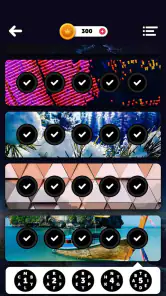
Words of the World is a word puzzle game that challenges you to discover hidden words by connecting or arranging available letters. Its travel-themed presentation takes you through different locations and gives the traditional word-search format a more relaxed sense of progression. It is designed for players who enjoy vocabulary challenges, short sessions, and gradually increasing difficulty rather than fast-paced action.
How do you play Words of the World?
Gameplay is generally based on forming valid words from the letters shown in each puzzle. You can swipe across letters, tap them in sequence, or use the controls provided by the particular version of the game to submit an answer. Correct words help complete the level, while additional words may provide bonuses. As you advance, puzzles can become longer and more demanding, requiring broader vocabulary and careful attention.
Is Words of the World free to download and play?
Words of the World can usually be downloaded without an upfront purchase, but the free experience may include advertising, optional in-app purchases, or both. Purchases may offer hints, remove advertisements, or provide other convenience features. You can normally play without spending money, although progress may feel slower when a puzzle is difficult and your available hints or other assistance have been used. Optional in-app purchases range from $0.99 to $19.99 per item, so it is worth reviewing purchase settings before handing the device to a child.
Does Words of the World work offline?
Many of the core word puzzles can be played without a continuous internet connection, which makes the game convenient for travel, commuting, or areas with unreliable service. However, an internet connection may still be required for advertisements, cloud synchronization, updates, special events, or restoring purchases. Offline availability can also vary by platform and game version, so checking the store description is advisable before downloading.
Pros
- Relaxing word puzzles suitable for short or extended play sessions.
- Wide vocabulary encourages spelling practice and language learning.
- Simple controls make it accessible for most ages and skill levels.
- Progression system provides a clear reason to keep playing.
- Works well as a casual offline game during travel or downtime.
Cons
- Some puzzles may feel repetitive after extended play.
- Difficulty can vary noticeably between consecutive levels.
- Hints may be limited
- encouraging optional purchases or waiting.
- Ads can interrupt the flow between puzzles.
- Players seeking competitive multiplayer may find the experience limited.
- Category
- Word
- Version
- 1.0.111