Watcher of Realms - US
- 1.97K
- 4.5
- Installs
- 100.00K
- Price
- Free

Screenshots


Analysis by Reviewed
I went into Watcher of Realms expecting a familiar mobile fantasy role-playing game, but its appeal became clearer once I stopped treating each stage as something to rush through. The important question is not simply whether I could win a battle. It is whether I could read the situation, place the right heroes, react to pressure, collect useful rewards, and then return with a better plan. That action-and-adjustment cycle gives the game a more thoughtful feel than its “next-generation” label alone suggests.
This is a free game from Skystone Games Pte. Ltd., available for players aged Teen and compatible with Android 8.0 or later. It has built a solid early audience, with an average rating of 4.5 from roughly 6,600 ratings and more than 100,000 installs. Those figures do not automatically make it a good fit for everyone, but they do reflect a game that has attracted real attention rather than being an obscure experiment.
Where the first action really begins
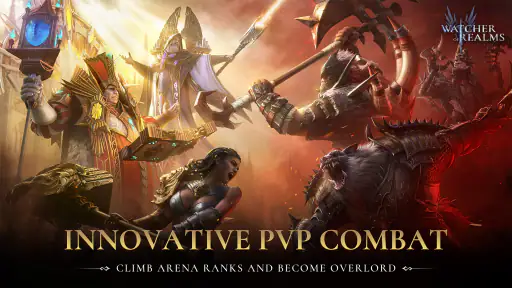
The first meaningful action is choosing how to approach a fight. In a conventional turn-based role-playing game, I often think about menus, damage types, and the order of commands. Here, the more immediate tension comes from preparing a battlefield and then watching the consequences unfold. The choices I make before the encounter matter because a strong character in the wrong place can be less useful than a less obvious pick used intelligently.
That makes the opening seconds of a stage surprisingly important. I am not only asking which hero is strongest. I am considering where pressure will arrive, which lane needs protection, and whether I should spend a valuable ability now or hold it for a more dangerous moment. The game rewards attention, especially when several problems appear close together and a single careless decision can turn a comfortable attempt into a recovery exercise.
I like this because it gives the role-playing structure a practical purpose. Collecting heroes is not just about filling a roster with attractive designs. It gives me more ways to answer different battle situations. A character who seems less exciting in one encounter can become the answer to a particular weakness in another. That creates a useful reason to experiment instead of always relying on the same small group.
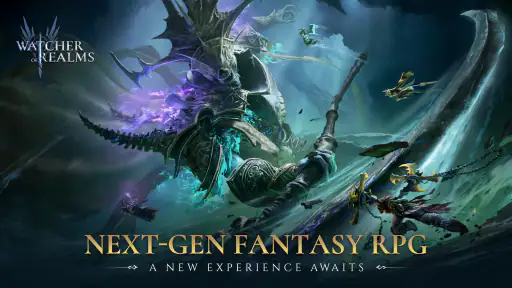
The fantasy presentation also helps the first action feel like part of a larger adventure rather than an isolated puzzle. The setting is serious enough to support the battles, while the character-focused structure gives me a reason to care about improving the team. I would not call the opening completely frictionless, though. Players who prefer a very simple action game may find the number of decisions more demanding than expected, particularly when they are still learning how the roster and battle flow fit together.
What I watch during a battle
My attention moves between three things: the immediate threat, the condition of my team, and the next likely problem. That sounds straightforward, but it changes how I play. I cannot simply tap through a stage while waiting for the strongest attack to recharge. I need to notice whether an enemy is slipping through, whether a defender is being overwhelmed, and whether using an ability now will leave me exposed later.
This is one of the game’s strongest practical qualities. It turns failure into information. When a stage goes badly, I can usually identify a reason: a placement was too late, a support character was exposed, a skill was wasted, or my team was not developed enough for the challenge. That does not make every defeat satisfying, but it makes many defeats useful. I come away with a specific correction instead of only the feeling that the game was unfair.
For a new player, I recommend resisting the urge to upgrade everything immediately. I found it more helpful to identify the heroes I genuinely use, observe which roles are causing trouble, and then spend improvement resources with a purpose. This is a small habit, but it reduces the common mobile-game problem of spreading progress so thinly that the whole roster feels weak.
The feedback rhythm keeps the screen active
The feedback arrives in a steady rhythm. I make a choice, watch the battlefield respond, adjust when the pressure changes, and then see whether the revised plan holds. That rhythm is more engaging than simply watching numbers rise because the result is tied to visible decisions. A well-timed intervention feels earned, while a poor one is usually obvious within moments.
There is also a useful distinction between a battle that is lost immediately and one that slowly unravels. In the first case, I probably misunderstood the encounter or entered with an unsuitable team. In the second, I may have handled the opening correctly but failed to plan for the later wave of pressure. Recognizing that difference helps me decide whether to replay with a different formation or leave the stage and improve the roster first.
This makes the game a better match for players who enjoy tactical feedback than for players who want a purely relaxing idle experience. It can be played in short bursts, but the best moments require me to stay mentally present. If I am distracted, I may miss the exact point where a small correction would have saved the attempt.
Compared with many role-playing games built mainly around automatic battles, this one gives my decisions more weight. Compared with a traditional console strategy game, it remains more approachable and easier to pick up for a brief session. The trade-off is that the mobile structure can sometimes make progress feel tied to repeated preparation rather than one dramatic victory.
Why the reward matters beyond the result screen
Rewards work best here when they answer a problem I have just encountered. After struggling with a stage, receiving something that helps strengthen a weak role or improve a reliable hero gives the next attempt a clear purpose. I am not collecting resources simply because the game tells me to. I am collecting them because I already know what I want to change.
That connection between reward and correction is important. It creates a small personal plan: identify the weakness, earn what is needed, improve the team, and test the solution. The reward is more satisfying when it changes my options rather than merely adding another item to a crowded inventory.
At the same time, the free-to-play design deserves a realistic look. The game can be downloaded without an upfront purchase, but it includes optional in-app purchases ranging from $0.99 to $99.99 per item. I would approach that system carefully. A player who enjoys collecting characters may feel tempted to spend whenever progress slows, while a player who prefers a fixed-price experience may dislike the uncertainty of deciding whether patience, repetition, or payment is the better answer.
My practical advice is to set a personal limit before becoming invested in the roster. That is not a criticism unique to this title; it is simply sensible when a game combines character collection, progression, and purchasable items. I also recommend judging a new character by how it changes your team rather than by rarity or appearance alone. A balanced group that solves your current problems is usually more valuable than a collection of impressive names that you do not understand how to use.
The reward loop also gives the game a reason to revisit earlier content. An old stage is not necessarily pointless if it supplies something needed for a current upgrade or helps test a new lineup. I enjoy that kind of reuse when it feels purposeful. The weakness is that repetition can become routine if I am replaying content only because the next meaningful improvement is still out of reach.
The reset that starts another session
Every completed attempt creates a reset point. I leave the battle with new information, a changed roster, or a clearer idea of what needs attention. Then the game presents the familiar question: should I try again immediately, adjust the team first, or stop and return later? That decision is the reason another session begins.
Sometimes I restart because I know the mistake was mine. Perhaps I placed a hero too late or used a powerful ability before the real danger arrived. Those quick retries are satisfying because the correction is fresh in my mind. Other times, the reset exposes a deeper issue: the team lacks a needed role, the upgrade path is too shallow, or I am trying to force a strategy that the stage is designed to punish. In those cases, repeating the same attempt would only waste time.
This is where I see a useful advanced habit: after a failed run, change one major variable at a time. I might alter the formation while keeping the roster, or switch one hero while leaving the rest unchanged. If I change everything at once, I may win without learning why. If I make a controlled adjustment, the result teaches me more and helps me build a repeatable approach for similar stages.
The reset is also well suited to everyday play. If I have a short break during the day, I can enter with a small goal: clear one stage, test a lineup, or gather enough progress for a particular improvement. In the evening, I may have more patience for a difficult encounter that needs several attempts. The game fits both patterns, although the more demanding battles are better played when I can give them undivided attention.
Players who dislike repeating content should think carefully before installing it. The loop depends on returning to battles, learning their pressure points, and improving through several attempts. That repetition is meaningful when I am making discoveries, but it can feel like a chore when progress depends on farming rather than decision-making.
Who gets the most from this fantasy RPG
I would recommend it first to players who enjoy building a roster and then proving that the roster works under pressure. It suits people who like asking why a battle failed, testing a different arrangement, and watching a previously troublesome encounter become manageable. It is also a good choice for someone who wants more involvement than an auto-battle game usually provides without committing to the complexity of a full desktop strategy title.
It is less suitable for anyone looking for a one-time, story-first adventure with a clearly finished path. The free-to-play structure, repeated progression, and character-focused development place the emphasis on ongoing improvement. Players who want complete control over every purchase may prefer a premium role-playing game, while players who want instant action may be happier with a simpler arcade or action title.
I also would not choose it for a child simply because the fantasy art looks accessible. Its Teen content rating is a better guide, and the presence of optional purchases means an adult should be aware of how the game is being used. For older players, the main question is not whether the game can be started easily, but whether its long-term loop matches their tolerance for collecting, upgrading, and retrying.
Small habits that improve the experience
My first useful habit is to treat the battle preview and opening moments as reconnaissance rather than as a formality. I look for the direction of pressure and decide which hero must survive longest. That helps prevent the common mistake of placing the most powerful character where the action is already safe.
My second habit is to keep a short mental record of failed attempts. I ask whether the problem was timing, placement, durability, damage, or a missing role. This sounds basic, but it stops me from blaming the entire team when only one part of the plan was weak. It also makes upgrades more efficient because I am improving a known bottleneck.
My third habit is to separate experimentation from serious progression. When I am testing a new hero or formation, I accept that the run may fail and focus on learning. When I need reliable progress, I use the lineup I understand best. Mixing those goals can make the game feel more frustrating than it is, because an experimental failure is not the same as a poorly prepared attempt.
A fourth trade-off is worth mentioning: broad roster growth can be exciting, but concentrated investment usually produces clearer results sooner. I prefer developing a dependable core first, then expanding once I understand what the later challenges are asking from me. That approach may feel slower for collectors, yet it gives each new addition a more meaningful role.
How it compares with familiar alternatives
Against a standard character-collection RPG, this game stands out when I want my roster choices to matter during the encounter rather than only in a menu. Against an auto-progress title, it offers more opportunities to intervene and correct mistakes. Against a large traditional role-playing game, it is easier to fit into a mobile routine, but it does not offer the same sense of uninterrupted exploration or the certainty of a single purchase.
The comparison depends on what I want from the category. If I want the satisfaction of slowly solving tactical problems with a growing group of heroes, this is a strong candidate. If I want a short, self-contained story with no ongoing resource loop, I would choose something else. If I want constant twitch action, I would also look elsewhere, because the pleasure here comes from planning, timing, and improvement rather than reflexes alone.
The current version is 1.6.30.817.1, and the game’s Android requirement begins at version 8.0. That makes it accessible to many Android users, though actual comfort will still depend on the device and on how much visual activity a player is comfortable managing. I would keep some storage and battery awareness in mind with any substantial fantasy game, especially if I plan to play long sessions, but the more important compatibility question is whether my phone can handle the game comfortably during busy battles.
My verdict on the complete loop
The loop works because each stage has a clear chain: I take an action, receive immediate battlefield feedback, earn progress or information, reset with a better understanding, and find a reason to attempt another session. The strongest part is the transition between failure and adjustment. I rarely feel that a defeat is completely empty, provided I take a moment to identify what went wrong.
The weaknesses are equally clear. Repetition can lose its charm, optional purchases may complicate the feeling of progress, and players who want effortless casual play may find the tactical attention tiring. The game also asks for patience; a new hero or upgrade is most valuable when I understand the problem it solves, not simply when I obtain it.
After spending time with it, I see Watcher of Realms as a good recommendation for a friend who likes fantasy character collecting but wants battles to demand more than automatic choices. I would describe it as a thoughtful mobile role-playing game with a satisfying retry structure, not as a universal replacement for every game in the genre. Start free, learn the battlefield before spending resources, and decide early whether the repeat-and-improve rhythm feels rewarding to you.
For me, that rhythm is the reason to return. The next session is not only about claiming another reward. It is about testing whether the lesson from the last attempt has become a better plan. When that process clicks, the game’s most valuable reward is the feeling that I solved the battle rather than merely survived it.
Pros
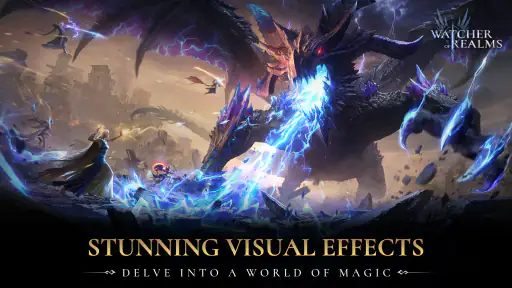
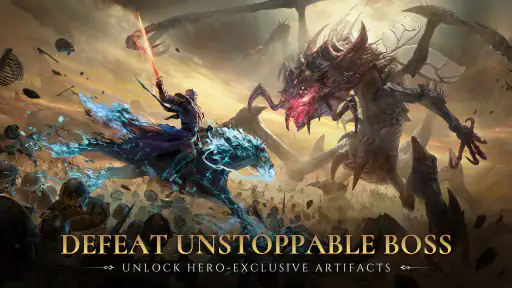
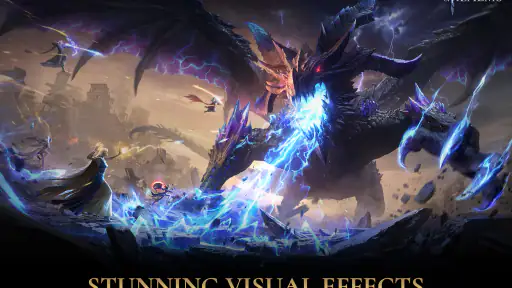
- High-quality 3D visuals and detailed hero designs
- Regular events provide fresh objectives and extra rewards
- Many heroes offer distinct roles and team-building options
- Auto-battle and speed controls make routine stages convenient
- Guild features add cooperative goals and social interaction
Cons
- Progress can slow noticeably without upgrading heroes and gear
- Limited resources make experimenting with many heroes difficult
- Some menus and systems may feel overwhelming for new players
- Later content often requires carefully optimized team compositions
- Large updates may consume significant storage and mobile data

- Category
- Role Playing
- Version
- 1.6.30.817.1