ACECRAFT: Sky Hero
- 7.66K
- 4.6
- Installs
- 500.00K
- Price
- Free

Screenshots

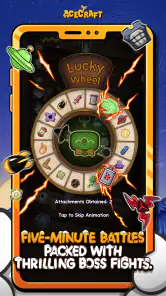
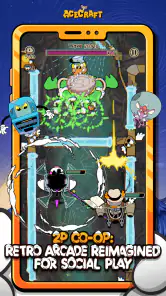
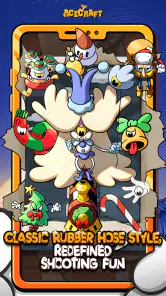
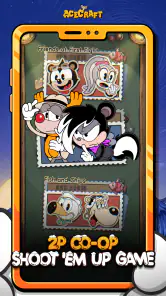

Analysis by Reviewed
ACECRAFT: Sky Hero is an action game that immediately caught my attention because it treats cooperative play as the center of the experience rather than an optional extra. I spent time looking at how comfortably it works in different situations: playing alone, sharing a session with another person, using a smaller screen, and trying to follow a busy battle without relying on perfect reactions. My overall impression is that it has a clear personality and an appealing arcade feel, but its fast pace also creates real barriers for players who need more time, less visual intensity, or very forgiving controls.
Developed by Skystone Games Pte. Ltd., the game is free to start and is aimed at Everyone. It belongs to the action category, yet its most distinctive idea is the two-player cooperative shoot-'em-up format. That makes it more interesting than a standard solo arcade shooter, especially when I want a quick shared activity instead of a long competitive match. The game has already passed 500 thousand installs and holds a 4.6 average from around 37 thousand ratings, which suggests that its central concept is connecting with a substantial audience.
How clearly the game communicates what is happening
Readability and navigation during a busy run
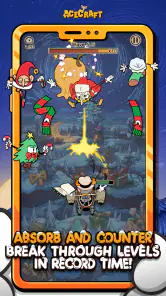
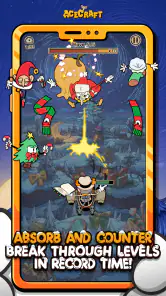
My first concern with any shoot-'em-up is not simply whether the controls respond. It is whether I can understand the screen quickly enough to make a useful decision. ACECRAFT: Sky Hero has to present a player character, incoming threats, projectiles, movement paths, and cooperative action at the same time. That creates an inherently crowded visual environment, so the quality of its moment-to-moment readability matters more than decorative detail.
I found the basic premise easy to understand. You are not entering a complicated role-playing system that demands a long explanation before the action starts. The game’s identity is visible almost immediately: move, attack, avoid danger, and coordinate with a partner. That directness is helpful for a first-time player, particularly someone who is joining a friend’s session and does not want to study a large collection of menus before playing.
The cooperative focus also gives navigation a practical purpose. I am not only watching my own position; I am trying to maintain awareness of what the other player is doing. That can make the action easier to read when both players naturally divide their attention, but it can also make the screen feel more demanding when both people move unpredictably. New players should begin with short sessions and agree on simple habits, such as keeping to separate sides of the play area rather than crossing constantly.
One useful adjustment in practice is to avoid treating every visual event as equally important. I learned to watch the space immediately around my character first, then check the wider field during safer moments. That approach is more reliable than staring at every effect at once. It is a small but important lesson for players who find action games visually overwhelming: the game becomes more manageable when attention is deliberately narrowed.
Menus and progression are easier to approach when I think of them as preparation for the next run rather than as a separate game. I would not recommend tapping through them quickly if a player is still learning the rhythm of combat. Taking a moment to identify the next objective, understand the available choices, and decide who is responsible for which part of the screen reduces confusion once the action begins.
Why the two-player design changes the learning curve
Many arcade shooters are built around solitary repetition. You memorize patterns, improve your route, and accept that every mistake belongs to you. This game changes that relationship. A partner can make the experience feel more welcoming because a beginner does not have to face the entire challenge in isolation. At the same time, cooperation introduces social pressure: a player may feel responsible for another person’s failed run or hesitate to experiment.
I think the best introduction is with a patient friend rather than with a highly experienced player who expects perfect performance. The stronger player can model positioning without taking over every decision. A beginner can then learn by watching how the screen is managed, where danger tends to collect, and when it is safer to move than to chase an attack opportunity.
There is also a subtle accessibility benefit in shared play. A partner can help with attention by calling out danger or reminding the other player to reposition. This is not a replacement for clear game design, and it should not be treated as an official assistance feature, but it can make the experience more approachable for someone who struggles to process several moving elements alone.
Motor and sensory considerations
The main physical demand is sustained movement combined with rapid decisions. Players who are comfortable with touch controls and quick directional changes will probably find the action lively. Players with limited dexterity, hand fatigue, tremors, or difficulty performing precise gestures may find the same design tiring. A game can be easy to understand and still be difficult to operate, and this is where the distinction matters most.
I would approach sessions in short blocks if repeated movement begins to strain the hand. Holding the device in a stable position, keeping the playing area unobstructed, and avoiding unnecessary repositioning of the phone can make a noticeable difference. These are ordinary practical habits rather than special settings, but they reduce the amount of effort spent fighting the device instead of playing.
Players who are sensitive to flashing effects, dense particle activity, or sudden changes in screen focus should be cautious. A shoot-'em-up naturally produces a lot of motion, and cooperative play can increase the amount of simultaneous activity. I would not recommend starting with a long session in a dark room or when already tired. The game is better suited to a well-lit environment where the screen can be watched comfortably.
Sound can also influence how approachable the action feels. Even when visual information is available, audio may add urgency and make a crowded battle feel more intense. I prefer beginning with a moderate volume and adjusting it only after I know whether the sound helps me react or simply adds pressure. Players who do not use audio cues should develop a visual scanning habit rather than assuming that every important event will be communicated through sound.
The Everyone age rating makes the game an accessible choice in terms of audience suitability, but that should not be confused with universal physical accessibility. The rating tells me who the content is intended for; it does not remove the demands of fast movement, visual tracking, and cooperative timing. That distinction is important for parents, older players, and anyone choosing a game for a mixed-ability group.
Where it fits different situations and where it still falls short
Situational access: quick sessions, shared devices, and uneven experience
ACECRAFT: Sky Hero works best for me when I have a short window and another person is ready to play. It is a natural choice for a break, a casual evening with a friend, or a family session where people want immediate action rather than a long story campaign. The straightforward premise lowers the amount of explanation needed, so someone can understand the goal without first learning a large fictional world.
A realistic example would be two friends playing after work while one of them has never touched a shoot-'em-up. I would let the newcomer focus on staying alive and learning movement while the experienced player handles more ambitious attacks. After a few attempts, they can swap responsibilities. This makes the session feel cooperative in a meaningful way: the goal is not merely to occupy the same match, but to adjust the pace so both players can contribute.
The format is less convenient when the people involved have very different expectations. A player seeking a calm, low-pressure experience may not enjoy being paired with someone who treats every run as a test of speed. Likewise, someone who prefers private progression and complete control may find the cooperative emphasis distracting. In those situations, a slower puzzle game or a solo-focused action title would probably be a better fit.
It is also worth thinking about the physical context. Playing on a small phone while walking, commuting, or sitting in a crowded place can make a demanding action game harder to follow. Reflections, unstable grip, interruptions, and limited attention all work against precise movement. I would choose a stable seat and a clear view of the screen, especially when playing with another person whose actions add more information to process.
The game is free, which makes trying the core experience less intimidating. However, in-app purchases range from $0.99 to $99.99 per item. That wide range is a reason to set expectations before handing the device to a child or beginning a shared family session. I would treat optional spending as something to manage deliberately rather than as part of the basic test of whether the game is enjoyable.
Useful habits for players with different needs
My first practical tip is to create a simple communication rule before a cooperative run. One player can call out immediate danger while the other concentrates on positioning, then they can switch roles during a quieter moment. This prevents both players from speaking at once and turning helpful information into more noise.
My second tip is to use the edges of the play area thoughtfully rather than hugging them automatically. Staying near an edge can make the screen feel more predictable, but it can also reduce escape options if danger arrives from that direction. A player who has slower reactions may prefer a position with room on more than one side, even if it means giving up a slightly convenient attack angle.
My third tip is to judge progress by consistency, not by one spectacular run. Players with limited stamina or slower reaction speed may benefit from learning one repeatable movement pattern at a time. Trying to imitate a fast player immediately can create unnecessary fatigue and frustration. In a cooperative game, reliable survival can be more valuable to the team than aggressive play that succeeds only occasionally.
A fourth insight is that the partner can act as an informal pacing tool. If one player becomes overloaded, the other can reduce unnecessary movement and leave more visual space instead of filling every opening with action. This is not a formal accessibility mode, but it is a practical way to make shared play more inclusive without changing the game itself.
Remaining barriers and comparison with usual alternatives
The biggest remaining barrier is the genre’s dependence on fast visual processing. A traditional turn-based game, a slower puzzle title, or a story-driven adventure would be easier for someone who needs time to interpret the screen before acting. ACECRAFT: Sky Hero has a different appeal: it asks me to make decisions while the situation is still changing. That excitement is also the reason it will not suit every player.
Compared with a typical solo arcade shooter, the two-player structure offers more opportunities for support and shared learning. A newcomer can observe a partner, receive verbal guidance, and feel that mistakes are part of a joint attempt. The trade-off is that cooperative play can make timing less predictable. A solo alternative is often better for someone who wants complete control over the pace, while this game is stronger when the social element is part of the reason for playing.
Compared with a competitive action game, the cooperative approach is less focused on defeating another person and more focused on managing a common challenge. That can reduce the sting of losing to a human opponent, but it does not eliminate pressure. A partner’s success and failure remain visible, so players who are sensitive to performance anxiety may still prefer a private, forgiving game.
The current version is 13.1.33.3651, and the game requires Android 8.0 or later. For someone deciding whether to install it, the practical question is not only whether the device meets that requirement, but whether the screen and touch response make rapid play comfortable. A technically compatible phone can still be a poor match if the display is difficult to see or the player cannot hold it steadily for a full session.
I also would not choose this title for someone whose main priority is a quiet, low-stimulation experience. Its action identity is not a minor detail that can be ignored. Players who enjoy bright, active battles and the need to coordinate will likely see that intensity as the point. Players who need minimal motion, slower pacing, or highly predictable input should look toward a different category instead of hoping the game will behave like a relaxed casual app.
Inclusive verdict: who should try it
After considering the game through that wider lens, I see ACECRAFT: Sky Hero as a promising choice for friends who want a compact cooperative action experience and are willing to adapt their play style to each other. Its clearest strength is the way it turns a familiar arcade format into a shared activity. That gives beginners a social path into the genre and gives experienced players a reason to explain, coordinate, and adjust rather than simply chase a personal score.
Its accessibility is more situational than universal. The clear concept, Everyone rating, and cooperative structure can help people who benefit from simple goals and social guidance. The rapid movement, visual density, and need for continuous attention can still exclude players with certain motor or sensory needs. I appreciate that the game can be made friendlier through communication, pacing, and sensible session length, but those workarounds depend on the players and do not replace dedicated accessibility controls.
I would recommend trying it if you enjoy action games, have a cooperative partner, and want something more immediate than a long campaign. I would skip it if you need slow decision-making, dislike shared responsibility, or find busy screens uncomfortable. The free entry point makes experimentation easy, while the in-app purchase range means I would keep spending boundaries clear from the beginning.
For me, the final decision is positive but specific: this is not simply an action game for everyone who owns a compatible phone. It is an action game for people who enjoy learning through movement and sharing that learning with someone else. Its most inclusive quality is the possibility of cooperation, while its main limitation is the speed required to participate comfortably. If that balance matches your situation, ACECRAFT: Sky Hero is worth a try, and it becomes much more enjoyable when both players treat accessibility as a shared part of the session rather than expecting one person to adapt alone.
Pros
- Simple controls make the game easy to pick up on mobile.
- Bright cartoon visuals give each stage a cheerful
- polished look.
- Short missions fit well into quick gaming sessions.
- Different heroes and aircraft add variety to the gameplay.
- Frequent rewards help maintain a steady sense of progression.
Cons
- Upgrade systems can make later stages feel dependent on grinding.
- Enemy patterns may become repetitive after extended play.
- Some menus and features take time to unlock.
- Limited energy can interrupt longer play sessions.
- The small on-screen controls may feel cramped on smaller phones.

- Category
- Action
- Version
- 13.1.33.3651