Crystal of Atlan
- 1.92K
- 4.3
- Installs
- 1.00M
- Price
- Free

Screenshots


Analysis by Reviewed
I went into Crystal of Atlan expecting a quick action game and found something much closer to a long-term mobile RPG built around movement, combat, and a flashy magic-meets-machinery setting. It comes from Skystone Games Pte. Ltd. and is free to start, with optional purchases ranging from $0.99 to $99.99 per item. That pricing range matters because this is not the kind of game I would judge only by its first hour; the real question is whether its ongoing structure feels enjoyable without making spending feel necessary.
As a magicpunk MMO action RPG, it aims at players who want more physical combat than a typical menu-driven role-playing game provides. I spent most of my attention on how the battles feel, how much control the character gives me, and whether the broader online format adds something meaningful rather than simply making the game busier. My overall impression is positive, but it comes with a clear condition: you need to enjoy repeating combat activities and gradually improving a character. If you want a compact, offline-friendly action game, this is probably the wrong direction.
How the current version feels to play
A stylish action RPG with a strong movement focus
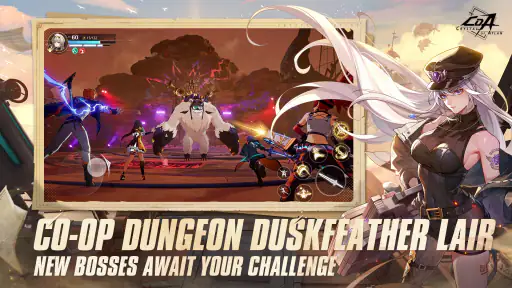
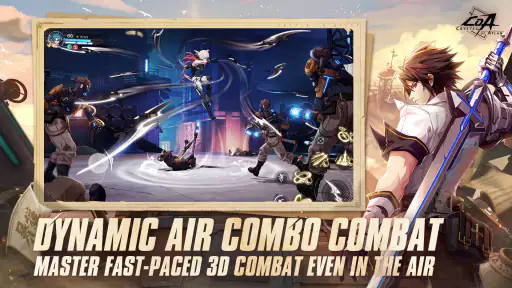
The most appealing part of Crystal of Atlan is the way it tries to make combat feel active. Instead of reducing every encounter to tapping an attack button and waiting for cooldowns, the game encourages me to pay attention to positioning, timing, and the rhythm of abilities. That gives ordinary fights more personality than I usually expect from a mobile MMO, especially when several effects fill the screen and the character moves quickly between targets.
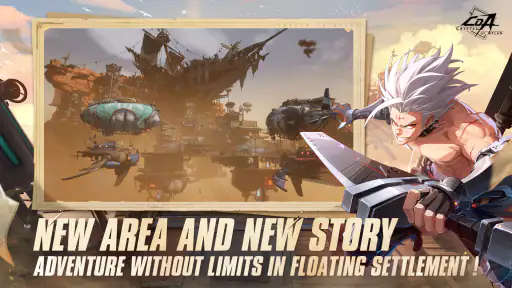
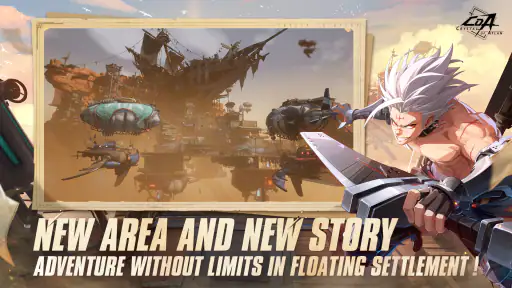
The magicpunk identity also helps it stand apart. The combination of arcane imagery and mechanical design gives the world a distinct visual direction, rather than making it look like another medieval fantasy adventure. I found that useful when deciding whether to continue playing: even when a mission structure felt familiar, the setting gave the experience its own flavor.
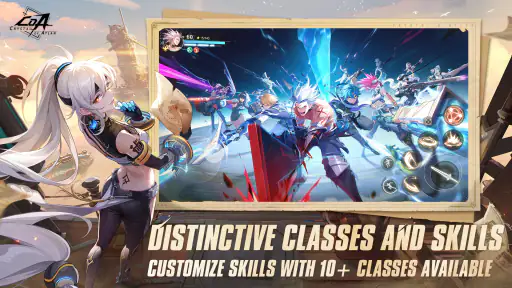
That speed has a downside. Fast combat can become visually crowded, particularly when multiple enemies and effects overlap. New players may need time to understand which animation signals danger, which ability is ready, and where the character is actually standing. I recommend beginning with deliberate movement instead of immediately trying to chain every skill. Learning the spacing of attacks first makes later encounters feel much less chaotic.
What the MMO format adds to the experience
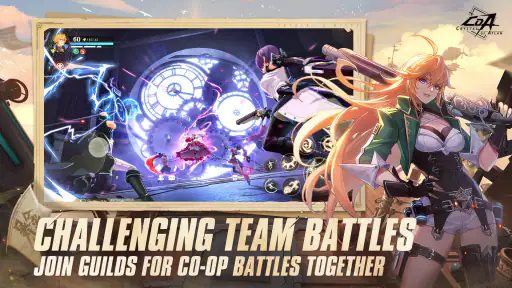
The online structure gives the game a sense of a larger world, but it also changes the way I approach it. I cannot treat every session as a self-contained arcade run. Progression, repeated activities, character growth, and interaction with the wider game environment all matter more than a single successful battle. That is useful for players who like having a reason to return, but less appealing if you prefer games that deliver a complete experience in short, isolated sessions.
A realistic use case is a player who has a regular evening routine: a few battles after work, some equipment or character management, and a longer session at the weekend. The game fits that pattern better than a title designed only for five-minute bursts. On the other hand, I would not recommend starting it during a busy period if you dislike leaving a game midway through a progression loop. The MMO design naturally encourages continued attention.
Another practical consideration is the Teen content rating. That makes it easier to place in a family discussion than a mature-only action game, but parents should still remember that the online and purchase elements make supervision worthwhile. The rating does not turn the game into a simple children’s title, and the optional spending system deserves attention before handing over an unrestricted payment method.
The first decisions that affect later enjoyment
One of my most useful discoveries was that early experimentation is more valuable than rushing toward the strongest-looking ability. A mobile action RPG can tempt players to select skills because their effects appear dramatic, but a spectacular attack is not automatically the best fit for the way you move. I had a better time when I tested how abilities worked together and noticed which ones helped me recover from a poor position.
I also suggest treating the opening progression as a learning phase rather than a race. Use it to identify whether you prefer close-range pressure, safer spacing, or a more ability-focused approach. That decision affects how satisfying regular encounters feel. If a combat style does not suit you, simply increasing its power will not necessarily solve the problem.
Inventory and character management deserve the same patience. It is easy to focus on the next battle and ignore the small decisions around equipment or upgrades, yet those choices influence how forgiving the game feels. I found it more efficient to pause after a group of missions, compare what had changed, and then return to combat with a clear plan. That workflow reduced the sense of constantly sorting through rewards without understanding their purpose.
Where the latest release fits in
The game launched on May 12, 2025, and the current version is 1.1.7. Those details place it in an early stage of its broader life rather than in the category of a long-established mobile classic. I see that as both an opportunity and a caution. Newer players can enter while the experience is still developing, but they should also expect the balance, pacing, and overall priorities to evolve over time.
For existing users, a version number is most useful when viewed as a sign of ongoing maintenance rather than a promise that every personal complaint has been solved. I would update before judging the game, because the current build is the relevant experience. At the same time, I would avoid assuming that a newer build automatically changes the fundamental design. If the core loop of action combat, repeated progression, and online play does not appeal to you, a routine update is unlikely to transform it into a different genre.
The minimum operating system is Android 7.0, which gives the game a broad potential reach among Android users. Compatibility alone does not guarantee an equally smooth experience on every device, though. Players with older hardware should be realistic about the demands of a visually active MMO and should pay attention to heat, battery use, and control responsiveness during longer sessions. Those practical factors can matter more than a game’s advertised style.
How the current build affects returning players
If you already started playing, the best way to evaluate the current version is to look for improvements in your own routine rather than chasing every change as if it were a completely new game. Are battles easier to read? Does progression feel less awkward? Are you spending less time correcting mistakes caused by unclear controls? Those questions tell you more about whether the update helped than a version label by itself.
Returning players should also resist rebuilding their entire approach after every adjustment. Keep a familiar setup long enough to understand what has genuinely changed, then make one change at a time. This is especially useful in an action RPG, where a different skill arrangement can make a character feel weaker simply because the player has not yet adapted to its timing.
New users have a different advantage: they can learn the current game without carrying habits from an older build. I recommend taking screenshots or notes of the abilities and equipment that feel useful during the opening hours, not because the game requires formal record keeping, but because it is easy to forget why a particular setup worked. That small habit makes experimentation more purposeful.
Spending, progression, and the value question
Because the game is free to play, the first financial decision is simple: you can try the core experience before committing money. That is a genuine strength. I would use the free entry period to answer three questions: Do I enjoy the combat after the novelty fades? Am I comfortable with the pace of character improvement? Do I like the online structure enough to return regularly?
The more difficult question is how optional purchases fit into your personal boundaries. With individual items reaching $99.99, I would not buy anything impulsively during the first session. Give yourself time to understand what a purchase changes, whether it saves time, and whether it affects a part of the game you already enjoy. A purchase has better value when it supports a playstyle you have tested, not when it is used to escape confusion about progression.
My preferred approach is to decide on a fixed entertainment budget before opening the shop. That keeps the spending decision separate from the excitement of a new character, a powerful-looking reward, or a frustrating battle. Players who dislike in-app purchases on principle should skip this game, even though the download itself is free. The presence of optional spending is part of the experience you are choosing, not a minor footnote.
Where it beats more traditional alternatives
Compared with a conventional turn-based mobile RPG, Crystal of Atlan gives me more immediate responsibility. I am not simply selecting an action and watching the result; movement and timing feel more central. That makes victories more satisfying when I improve through practice rather than only through stronger numbers.
Compared with a small offline action game, however, it asks for more commitment. A focused single-player title may offer cleaner pacing, fewer menus, and a more predictable session length. If your priority is a game you can launch on a flight or play without thinking about online progression, that alternative is likely better. This game earns its place through scale, ongoing development, and a more connected structure, not through simplicity.
It also differs from an ordinary MMO that relies mainly on auto-battling or passive progress. Here, I get more value when I actively engage with the combat. That is a strength for action fans, but it means the game can feel tiring if I am not in the mood to concentrate. I would not choose it as background entertainment while doing something else.
The gaps I noticed during longer sessions
The biggest limitation is repetition. Once the initial spectacle settles, the quality of the experience depends on whether the repeated combat and progression loop remains satisfying for you. I enjoyed the active battles, but I could also see how players might feel that they are performing similar tasks for incremental improvement. The game is more convincing as a long-term hobby for people who like refinement than for people who need constant novelty.
Another friction point is the learning curve created by speed and visual density. The game wants to feel energetic, but energy can become noise when the battlefield is crowded. I found that lowering my own pace helped: choose a target, watch its attack pattern, and use movement to create space before spending every ability. That is less flashy than button-mashing, but it produces more consistent results.
The online format is another possible barrier. Players who want complete control over when and how they play may find the MMO framework intrusive compared with a traditional offline action RPG. Even if the combat itself is enjoyable, the surrounding structure can make the game feel like a commitment. That is not a flaw for its intended audience, but it is a genuine reason to choose something else.
Finally, the purchase range means the game requires self-control from players who are sensitive to premium progression. I would especially avoid making a purchase after losing a difficult fight. Frustration is a poor guide to value, and a stronger item may hide the real issue if the problem is unfamiliar controls or an unsuitable build.
Who should install it, and who should pass
I would recommend Crystal of Atlan to players who want an action-heavy mobile RPG with a distinctive magic-and-machinery atmosphere. It suits people who enjoy learning ability timing, improving through repeated encounters, and returning to a character over multiple sessions. It is also a reasonable choice for someone curious about an MMO but unwilling to pay before trying it.
I would be more cautious about recommending it to players who want a relaxed, offline, or story-first experience. It is not my first choice for someone who dislikes recurring progression, online structures, or in-app purchase shops. Likewise, if you prefer slow tactical decision-making, the quick combat may feel less thoughtful than a turn-based alternative.
For families, the Teen rating is a useful starting point, but I would still discuss online interaction and spending before allowing unrestricted access. For older Android devices, I would test a normal session rather than judging compatibility only from the operating-system requirement. A game can install successfully and still be uncomfortable if performance, heat, or battery life becomes a problem.
What I would watch as the game evolves
The most important future question is whether new releases deepen the combat without making the existing systems harder to understand. I would like to see the game preserve its active feel while improving clarity for players who are still learning. A good evolution would give experienced users more room to master their characters without turning the opening hours into a wall of menus and effects.
I would also watch how the balance between free play and purchases develops. The free starting point is attractive, but long-term trust depends on whether players feel able to make meaningful progress through regular play. That does not mean every item must be easy to obtain; it means the game should make the value of spending understandable and keep experimentation viable for people who choose not to pay.
For current players, the practical advice is to judge each update through your own session pattern. Try a familiar activity, compare how it feels with your previous routine, and avoid changing several parts of your build at once. For new players, start slowly, learn the movement, and postpone purchases until you know what kind of character and schedule you actually enjoy.
After spending time with it, I see Crystal of Atlan as a promising choice for a specific kind of mobile player rather than a universal recommendation. Its strongest qualities are the active combat, the unusual setting, and the sense that character improvement can come from better play as well as progression. Its weaknesses are the repetition, the online commitment, the busy presentation, and the need to approach purchases carefully.
The rating sits at a 4.3 average from around 39 thousand ratings, and the game has passed one million installs, which suggests that its combination of action and MMO structure has found a substantial audience. I would still make the decision based on your habits, not popularity. If you want a free-to-start magicpunk action RPG and are comfortable investing time in a developing online game, it is worth trying. If you want a clean, self-contained adventure with no shop pressure, I would choose a different kind of game.
My final advice is straightforward: install it for the combat, stay for the progression only if the repeated loop genuinely feels rewarding, and treat every purchase as optional rather than necessary. The best way to enjoy this game is to master its movement before trying to accelerate its progression. That approach lets the strengths of the current version show themselves while keeping its limitations—and your spending—under control.
Pros
- Fast
- stylish combat with satisfying combos and aerial attacks.
- Large anime-inspired world with varied environments to explore.
- Multiple classes offer distinct weapons
- skills
- and playstyles.
- Frequent events provide extra rewards and limited-time activities.
- Strong visual presentation with detailed character designs and effects.
Cons
- Combat can feel repetitive during longer farming sessions.
- High-level progression may require considerable time and resource grinding.
- Some content and rewards are tied to limited-time availability.
- Device performance may drop during crowded fights or intense effects.
- Gacha systems can make top gear and characters difficult to obtain.

- Category
- Action
- Version
- 1.1.7