Warcodes - AI RPG Game
- 1.26K
- 4.5
- Installs
- 100.00K
- Price
- Free

Screenshots



Analysis by Reviewed
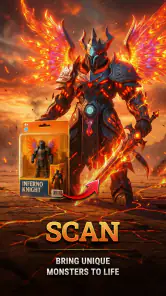
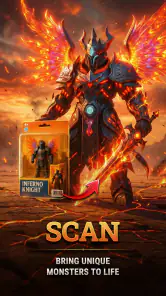
Warcodes caught my attention because it turns something familiar from everyday life into the starting point for a strategy game. Rather than asking me to build a conventional fantasy army from a fixed roster, it presents real-world items as creatures and places them in an AI RPG arena. That idea is simple to understand but surprisingly effective during the first few sessions: I found myself looking at ordinary objects with a more playful question in mind—what kind of fighter would this become?
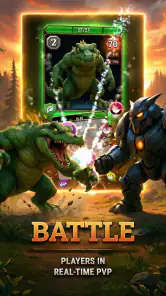
Developed by Cozy Orchards, this free strategy game is aimed at players who enjoy experimenting more than following a traditional campaign path. Its store summary describes the central hook clearly, but the real test is whether that hook still feels worthwhile after the novelty fades. In my experience, Warcodes has a strong opening week because the conversion of objects into combatants gives every encounter a small sense of discovery. The longer-term question is whether the arena offers enough meaningful decisions to become a habit rather than a quick curiosity.
The game is available to players aged Everyone 10+, and it has reached over one hundred thousand installs with an average rating of 4.5 from around four thousand ratings. Those figures suggest that the unusual concept has found an audience, although they do not remove the need to consider how you personally like to play. If you want a strategy title that feels familiar immediately, this may take some adjustment. If you enjoy unusual rules and a touch of imagination, its first impression is much stronger.
Why the first week feels so inviting
The most appealing part of Warcodes is the way it makes the source material feel like part of the strategy rather than decoration. A real-world item is not just a name on a menu; it becomes the prompt for a creature and a possible tactical role. That gives the game a different rhythm from standard RPGs, where I usually begin by choosing from warriors, archers, mages, or other established classes. Here, the fun comes from wondering how an object can be interpreted inside an AI-driven battle.
That unpredictability makes short sessions easy to start. I do not need to commit to a long story chapter to get something interesting from the game. A quick arena encounter can be approached as an experiment: choose an item, see how its creature behaves, and decide whether the result deserves another attempt. This is a useful design choice for people who play in small gaps during the day, especially when a full campaign game feels too demanding.
The first-week appeal also comes from the gap between expectation and result. When a game uses recognizable objects as its raw material, I naturally form an idea of what a creature might be like before seeing it in action. The AI element then adds uncertainty. That combination creates a small feedback loop: imagine, test, observe, and revise. It is more engaging than simply unlocking a stronger unit from a predictable list.
My best advice for a new player is to treat the opening sessions as scouting rather than optimization. Do not immediately judge a creature by appearance or by the item that inspired it. Watch how it contributes in an actual battle, then compare that behavior with what you expected. This approach reveals one of the game’s less obvious strengths: the most entertaining choices are not always the ones that look powerful at first glance.
Another useful habit is to keep mental notes about combinations that produce interesting results. Warcodes is at its most enjoyable when I remember why I selected something and can test a related idea later. Choosing items at random can be funny, but deliberate experiments give the strategy layer more weight. For example, I might select one creature because it seems reliable and another because it is an odd choice, then use the encounter to learn which assumption was wrong.
That said, the opening excitement depends heavily on your tolerance for interpretation. Players who prefer clearly explained statistics, fixed roles, and carefully signposted objectives may find the concept less satisfying than those who enjoy ambiguity. The AI presentation can make encounters feel lively, but it can also make outcomes harder to read. If you want every result to be traceable to a transparent tactical formula, this is not the most comfortable entry in the strategy category.
The free price makes trying that experiment easy. There is no purchase required just to discover whether the central idea works for you, although optional in-app purchases range from $0.99 to $99.99 per item. I would approach those purchases cautiously during the first week. The point of the early game is to learn whether you enjoy the object-to-creature loop, not to spend money before you understand how much recurring value it offers.
What changes after the novelty wears off
After the initial surprise, Warcodes needs to answer a more demanding question: does each battle teach me something, or am I simply repeating the same transformation with a different object? This is where personal play style matters. If I enjoy collecting unusual outcomes and testing them in the arena, the concept can continue to provide small discoveries. If I need a steadily unfolding narrative or a deep, highly visible progression system, the game may feel thinner once the first batch of ideas has been explored.
The strongest month-to-month value comes from treating it as a laboratory. I would not use it as my only strategy game, but I can see it working well as a companion title between longer sessions in a more traditional RPG. Its object-based premise gives it an identity that many roster-driven games lack. Even when I am not playing for a long stretch, it is easy to return with a new experiment in mind.
That return value is more dependable for players who create their own goals. One session can focus on finding a creature that performs differently from its appearance. Another can focus on building a group around a particular idea rather than chasing the most obvious choice. A third can be about testing whether a previous failure came from the creature itself or from the way I used it. These self-directed challenges are important because they turn a limited premise into a longer personal project.
There is a trade-off, though. Self-directed play is rewarding only when I am willing to supply some of the structure myself. Players who expect the game to constantly provide new objectives may run out of motivation sooner. The difference between a lasting habit and a short-lived download is therefore not only the game’s content; it is also whether experimentation feels like a satisfying activity in its own right.
I also think the AI angle works best when it creates variety without becoming the entire reason to return. At first, unexpected behavior is enough to keep me curious. Over time, I want those surprises to support decisions rather than replace them. If I cannot learn from an encounter, a strange result may feel amusing once but frustrating after repeated sessions. The ideal use of the AI system is to make familiar choices less predictable while still leaving me with useful information for the next battle.
For a commuter, a student between tasks, or someone who prefers compact mobile sessions, that balance can be appealing. I can imagine opening the game after dinner, running a few experiments, and stopping before it becomes a major time commitment. For someone looking for a main game with a large world, extensive party management, and a long narrative arc, the same compactness may feel like a limitation rather than a benefit.
The real maintenance burden
Warcodes does not demand the same kind of maintenance as a large live-service game with a complicated daily schedule, but it still asks me to maintain curiosity. That is the central burden. I need to remember which ideas I have already tested, avoid falling into random selections, and decide whether a disappointing result deserves another attempt. The game is light to enter, yet its lasting value depends on active attention.
My practical routine would be to keep sessions focused. I would choose a small question before starting, such as whether a particular creature works better in an aggressive or cautious role, and stop once I have learned enough to answer it. This prevents the arena from turning into aimless repetition. It also makes each visit feel more purposeful without turning a casual game into homework.
Another maintenance issue is spending discipline. Because the game is free and offers in-app purchases, it is easy to confuse access to more possibilities with genuine improvement in enjoyment. I would first establish a no-purchase routine and see how often I return naturally. If I still enjoy experimenting after that, I can make a more informed decision about whether an optional item adds something meaningful. The broad price range means that impulse buying deserves particular caution.
Version 16.0.0 shows that the game is being presented in a mature current form rather than as an untouched early experiment, but a version number alone does not guarantee that every player will find endless depth. I would still judge updates by whether they give me new reasons to think, not merely new things to tap. For this type of game, meaningful variety matters more than the appearance of constant activity.
Device compatibility is relatively approachable because the minimum operating system is Android 8.0. That makes it a realistic option for people who are not using a recent phone. Even so, the best experience will depend on how comfortable you are with the game’s presentation and controls on your particular device. I would pay attention to readability and responsiveness during the first session, especially if you plan to use it in short bursts while moving between places.
The developer’s identity also shapes the tone. Cozy Orchards has attached a playful, imaginative idea to a strategy framework instead of trying to imitate a conventional military or fantasy game. That gives Warcodes personality, but it also means the game’s appeal is narrower. It is not trying to satisfy every kind of strategist. Its maintenance burden is acceptable for people who like creative systems; it is less appealing to players who want a clean competitive ladder or a meticulously balanced collection game.
Where fatigue can begin
The first source of fatigue is repetition without a fresh question. Turning items into creatures is memorable, but the transformation itself cannot carry every session forever. Once I have seen enough examples, I need battles to produce new tactical lessons or the activity starts to feel like browsing variations of the same trick. This is the point at which a player should be honest about whether experimentation remains fun or has become a routine obligation.
The second source is unclear causality. Strategy is satisfying when I can connect a decision with an outcome. AI-driven behavior can make the arena feel less mechanical, but too much uncertainty weakens the learning process. I am comfortable losing when I understand what I could try differently. I am less patient with a loss that seems to come from behavior I cannot interpret or influence.
A third issue is the possible tension between free access and optional purchases. The free entry is a real advantage, but the presence of items costing as much as $99.99 can change how some players view progression. I would not recommend spending heavily simply because the game’s central idea is novel. The right question is whether a purchase supports a play style you already enjoy, not whether it might rescue a loop that has begun to feel repetitive.
There is also a social expectation that comes with a game described as an AI RPG arena. Some players may arrive expecting a competitive environment with clear rankings, while others may expect a role-playing experience with story and character development. If your preferred alternative is a conventional strategy game with visible resource economies and carefully documented counters, that option may serve you better. Warcodes is more appealing when the arena’s imaginative uncertainty matters as much as strict optimization.
I would also skip it if I dislike games that ask me to invent my own reasons to continue. The title can provide a distinctive framework, but not every player wants to turn a mobile game into a personal experiment. A conventional turn-based RPG is likely a better choice for someone who wants a guided plot. A classic strategy title may be better for someone who wants predictable systems and long-term mastery. Warcodes earns its place beside those games, not necessarily instead of them.
Who should keep it installed
I would recommend keeping Warcodes installed if you enjoy unusual prompts, compact strategy sessions, and the pleasure of testing an idea just to see how it behaves. It is especially suitable for players who like discussing strange game outcomes with friends, even when the game itself is played alone. The real-world item premise gives conversations a natural starting point: why did that object become this kind of creature, and what happens if I use it differently?
It is also a good fit for people who want a free first step into an unconventional strategy game. You can spend time evaluating the core loop before deciding whether it deserves more attention. That is more valuable than a game that hides its identity behind a long introduction. Warcodes tells me quickly what makes it different, and I appreciate that directness.
On the other hand, I would not choose it as my main recommendation for a player who wants a carefully balanced esports-style challenge, a deep story, or an enormous collection of traditional heroes. The game’s identity is built around interpretation and surprise. Those qualities can make it refreshing, but they can also prevent it from delivering the precision that dedicated strategy fans sometimes demand.
One realistic use case is a short evening routine. I might have ten minutes after finishing household tasks, choose a small set of items, run a couple of arena tests, and stop after finding one result worth remembering. The game works in that situation because it does not require me to settle into a large world first. The danger is opening it without a plan and continuing through battles that no longer teach me anything. A simple session goal keeps the experience from becoming empty tapping.
Another use case is creative play with a younger family member who meets the Everyone 10+ rating. The object-based premise is easy to explain, and choosing what an item might become can be entertaining before the battle even begins. I would still keep the child’s age and comfort in mind, but the concept is more approachable than many strategy games that begin with dense menus and established lore.
My long-term verdict
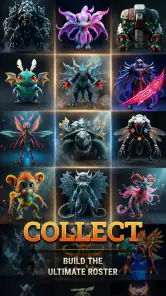
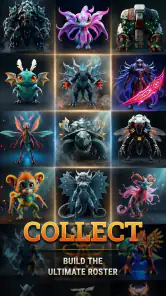
Warcodes earns a place on my device as a distinctive side game, not as an automatic replacement for a larger RPG or a more rigorous strategy title. Its first-week appeal is genuine: the object-to-creature concept is memorable, the AI arena creates room for surprise, and the free price makes experimentation accessible. The game’s strongest moments come when I approach each battle with a question and leave with a new idea.
Its long-term value is more conditional. I need to supply curiosity, remember what I have tested, and accept that not every unusual result will lead to a clear tactical lesson. Players who enjoy that kind of open-ended discovery may return regularly. Players who depend on constant rewards, structured campaigns, or transparent competitive systems may feel the novelty fade faster.
The game’s 4.5 average from around four thousand ratings is encouraging, and its growing install base shows that the concept has practical appeal beyond a tiny niche. Still, my recommendation is based less on those figures than on the kind of attention Warcodes asks for. It is a playful strategy experiment with enough identity to stand out, but its staying power depends on whether you enjoy creating your own challenges.
My honest recommendation is to try it free, avoid rushing into purchases, and judge it after the first novelty-driven sessions have passed. If you are still curious about testing another object, another creature, or another tactical assumption, it has earned recurring space in your mobile rotation. If you find yourself repeating battles without learning or imagining anything new, uninstalling it is reasonable. Warcodes is at its best when it makes ordinary things feel strategically interesting; once that feeling disappears, there may be better alternatives for your particular kind of play.
For me, that makes it a worthwhile but selective recommendation. Warcodes is not a universal strategy game, and it does not need to be. Its value lies in giving familiar objects an unexpected role in an AI RPG arena, then trusting the player to explore the consequences. Keep it for creative, short-form experimentation; skip it if your ideal game is built around fixed rules, a guided story, or relentless progression.
Pros
- AI-generated battles make each playthrough feel different.
- Turn-based combat is easy to learn but offers room for strategy.
- Character progression gives you reasons to keep playing.
- Fantasy artwork and effects create an appealing RPG atmosphere.
- Short encounters fit well into quick mobile gaming sessions.
Cons
- AI-generated content can sometimes feel repetitive or inconsistent.
- Progress may become grindy when upgrading heroes and equipment.
- Some features may be limited without in-app purchases.
- The game can require a stable internet connection to function properly.
- New players may need time to understand all available systems.

- Category
- Strategy
- Version
- 16.0.0