Wall Brawl - Tower Defense TD
- 185.00
- 4.7
- Installs
- 100.00K
- Price
- Free

Screenshots
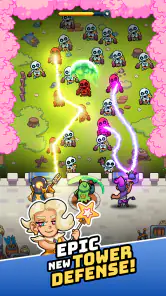



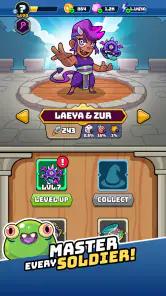
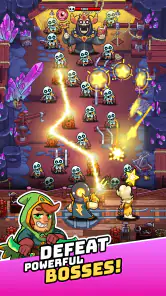
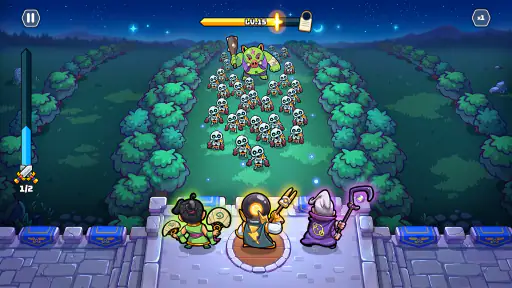
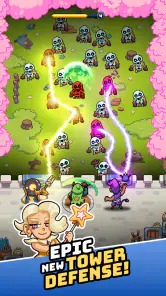
Analysis by Reviewed
Wall Brawl - Tower Defense TD makes a confident first impression by putting its identity in the name: this is a strategy game about protecting a castle wall while waves of enemies turn every decision into a small crisis. I found it easy to understand within a few moments, but not so simple that the strategic layer disappears. The appeal comes from the tension between preparing a defense and reacting when the attack stops going according to plan.
Developed by Homa, the game sits in the tower defense and role-playing strategy space. It is free to start, aimed at Everyone, and available for devices running Android 7.0 or later. Its store presence is still relatively compact, with over 100 thousand installs, yet the average rating is a strong 4.7 from around 1.9 thousand ratings. Those figures suggest that the central idea is connecting with players, although a smaller audience also means I would treat the rating as an encouraging signal rather than a complete picture of long-term depth.
A castle-defense mood built around pressure
The first few minutes make the objective clear
What I like most about the opening experience is that it does not bury the basic purpose under a complicated presentation. The wall is the focus, the enemy pressure is easy to read, and the game quickly establishes the familiar tower defense question: should I strengthen what is already working, or prepare for the next threat before it arrives?
That clarity matters on a phone. A strategy game can become tiring when every screen asks for attention before the player has formed a mental picture of the battlefield. Wall Brawl keeps its premise compact, which makes it suitable for short sessions. I can imagine opening it while waiting for a bus or taking a brief break, then stopping after a few defensive encounters without feeling that I have abandoned a long narrative sequence.
The trade-off is that the straightforward presentation may not satisfy players who want a large campaign map, extensive lore, or a highly elaborate strategy interface. This is a focused castle-defense experience rather than a grand management simulator. Its strength is immediate readability, not the promise of an enormous world.
Visual language that supports the battle
The art direction works because it reinforces the fantasy of a threatened kingdom instead of competing with the mechanics. The castle-wall setting gives every defensive choice a visible purpose. Rather than feeling like abstract icons placed on a grid, the action is framed as a stand against an approaching force, which helps the pacing feel more personal.
I also appreciate how this setting gives the game a consistent emotional tone. A wall naturally creates a sense of last resistance: the player is not simply collecting points, but trying to hold a boundary. That idea makes even a familiar tower defense structure easier to follow. When the pressure increases, the visual language tells me why the moment matters.
The presentation is best approached as a readable battle scene, not as a showcase for photorealistic graphics. Players choosing this game for a colorful, accessible strategy mood will probably find the style more inviting than a dense military interface. On the other hand, anyone expecting a highly detailed role-playing world with extensive character drama may find the setting intentionally light.
Why the setting affects decision-making
The castle theme is not only decoration. It changes how I interpret risk. In a conventional tower defense game, I may think mainly in terms of lanes, range, and damage. Here, the wall creates an additional psychological threshold: a defense that looks acceptable at a distance can suddenly feel inadequate when enemies get close.
That makes one useful habit especially important: I avoid judging a setup only by how quickly it handles the first visible wave. I look at whether the defense has room to cope when the rhythm changes. A strong early position can still be fragile if it depends on one narrow answer, while a slightly less powerful arrangement may be safer because it gives me more ways to respond.
This is one of the more valuable lessons for new players. Instead of spending every improvement on the most obvious damage increase, I try to build a defense that remains understandable under pressure. The game’s wall-centered framing makes that trade-off intuitive, even before I know every detail of the progression system.
Sound and the rhythm of a defensive stand
The atmosphere depends on more than what appears on screen. In a game built around waves and sudden pressure, sound helps separate preparation from danger. The most effective rhythm is the contrast between a calmer planning moment and the busier flow of an attack. That contrast gives the player a chance to breathe, make a choice, and then watch the decision being tested.
I find this structure more important than having constant spectacle. If every second is equally loud and busy, the battle loses shape. Wall Brawl benefits from feeling like a sequence of small rises in tension rather than one uninterrupted burst. The castle setting feels more coherent when the audio and action suggest that an assault is building, arriving, and being contained.
This also affects where I would play it. With sound enabled, the game has a stronger sense of occasion and the incoming threat feels more immediate. With sound muted, it remains playable, but some of the emotional pacing is reduced. For a quick public session, silent play is practical; for a more engaging run, headphones or a quiet room should make the defensive rhythm easier to appreciate.
One practical tip is to use the quieter moments for planning rather than tapping through them automatically. The pause between attacks is not empty time. It is where I check what failed, decide whether the next improvement solves that weakness, and consider whether I am preparing for a different kind of pressure. Treating those moments as part of the strategy makes the game feel less reactive.
Where the strategy feels most satisfying
The best moments come when a defense succeeds for a reason I can identify. If a difficult wave is stopped because I positioned my resources carefully or corrected a weakness before it became a crisis, the result feels earned. That is the core pleasure of tower defense, and this game keeps it visible through the direct relationship between the wall and the incoming attack.
I would not recommend playing by tapping upgrades as soon as they become available. A better workflow is to observe one complete attack pattern, note where the defense starts to struggle, and then spend with that problem in mind. This avoids a common trap in mobile strategy games: making upgrades that look helpful but do not address the point where the battle is actually being lost.
Another useful approach is to separate emergency choices from long-term choices. If the wall is under immediate threat, a quick defensive improvement may be justified even when it is not the most efficient investment. When the situation is stable, I prefer choices that make the next few encounters easier to read. This distinction helps prevent panic spending and gives the pacing a more deliberate shape.
How it compares with familiar tower defense games
Players coming from traditional tower defense games will recognize the basic satisfaction of preparing a defense, watching enemies advance, and adjusting after each clash. Wall Brawl is easier to approach than many systems-heavy alternatives because the castle-wall premise keeps attention on one central conflict. I do not need to begin by learning a huge fictional universe before understanding what I am protecting.
Compared with a deeper strategy or role-playing title, however, the experience is likely to feel more concentrated. A larger alternative may offer broader map control, more elaborate unit relationships, or a longer-term campaign structure. That can be preferable for players who want to spend an evening analyzing several interconnected systems. Wall Brawl is a better fit when I want the pressure of defense without turning every session into a full planning project.
It also differs from purely casual arcade games. The visual accessibility may make it look immediately approachable, but the strongest results still come from paying attention to timing and weakness. I would not describe it as something to play entirely on autopilot. The game is most enjoyable when I engage with the defense as a sequence of decisions rather than treating it as a passive stream of rewards.
Progression, spending, and everyday use
Because the game is free, it is easy to try without making an initial purchase. It includes optional in-app purchases ranging from under a dollar to amounts close to one hundred dollars per item. That range is worth keeping in mind before starting, especially for players who prefer games with no temptation to spend. I recommend deciding in advance whether I am playing strictly for free, because a difficult defensive moment can make any mobile game’s purchase prompts feel more persuasive.
For me, the sensible free-to-play routine is to treat each session as a chance to improve decision-making rather than as a race to unlock everything immediately. I focus on understanding why a defense failed, then return with a clearer plan. This makes the game more rewarding and reduces the pressure to solve every obstacle through spending.
A realistic everyday scenario would be a ten-minute evening session after work. I can play one or two defensive encounters, notice that the same section of the wall keeps becoming vulnerable, and use the next attempt to address that specific issue. That is a better use of the game than opening it while distracted during a meeting or expecting it to replace a long-form strategy session. Its compact premise suits short attention windows, but it still rewards concentration.
The current version is 0.6.25, and the game was released on December 3, 2025. Those details place it in a relatively early stage of its life, so I would approach it as a developing experience rather than a finished alternative to the longest-running strategy franchises. The current package is enough to judge the core mood and play style, but players who demand years of accumulated content may be happier with an established competitor.
Who will enjoy the atmosphere most
I think Wall Brawl is particularly well suited to players who like the visual idea of defending a kingdom but do not want an intimidating interface. It is also a good choice for someone who enjoys finding the weak point in a defense, correcting it, and seeing the next attempt go better. The combination of a clear wall-centered objective and wave-based pressure makes the game easy to revisit.
It is less suitable for players who dislike repeated attempts. Strategy games built around defense naturally ask me to learn from failure, and the same is true here. If I want a story that moves forward without asking me to revisit a difficult encounter, a narrative adventure may be a better choice. Likewise, if I prefer relaxed decoration or city-building with no immediate threat, the castle-under-attack mood may feel too demanding.
I would also skip it if my priority is competitive multiplayer strategy or a massive roster of role-playing characters. The appeal here is the focused act of holding a defensive position. That focus is a strength when I want clarity, but a limitation when I want a broad social or collection-driven game.
Small habits that improve the experience
My first recommendation is to watch the entire defense before changing too many things. Making several adjustments at once can produce a win, but it becomes difficult to know which decision mattered. One controlled change gives better feedback and helps build a reliable understanding of the battle.
Second, I keep an eye on consistency rather than celebrating a single fast victory. A setup that survives comfortably is usually more valuable than one that barely succeeds through a lucky sequence. This is especially relevant in a wall-defense game, where a small weakness can become obvious only after the attack has had time to develop.
Third, I use the sound and visual rhythm as information. A calmer phase is a chance to plan, while a sudden increase in activity is a reminder to stop experimenting and protect the most vulnerable part of the defense. This may sound simple, but it prevents the common mistake of making a long-term adjustment while an immediate threat is already unfolding.
Finally, I keep the purchase structure in perspective. If progress starts to feel like a shopping decision rather than a strategic one, I step away and return later. The game works best when I am trying to understand the battlefield, not when I am trying to overpower every obstacle instantly.
My final view of the playable mood
Wall Brawl succeeds because its art direction, castle setting, sound, and pacing all point toward the same experience: a compact defensive stand that becomes more tense as the pressure reaches the wall. The presentation does not overwhelm the mechanics, and the mechanics give the atmosphere a clear purpose. I always know what the danger is and why a successful defense feels satisfying.
Its limitations are equally clear. This is not the right pick for someone seeking a huge campaign, deep role-playing storytelling, or a completely hands-off casual game. The free-to-play structure also deserves attention, particularly because the available purchases extend from small amounts to nearly one hundred dollars per item. I would keep that in mind before recommending it to a younger player, even though the content rating is Everyone.
For my own recommendation, I would suggest trying it to anyone who enjoys tower defense with a strong sense of place and short, purposeful sessions. The average rating of 4.7 and the growing install base make it an appealing starting point, while the early version number reminds me not to judge it as a fully mature genre giant. The best reason to play is the feeling of turning a vulnerable wall into a defense I understand. When I want that focused mood, Wall Brawl is easy to pick up and surprisingly satisfying to return to.
Pros
- Quick matches make it easy to enjoy during short breaks.
- Tower placement encourages strategic planning and experimentation.
- Bright visuals and playful effects make battles easy to follow.
- Different enemy types keep defensive tactics from feeling repetitive.
- The competitive format adds tension beyond standard tower defense levels.
Cons
- Some upgrades may take time to unlock without frequent play.
- Later waves can feel demanding for players new to tower defense games.
- The small battlefield may limit strategic variety in certain rounds.
- Repeated battles can become familiar once the best tactics are discovered.
- Performance may vary on older devices during busy combat scenes.

- Category
- Strategy
- Version
- 0.6.25