Vegas Crime Simulator
- 9.76K
- 4.1
- Installs
- 100.00M
- Price
- Free
Screenshots

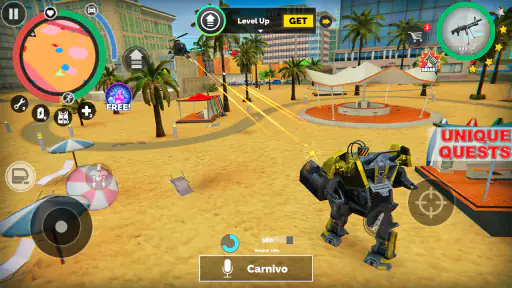
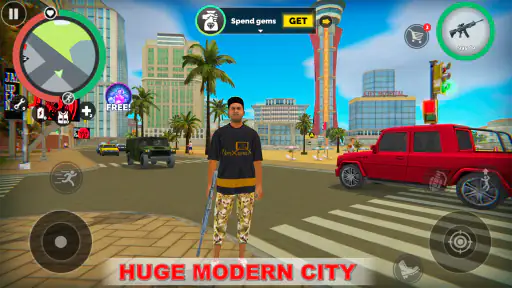

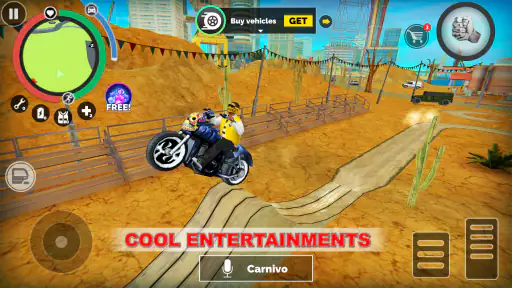
Analysis by Reviewed
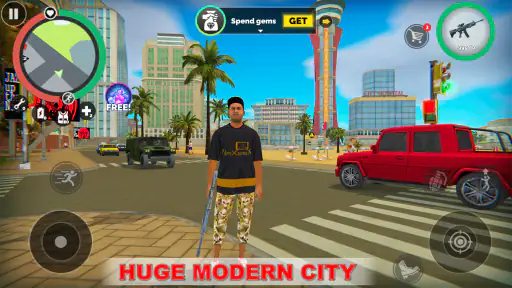
I first approached Vegas Crime Simulator expecting a quick burst of open-city action, and that is exactly where it makes the strongest first impression. The game drops me into a crime-focused setting where movement, driving, missions, and fights are tied together rather than separated into neat menus. I can take on an objective, cause trouble on the way there, grab a vehicle, and keep moving until the situation becomes too chaotic to ignore. That immediate freedom is the main reason I understand its appeal.
This is a free action game from Naxeex Action & RPG Games, aimed at players who enjoy a loose sandbox more than a carefully guided story. Its mature 17+ rating is important because the whole design revolves around gang conflict, weapons, theft, and criminal activity. It is not a gentle driving game with a few action scenes added later. The criminal theme is the foundation of the experience, and the game works best when I accept that its fun comes from experimenting inside that setting rather than looking for a realistic simulation.
How the action loop feels from the first move
The opening action is deliberately direct
The most satisfying way to begin is to choose a simple objective and start moving instead of spending too long trying to understand every option. The basic rhythm is easy to recognize: travel through the city, reach a situation that needs force or speed, complete the task, and decide whether to continue with another mission or create a little trouble of my own. That low barrier to entry helps when I only have a short break and want something playable immediately.
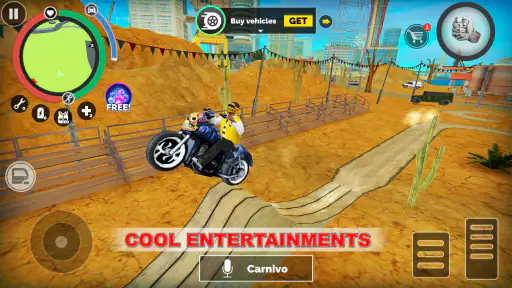
Driving is a major part of that first contact. A vehicle changes how quickly I cross the city and also changes the feeling of an encounter. On foot, a fight feels more exposed and personal; behind the wheel, movement becomes the advantage. Stealing a car is not just a decorative detail from the premise, because it gives the player a practical way to reposition and turn a slow trip into an active part of the session.
I also like that the game does not force every minute into a rigid sequence. Missions give the session direction, but the surrounding city creates distractions. I can begin with a clear goal, get pulled into a confrontation, and then return to the original task or abandon it for something more entertaining. That flexibility is useful for players who enjoy making their own small stories, even when those stories are messy and short.
Feedback arrives through movement and conflict
The feedback rhythm is built around visible consequences. A successful action lets me keep moving, while a poor approach can leave me surrounded, delayed, or forced to rethink the route. The response is not subtle: vehicles, enemies, and mission objectives make it clear when an action has changed the situation. I never feel as if I am simply walking through an empty map waiting for a cutscene to tell me that something happened.
That immediacy is also where the game shows its rougher side. The action can feel more like a compact mobile sandbox than a polished console-style open-world adventure. Driving and combat are enjoyable when I treat them as quick, energetic interactions, but players who expect precise handling or highly refined enemy behavior may notice the limits sooner. The game rewards momentum more than careful technical play.
More From Our News Desk

Clash of Clans Is Won Between the Battles

Android Auto Makes the Case for Quieter Car Software

MobiOffice: Transforming Mobile Productivity with Seamless Integration

EA SPORTS FC™ Mobile Soccer: Redefining Mobile Sports Gaming

How Microsoft OneDrive Became a Mobile Productivity Giant

How Google Translate Breaks Language Barriers Effortlessly
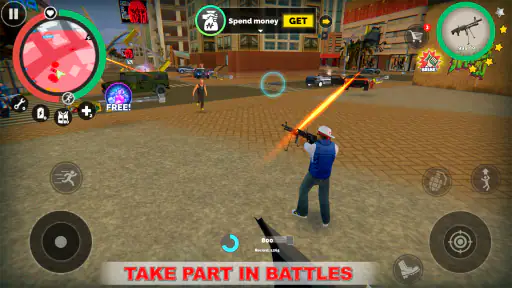
For me, the best feedback comes when several systems collide. I may be heading toward a mission, switch to a stolen vehicle, attract attention, and then have to fight my way out before returning to the objective. It is not a carefully staged sequence, yet it creates a stronger memory than simply checking off a task. The city feels most entertaining when my plan survives only partially.
Why another session starts
The reward is not limited to finishing a mission. There is also the satisfaction of improving the next attempt: choosing a better route, getting to the objective faster, avoiding an unnecessary fight, or recognizing when a vehicle will be more useful than staying on foot. Those small decisions give the game a repeatable quality. I often restart because I think I can handle the same kind of situation more cleanly, not because the game has delivered a deep narrative twist.
This makes it a good fit for short, informal play. Imagine having fifteen minutes before leaving home. I can launch the game, complete one objective, experiment with a vehicle, and stop without needing to remember a complicated plot. On a longer evening, the same structure can stretch into a more chaotic run through several missions and unscripted encounters. The game accommodates both habits, although the shorter format suits its straightforward design particularly well.
The criminal theme also supplies a simple form of role-play. I am not building a nuanced character with difficult moral choices; I am stepping into an exaggerated action fantasy where taking risks is part of the entertainment. That distinction matters. If I want a serious crime drama, this is too light and game-like. If I want a fast way to cause trouble, complete objectives, and see how long a plan lasts, the tone is much more appropriate.
Resetting after failure is part of the appeal
A failed attempt does not feel like the end of the experience. It becomes a reset point: I try the mission again, approach from another direction, use a vehicle differently, or avoid the confrontation that ruined the previous run. This repeat-and-adjust structure is central to the game’s appeal. The action is entertaining, but the reason I begin another session is usually the thought that the next run can be more efficient or more spectacular.
There is a trade-off here. Players who need a strong sense of permanent progress may find the loop less compelling than an RPG with a carefully developed character and a long-term build. The game’s satisfaction comes more from moment-to-moment freedom and repeated attempts than from a complex personal journey. I would not choose it as my main game if I wanted deep strategic planning, a rich dialogue system, or a campaign that constantly changes based on major decisions.
On the other hand, the reset is convenient for mobile play. I can treat each launch as a self-contained experiment. One session might focus on completing objectives, another on driving, and another on seeing how much trouble I can create before the situation collapses. That variety helps prevent the missions from feeling like a checklist, provided I am willing to make my own goals alongside the official ones.
Practical details before installing
The game is free to install, which makes trying it easy, but it includes in-app purchases ranging from $0.99 to $199.90 per item. I would approach that store model carefully and decide in advance whether I am comfortable playing without spending or whether I want optional purchases available. For a younger player, the mature rating and purchase access are both reasons for an adult to check the device settings before handing over the phone.
It supports devices running Android 6.0 or later, and the current version is 6.6.7. That relatively broad system requirement makes it accessible to many older Android devices, although actual comfort can still depend on the phone’s hardware and how smoothly it handles a busy action scene. I would close other demanding apps first and use a stable connection for downloading updates, especially on a device with limited free space.
The game has been available since June 3, 2015, and its long presence helps explain why it has such a large audience. It has passed over 100 million installs, with a 4.1 average from around 1.4 million ratings and roughly 9,800 written reviews. Those figures do not guarantee that every player will enjoy the controls, but they do show that the basic combination of missions, vehicles, and open-ended crime action has reached far beyond a small niche.
Where it stands beside other mobile action games
Compared with a traditional mission-based action game, this one gives me more room to wander between objectives. Compared with a dedicated racing game, driving is a tool for movement and trouble rather than the entire point. Compared with a deep role-playing game, character development and long-term decision-making are less central. Its position is somewhere in the middle: an accessible open-city action toy with enough structure to keep the chaos pointed in a direction.
That middle ground is both its strength and its limitation. I can move from driving to fighting without changing games, which creates variety during a short session. However, none of those individual activities feels as specialized as it would in a game devoted only to racing, combat, or role-playing. I would recommend it over those alternatives when variety and instant access matter more than precision or depth.
It is also worth separating this experience from premium open-world games that aim for cinematic presentation. Vegas Crime Simulator is better approached as a compact mobile sandbox. Its value comes from how quickly it lets me act and recover from a failed plan, not from delivering the largest world or the most detailed simulation. That expectation makes the rough edges easier to accept and keeps the focus on the loop that the game actually handles well.
Small habits that improve a session
My first practical tip is to use missions as anchors rather than treating them as the only content. Starting with an objective gives the session purpose, but leaving room for detours produces the most memorable moments. If I rush from one marker to the next without reacting to the city, I lose much of the reason to play an open-ended action game in the first place.
My second tip is to think of vehicle choice as part of the plan, not merely transportation. A car can save time, change the angle of an encounter, and provide an escape when staying on foot becomes inconvenient. I try to consider whether I need speed, access, or a quick way out before committing to a fight. That simple decision often matters more than charging directly into every confrontation.
A third useful habit is to separate experimentation from progress. When I am trying to complete a mission, I play conservatively enough to preserve the attempt. When I want to explore the sandbox, I accept that the session may end in failure. Mixing those two intentions without realizing it can make the game feel frustrating, while choosing one clearly makes the reset feel like a natural result of the experiment.
I would also keep expectations realistic about the control feel. The game is more enjoyable when I use broad movement and quick reactions rather than demanding perfect precision from every turn or attack. Players with a larger screen may find the action easier to read, while anyone sensitive to virtual controls should spend a short trial session before deciding whether the handling suits them.
Who should play it and who should skip it
I recommend it to Android players who want a free, mature action sandbox that can be enjoyed in short bursts. It is especially suitable for someone who likes stealing cars, moving between missions, and turning an ordinary objective into an improvised chase or fight. It also works for players who prefer replayable situations over a heavily scripted campaign, because the fun often comes from how an attempt unfolds rather than from simply reaching the next story beat.
I would skip it if you are looking for a calm driving experience, a realistic depiction of crime, or a polished competitive action game. The mature subject matter is not a side detail, so it is a poor choice for children and for anyone who dislikes violent criminal themes. I would also point role-playing fans toward a more character-focused alternative if their main goal is deep progression, detailed choices, and a story that remains the center of attention.
Another reason to hesitate is the purchase range. Even though the game is free, the presence of high-priced individual items means I would not install it on a shared device without checking purchase protections. A player who wants a completely uncomplicated free-to-play experience may feel more comfortable with a title that has a simpler monetization approach. Here, the sensible choice is to decide on spending limits before the action becomes absorbing.
My verdict on the complete loop
What keeps me returning is the compact cycle: take an action, receive an immediate reaction, gain the satisfaction of completing or surviving the situation, then reset and try a different approach. The loop is tangible because the game connects missions, driving, theft, and combat without making me wait long for the next decision. Even a failed run can be useful when it teaches me that a route, vehicle, or reckless attack was the wrong choice.
The experience is not equally strong in every area. Its open-city freedom can feel more entertaining than its precision, and its quick action is more convincing than any claim to realism. The mature theme, purchase range, and less specialized systems will narrow its audience. Still, those limitations do not erase the central pleasure of having a short mission turn into an unpredictable mobile crime spree.
After spending time with it, I see Vegas Crime Simulator as a good recommendation for the right kind of player rather than a universal action game. If you want immediate movement, accessible missions, and the freedom to restart after a chaotic attempt, it has a clear purpose. If you need refined controls, deep storytelling, or a carefully balanced progression system, another genre option will serve you better. For me, its strongest quality is simple: it gives me a reason to start one more session because the next attempt might unfold completely differently.
Vegas Crime Simulator Frequently Asked Questions
What kind of gameplay should I expect from Vegas Crime Simulator?
Vegas Crime Simulator is an action game built around open-world crime adventures. Its store summary highlights surviving gang wars, completing missions, stealing cars, and fighting your way to the top. Expect a mix of driving, combat, and city exploration, with a focus on arcade-style action rather than a realistic crime simulation.
Can I customize my character or vehicles in Vegas Crime Simulator?
The game centers on controlling a criminal character and using vehicles as part of its open-world action. If character or vehicle customization is important to you, check the options available in the version you install before investing time or money. The core appeal described for the game is exploring, driving, fighting, and taking on missions, rather than customization alone.
Does Vegas Crime Simulator offer missions, or is it only free-roaming?
It offers both mission-based play and free roaming. The game’s premise includes completing missions, while its open-world setup lets you explore city streets and take part in activities beyond the main objectives. That mix suits players who like having goals to follow but also want room to drive, fight, and explore at their own pace.
What is Vegas Crime Simulator about?
Vegas Crime Simulator is an open-world action game set in a fictional version of Las Vegas. You control a criminal character who can explore city streets, complete missions, fight rival gangs, steal or drive vehicles, and cause chaos outside the main objectives. The game focuses on free-roaming gameplay, simple combat, driving, and arcade-style crime adventures rather than realistic simulation.
Can I play Vegas Crime Simulator offline?
Vegas Crime Simulator is generally designed to be playable without a constant internet connection, which makes it suitable for short sessions while traveling or when Wi-Fi is unavailable. However, some features may depend on the version installed, including advertisements, purchases, updates, or external services. It is recommended to launch the game once while online and check whether your device’s version offers all content offline.
Pros
- Large open-world map with plenty of areas to explore.
- Wide selection of weapons and vehicles to use.
- Simple controls make movement and combat easy to learn.
- Varied missions provide more than just standard shootouts.
- Offline play is available for many core features.
Cons
- Frequent ads can interrupt gameplay and reduce immersion.
- Graphics look dated compared with newer open-world games.
- Mission objectives can become repetitive after extended play.
- Vehicle handling feels loose and sometimes difficult to control.
- Some items and upgrades require in-app purchases.
- Category
- Action
- Version
- 6.6.7