The Division Resurgence
- 3.48K
- 4.5
- Installs
- 1.00M
- Price
- Free

Screenshots

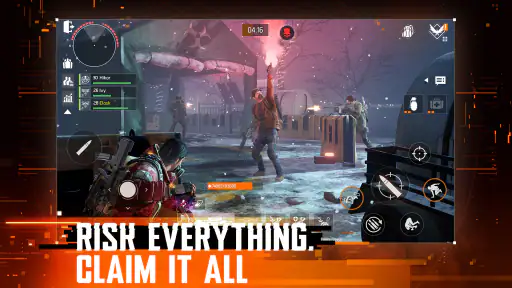
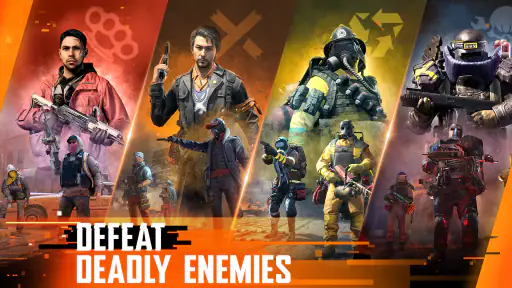
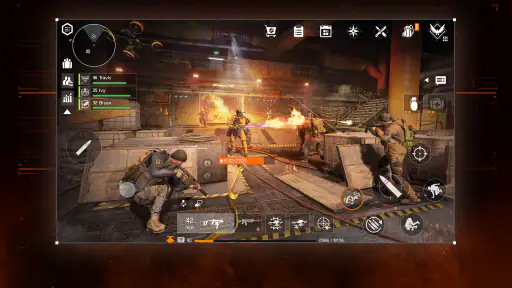
Analysis by Reviewed
The Division Resurgence is a free action game from Ubisoft Entertainment that brings the familiar fight for New York City to mobile devices. I approached it as the kind of player who wants a serious shooter for short sessions, but also wants to understand whether free access comes with uncomfortable spending pressure. My overall impression is positive but cautious: the game has a strong identity, a mature tone, and the appeal of a large-scale urban conflict, yet its long-term value depends heavily on how comfortable you are with optional purchases and ongoing progression.
It is available for devices running Android 6.0 or later, carries a Mature 17+ age rating, and has reached over a million installs. The game is free to start, while its in-app purchase range runs from forty-nine cents to ninety-nine dollars and ninety-nine cents per item. That range matters more than the word “free,” because a player can begin without paying but may later encounter spending choices at very different levels.
What playing the mobile Division feels like
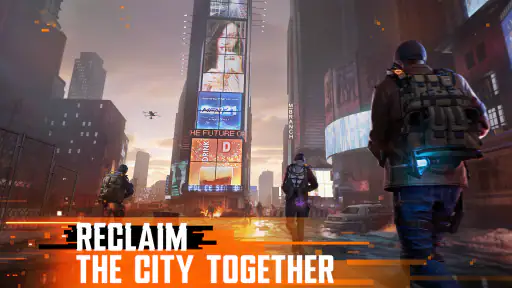
The appeal is easy to understand. This is not presented as a cheerful arcade shooter or a quick puzzle game; it aims for a darker, more grounded action experience built around a city in crisis. The setting gives each encounter a sense of place, and the idea of reclaiming New York creates a clear reason to keep moving from one confrontation to the next.
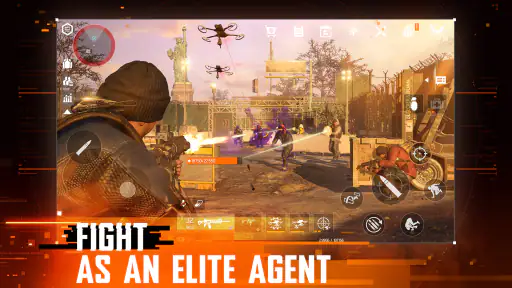
I like that the game’s identity is immediately more specific than “another mobile shooter.” The Division name suggests tactical movement, cover, equipment decisions, and a world where survival matters. On a phone, that combination can be difficult to translate. Touch controls need to stay readable while the screen is busy, and a player needs enough control to feel responsible for a mistake rather than blaming the interface.
That is why I would recommend approaching this as a focused action game rather than as a casual time filler. It may suit someone who enjoys settling into a tense session with headphones and a few uninterrupted minutes. It is less suitable for a person who wants a game that can be played comfortably with one thumb while distracted.
The current version is 1.60224.0, so anyone installing it should make sure the device has enough free space and that the phone is not already struggling with demanding games. I would also test the controls before committing money. A shooter can look excellent in screenshots and still feel awkward if aiming, movement, and camera adjustments do not match your hands.
Why the setting does more work than the store pitch
The strongest part of the concept is the tension between familiar city streets and a hostile situation. New York is not just a backdrop in this kind of game; it gives the action a recognizable scale. Alleys, buildings, and open streets can make an encounter feel more deliberate than a sequence of disconnected arenas.
That atmosphere is also what separates it from many simpler mobile action games. If your usual alternative is a fast match-based shooter with short rounds and constant respawning, this offers a more campaign-minded reason to explore and improve. The trade-off is that a more involved game asks more from your phone, your attention, and your patience.
I would not choose it solely because it is associated with a console and PC franchise. Mobile adaptations have to be judged by how well they work in the hand. The important question is whether you enjoy the rhythm of moving through danger, making careful attacks, and returning to improve your character, not whether the title sounds familiar.
Starting free and deciding when to spend
The free entry point is useful because it lets you discover whether the controls, tone, and progression suit you before you pay anything. I strongly recommend using that opportunity fully. Play long enough to see how the early game feels, whether the screen remains comfortable during combat, and whether the upgrade loop motivates you or starts to feel like a chore.
The purchase range deserves a calm, practical approach. A small optional item and a ninety-nine-dollar-and-ninety-nine-cent item represent very different decisions, even though both appear under the same in-app purchase label. I would set a personal limit before opening the shop, especially if the game becomes part of a daily routine. A budget is more useful than trying to guess what every purchase might do.
I also would not treat spending as a shortcut to enjoyment. If the core shooting and exploration are not satisfying without purchases, buying more is unlikely to fix that problem. Conversely, if the basic loop already works for you, remaining free-to-play may be perfectly reasonable. The sensible test is whether a purchase removes a genuine annoyance or simply creates a new reason to keep checking the store.
For families, the Mature 17+ rating is an important boundary rather than a minor label. I would not install this for a younger player just because it is free. The age rating and the presence of in-app purchases should be considered together, particularly on a shared phone or tablet.
Progression can be motivating, but watch the pressure
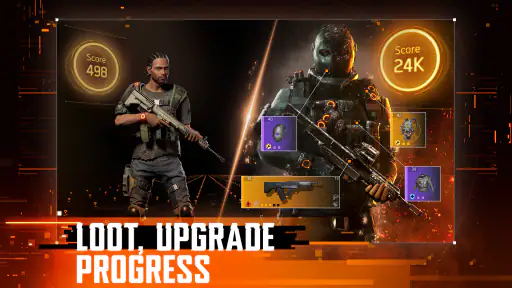
Games in this style often become more demanding as the player advances, and that can be satisfying when improvement comes from better decisions. I enjoy progression most when a new challenge encourages me to learn positioning, timing, or equipment choices. It becomes less appealing when the main answer to difficulty appears to be spending.
My practical advice is to separate two feelings: “I need to understand the game better” and “I need to buy something.” Those are not the same. If a mission exposes weak movement or poor preparation, try changing your approach first. If the game repeatedly makes progress feel dependent on purchases, that is a meaningful warning for a free-to-play player.
A useful everyday scenario is a commute or lunch break. I would use a short session to complete a manageable objective, adjust equipment, or learn one area rather than beginning a demanding activity when I have only a few minutes. That habit reduces frustration and makes the game feel like a planned hobby instead of an obligation. If you regularly play while rushing, the slower tactical mood may work against you.
Another good habit is to avoid spending immediately after a difficult loss. Frustration makes any upgrade look more valuable than it may be. I prefer to close the shop, replay the situation mentally, and return later. If the problem was poor positioning or an unsuitable approach, money would only hide the lesson temporarily.
Fairness: what I can judge and what I cannot
Fairness is the hardest part to assess from the purchase information alone. The game is free and offers individual purchases from forty-nine cents up to ninety-nine dollars and ninety-nine cents, but those prices do not by themselves prove whether paid items affect combat strength, speed up progress, or remain purely optional. I would not claim more than that.
For a competitive player, this uncertainty matters. If you care about equal footing, you should spend time with the free experience before entering any serious competitive routine. Pay attention to whether success feels connected to aim, movement, teamwork, and decisions, or whether progression advantages seem to dominate. That is a better test than assuming either perfect fairness or automatic pay-to-win design.
Players who mainly enjoy solo action may be less concerned about competitive balance. In that case, the important question is value over time: does the game give you enough satisfying play without asking you to purchase progress? Players who compare every opponent closely will understandably demand a clearer sense of fairness before spending.
This is where The Division Resurgence differs from a traditional premium action game. A premium title usually gives you a clearer idea of the initial cost, while a free-to-start mobile game moves the decision into the experience itself. That flexibility is convenient, but it also means you must manage your own boundaries. I see that as the central trade-off, not an automatic flaw.
How it compares with familiar mobile alternatives
Against a quick arcade shooter, this game is likely to appeal more to players who want atmosphere and a continuing conflict than instant matches. The city setting and mature presentation give it a heavier mood. The cost is that it may demand more concentration and patience than a game designed around very short bursts.
Against a premium single-player action game, the free starting point is a clear advantage for curious players. You can try the basic experience before deciding whether it deserves money. The disadvantage is that purchases introduce a layer of uncertainty that a fixed-price game often avoids.
Against a competitive shooter built almost entirely around fast reflexes, I would choose this when I want the environment and progression to matter as much as raw reaction speed. I would choose the faster alternative when I have only a few minutes, want a cleaner competitive loop, or dislike the possibility of spending pressure.
That comparison also explains who should skip it. If you want a completely predictable one-time purchase, this is not the safest match. If you dislike mature themes, it is clearly unsuitable. If your phone barely meets the minimum operating-system requirement and already performs poorly with demanding games, I would not expect a comfortable experience simply because the app can technically install.
Questions I would settle before installing
“Can I try it without paying?” Yes. It is free to start, and I would use that period to evaluate the controls, pacing, and progression rather than treating the first few minutes as enough evidence.
“How much could I spend?” Individual in-app purchases range from forty-nine cents to ninety-nine dollars and ninety-nine cents. That does not mean you need to spend, but it does mean purchase controls and a personal budget are sensible precautions.
“Is it appropriate for children?” The content rating is Mature 17+, so I would treat it as an adult-oriented game and keep it away from younger players.
“Will it work on my phone?” The minimum operating-system requirement is Android 6.0. Meeting that requirement only answers compatibility at a basic level; I would still check how the device handles demanding 3D games and whether touch controls feel precise enough.
“Should I choose it over another action game?” Choose it if the idea of reclaiming a troubled New York, using a more deliberate action style, and building a longer-term routine sounds appealing. Choose something else if you want instant matches, a fixed price, or no uncertainty around optional spending.
The details that shape long-term trust
Ubisoft Entertainment gives the game a recognizable name and a clear creative direction, but a developer’s reputation should not replace personal testing. I would judge the app by how transparent its purchases feel during play, how much progress remains enjoyable without spending, and whether updates preserve a fair relationship with players.
The audience response is encouraging at a glance: the game holds a 4.5 average from over a hundred thousand ratings, with thousands of written reviews and more than a million installs. Those figures show broad interest, but they are not a substitute for checking whether the game fits your priorities. A popular free game can still be wrong for someone who dislikes mobile progression systems.
I would also avoid making a purchase based on urgency. The best time to spend is after you understand what you enjoy, what slows you down, and whether the purchase improves that specific part of the experience. If you cannot explain what a purchase changes for you, keep playing without it.
That approach makes the game easier to evaluate fairly. You are not asking whether it is universally good; you are asking whether its mobile version offers enough value for your kind of play. A tactical action fan may find the setting and structure compelling, while a player seeking a simple pick-up-and-play shooter may find the extra layers tiring.
My verdict after weighing the trade-offs
The Division Resurgence is worth trying free, but it is not a game I would recommend buying into blindly. Its strongest qualities are its distinctive New York setting, mature action identity, and potential to offer a deeper alternative to disposable mobile matches. The free starting point makes that discovery relatively easy.
My reservation is not that optional purchases exist; it is that the purchase range is wide enough to require discipline, while the available facts do not establish how spending affects progression or competition. I would therefore keep my wallet closed until the game has earned trust through actual play. That is especially important for anyone who cares about competitive fairness or tends to spend impulsively after a frustrating session.
For me, the right audience is an adult player with a compatible Android device who enjoys action games with a darker atmosphere and is willing to learn the game’s rhythm. I would recommend it to a friend in that group, with one condition: start free, set a spending limit, and judge the experience by the quality of play rather than by the promise of faster progress.
If you want a familiar world, a more serious tone, and a mobile action game that can become a regular hobby, it deserves a careful trial. If you want a fixed-cost experience or completely predictable competitive conditions, another option will probably leave you more comfortable. That balance is why I see it as promising and playable, but best approached with clear boundaries.
Pros
- Faithfully recreates The Division’s cover-based shooting on mobile.
- Large open-world areas offer plenty of exploration and side activities.
- Playable solo or cooperatively with friends.
- Multiple skill combinations support different combat styles.
- Regular events and missions provide reasons to keep returning.
Cons
- Requires substantial storage space and may need additional downloads.
- Long sessions can drain battery and make devices run hot.
- Touch controls may feel less precise than playing with a controller.
- Progression can feel slow without investing significant time.
- Online-only access prevents playing during unreliable connections.

- Category
- Action
- Version
- 1.60224.0