Spirit Island
- 152.00
- 3.8
- Installs
- 100.00K
- Price
- Free

Screenshots
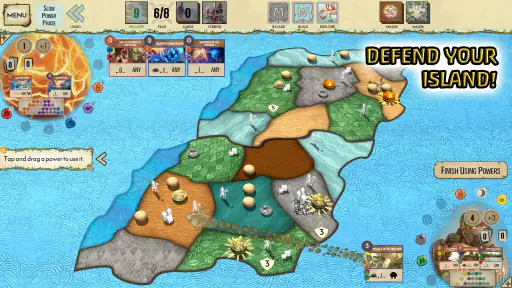
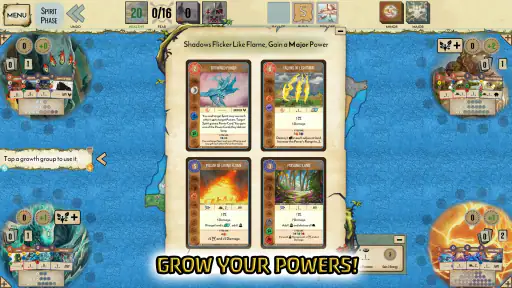
Analysis by Reviewed
Spirit Island is the kind of board game I open when I want to think carefully rather than relax with a quick, predictable match. It comes from Handelabra Games and turns the familiar idea of defending an island into a demanding cooperative strategy experience: instead of guiding settlers, I play as a spirit trying to push them away while protecting the island’s people and land. That reversal is the game’s defining capability, and it changes almost every decision.
On mobile, the appeal is not simply having a well-known board game in a portable format. The important part is that the app lets me manage a complicated shared situation without needing a table covered in pieces, cards, tokens, and reference sheets. The digital presentation handles much of that administration while leaving me responsible for the difficult choices. In my experience, that makes the game easier to set up and easier to revisit, but it does not make the strategy itself gentle.
The game is free to download, with optional purchases ranging from $2.99 to $24.99 per item. It is rated for Everyone, and it runs on Android devices using version 7.0 or later. Its current version is 3.3.3. The app was released on December 14, 2020, and has passed 100K installs, with a 3.8 average from around 1K ratings. Those figures suggest a reasonably established audience, although the rating also feels fair to me: this is a specialized digital board game, not an instantly approachable casual title.
Why cooperative defense is the real strength
I find the cooperative defense most compelling when I stop thinking of each spirit as an individual score-maker and treat the island as one shared problem. This section looks at how that perspective changes the value of a turn, especially when two spirits can cover each other’s weaknesses. The following discussion then shifts from the strategic principle to the pace of an actual session.
A board game built around reacting before the problem grows
The most interesting capability here is the way the game makes me plan around threats that are already developing. I am not merely collecting points or racing toward a finish line. I have to look at the island, identify where settlers are likely to cause the most damage, and decide whether to solve an urgent problem now or prepare a stronger response later.
That creates a distinctive rhythm. A useful move is often not the move that looks strongest immediately. I may need to accept a small amount of trouble in one area so that a spirit can gain the power, position, or cards needed to prevent a much larger disaster elsewhere. The island constantly asks me to weigh damage against timing, and that is where the cooperative design becomes meaningful.
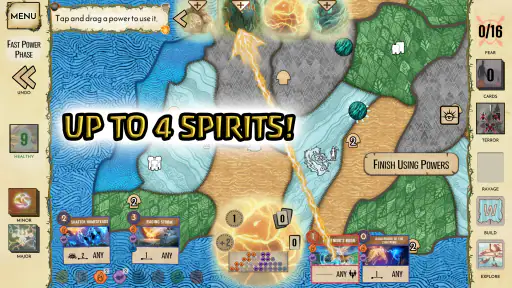
When I play with several spirits, I am effectively coordinating different roles. One spirit may be better at controlling a particular part of the island, while another can support, defend, or strike at a more suitable moment. The challenge is not just learning what each spirit can do. It is learning how their choices interact without wasting actions on overlapping solutions.
More From Our News Desk

Weather by Xiaomi Review: Clear at a Glance, Less Clear Up Close

X Under Pressure: Can It Recover When Posting Goes Wrong?

Clash of Clans Is Won Between the Battles

Android Auto Makes the Case for Quieter Car Software

MobiOffice: Transforming Mobile Productivity with Seamless Integration

EA SPORTS FC™ Mobile Soccer: Redefining Mobile Sports Gaming
The central lesson is that prevention is usually more valuable than cleanup. If I wait until every problem is obvious, I often spend several turns recovering instead of building momentum. The strongest sessions come from recognizing the shape of the next threat early enough to prepare for it.
Why the digital format matters
A physical version of a game this involved can be rewarding, but it also asks players to organize a large amount of information. On a phone or tablet, the app takes over the repetitive handling that can slow a tabletop session. I can concentrate on the decisions rather than repeatedly checking whether every piece is in the correct place.
That convenience is especially useful when I want to practice alone. Solo play is not just a fallback here; it is a practical way to understand how the spirits complement one another. I can try a conservative approach, replay the situation, and compare it with a riskier plan without needing another person to learn the rules at the same time.
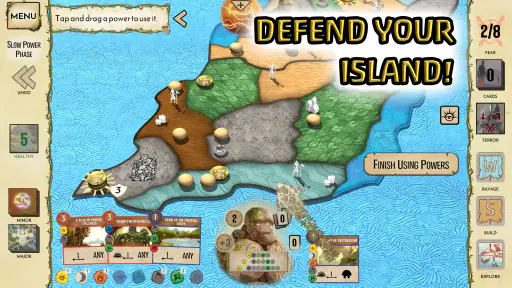
Still, the screen does not remove the mental workload. The board can become visually busy, and I need to inspect several areas before committing to a turn. On a smaller phone, that process can feel cramped compared with a tablet or a physical table. I would choose a larger screen for serious sessions, particularly when controlling more than one spirit.
Learning the game without rushing
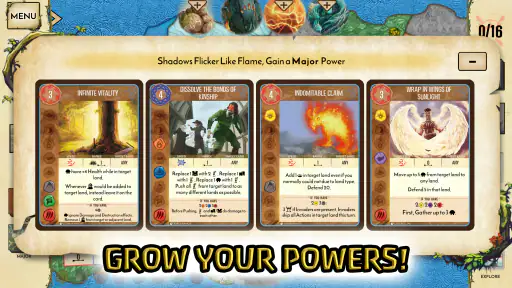
New players should expect a learning period. The broad idea is easy to explain, but the consequences of a decision can be hard to see until I have played a few turns. A card that appears useful may be less valuable than a simpler action that prevents an escalation. Likewise, a spirit that looks powerful may require careful positioning and timing before it becomes effective.
My advice is to begin with one spirit and treat the first session as a lesson in priorities rather than a test of skill. I would focus on understanding how threats develop, how the island changes, and why some problems deserve attention before others. Trying to control several spirits immediately can turn an already demanding game into an exercise in remembering procedures.
It also helps to pause before each turn and ask one practical question: what will become worse if I do nothing? That question keeps me from chasing every visible issue. It encourages the kind of forward planning the game rewards and makes the interface feel less overwhelming.
How a typical session feels in practice
In practice, I get the most from a session when I give myself room to inspect the board before acting, rather than trying to solve the first visible threat immediately. That small pause helps me connect a spirit’s immediate move with what the group may need later. The next section considers why that careful rhythm can be rewarding for some players but demanding for others.
From immediate danger to longer-term planning
A session usually begins with a board that looks manageable enough, but the pressure builds quickly if I treat each turn as an isolated puzzle. The game pushes me to connect present actions with future consequences. I need to consider where settlers are active, where the land is vulnerable, and which spirit has the best chance of changing the situation before it spreads.
The most satisfying turns are rarely spectacular. Sometimes the best result is preventing a chain of problems, protecting a key area, or setting up a combination that will matter later. The game rewards players who notice these quiet gains. If I only judge a turn by how much I destroyed, I can easily miss the strategic value of defense, movement, or preparation.
Cooperation works best when each player explains intentions rather than simply announcing actions. In a shared game, it is tempting to solve the problem directly in front of me and let someone else handle their region. That approach can waste opportunities. A spirit’s action may become much stronger when coordinated with another spirit’s plan, so discussing timing is often more important than dividing the island into separate personal territories.
A realistic evening use case
Imagine I have a free evening and want a game that can be played in short focused periods rather than one uninterrupted marathon. I can start a solo session, examine the island, and make a few careful turns. If I need to stop, the digital format is more convenient than leaving a physical board assembled on a table. When I return, I can continue thinking about the same strategic problem instead of rebuilding the entire setup.
That makes Spirit Island a better fit for deliberate players than for people looking for a five-minute distraction. I would use it after work when I want something absorbing, or during travel when I have enough attention for planning. I would not choose it while waiting in a queue or when I expect frequent interruptions, because losing track of the board state can make the next decision harder.
For a group, the app can also be useful when everyone already knows the game and wants to get into a session without spending time arranging components. The cooperative nature means it can replace a traditional board setup in situations where carrying the physical game is inconvenient. However, the social experience is still different from sitting around a table. Players who value face-to-face conversation and shared physical pieces may prefer the tabletop alternative.
Practical habits that improve decision-making
I found three habits particularly useful. First, I check the areas most likely to become dangerous before looking for an impressive attack. This prevents me from spending a turn on a satisfying action that leaves a bigger threat untouched.
Second, I avoid treating every spirit as if it should perform the same job. A spirit’s value often comes from doing something the others cannot do efficiently. Trying to make every character defend, attack, and support equally can dilute the team’s strengths.
Third, I plan around the next opportunity rather than only the current turn. If a stronger action will become available soon, I may accept a modest setback now in order to create a much better response later. This is a difficult tradeoff for beginners, but it is one of the clearest ways to improve.
These habits are not shortcuts that remove the challenge. They simply help me spend attention on the decisions that matter instead of reacting to every piece of information with equal urgency.
Where the app asks for patience
I think patience matters here not because the app relies on slow busywork, but because understanding why a plan failed takes attention. A useful way to keep early sessions manageable is to change one decision at a time, so I can tell which choice made the island harder to defend. From there, it becomes easier to judge whether the game’s demanding pace is a welcome challenge or a poor fit.
The learning curve is genuine
The biggest limitation is accessibility in the practical sense. An Everyone age rating describes who can access the game, not how easy it is to understand. Spirit Island demands more concentration than most casual board apps, and the cooperative structure can make a beginner feel responsible for several problems at once.
I would skip it if I wanted a light game with obvious turns, quick rewards, or minimal reading. I would also hesitate to recommend it to someone who dislikes planning several steps ahead. The game is not difficult because the controls are complicated; it is difficult because the consequences of small choices accumulate.
The best way around that friction is to learn slowly. I would rather replay a simple setup and understand why it went wrong than immediately add more complexity. The app becomes more enjoyable once I stop expecting every session to go perfectly and start treating failed attempts as information about the island’s priorities.
Screen size and attention affect the experience
Although the digital format reduces physical clutter, it introduces its own practical concerns. A phone screen can make it harder to compare distant parts of the island at a glance. I sometimes need to move between areas mentally, which adds friction when several effects are happening at once.
This is one reason I see the app as better suited to a tablet or a larger phone than to the smallest supported device. The minimum operating-system requirement is Android 7.0, so compatibility is broad, but operating-system support does not guarantee that every screen size will feel equally comfortable.
Another tradeoff is concentration. A physical board naturally creates a shared space where everyone can inspect the same state. On a mobile screen, the experience can become more solitary, even when the game itself is cooperative. That is excellent for solo practice, but less ideal for players who want the atmosphere of a group board-game night.
Free entry with optional spending
The free starting point makes it easier to try the game before deciding whether it belongs in my regular rotation. The optional purchases are meaningful to consider because this is the sort of title I would only pay for after confirming that I enjoy its demanding style. I would not purchase additional content simply because I liked the first few minutes; I would first complete enough sessions to know whether the strategic depth suits me.
That approach matters because the app’s value depends on repeated play. If I only want an occasional casual board game, paying for more content would not solve the basic mismatch. If I enjoy experimenting with different spirits and refining cooperative plans, optional purchases can make more sense as an extension of a game I already understand.
The 3.8 average also gives me a useful expectation: this is not a universally effortless experience. I would read that rating as a reminder to approach the app for its depth, not for instant accessibility. Players who appreciate complex cooperative decisions may find the rough edges acceptable, while casual players may prefer a simpler board game with faster feedback.
Who will get the most from Spirit Island?
The best match, in my view, is someone who enjoys tracing cause and effect and does not mind learning through setbacks. This section weighs that appeal against the needs of players who want a lighter board-game experience, while considering when solo practice or a group session is likely to be more satisfying. That distinction is the clearest guide to deciding whether the game deserves a place in your rotation.
Best for thoughtful solo players
Solo players are among the strongest candidates. The app gives me room to learn at my own pace, test different approaches, and study how multiple spirits can work together. I can pause to think without worrying that another player is waiting for my turn, which is valuable because the game often rewards careful examination.
It is also a good choice for people who enjoy improving through repetition. A failed session does not necessarily feel wasted. I can identify the moment when I reacted too late, used a spirit inefficiently, or ignored a developing threat. The next attempt becomes a practical experiment rather than a simple restart.
Best for experienced board-game groups
Groups with experience in cooperative strategy games will probably understand the appeal quickly. The teamwork has real substance because players must coordinate timing and priorities, not merely combine attacks. Everyone can contribute through a different role, provided the group communicates clearly.
That said, I would avoid letting one confident player make every decision. The game is more interesting when each person explains their own plan and the group negotiates the larger response. If one player controls the entire table, the cooperative design loses much of its value and the others may feel like assistants rather than players.
Who should choose another board game?
I would point elsewhere if the desired experience is a fast match, a party game, or a relaxing puzzle with little consequence. Spirit Island asks me to remember priorities, accept temporary losses, and think beyond the current turn. Someone who wants immediate clarity may enjoy a lighter digital board game more.
I would also recommend the physical version to players who care most about tactile components, a large shared view, and spontaneous conversation around a table. The app is more convenient, especially for solo play and storage, but convenience is not the same as atmosphere.
For players comparing it with traditional strategy alternatives, the key difference is the direction of play. Many board games focus on building an engine, expanding territory, or competing for the best score. Here, I am constantly responding to pressure while trying to make the island stronger. That defensive, cooperative focus creates a more urgent experience, but it also means I have less freedom to play casually.
After spending time with it, I see Spirit Island as a strong recommendation for a specific audience rather than a universal one. Handelabra Games has delivered a mobile board game that preserves the central tension of coordinated defense: I win by understanding the whole island, not by making one impressive move. The free entry point makes trying it sensible, and the portable format is genuinely useful for solo sessions.
My final advice is simple: start small, use a larger screen if possible, and judge the game after several thoughtful turns rather than a rushed first attempt. If you enjoy planning, cooperation, and learning from difficult losses, Spirit Island can become a remarkably satisfying strategy companion. If you want quick rules and instant results, its depth will feel more like work than entertainment.
For me, the deciding strength is the way every choice has a defensive purpose. I am not just taking actions; I am shaping what the island will need next. That makes the app demanding, occasionally crowded, and not always easy to teach, but it also gives each successful turn a sense of earned control that simpler board games rarely match.
Spirit Island Frequently Asked Questions
Does Spirit Island require a lot of time and attention during a game?
Spirit Island is best suited to players who enjoy thoughtful, turn-by-turn planning rather than quick, casual rounds. You need to consider each spirit’s abilities, coordinate powers, manage energy and cards, and respond to the invaders’ actions. Because several decisions can interact, a game may feel mentally demanding, especially while learning. It is a stronger fit for focused play than for something to pick up for a few seconds.
What kind of strategy does Spirit Island use?
Spirit Island is a cooperative settler-destruction strategy game built around preventing invaders from overwhelming the island. Rather than simply attacking, you use each spirit’s distinctive powers, coordinate effects, and plan how to handle threats as they develop. Success depends on balancing immediate dangers with longer-term growth. The game’s strategic choices make spirit combinations and changing situations central to each session.
What is Spirit Island, and how does the mobile game work?
Spirit Island is a cooperative strategy board game adapted for Android and iOS. Instead of controlling invading nations, you play as powerful island spirits defending their home from colonizers. Each spirit has unique abilities, growth options, and play styles. You combine powers with other spirits, manage energy and cards, and plan several turns ahead to prevent the island from being overrun.
Can Spirit Island be played offline or without other players?
Yes, Spirit Island can be played solo, and the digital version is designed to let one player control multiple spirits in a single game. Depending on the version and platform features available, some modes may require an internet connection for updates, purchases, or online play. The solo experience is substantial, although managing several spirits can feel demanding for newcomers.
Is Spirit Island suitable for beginners in strategy games?
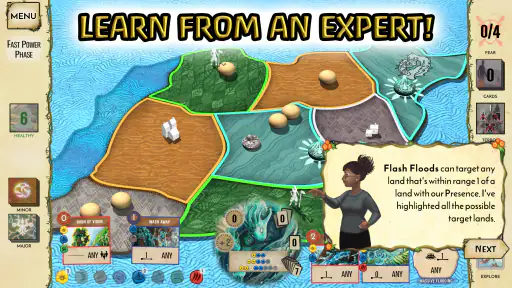
Spirit Island is accessible if you are willing to learn, but it is not a casual, instantly understandable game. The tutorial and introductory scenarios help explain the core systems, yet the number of cards, powers, invader actions, and spirit abilities can initially feel overwhelming. New players should begin with a recommended low-complexity spirit and use the tutorial before attempting advanced scenarios.
Pros
- Deep cooperative strategy rewards careful planning and teamwork.
- Highly varied spirits offer distinct playstyles and replay value.
- Faithfully captures the board game's complex mechanics on mobile.
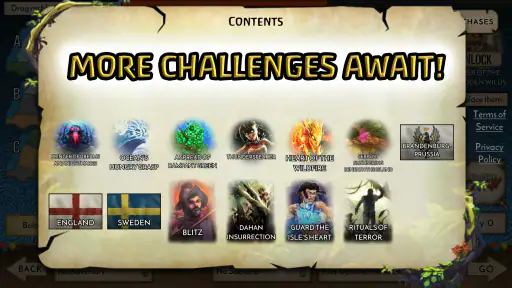
- Challenging scenarios and adversaries keep experienced players engaged.
- Offline play makes it convenient for travel or limited connections.
Cons
- The steep learning curve may overwhelm newcomers to strategy games.
- Long sessions can be difficult to complete on a phone.
- Small interface elements may feel cramped on smaller screens.
- Some advanced content may require additional purchases or expansions.
- Randomized events can occasionally make victories feel frustratingly unfair.
- Category
- Board
- Version
- 3.3.3