Root Board Game
- 404.00
- 5.0
- Installs
- 50.00K
- Price
- $9.99

Screenshots
Analysis by Reviewed
When I share a game with family or friends, I want it to give us something to discuss between turns, not just keep the screen busy. Root Board Game does that through a woodland conflict where each side approaches the contest differently. It is a paid board game from Dire Wolf Digital, with a 5.0 average from around 4,000 ratings. That enthusiasm makes sense to me, though I would recommend it to people who are willing to learn rather than anyone looking for a quick, self-explanatory family game.
What a shared evening with Root can look like
A realistic use is a quiet evening at home: a few people gather around one device, take turns, and talk through the changing board. That can be more convenient than getting out a physical game, but it is not the same as having a large tabletop everyone can inspect at once. I would make sure the screen is comfortable for everyone and agree in advance on how the device will be passed around. Those small arrangements matter more here than they do in a game where turns are almost automatic.
It also helps to plan for interruptions. If someone needs to step away, the group should agree whether to pause or continue, rather than leaving one player unsure what happened during their turn. I find that a short explanation of the current board state before play resumes is better than expecting someone to reconstruct it from memory. This is a deliberate game, so a little coordination protects the flow of the evening.
For a household that takes turns using the same phone or tablet, decide whose device is being used and who is responsible for starting the game. Do not assume that passing a device around creates separate personal accounts or keeps each person’s play distinct. If those boundaries matter to your group, settle them before buying and playing. A shared screen can make a game social, but it does not answer account or progress questions by itself.
Learning the factions and making the device work for your group
Different factions mean different homework
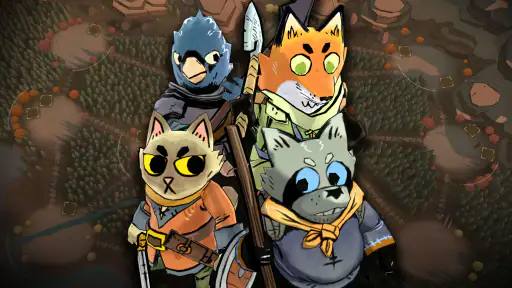
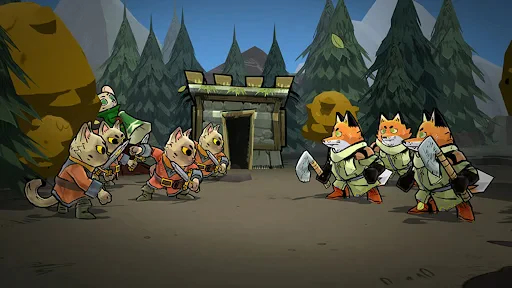
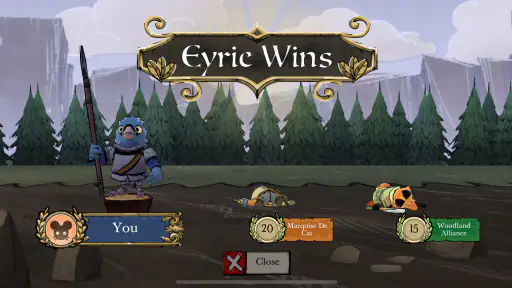
At first glance, Root Board Game might look like a cute and cuddly adventure with its adorable animal factions. But don’t be fooled by the charming graphics! This game is all about strategy and outsmarting your opponents. You’ll be choosing from various factions, each with unique abilities and goals. Whether you’re leading the Marquise de Cat in an effort to industrialize the forest or rallying woodland creatures with the Woodland Alliance, every turn counts.
Root is all about asymmetrical gameplay. Each faction has its own playstyle, making each game feel fresh and challenging. The learning curve can be a bit steep, especially if you’re new to the board game world, but once you get the hang of it, the strategic depth is incredibly rewarding. The game supports both solo play against AI and multiplayer modes, where you can test your mettle against players worldwide.
That unevenness is the main thing I would explain before inviting new players. You are not simply choosing a different color or a slightly altered version of the same role: factions ask you to think about the conflict in different ways. For a first session, I would avoid having everyone learn every faction at once. Let each person focus on the rules and aims of their own side, then pause to clarify how the others affect the board. That takes patience, but it is more useful than rushing through turns and hoping the strategy becomes obvious.
More From Our News Desk

Clash of Clans Is Won Between the Battles

Android Auto Makes the Case for Quieter Car Software

MobiOffice: Transforming Mobile Productivity with Seamless Integration

EA SPORTS FC™ Mobile Soccer: Redefining Mobile Sports Gaming

How Microsoft OneDrive Became a Mobile Productivity Giant

How Google Translate Breaks Language Barriers Effortlessly
A practical teaching approach is to ask each player to say, in their own words, what their faction is trying to achieve before play gets under way. It is a quick check that everyone has a starting point, not a test of whether they have memorized every rule. During play, experienced players can explain consequences when they arise instead of front-loading every detail. This keeps the opening from becoming a lecture while still helping newcomers understand why a move matters.
Planning around a shared device
If one person usually handles game setup, I’d make the device handoff and player order clear before beginning. That reduces the awkward pause of passing a phone around while people are still deciding whose turn it is. For a household with different preferences, solo play against AI offers a way to explore decisions without coordinating a group, while multiplayer suits players who are ready to compare plans and react to one another. I would not assume that a shared device automatically means shared progress or separate personal accounts; anyone who cares about keeping play distinct should settle that expectation before starting.
Compared with lighter board games built around quick turns and familiar rules, this asks for more attention and discussion. That is a strength when your group enjoys reading opponents and weighing consequences, but a poor fit when someone just wants a short, casual distraction. If your regular group already likes strategic tabletop games, the digital version gives you a way to play without laying out a physical board. If your group prefers simple party games, I’d choose something easier to teach.
The main trade-off against a physical copy is convenience versus shared visibility. A digital board avoids arranging components, but when several people want to examine the same situation, a single screen can feel cramped or make it harder to point out a detail. I would use the digital version when portability or a tidy setup matters most; for a group that loves leaning over a table and planning together, the physical format may feel more natural. Neither format removes the need to learn the factions.
For someone deciding whether multiplayer is the right starting point, I’d separate “learning the game” from “playing competitively.” A solo session against AI can give one person space to examine choices without holding up friends. Once the basic flow feels familiar, a group game becomes less intimidating and more conversational. If the goal is simply to spend a few minutes together with no preparation, however, even solo play may feel like more commitment than the occasion calls for.
Presentation, age, and household expectations
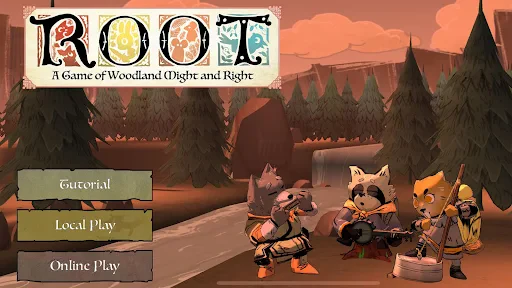
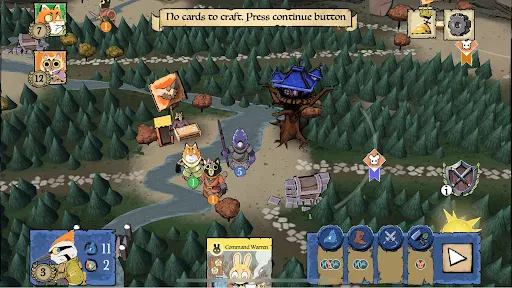
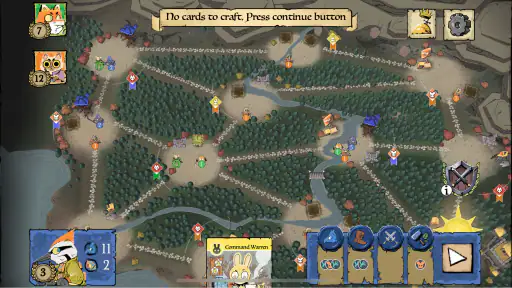
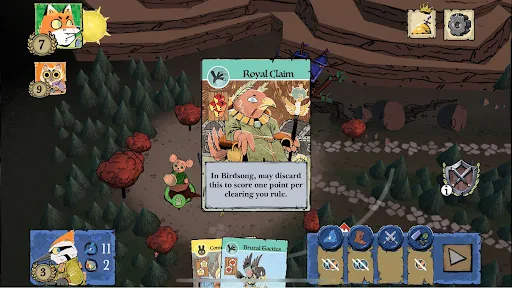
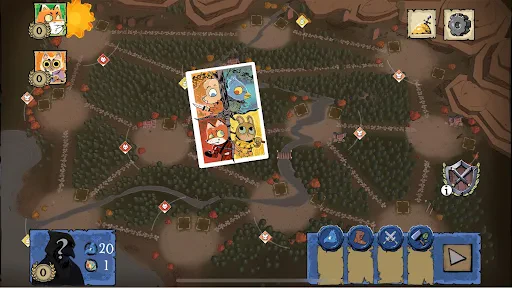
The artwork is simply stunning. The hand-drawn style gives life to the woodland setting, and the animations add a dynamic feel to the board. Each faction is beautifully represented, with intricate details that capture the essence of their characters. The music and sound effects enhance the immersive experience, making every battle and negotiation feel impactful.
The game is rated Everyone, which makes its presentation approachable for a broad age range, but I would not take that as a promise that every child will enjoy it. The challenge is understanding faction goals and following a changing contest, so younger or less experienced players may need an adult to explain the choices and keep the first session relaxed. In my view, it suits a household better when players can handle strategic decisions and accept that a loss may come from a rule they overlooked, rather than from a quick reaction.
That distinction is useful when choosing a game for mixed ages. The friendly woodland look may draw a child in, while the strategic demands can still require patient guidance. I would let the least experienced player choose a faction only after someone has described its basic aim in plain language. If the child is more interested in the artwork than in planning several moves, that is a sign to choose a lighter game for the shared session instead of expecting the visuals to carry it.
One useful trade-off to consider is cost. The game is listed at $9.99, with optional in-app purchases ranging from $5.99 to $9.99 per item. I’d decide whether the core experience is likely to get regular play before buying, and check the purchase flow together if a child uses the device. The game has reached over 50,000 installs, but popularity alone does not answer whether its slower, tactical style matches your household.
Because it is a paid game with optional purchases, I would treat the purchase decision separately from the question of whether the game suits your group. Think about how often your household actually sits down for strategy games, and whether more than one person will be interested after the first learning session. If a child shares the device, agree who can make purchase decisions before handing it over. That is a sensible household boundary, not a substitute for checking how the device’s own purchase settings work.
Replay value, useful habits, and the learning curve
One of the strongest aspects of Root is its replayability. With numerous factions and strategies to explore, no two games are ever the same. The community is active and welcoming, providing a wealth of resources and strategies for newcomers and veterans alike. Engaging with other players can lead to exciting discussions and strategies that you might not have considered.
For a more useful first play, I’d focus on learning what your own faction is trying to accomplish instead of trying to master the whole forest at once. After the game, talk through one decision that changed the board; that makes the next session easier to understand without turning the evening into a rules lecture. Players who prefer to learn by watching may find the early games frustrating, so patience from experienced friends matters. The current version is 1.31.4 and the minimum Android requirement is 6.0, details worth checking against the device you plan to use.
Another helpful habit is to keep the first session’s goal modest: understand the basic rhythm and notice what other factions can do, rather than trying to make a brilliant winning plan immediately. If your group is competitive, agree that explaining a key consequence is welcome during that first game. If everyone prefers to discover rules through play, accept that some early decisions may be imperfect. Either way, a brief pause to summarize the board after an interruption can prevent the next player from feeling lost.
Root is a better match for a planned game night than for an unplanned gap in the day. Its asymmetry gives returning players new angles to explore, but it also means a newcomer may need more than one session before the choices feel intuitive. I would recommend it to friends who enjoy tactical board games and like discussing why a move worked. I would steer away anyone who wants a low-effort game that can be explained in a sentence and played without much attention.
For people comparing it with the usual digital board-game options, the key question is not simply whether they like strategy. It is whether they enjoy learning different roles and tracking how those roles affect one another. A familiar, symmetric game is usually easier to teach because everyone follows much the same structure. Root offers more variety in how players approach the board, but the reward comes with a higher explanation cost. I would choose it for a group that values that variety, not as a default replacement for every board game.
Who I would recommend it to
If you already have a regular group that likes thoughtful turns, Root can give an evening a clear shared focus. It is especially suitable when players are comfortable asking questions, taking time to plan, and treating an early loss as part of learning. It also works for a solo player who wants to explore decisions against AI before inviting others. For a household, the strongest fit is a group that can agree on device sharing and make room for the learning curve without expecting every player to enjoy it equally.
I would skip it when the main goal is to keep a mixed group instantly entertained, when people dislike reading rules, or when the device will be passed around without anyone wanting to coordinate. If your group mainly wants quick laughs and simple turns, a party-style board game is a more dependable choice. If you enjoy strategy but want everyone to start from broadly similar rules, a more conventional board game may be easier to bring to the table.
In conclusion, if you’re looking for a game that combines cute graphics with deep, strategic gameplay, look no further than Root Board Game. It’s a game that challenges your mind while keeping you thoroughly entertained. So gather your courage, choose your faction, and dive into the woodland war. You won’t regret it!
My household verdict is more conditional: I’d recommend it to a group that enjoys deliberate strategy, can make room for a learning session, and is happy to coordinate around the device. I would skip it for a family wanting instant rules, very short rounds, or a game everyone can understand at a glance. If that sounds like your group, its distinctive factions and replay value can make the initial effort worthwhile; if not, a simpler board game will probably lead to a better evening.
Root Board Game Frequently Asked Questions
Who developed Root Board Game, and what kind of game is it?
Root Board Game is a digital board game from Dire Wolf Digital. It brings woodland warfare to a screen, with strategic play centered on competing animal factions. If you enjoy games where each side has its own goals and decisions matter throughout a match, Root offers a distinctive alternative to a straightforward, head-to-head board game.
What is the Root Board Game app about?
The Root Board Game app is a digital adaptation of the popular tabletop game 'Root.' It immerses players in a strategic quest within a forest kingdom, where various animal factions vie for control. The app replicates the intricate gameplay and strategic depth of the original board game, offering both solo and multiplayer modes.
Is the Root Board Game app suitable for beginners?
While the Root Board Game app offers a rich strategic experience, it might present a steep learning curve for beginners unfamiliar with the original board game. However, the app includes tutorials and guides to help new players understand the gameplay mechanics and strategies, making it accessible with some patience and practice.
Can I play the Root Board Game app offline?
Yes, the Root Board Game app offers offline gameplay modes. Players can enjoy solo matches against AI opponents without needing an internet connection. However, for multiplayer experiences and online features, an active internet connection is required to connect with other players worldwide.
Are there any in-app purchases in the Root Board Game app?
The Root Board Game app offers in-app purchases, primarily for expansions and additional content that enhance gameplay. The game costs $9.99, and in-app purchases range from $5.99 to $9.99 per item. While the base game provides a complete experience, purchasing expansions can unlock new factions, maps, and scenarios, offering extended replayability for dedicated players.
Pros
- Engaging strategy gameplay.
- High replayability value.
- Beautifully designed interface.
- Interactive tutorial for beginners.
- Multiplayer feature for fun with friends.
Cons
- Steep learning curve for new players.
- Occasional server connectivity issues.
- In-app purchases can be expensive.
- Requires a lot of device storage.
- Limited offline gameplay options.
- Category
- Board
- Version
- 1.31.4