Road of Kings - Endless Glory
- 3.26K
- 4.2
- Installs
- 1.00M
- Price
- Free

Screenshots


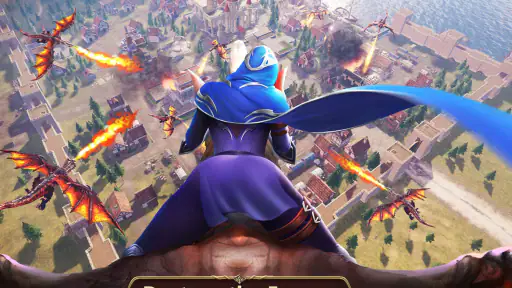





Analysis by Reviewed
I spent time with Road of Kings - Endless Glory as a mobile strategy game, and my first impression was that it wants to make ruling feel personal rather than purely mathematical. You are not simply placing buildings or moving troops around a map. The fantasy is broader: you build influence, enlarge your territory, manage relationships, and make choices that can make your kingdom feel either carefully controlled or pleasantly chaotic. That combination gives the game a different mood from a straightforward base-building title.
It is free to download, but it is aimed at adults, with a Mature 17+ content rating and optional purchases ranging from $0.99 to $99.99 per item. That matters because the game’s appeal depends partly on whether you enjoy a long-running strategy experience with social and romantic elements, rather than a short, self-contained campaign. I would recommend trying it if you like kingdom management with a dramatic tone. I would be more cautious if you want a clean, competitive strategy game with no distractions from the central battlefield.
What the current game feels like to play
The basic attraction is easy to understand. You begin with the idea of becoming a ruler, then gradually turn that role into a series of decisions about territory, progression, alliances, and personal relationships. The store summary’s promise of dating several lovers, annexing land, and expanding power is not just decorative wording; it describes the game’s unusual blend of court drama and strategic growth. I found that the political and personal sides give the routine tasks more context than they would have in a conventional city builder.
In practical terms, I approached each session in two ways. Sometimes I opened the game for a quick check of my kingdom and progress. At other times I stayed longer to work through several connected decisions. That makes it suitable for players who enjoy returning frequently, but it also means the experience can feel less satisfying if you only want a ten-minute game with a clear beginning and end. The game is built around continued development, so patience is part of the design.
The strategy category is a good fit, although this is not the kind of strategy game I would choose for a pure test of tactical skill. Its appeal comes from balancing several forms of advancement at once. Expanding too quickly can leave you feeling less prepared, while focusing only on internal development can make the wider kingdom feel static. I liked having to think about momentum instead of treating every action as an isolated button press.
One useful habit is to decide what kind of ruler you want to be before spending resources. I found it easier to judge opportunities when I had a priority in mind, such as strengthening the kingdom first or pushing outward into new territory. Without that plan, it is tempting to follow every available prompt and lose track of why a particular upgrade matters. This is one of the game’s less obvious challenges: the interface may show many possible actions, but not all of them deserve equal attention at the same moment.
Why the court setting changes the strategy loop
The relationship system gives the game a tone that separates it from familiar medieval strategy apps. Romantic interactions are part of the ruler fantasy, and they make the experience more character-focused than a standard map-and-resources game. I did not see those scenes as a replacement for strategy; they work more as a second layer that gives the kingdom a sense of personality. Players who enjoy narrative flavor will probably appreciate that extra dimension.
There is also a trade-off. If you prefer to keep your attention on territory and progression, the court material can feel like a detour. I sometimes wanted a clearer connection between a personal choice and my immediate strategic objective. The game is strongest when the two sides support each other, but not every player will enjoy switching between ruler drama and kingdom management. That is a matter of taste, not a flaw that affects everyone equally.
A realistic everyday use case would be playing during a commute, a lunch break, or while waiting for an appointment. I would first review the state of the kingdom, collect or apply whatever progress was ready, then choose one meaningful objective rather than tapping through everything available. That approach keeps a short session focused. If I had more time later, I could return to the relationship and expansion elements without feeling that I had wasted the earlier visit.
How the updated build fits into the experience
The current version is 3.8.9, which tells me this is a mature, continuing release rather than a newly launched experiment. The game originally arrived on November 25, 2019, so existing players have had a long period in which the experience could develop. I would not treat the version number alone as proof that every part of the game has been transformed, but it does place the current build in the context of an established product with a history behind it.
For someone returning after time away, the sensible approach is to spend the first session observing rather than immediately committing every available resource. A returning player may remember the broad idea of ruling and expansion but not the best order for current tasks. I would check how the kingdom is progressing, identify which systems are already active, and then rebuild a routine around the present interface. That reduces the chance of following an old habit that no longer matches the way the current version presents progress.
The game runs on Android devices using version 7.1 or later, which keeps the minimum operating-system requirement relatively approachable for people who are not using the newest phone. Still, compatibility is not the same as comfort. A strategy game with many panels and ongoing activities is easier to enjoy on a device with a responsive screen and enough space to read its information. If your phone is older, I would pay attention to how quickly menus open and how comfortable the text feels before deciding whether it deserves a permanent place on your home screen.
HeroNow Games has kept the product active as a recognizable long-form strategy title, and that continuity is valuable for players who dislike games that disappear after a brief launch period. At the same time, a long-running game can feel intimidating to a newcomer. You are entering a world that may seem to have many layers already in motion. I recommend treating the early period as orientation instead of trying to understand every system immediately.
What the audience response suggests
The game has an average rating of 4.2 from around 70 thousand ratings, with roughly 3.3 thousand written reviews. It has also passed one million installs. Those figures suggest that Road of Kings - Endless Glory has found a substantial audience, but they do not tell me that it will suit every strategy fan. The combination of a solid average and a large player base is encouraging for someone looking for an established mobile game, while the Mature 17+ label remains important for deciding whether its tone is appropriate for you.
I would read the audience response as evidence of staying power rather than a guarantee of perfect balance. Players who enjoy the royal role-playing angle may rate it highly because it offers more than construction and combat. Players who want a tightly focused tactical contest may judge the same mixture less favorably. In my experience, the game makes the most sense when you approach it as a hybrid: part kingdom progression, part court fantasy, and part ongoing collection of decisions.
Where new players can lose time or resources
My biggest practical warning is to avoid treating every available action as equally urgent. The game encourages a busy style of play, and a new ruler can easily mistake activity for progress. I preferred to choose a primary goal, such as preparing for expansion, and then use secondary actions only when they supported that goal. This simple filter made the interface feel less crowded and helped me understand the consequences of each decision.
A second useful tip is to separate experimentation from commitment. When an option affects the direction of the kingdom, I would first consider whether it supports my current plan or merely looks attractive because it is immediately available. This is especially helpful for players who are used to fast mobile games where pressing the highlighted button is usually correct. Here, slowing down for a moment can produce a more coherent run.
The third insight concerns spending. Because purchases are optional and can reach $99.99 per item, I would not begin by assuming that buying something is necessary to understand the game. I recommend learning the normal rhythm first, then deciding whether a purchase solves a real frustration or simply accelerates a process you have not yet learned to enjoy. That distinction matters in a progression-focused strategy game. Spending may save time, but it does not automatically make the decisions more interesting.
How it compares with more traditional strategy games
Compared with a classic city builder, this game places more emphasis on the ruler’s identity and personal life. A conventional alternative may give you a cleaner view of production chains, construction order, and defensive planning. Road of Kings - Endless Glory feels more theatrical. It asks what kind of monarch you want to embody, not only which building should come next. I found that more memorable, although players who want a highly transparent economy may prefer the simpler structure of a traditional builder.
Compared with a competitive war strategy game, it is less appealing if your main goal is immediate, skill-based conflict against other players. Its broader court-and-kingdom framing gives you more to think about, but it can also dilute the intensity of a pure tactical contest. I would choose this game for a relaxed, ongoing fantasy of ruling. I would choose a dedicated battle strategy title when I wanted every decision to lead directly to a confrontation on the map.
It also differs from a purely narrative role-playing game. You are not only reading a story or selecting dialogue; the kingdom’s expansion and development remain central to the experience. That makes it a better fit for someone who wants agency over a growing realm. However, anyone expecting a tightly authored story with a fixed dramatic arc may find the ongoing structure less focused than a traditional role-playing game.
Limitations that affected my enjoyment
The largest limitation is the amount of mental switching. The game asks you to move between expansion, progression, and personal relationships, and that variety is also what can make it feel unfocused. On a good day, the mixture creates a satisfying sense of being a ruler with many responsibilities. On a tired day, it can feel like several smaller activities competing for attention.
The long-term format is another consideration. Progress feels more rewarding when I return regularly, but less rewarding when I expect a complete experience in one sitting. If you dislike waiting for development or prefer games that offer a definitive finish, this may not be the right choice. The free entry makes trying it easy, yet the ongoing structure still asks for a commitment of attention.
The Mature 17+ rating should also guide your decision before installation. This is not a neutral fantasy setting designed for every age group. The romantic and adult presentation is part of the game’s identity, so parents looking for a general-audience strategy game should skip it rather than relying on the kingdom-building label alone.
Finally, the optional purchase range means I would keep a personal spending limit. Even when the free path is enjoyable, a player who is highly invested in rapid advancement may feel pressure to pay for convenience. My advice is to decide in advance whether you are playing for planning and atmosphere or for speed. If speed is the priority, the purchase system becomes more relevant; if discovery is the priority, patience is usually the better first strategy.
Who should try it and what to watch next
I think Road of Kings - Endless Glory is best for adults who like mobile strategy with a strong royal fantasy, ongoing progression, and relationship-driven flavor. It is particularly suited to players who enjoy checking a kingdom repeatedly and making gradual improvements rather than finishing a campaign in a weekend. The game’s established audience and continuing version history make it a reasonable choice for someone who wants a title with staying power.
I would skip it if you want a minimalist strategy interface, a purely tactical battlefield, or a family-friendly fantasy game. I would also look elsewhere if you dislike games that combine several progression layers or if optional purchases make you uncomfortable. A focused city builder is likely a better alternative for economic planning, while a dedicated tactics game will better serve players who want direct combat decisions.
For existing users, the most useful way to approach the current build is to watch how your established routine fits the present progression path. Do not assume that the fastest-looking action is the most valuable one. Reassess your priorities after returning from a break, especially before expanding aggressively or spending. For new users, watch whether the relationship and ruler elements genuinely add enjoyment after the novelty fades. That answer will tell you more than the store summary can.
My final view is positive but selective. This is a strategy game for players who want to feel like a character inside the kingdom, not just the person operating it. I enjoyed the way territorial ambition and court life give each session a distinctive personality, and I appreciated having room to choose my own priorities. The experience is less convincing when its different layers pull in opposite directions, and the long-term purchase structure deserves a measured approach.
If that blend sounds appealing, the free download gives you a sensible way to test the tone, pace, and amount of management before investing anything. I would begin slowly, set a spending boundary, and judge the game by whether its royal drama makes routine progression more engaging. For the right player, that is the reason to stay with it; for everyone else, a more focused strategy alternative will probably be more satisfying.
Pros
- Large-scale kingdom battles offer plenty of long-term goals.
- Hero collection and upgrades provide meaningful strategic variety.
- Alliance features make cooperation and coordinated attacks rewarding.
- Frequent events help keep the gameplay active between major battles.
- The fantasy visuals and character designs are appealing on mobile screens.
Cons
- Progress can become heavily dependent on spending as competition increases.
- Many upgrades and resources may feel overwhelming for new players.
- Timers and energy limits can slow progress during longer sessions.
- Power differences between players may make PvP feel unbalanced.
- The game requires a stable internet connection to play.

- Category
- Strategy
- Version
- 3.8.9