Papa's Pizzeria To Go!
- 467.00
- 4.3
- Installs
- 100.00K
- Price
- $0.99
Screenshots
Analysis by Reviewed
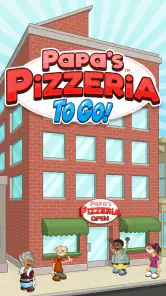
For me, the main appeal of Papa's Pizzeria To Go! is that it turns a familiar pizza-shop routine into a compact strategy game: listen to what each customer wants, prepare the order carefully, and keep the work moving. That rhythm suits a short break, though it can feel demanding if you want a game you can play without paying attention. Flipline Studios made this paid mobile entry in its Papa’s series, and the touch controls make the hands-on work feel at home on a phone.
Where the work gets tricky
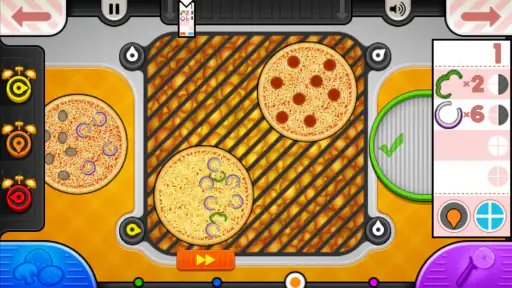
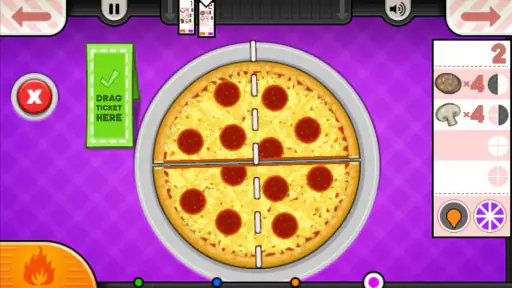
The challenge is less about learning a complicated control scheme and more about keeping several parts of an order straight. Taking a request is only the start; sauce, toppings, baking, and slicing all affect how well the finished pizza matches what the customer asked for. I’d focus on accuracy before speed when starting out. Rushing through each station can make a run feel hectic, while a steady rhythm gives you a better chance to remember the details.
That makes the game a good fit for players who enjoy time-management decisions and incremental improvement. If you prefer a strategy game built around long-term planning, a map, or a broad set of tactical options, this is a much narrower kind of strategy: your decisions happen in the flow of the kitchen. Someone looking for a quiet, hands-off experience may also find the repeated order cycle more demanding than relaxing.
Getting comfortable with the routine
I find it helps to treat each pizza as a sequence rather than trying to remember the whole order at once. Read the request carefully, then give your attention to the current step before moving on. When the pace picks up, that simple habit can prevent avoidable mistakes. It also makes short play sessions more satisfying: instead of chasing a perfect score immediately, I can concentrate on one part of the process and gradually become more consistent.
For an everyday example, it works well as a quick game while waiting for a ride or taking a lunch break, provided you have enough attention to follow an order through. It is not the best choice if you have only a few distracted seconds, since the appeal depends on completing the chain of kitchen tasks rather than tapping once and putting the phone away. The mobile format is convenient, but the active workflow is still the point.
Gameplay Experience
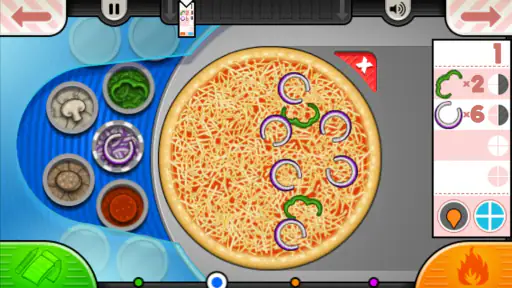
First things first, Papa's Pizzeria To Go! brilliantly captures the charm of the original flash game but optimizes it for mobile devices. The game kicks off with our beloved character, Roy, suddenly left in charge of Papa Louie's pizzeria. Your mission? To whip up delicious pizzas, of course! The controls are intuitive, with a simple tap and drag interface that feels natural on a touchscreen. You’ll be taking orders, spreading sauce, adding toppings, baking perfection, and slicing like a pro in no time.
Graphics and Sound
Now, let’s talk about the graphics. The developers have stayed true to the colorful, cartoonish style that made the original game so fun and inviting. Everything is bright and vibrant, with animations that are smooth and engaging. The sound effects and upbeat music add an extra layer of excitement, making the game even more immersive. Every time you hear that "ding!" when a pizza is ready, it’s just pure satisfaction.
More From Our News Desk

Weather by Xiaomi Review: Clear at a Glance, Less Clear Up Close

X Under Pressure: Can It Recover When Posting Goes Wrong?

Clash of Clans Is Won Between the Battles

Android Auto Makes the Case for Quieter Car Software

MobiOffice: Transforming Mobile Productivity with Seamless Integration

EA SPORTS FC™ Mobile Soccer: Redefining Mobile Sports Gaming
Challenges and Progression
One of the aspects I love is the game’s progression system. As you advance, new ingredients and customers are introduced, each with their unique preferences, keeping you on your toes. The challenge ramps up gradually, ensuring that you’re always engaged without feeling overwhelmed. Plus, the game introduces special events and holidays, which not only add a festive touch but also spice up your pizzeria with themed ingredients and decorations.
There's something incredibly rewarding about perfectly timing each pizza, getting the crust just right, and watching your tips roll in. Trust me, seeing those happy customer faces never gets old!
Replayability and Updates
What really keeps me coming back to Papa's Pizzeria To Go! is its replayability. The game encourages you to improve with each playthrough, striving for higher scores and better tips. The developers also frequently update the game with new content, ensuring it remains fresh and entertaining.
Price, audience, and expectations
The game is rated Everyone, and its average score is 4.3 from around 7,500 ratings; it has also passed 100,000 installs. I’d recommend it most to players who enjoy learning a repeated process and polishing their performance. The mobile edition costs $0.99, with optional in-app purchases ranging from $0.99 to $4.99 per item, so it is worth checking the purchase details before deciding whether those extras suit you.
It was released on November 12, 2014, and version 1.1.4 is the current version. That age is useful context if you are choosing between this and a newer game: the appeal here is the established, focused Papa’s kitchen formula, not a promise of a constantly changing experience. The game has 467 written reviews, but I would judge it by whether you enjoy its particular mix of careful assembly and time pressure rather than by numbers alone.
When a snag may be outside the game
If a session feels unresponsive, I’d first check the simple things: make sure the device is reacting normally to touch, close other demanding activity, and reopen the game if it has stopped responding. If the same problem continues, checking that the installed version is current is a sensible next step. Those basic checks are more useful than assuming every missed action is a flaw in the game; precise tapping and dragging are part of the kitchen routine, and a distracted or poorly registered gesture can interrupt it.
For players comparing it with other strategy games, this is best understood as a focused service-and-timing challenge rather than a broad management simulator. It gives you a clear job to do and room to improve at it, but its appeal depends on enjoying repetition with small variations. If that sounds satisfying, the compact format makes it easy to return for another shift. If you want a story-led adventure or a game with more varied strategic systems, I’d choose something else.
Whether you're a seasoned pizza pro or a newcomer to Papa’s franchise, this game offers hours of addictive fun. It's a delightful blend of strategy, time management, and pure joy. So, if you haven't downloaded it yet, what are you waiting for? Slap on that apron and get cooking!
Choosing the right moment to play
The best time to pick this up is when you can give a few minutes of steady attention, not necessarily when you have a long stretch free. A single order naturally breaks into manageable actions, but interruptions can make it harder to keep track of what you were doing. I’d avoid starting a shift while walking, juggling a conversation, or waiting for something that may call you away at any second. The game’s short-session appeal comes from being able to make progress in a small window, not from being interruption-proof.
It can also suit a shared household in a simple way: one person can handle the order while another watches for details or suggests how to keep the stations moving. That works best as casual cooperation rather than a substitute for the game’s own challenge. If you prefer to concentrate alone, the clear customer requests and visible stages make it easy to settle into your own rhythm. Either way, I find the most satisfying goal is improving consistency, rather than treating every order as a race.
Small habits that make orders easier
One useful habit is to separate reading from execution. I take a moment to understand the request before I start moving ingredients, then check the finished pizza against the order before serving it. That quick mental pause helps when the request contains several details, because it reduces the temptation to rely on memory alone. It is not a shortcut that removes the challenge; it is a way to keep the challenge focused on timing and precision instead of avoidable confusion.
I’d also pay attention to which part of the process causes the most trouble. If toppings are the weak point, slow down there until placement feels reliable; if timing is the issue, concentrate on watching the baking stage rather than trying to do everything quickly. This kind of self-correction is one of the game’s quiet strengths. You can turn a disappointing run into a practical lesson, then test whether the adjustment helps on the next orders. It gives each session a modest, clear purpose.
There is a trade-off, though: careful play can feel methodical, especially if you expect every round to introduce a radically different activity. The enjoyment comes from applying familiar steps to changing customer preferences and gradually handling the routine better. Players who like refining a process may find that loop calming and rewarding; players who need constant novelty may feel they have seen the core appeal early on.
How it differs from other strategy games
Compared with turn-based strategy games, this one asks for practical attention in the moment instead of offering time to inspect a board and plan several moves ahead. Compared with broad restaurant or business simulators, its focus is the order itself: reading, preparing, baking, and serving. That narrower scope is a real advantage on a phone because it makes the goal immediately understandable, but it also means players should not expect deep economic planning or a large set of strategic systems.
For me, the closest comparison is another time-management game that makes the player coordinate a sequence of tasks. The difference that matters is the pizza-specific assembly: customers’ preferences make accuracy part of the challenge, not just speed. If you enjoy spotting how an order differs from the last one and translating that into careful actions, this is a better fit than a game built mainly around upgrading a business or exploring a large world. If variety of setting and mechanics matters most, a broader alternative would be a better use of your time.
What the purchase means in practice
Because this is a paid game with optional purchases, I’d decide first whether the basic kitchen loop sounds appealing on its own. The listed price is modest, but the optional items are a separate choice; I wouldn’t treat them as necessary to enjoy the central appeal. The game’s value depends less on how many extras you collect and more on whether you like returning to the same stations to become more accurate. If you are unsure, think about whether you normally enjoy replaying a task to improve your result.
The Everyone age rating makes it suitable for a broad audience, and the cartoon presentation keeps the tone light. Still, suitability does not guarantee that every player will enjoy the pace. Younger players or anyone new to this kind of game may benefit from taking orders slowly at first, while someone who dislikes timed multitasking may find the pressure frustrating even though the theme is cheerful. I’d choose it for a player who likes hands-on challenges, not simply for someone who likes pizza or bright graphics.
When troubleshooting is worth trying
If taps or drags seem to miss, I’d first pause and see whether the issue repeats in the same part of an order. A rushed gesture can look like a control problem when it is really just a movement that did not land where intended. I’d make deliberate, uncomplicated movements, check that the screen responds normally elsewhere, and then reopen the game if it has frozen. These are sensible first steps because they distinguish a one-off interruption from a recurring device or game issue without guessing at a cause.
If a problem returns after reopening, I would avoid making several changes at once. Check whether the game is up to date, then test again so you can tell whether anything changed. If the device is struggling with other apps too, the game may not be the source of the trouble; if only this game behaves oddly, it is more useful to focus on its current installation and version. I would not assume that a missed order or imperfect score means something is broken: mistakes are also part of learning the pace.
Who should choose something else
I would skip this one if you want a relaxing game that can be played while barely looking at the screen, since every order asks you to stay involved. I’d also look elsewhere if you want a large story, open-ended exploration, or strategy that revolves around long-range planning. This is deliberately more immediate and repetitive: the pleasure is in doing the kitchen work well and noticing improvement, rather than unlocking an entirely new style of play every few minutes.
On the other hand, it is an easy recommendation for someone who enjoys quick, focused challenges and does not mind repeating a familiar sequence. It can fill a short pause, provide a gentle test of attention, or give a fan of Flipline Studios’ cooking games a compact version of that service-counter routine. I would start with a calm pace, learn the order of operations, and let speed come later. That approach makes the game feel more like a satisfying skill to polish than a frantic race.
My practical verdict is that this is a focused, approachable strategy game whose strongest feature is the way it turns ordinary order handling into a hands-on routine. Its limitations are just as clear: the play is repetitive by design, and it asks for attention at times when some mobile games do not. If you enjoy careful assembly, timing, and small improvements from one customer to the next, I think it earns a place on your phone. If you want variety above all else or need a game that tolerates constant interruptions, I’d pass and choose a broader or less active alternative.
Papa's Pizzeria To Go! Frequently Asked Questions
Is Papa's Pizzeria To Go! suitable for children?
Papa's Pizzeria To Go! is rated Everyone, making it suitable for a broad audience, including younger players. Its focus is on preparing and serving pizzas, with strategy and time-management elements at the center of play. Parents looking for a light restaurant game may find its approachable theme appealing, while children can practice keeping track of customer orders and completing tasks.
Do I need to pay to download Papa's Pizzeria To Go!, and are there optional purchases?
The game costs $0.99 to download, and it also offers in-app purchases priced from $0.99 to $4.99 per item. That means the initial purchase and optional extras are separate considerations when deciding whether it suits your budget. Papa's Pizzeria To Go! is a strategy game from Flipline Studios, built around topping, baking, and serving pizzas.
What is Papa's Pizzeria To Go! and how does it differ from the original version?
Papa's Pizzeria To Go! is a mobile version of the popular time-management game where you run a pizzeria. Unlike the original, this version is optimized for touchscreens, offering a more intuitive interface for mobile devices. It retains the core gameplay mechanics but has been streamlined to fit smaller screens and ensure smooth performance on smartphones.
Can I play Papa's Pizzeria To Go! offline?
Yes, one of the great features of Papa's Pizzeria To Go! is that it can be played offline. This makes it perfect for gaming on the go, without worrying about internet connectivity. You can enjoy managing your virtual pizzeria anytime and anywhere, making it a convenient option for users who travel frequently or have limited data plans.
Are there any in-app purchases in Papa's Pizzeria To Go!?
Papa's Pizzeria To Go! does have in-app purchases, with optional items priced from $0.99 to $4.99. The game is also a paid download, so consider both the purchase price and any optional extras before installing. Its central appeal remains the pizza-making routine: topping orders, baking them, and serving customers as you manage the pizzeria.
Pros
- Intuitive and easy-to-use controls.
- Engaging gameplay with multiple levels.
- Regular updates with new content.
- Supports offline play.
- Colorful and fun graphics.
Cons
- Limited free features without purchase.
- Some levels can be repetitive.
- In-app ads can be intrusive.
- Requires internet for updates.
- High battery usage on some devices.
- Category
- Strategy
- Version
- 1.1.4