Papa's Cheeseria To Go!
- 194.00
- 4.6
- Installs
- 100.00K
- Price
- $1.99

Screenshots
Analysis by Reviewed
On a short break, I like a game that gives me something to focus on without asking me to learn a complicated system. Papa’s Cheeseria To Go! fits that mood: I take sandwich orders, assemble them, and try to keep the work moving as the shop gets busier. The cheerful presentation makes the first visit inviting, though the real appeal is the steady rhythm of turning a customer’s request into a finished meal.
A small shop with a clear visual identity
The colorful, cartoon-like art gives the game a lighthearted setting, and its playful animations help make each shift feel lively rather than sterile. That style suits the subject: grilled sandwiches are the whole point, so the food and shop details keep the action grounded in one cozy premise. I also like that decorating the shop and customizing the worker offer small ways to make the place feel like mine, rather than just a succession of identical counters.
Those touches are mainly for personality, not a reason to expect a deep design simulator. I’d treat customization as a pleasant side activity between shifts. If you want a game centered on building elaborate spaces, this one is more focused on the daily work of the shop.
That distinction helps set expectations before getting attached to the decorations. I find the visual changes most satisfying when I think of them as a little reward for time spent working, not as the main progression system. Someone who enjoys giving a character a personal look or making a shop feel less anonymous will get a modest extra pleasure from it; someone hoping to plan a floor layout or shape a business from the ground up should look elsewhere.
The workday sets the pace
Taking an order, grilling bread, layering ingredients, and serving the result creates a satisfying routine. At first, the steps are easy to follow; later, more involved requests and overlapping tasks ask for better attention. I find it most enjoyable when I focus on one part of the order at a time instead of rushing every station at once. That small habit makes the busy stretches feel manageable without removing the pressure that gives the game its strategy.
The short mini-games after workdays add a useful change of tempo and a chance to earn in-game currency. They break up the sandwich shifts, although players who only want the central cooking loop may see them as a detour. I’d use them as a palate cleanser rather than something to rush through just to get back to work.
For me, the key is to treat a shift as a sequence of small decisions rather than one long test of speed. I check what each customer actually asked for, keep an eye on the bread while moving through the other parts of the order, and avoid tapping just because the queue looks intimidating. That order of attention is useful because a sandwich can be assembled accurately only if I have not let an earlier step drift out of view. The game rewards calm coordination more than frantic activity.
More From Our News Desk

Weather by Xiaomi Review: Clear at a Glance, Less Clear Up Close

X Under Pressure: Can It Recover When Posting Goes Wrong?

Clash of Clans Is Won Between the Battles

Android Auto Makes the Case for Quieter Car Software

MobiOffice: Transforming Mobile Productivity with Seamless Integration

EA SPORTS FC™ Mobile Soccer: Redefining Mobile Sports Gaming
The mini-games also change how I think about the end of a workday. They are a break from the counter, but they can be useful if I want a little extra currency for the personal touches. If I am playing for only a few minutes, I may prefer to finish the shift and stop there; if I have time to settle in, the brief change in activity keeps the overall session from feeling like the same sequence repeated without pause.
Who will enjoy the challenge
The difficulty rises as the days go by, and customer requests can make the pace feel more like a lunch rush than a relaxed cooking session. Still, I find the challenge fair: the goal is to improve how I handle the flow, not to master a complicated strategy spreadsheet. Replaying days to sharpen a score gives the routine a reason to continue, though people who dislike repeating task-based levels may lose interest once the basic pattern is familiar.
As a strategy game from Flipline Studios, it is a focused option for players who enjoy coordinating several simple actions under time pressure. It is less suitable if you want free-form cooking, a quiet game with no urgency, or a broad management sim with lots of interconnected systems. Compared with puzzle games, it asks more of your timing; compared with large-scale strategy titles, it keeps the decisions immediate and hands-on.
I would especially recommend it to someone who likes games that make a short session feel complete. A workday provides a defined task, and the request-by-request routine gives me a clear way to judge whether I am getting better. It can suit a commute or a wait between appointments, as long as I have enough attention to follow the orders. It is not the game I reach for when I need to play one-handed while distracted or when I want the phone to entertain me without requiring decisions.
A realistic use case is winding down after dinner with a few shifts, not settling in for a complicated campaign. I can focus on a small goal, such as handling a busier stretch more smoothly, then put the game away when the session feels finished. That makes it a better fit for people who enjoy repeatable, self-contained play than for those who need a strong narrative hook or a dramatic change in setting from one session to the next.
Compared with the usual alternatives in time-management and strategy games, this one is narrower and more tactile. A puzzle game might ask me to solve a fixed board, while a larger management game often puts me in charge of long-term planning. Here, the decisions happen at the counter: follow the order, manage the cooking and assembly, and keep the work moving. I prefer that directness when I want active play without learning a big web of systems, but the same focus can feel limited if I want strategic choices that change the whole shop.
What I keep in mind while playing
A useful approach is to read each order carefully before committing to the build, then give attention to the grill and assembly in a deliberate sequence. When several orders compete for attention, a quick glance at what is cooking can help prevent one task from slipping behind while you concentrate on another. The game rewards steady observation more than frantic tapping, especially once the queue becomes demanding.
It also works well in short pockets of free time: a single workday gives me a clear goal, while the ongoing progression gives me a reason to return later. I would not choose it when I want a story-heavy game or a completely idle experience; its fun comes from staying involved. The mobile format makes the compact station-based routine easy to pick up, but the growing multitasking demand may feel cramped if you prefer a slower pace.
One practical tip is to resist treating every customer as an emergency. When I respond to the order that looks most urgent without checking what else is happening, it is easy to lose track of the bread or rush the build. A quick scan of the whole counter before committing to the next action gives me a better sense of what needs attention. That pause is small, but it turns the rush into something I can manage instead of a string of panicked taps.
Another useful trade-off is deciding whether I am playing for a clean score or simply to make progress. If I am learning a pattern, I would rather work steadily and accept that a shift may not be perfect than hurry and misunderstand an order. Once the sequence feels familiar, I can focus on improving efficiency. This makes replaying a day more purposeful: I am not repeating it just because the game says so, but to test whether a more deliberate approach produces a better result.
The difficulty is also worth considering in relation to where and how you play. On a quiet break, the growing pace can be satisfying because it gives the session some momentum. In a noisy place where I keep getting interrupted, remembering which part of an order is in progress becomes less enjoyable. I would choose a calm moment for the busier shifts, and save early or familiar stages for times when my attention is divided.
Buying and getting started
The game costs $1.99, is rated Everyone, and has optional in-app purchases priced from $0.99 to $4.99 per item. It has a 4.6 average from around two thousand ratings, with over one hundred thousand installs. Version 1.0.4 was released on October 23, 2019. Those details make it easier to judge the purchase, but I’d base the decision on the play style: it is a paid game with additional purchases, so anyone who wants a strictly one-payment experience should check the purchase options before deciding.
I’d recommend starting with a few shifts and treating early orders as practice in keeping the stations organized. There is no need to chase perfect performance immediately; learning how the bread, ingredients, and timing fit together makes later rushes less stressful. That gradual improvement is more satisfying than trying to play every order at maximum speed from the start.
For someone deciding whether the price is worthwhile, I would focus on how much they enjoy repeating a hands-on routine. The appeal is not a large set of unrelated modes; it is learning the flow of this sandwich shop and getting more comfortable as the requests become more demanding. If that loop sounds appealing, the purchase is easy to understand. If you are uncertain about time-management games, it may be wiser to decide based on a few sessions’ worth of interest rather than assuming customization or the mini-games will transform the core experience.
The optional purchases are another reason to make that decision consciously. I would not treat them as necessary to enjoy the basic appeal, but a player who wants to avoid extra spending altogether should be comfortable with the purchase setup before starting. The game is aimed at a broad audience, with an Everyone age rating, yet the busy sections still call for attention; the age label does not mean that every moment is calm or effortless.
First Impressions and Gameplay
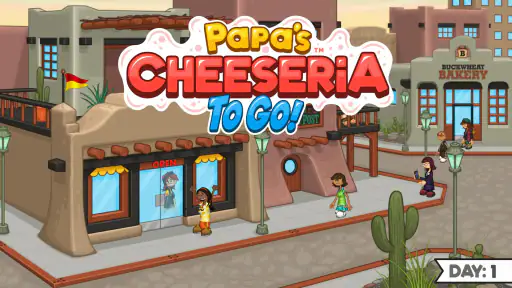
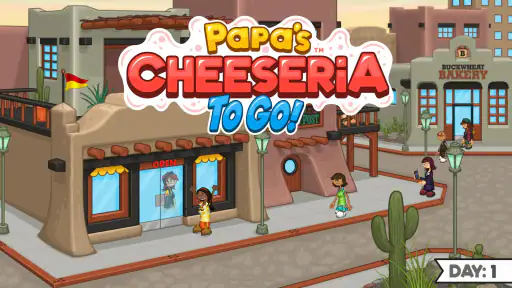
From the moment I launched the app, Papa’s Cheeseria To Go! greeted me with vibrant colors and playful animations. It's clear the developers put a lot of love into making the game visually appealing without overwhelming the senses. As you might expect, the main objective of the game is to manage a sandwich shop, crafting sandwiches to the exact specifications of your customers.
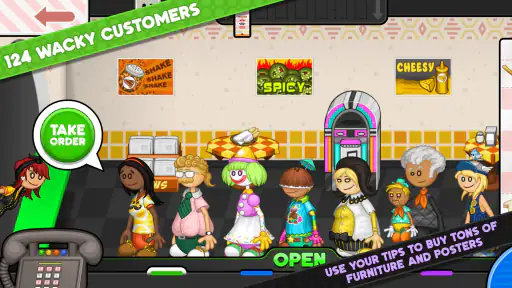
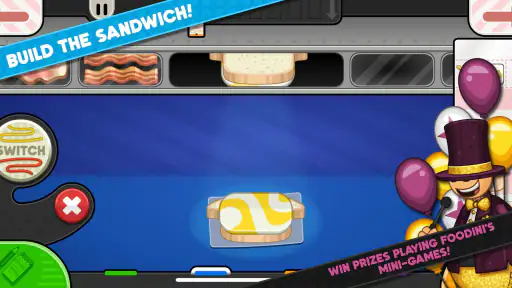
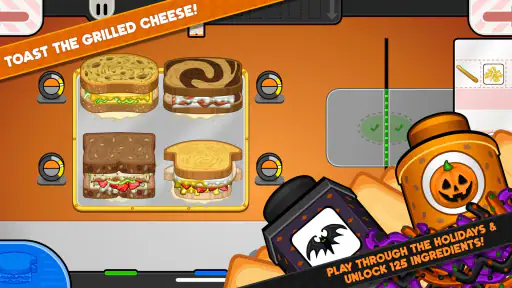
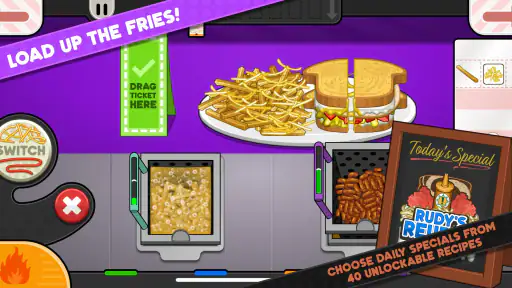
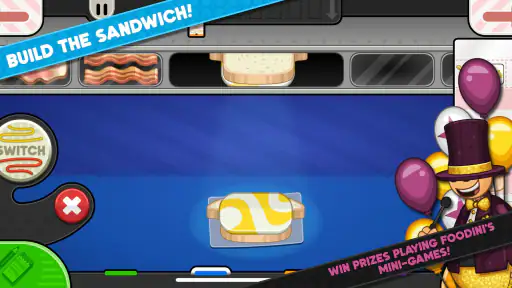
At its core, the gameplay is simple yet incredibly engaging. You’re tasked with taking orders, grilling bread, stacking ingredients, and serving up the perfect meal. As you progress, the orders become more complex, requiring you to juggle multiple tasks at once. It’s a bit like being a real-life line cook during a lunch rush, but with way more cheese!
Features that Make It a Standout
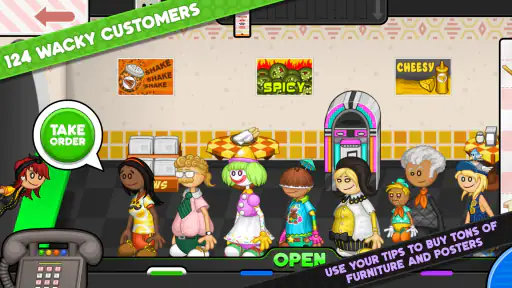
One of the standout features of the game is the customization. You can personalize your worker and even decorate your shop to your heart's content. This adds a layer of personalization that keeps the game feeling fresh as you advance through the levels. Plus, who doesn’t love a little interior design?
The game also introduces mini-games after each workday, which is a fantastic way to earn extra in-game currency and break the monotony. These mini-games are short and sweet, offering a nice change of pace from the main sandwich-making action.
Challenges and Replayability
As with any time-management game, the challenge ramps up the further you go. What starts as a leisurely pace quickly becomes a frenzied race against the clock. Each new customer brings unique requests that will test your multitasking skills.
But don't worry, this isn’t a game that’s going to leave you frustrated. Instead, it strikes a fine balance between challenging and fun. The satisfaction of seeing a customer leave your shop happy and full is enough to keep you coming back for more.
Replayability is another strong suit of Papa’s Cheeseria To Go!. With each new day in the game offering different challenges and customer orders, you’ll find yourself wanting to improve your scores and hone your sandwich-making skills.
Final Thoughts
In a world filled with mobile games that often feel repetitive, Papa’s Cheeseria To Go! stands out as a deliciously fun and engaging experience. Whether you’re a fan of the Papa's series or new to the franchise, this game is sure to provide hours of cheesy delight.
So, if you're in the mood for a game that combines strategy, creativity, and a whole lot of cheese, give Papa’s Cheeseria To Go! a whirl. Just make sure you’ve got a real-life snack nearby because all that sandwich making is sure to stir up your appetite!
Papa's Cheeseria To Go! Frequently Asked Questions
Who developed Papa's Cheeseria To Go!, and what kind of game is it?
Papa's Cheeseria To Go! is a strategy game developed by Flipline Studios. It centers on running a grilled-cheese sandwich shop, with players switching between customer orders, cooking, and assembling each meal. The appeal comes from balancing several tasks while keeping orders accurate and customers satisfied, making it a fit for players who enjoy hands-on restaurant management and time-based challenges.
How much does Papa's Cheeseria To Go! cost, and are there extra charges?
Papa's Cheeseria To Go! costs $1.99 to download, and it also offers optional in-app purchases priced from $0.99 to $4.99 per item. Those purchases are separate from the initial price, so it is worth considering them if children will be playing on a device with payment access. The game can still be enjoyed without buying optional extras.
What is Papa's Cheeseria To Go! and how does it work?
Papa's Cheeseria To Go! is a fun and engaging cooking simulation game where you manage a sandwich shop specializing in grilled cheese. Players take on various roles such as taking orders, cooking, and assembling sandwiches to satisfy customers. Each level becomes progressively challenging, requiring players to perfect their timing and multitasking skills. With colorful graphics and an intuitive interface, the game provides hours of entertainment for food lovers and gamers alike.
On which platforms is Papa's Cheeseria To Go! available?
Papa's Cheeseria To Go! is available for download on both Android and iOS platforms. Players can find it on the Google Play Store for Android devices and the Apple App Store for iOS devices. The game is optimized for mobile play, ensuring smooth gameplay on smartphones and tablets. This accessibility allows players to enjoy the game anytime and anywhere.
Is an internet connection required to play Papa's Cheeseria To Go!?
No, an internet connection is not required to play Papa's Cheeseria To Go! once it's downloaded and installed. This makes it a perfect game for offline play, allowing gamers to enjoy the game without worrying about data usage or connectivity issues. It’s ideal for playing during commutes, travel, or in areas with limited internet access.
Pros
- Fun and engaging gameplay.
- Wide variety of ingredients.
- Easy to learn controls.
- Colorful and vibrant graphics.
- Great for all ages.
Cons
- Ads can be intrusive.
- Limited free content.
- Requires internet connection.
- In-app purchases needed.
- Can be repetitive.
- Category
- Strategy
- Version
- 1.0.4