New York Mysteries 1
- 1.40K
- 4.6
- Installs
- 1.00M
- Price
- Free

Screenshots




Analysis by Reviewed
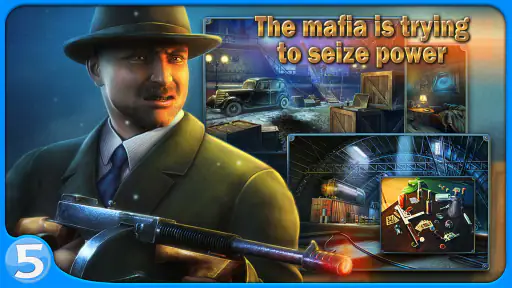
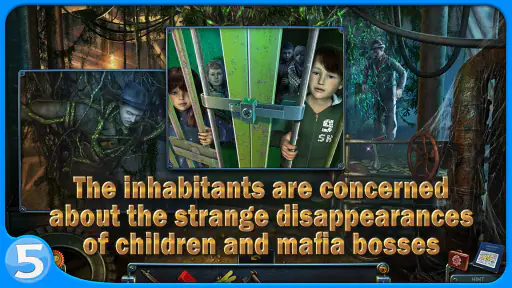
I approached New York Mysteries 1 as the kind of adventure game you open when you want a self-contained mystery rather than a quick arcade distraction. Developed by FIVE-BN GAMES, it places a detective story around the unsettling disappearance of children and a connection to organized crime. That setup gives the game a darker mood than its age rating might suggest, while still keeping the presentation suitable for players rated Everyone 10+.
My first impression was that this is a game built around attention. It asks me to look closely, remember details, and connect clues instead of simply reacting quickly. If you enjoy exploring scenes, solving puzzles, and following a supernatural-tinged investigation at your own pace, it has a clear appeal. If you mainly want constant action, competitive play, or a short session with no reading, I would look elsewhere.
How I decided whether it was worth playing
For this type of game, I judge three things first: whether the mystery gives me a reason to keep exploring, whether the puzzles feel connected to the story, and whether the interface makes investigation comfortable on a phone. A beautiful setting is not enough if every clue feels random. Likewise, a clever puzzle can become tiring when the game gives too little direction or makes basic interaction awkward.
New York Mysteries 1 performs best when I treat it as a slow investigation. I do not play it like a traditional action adventure. I search each location carefully, inspect objects that look ordinary, and keep track of details that may become useful later. That rhythm is important because the enjoyment comes from noticing relationships between places, characters, and evidence rather than from rapid progression.
The game is free to start, which makes the decision easier for curious players. Optional in-app purchases range from $0.99 to $14.99 per item, so I would still approach it with the usual caution around optional spending. The free entry point is useful if you are unsure whether this style of mystery suits you, but anyone who dislikes purchase prompts in free games should consider that before installing.
It has an average rating of 4.6 from around 61 thousand ratings, and it has passed over a million installs. Those figures suggest that the format has found a substantial audience, although popularity alone is not a reason to ignore its slower pace. I would use those numbers as reassurance that the game is established, not as proof that every player will enjoy its particular puzzle style.
The story works best when you enjoy atmosphere
The central investigation gives the game a strong reason to move from one scene to another. Mysterious kidnappings, children in danger, and mafiosi create a combination of crime drama and eerie adventure. I liked that the premise encourages me to inspect the world for meaning. A locked area is not just a barrier; it feels like part of a larger question about what happened and who is involved.
The tone is one of the reasons I would recommend it to someone who enjoys narrative exploration. It is more interested in suspense and discovery than in making the player feel powerful. That makes the experience a good fit for an evening when I want something absorbing but not physically demanding. I can pause, think through a clue, and return later without losing the appeal of the investigation.
At the same time, the subject matter is not ideal for every younger player. The Everyone 10+ rating gives a useful boundary, but the kidnapping theme and criminal elements may still feel uncomfortable for sensitive players. I would choose it for a family member based on their tolerance for suspense, not on the age label alone.
Exploration rewards a deliberate routine
One of my most useful habits with this game is to finish examining a location before moving on. I look at the edges of the screen, revisit objects after obtaining a new item, and avoid tapping randomly just to force progress. That approach reduces frustration because many adventure puzzles depend on recognizing that an earlier scene has become relevant again.
I also recommend keeping a simple mental or written list of unresolved details. When several clues appear close together, it is easy to remember the general mood but forget the exact object or location that mattered. A short note such as “symbol near the entrance” or “missing item connected to the office” can save time later. This is not a feature claim; it is a practical way to handle a mystery game whose clues are spread across multiple scenes.
Another useful trade-off is deciding when to stop searching. I sometimes found that repeatedly examining the same area without a new item or idea produced no benefit. When that happens, I move to another location, review the inventory, and ask what the current objective actually requires. This prevents the common adventure-game mistake of turning careful observation into aimless tapping.
Puzzles are the real test of patience
The puzzles are where the game will divide players. I enjoy challenges that make me reconsider an object or combine information from separate parts of the investigation. However, this is not the right choice if you want every solution to be obvious or if you become annoyed when a clue is indirect.
When I get stuck, I use a three-step process. First, I check whether I have overlooked a collectible or interaction in a previously visited scene. Second, I inspect the inventory and ask whether two items belong to the same situation rather than trying every combination. Third, I return to the story objective and look for an action that advances the investigation without solving the whole puzzle at once.
This method matters because the temptation to tap everywhere can make the game feel less intelligent than it is. The best moments come when I understand why a solution works. The weaker moments are those in which I am testing possibilities because the connection between clue and action is not immediately clear. Players who prefer transparent logic may want a more straightforward puzzle adventure.
What makes it a better choice than faster alternatives
Compared with action-oriented adventure games, this one wins through concentration rather than speed. I do not need quick reflexes or a competitive mindset. That makes it suitable for a quiet commute, a relaxed break, or a late-night session when I want a story to occupy my attention without demanding constant movement.
It also offers a different experience from endless-runner and casual puzzle games. Those alternatives are often better when I have only a few minutes and want an immediate result. Here, a short session may end in the middle of an investigation, and the satisfaction comes from building understanding over time. I would choose this game when I want continuity, not instant repetition.
Against other hidden-object adventures, its strongest distinction is the combination of a New York crime setting with a more mysterious, unsettling storyline. That atmosphere gives the search scenes a purpose beyond finding items for their own sake. The setting will matter more to players who enjoy noir-flavored investigations than to those who only want abstract puzzles.
Where another kind of game may fit better
I would not recommend it to someone looking for multiplayer interaction, competitive progression, or a large open world. Nothing about the core appeal points in that direction. The game is built for a guided mystery, so players who want freedom to wander or constantly changing challenges may find it restrictive.
It may also be a poor fit for people who dislike reading and observation. The kidnapping investigation needs attention to context. Skipping through the story or treating every scene as a simple object hunt removes much of the reason to continue. If your preferred mobile game is something you can understand instantly with the sound off and minimal concentration, a faster casual title would be a better choice.
There is a practical difference between choosing this and choosing a purely linear story game. A linear game usually tells me where to go and lets me focus on characters and plot. This adventure asks me to participate in the investigation by identifying what matters. That extra involvement is rewarding when I am in the mood for it, but it also means progress can slow down when my attention is elsewhere.
Playing it in an everyday situation
Imagine having half an hour after dinner while waiting for a friend to call. I would start by reviewing the current objective, explore one location carefully, and stop after reaching a natural clue or puzzle. That is a better use of the game than rushing through several scenes while distracted. If I were playing during a noisy commute, I would focus on visual clues and pause whenever the story required more concentration.
For a shared household device, I would be careful about who plays and how purchases are handled. The game is free, but optional items can cost between $0.99 and $14.99. A child using the device should have an adult’s guidance around spending, even though the content rating is Everyone 10+. The story itself may be suitable for the rating while the purchase decision still deserves separate attention.
The game is compatible with devices running Android 7.1 or later. That makes it accessible to many older Android users, but I would still keep expectations realistic on an aging phone: a supported operating system does not automatically guarantee the same comfort on every screen or device. I would install it when I have enough storage and time to play attentively rather than treating it as a disposable download.
What switching from another adventure game feels like
The cost of switching is mostly mental, not financial. Since the game is free to begin, the bigger commitment is learning its pace and remembering its investigation. Someone coming from a fast hidden-object title may initially feel that progress is too slow. Someone coming from a story-heavy adventure may appreciate having more responsibility for finding the next step.
I would give it a fair trial by playing beyond the opening setup and completing enough exploration to encounter its normal puzzle rhythm. A few minutes are not enough to judge a mystery game because the early scenes mainly establish the premise. If the combination of searching, revisiting locations, and interpreting clues already feels like work after that point, switching to a simpler alternative is sensible.
There is also a small habit change involved. I do not recommend playing while constantly switching between several apps, because losing track of an item or objective makes the investigation harder than it needs to be. I get more from it when I treat each session as a focused chapter, even if that chapter is short.
Version, audience, and overall value
The current version is 2.2.1.1597.247, and the game was released on Jul 24, 2019. That history makes it feel like an established adventure rather than a brand-new experiment. For me, the important question is not whether it is recent, but whether its scene-based mystery and measured puzzle design match what I want from a mobile game.
I would recommend it to fans of investigative adventures, players who enjoy hidden details, and anyone who prefers a story with a darker crime-and-mystery atmosphere. It is especially appealing if you want a free way to test whether you enjoy this style before committing to another narrative puzzle game.
I would skip it if I need immediate action, dislike revisiting locations, or want a game that remains satisfying while I am only half paying attention. I would also be cautious if the kidnapping theme is likely to be upsetting. Those are not minor details; they shape the entire experience.
My final recommendation is positive, with a clear condition: choose New York Mysteries 1 when you want to investigate patiently, not when you want to play quickly. FIVE-BN GAMES has built an adventure whose appeal comes from atmosphere, observation, and the gradual linking of clues. The free starting point lowers the risk, the established reception is encouraging, and the setting gives it more personality than a generic object-search game. Just keep spending under control, accept that some puzzles may test your patience, and give the mystery your full attention when you play.
Pros
- Atmospheric New York setting with detailed locations and period-inspired visuals.
- Clues and inventory items are usually easy to inspect and combine.
- Puzzles offer varied challenges beyond simple hidden-object searches.
- Offline play makes it convenient for travel or areas with limited connectivity.
- The story provides a satisfying mystery with memorable supernatural elements.
Cons
- Some puzzles rely on trial and error rather than clear logical clues.
- The pacing can slow down during extended item-hunting sections.
- Hints may be limited
- especially for players who get stuck repeatedly.
- Certain scenes and animations feel dated on newer high-resolution devices.
- The complete adventure may require an in-app purchase after the opening content.

- Category
- Adventure
- Version
- 2.2.1.1597.247