Narco Empire
- 485.00
- 4.8
- Installs
- 1.00M
- Price
- Free

Screenshots






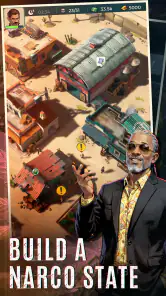

Analysis by Reviewed
Narco Empire is the kind of strategy game that asks me to think beyond the next move. Its central fantasy is clear: I begin at street level and work toward control of a larger criminal operation, making choices about growth, pressure, and survival along the way. That premise gives the game a darker tone than a typical empire builder, and its Mature 17+ rating is important context before anyone installs it.
I approached it as a mobile strategy player rather than as someone looking only for a quick action game. The appeal is not simply watching numbers rise. The interesting question is whether I can build momentum without creating problems that become harder to manage later. That makes it a better fit for people who enjoy planning and gradual progression than for players who want constant combat or a short, self-contained session.
How the street-to-empire climb shapes your decisions
Small choices matter more than the criminal theme suggests
The strongest part of the concept is the change in perspective as the operation grows. Early progress feels personal and immediate, while later decisions are easier to judge in terms of opportunity cost. If I commit resources to one direction, I am also giving up the chance to strengthen another. That basic tension is what keeps the strategy layer from feeling like a simple checklist.
I found it useful to play with a short planning horizon at first. Instead of trying to predict the entire route to the top, I focused on the next meaningful improvement and asked whether it would help me generate safer, more reliable progress. This approach reduces wasted effort and makes the game easier to read when several possible upgrades or objectives compete for attention.
That does not mean long-term planning is unimportant. In fact, the game becomes more interesting when I connect immediate actions to a broader goal. A decision that looks efficient now may leave me poorly prepared for the next stage. I recommend keeping one flexible reserve rather than spending everything as soon as it becomes available. That cushion gives me room to respond when the game presents a less convenient situation.
Why the setting changes the feel of strategy
Many mobile strategy games use kingdoms, armies, farms, or futuristic colonies as their framework. Narco Empire uses a criminal rise instead, so the atmosphere is more confrontational and morally grim. That setting is not just decoration for me: it changes how I interpret expansion, pressure, and control. The game is designed around ambition in a world where every gain carries a sense of exposure.
Players who prefer bright, relaxed management games may find that tone uncomfortable. I would also skip it if you want a historically grounded crime simulation or a story-led adventure with carefully developed characters. This is a strategy game first. The appeal comes from weighing choices and building influence, not from expecting a realistic account of organized crime.
Using short sessions without losing the larger plan
The game works best for me when I divide play into two modes. In a brief session, I handle the actions that are already part of a plan: collecting progress, checking available improvements, and preparing the next step. In a longer session, I review whether my current direction still makes sense and decide what I am willing to delay.
That distinction is useful on a phone because it prevents every visit from becoming aimless tapping. I do not need to make a major strategic change each time I open the game. Sometimes the smart move is simply to preserve resources and wait until a better opportunity appears. That patience is easy to overlook in a mobile game built around visible progression.
Where the first layer of friction appears
The main friction comes from the temptation to measure success only by how quickly the empire expands. Fast growth feels satisfying, but it can encourage shallow decisions. When I chase every available improvement, I risk losing track of which choices actually support my intended direction. The game rewards attention more than blind momentum.
I also think the mature subject matter will narrow its audience. The premise is deliberately provocative, and that can make the experience feel less comfortable than a conventional strategy title. Parents should pay attention to the age classification, and anyone sharing a device should remember that the game is marked for Mature 17+ audiences.
Risk and reward are most interesting when resources are limited
The game’s central appeal comes from balancing ambition against exposure. A cautious approach protects what I have already built, but it can also leave me behind. A more aggressive approach may create faster progress, yet it demands better preparation and a willingness to absorb setbacks. I enjoy that trade-off because neither extreme is automatically correct.
My practical rule is to distinguish between reversible and irreversible decisions. If an action only changes my short-term pace, I am comfortable experimenting. If it commits a large share of my available resources or closes off another route, I slow down and compare the likely benefits with the cost of losing flexibility. This habit makes the game feel more strategic without requiring complicated calculations.
Another useful rule is to avoid treating every reward as equally valuable. A reward that improves immediate output may look attractive, while a less dramatic benefit could make future choices safer or more adaptable. I pay attention to what a reward enables, not just what it gives me right now. That is one of the clearest ways to get more from the game than simply following the most obvious prompt.
When spending can distort the challenge
The game is free to play, but it includes optional purchases ranging from $0.99 to $199.99 per item. That wide range matters when deciding how to approach progression. I prefer to begin without spending and learn the normal rhythm first. Otherwise, it becomes difficult to tell whether I am solving a strategic problem or merely removing the pressure that makes the decision meaningful.
For players who do spend, I would set a personal limit before buying anything. The most expensive option is not automatically the best value for a particular player, especially if the real appeal is planning rather than acceleration. Spending can make the early experience smoother, but it may also reduce the satisfaction of finding an efficient route through a difficult stretch.
This is where Narco Empire differs from a premium strategy game with one fixed price. A paid alternative may offer a more predictable progression model and fewer purchase decisions. On the other hand, the free entry here makes it easier to test the tone and strategic loop before committing money. I see that as a practical advantage, provided the player is comfortable ignoring optional purchases.
A realistic everyday scenario
Imagine I have ten minutes during a commute. I open the game, check what has accumulated, and notice that I can either make a modest improvement now or save for a more meaningful step later. The quick choice is tempting because it produces an immediate sense of progress. The better choice depends on my current plan: if the larger step will unlock a stronger position soon, saving is sensible; if the small improvement supports my next objective and does not consume my flexibility, taking it may be worthwhile.
Later that evening, I have more time to reassess. I can look at the direction I have created, identify where my progress feels fragile, and decide whether to continue or change course. That two-stage routine—short-term maintenance followed by deliberate review—fits the game better than trying to force a major decision every time I launch it.
Adaptation matters when the first plan stops working
No strategy remains perfect forever. One of the better habits I developed was treating an early plan as a starting point rather than a promise. If the route I chose begins demanding too many compromises, I would rather adapt while I still have room to maneuver than defend it simply because I have already invested in it.
That mindset also helps with setbacks. A setback does not necessarily mean the entire run is ruined. It may show that I expanded too quickly, spent without a reserve, or valued immediate output over stability. Instead of repeating the same action, I use the setback as information and adjust the next decision. The game is more rewarding when I treat failure as feedback rather than as a reason to rush.
My most useful adaptation tip is to keep track of why I made a major choice. I do not need a detailed spreadsheet. A quick mental note—“I chose this for flexibility” or “I accepted this risk for faster growth”—makes later evaluation much easier. If the result does not match the reason, I know what to change. This is a small habit, but it turns a sequence of taps into a clearer strategic process.
Who will enjoy the decision-making most
I would recommend Narco Empire to players who like gradual empire-building, morally darker settings, and choices that become more meaningful when considered over time. It suits someone who enjoys checking progress, making a plan, and returning later to see whether that plan still holds together.
I would not recommend it to someone seeking a purely competitive action game, a calm city builder, or a story with a sympathetic central cast. It is also a poor fit if you dislike free-to-play structures with optional purchases. Even when I ignore spending, the presence of that model affects how I think about pacing and rewards.
Depth over time depends on how deliberately you play
At first, the climb can feel straightforward because the broad objective is easy to understand. The deeper value appears when I stop asking only, “What can I do next?” and start asking, “What kind of position will this create?” That shift is what gives the game a longer life for me. It encourages planning horizons that stretch beyond the current action.
The current version is 1.0.41, and the game has already attracted over 1M installs. Its average rating is 4.8 from around 58K ratings, with 485 reviews shown alongside that audience response. Those figures suggest strong interest, but I would still judge the game by its particular style rather than by popularity alone. A large player base cannot make a strategy loop enjoyable for someone who dislikes its tone or pacing.
Compared with familiar strategy alternatives, its identity is more about criminal ascent than territorial fantasy, peaceful construction, or conventional military command. That gives it a sharper personality, but it also means the atmosphere may carry more weight in the buying decision. If I want a broad, neutral strategy sandbox, another game may be easier to recommend. If I want the specific tension of building influence in a dangerous underworld setting, this one stands apart.
The game is available free from Sparkhaven HK Limited and runs on Android 6.0 or later. That makes trying it relatively accessible for compatible Android users, although device compatibility is only the first question. I would also consider whether the mature theme, free-to-play structure, and need for ongoing attention match the way I normally play on mobile.
My strategy verdict
Narco Empire is strongest when I treat it as a game of controlled escalation, not a race to make the biggest number appear. Its street-to-empire premise gives ordinary progression choices a darker edge, while the risk-and-reward structure encourages me to think about reserves, timing, and the consequences of overextending.
I like that it can fit around short visits without reducing every session to meaningless maintenance. The best results come from combining quick check-ins with occasional longer reviews of the overall plan. That rhythm also makes it easier to resist impulsive spending and to recognize when a slower route is actually the more flexible one.
My recommendation is therefore specific: try it if you enjoy mobile strategy with a mature criminal setting and are willing to make decisions patiently. Start free, protect some flexibility, and judge rewards by what they enable later rather than by their immediate size. Skip it if you want a clean, family-friendly theme, a one-time premium purchase, or action that never asks you to wait and reconsider.
For me, the game earns its place as a thoughtful strategy option because the climb feels more satisfying when I have to manage ambition instead of simply feeding it. The real attraction is the planning horizon: every gain is useful, but not every gain is worth the risk.
Pros
- Engaging empire-building gameplay with clear progression goals.
- Wide range of upgrades keeps long-term development interesting.
- Strategic resource management adds depth beyond simple tapping.
- Regular missions provide useful objectives and rewards.
- Runs smoothly on many modern Android and iOS devices.
Cons
- Frequent grinding may be needed to unlock higher-level content.
- In-app purchases can speed progress and affect the gameplay balance.
- Some missions may feel repetitive after extended play sessions.
- Requires an internet connection for several core features.
- Ads or promotional offers may interrupt the overall experience.

- Category
- Strategy
- Version
- 1.0.41