Minipuzzles Go!
- 3.00
- 4.6
- Installs
- 10.00K
- Price
- Free

Screenshots
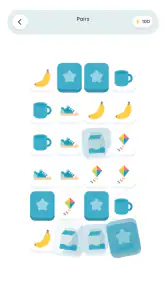
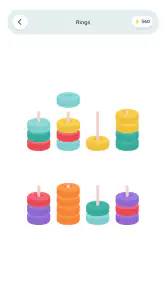
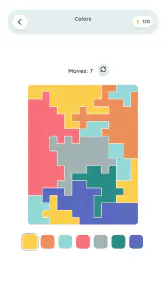
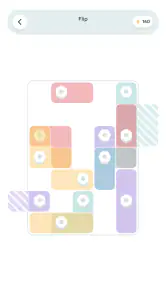
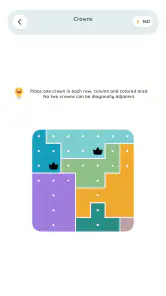
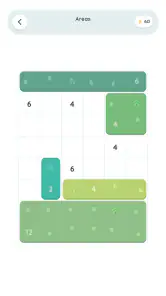

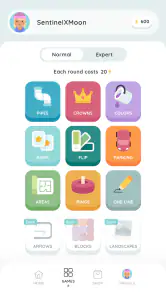
Analysis by Reviewed
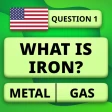
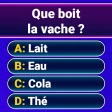
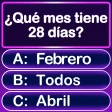
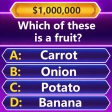
I found Minipuzzles Go! most appealing in the small gaps that usually disappear into scrolling: while waiting for an appointment, during a quiet coffee, or when someone at home wants a quick mental activity without committing to a long game. It is a free trivia game from Puzztime! built around relaxing puzzles, brain teasers, and daily challenges. That combination makes it easy to pick up, but it also means the experience works best when you want short bursts rather than a deep, competitive campaign.
My household test for any casual game is simple: can one person start playing without taking over the room, and can another person understand what is happening without needing a long explanation? This one fits that situation reasonably well. A family member can hand over the device for a few minutes, another person can suggest an answer, and the session can end naturally. I would not treat it as a shared account system or a family-management tool, though. It is better understood as a personal puzzle game that happens to work nicely in a shared-device setting.
How Minipuzzles Go! fits into everyday shared use
The strongest use case is a short, low-pressure break. Imagine a household waiting for dinner to finish: one person opens a daily challenge, another watches the clues, and the conversation becomes part of the activity. Because the game belongs to the trivia and puzzle space, it can invite discussion without requiring everyone to learn controls or follow a complicated story. That makes it more approachable than many action games when the device is passed between different ages or levels of gaming experience.
I also like the fact that the basic premise is easy to explain. “Try a small puzzle and see if you can solve it” is enough of a starting point. There is no need to teach a control scheme before someone can participate. In a shared setting, that matters more than it sounds: the person waiting beside you can offer an idea, take a turn, or simply watch without feeling lost.
Still, I would set expectations carefully. A game centered on short puzzles is unlikely to satisfy everyone at the same time. One person may enjoy thinking quietly, while another may prefer fast competition, a large multiplayer board, or a story with visible progress. Minipuzzles Go! is at its best when the household agrees that the goal is a pleasant mental pause, not a full evening of structured entertainment.
For solo use, I found the daily-challenge approach useful as a simple routine. It gives the game a reason to revisit rather than leaving every session dependent on a large block of free time. My practical tip is to use it as a transition activity: play before starting homework, while waiting for transport, or after finishing a chore. That prevents a short puzzle game from turning into an unplanned replacement for everything else you meant to do.
What to decide before putting it on a shared device
Installation is available at no charge, and the game is marked for Everyone, which lowers the barrier for a household considering it. It supports devices running Android 7.1 or later, so compatibility should be checked before assuming an older phone or tablet will handle it. The current version is 0.9.0, a detail worth keeping in mind when you are deciding whether this feels like a finished long-term staple or a game still developing.
The free entry point is helpful, but the presence of in-app purchases changes the conversation on a shared device. Individual items range from $0.99 to $11.99. I would not let a child or guest use a payment-enabled device without first agreeing on who is responsible for purchases. The important boundary is not whether the game is free to install; it is whether the device’s normal purchase approval process is already understood by everyone who may play.
I would also decide whose device it is and who gets to use it before starting. If a phone belongs to one person, another player should not assume that a personal daily routine, progress, or settings can be treated as communal property. The game may be easy to pass around, but the device itself still has a private owner. A simple rule such as “ask before opening it” avoids more friction than any puzzle can solve.
Another useful boundary is time. Short challenges can feel harmless, yet repeated attempts may stretch a quick break into a longer session. In my experience, the best arrangement is to agree on a natural stopping point, such as one challenge or one turn per person. That is especially sensible when the device is also used for calls, schoolwork, navigation, or other household tasks.
Because the title is presented as a game rather than a study tool, I would avoid promising educational outcomes. Trivia and brain teasers can encourage recall, attention, and conversation, but the experience should be offered as entertainment first. That distinction helps keep expectations realistic for both adults and younger players.
Coordinating turns without making the game feel like homework
Minipuzzles Go! lends itself to informal coordination better than many games because the core activity is understandable from the outside. If several people want to participate, one person can hold the device while the others suggest solutions. This works particularly well when the group treats wrong answers as part of the fun instead of turning each puzzle into a test of who is smartest.
My preferred household format would be a rotating host. The host reads or shows the puzzle, everyone gets a moment to think, and then the device moves to the next person. That approach avoids one confident player answering everything and gives quieter participants room to contribute. It also makes the game feel social without requiring a dedicated multiplayer mode or inventing a score system that may not be part of the experience.
There is a trade-off here. A puzzle designed for one player can become less satisfying when several people talk over it. If someone wants a calm, private challenge, group play may feel distracting rather than supportive. I would use shared play for occasional conversation and solo play for concentration. Trying to force every session into a family activity would miss one of the game’s more useful qualities: it can remain small and self-contained.
Another practical tip is to avoid revealing the answer too quickly when passing the device around. The first player should have a quiet moment before the group starts brainstorming. This keeps the challenge intact and prevents the fastest speaker from deciding the result for everyone. It is a small change, but it makes a noticeable difference when the appeal comes from thinking rather than merely watching someone else tap through.
For two people with different ages or experience levels, I would make the goal cooperative instead of competitive. Let the younger player identify familiar clues while the older player handles more abstract reasoning, or reverse those roles when appropriate. This keeps the activity flexible without claiming that the game includes age-based modes or special family features.
Age context, trust, and realistic expectations
The Everyone content rating makes Minipuzzles Go! a plausible choice for a broad household audience. I would still preview the experience with younger children rather than relying on the label alone. “Everyone” is useful context, but it does not tell you whether the vocabulary, puzzle logic, or pace will suit a particular child. A child who enjoys wordplay may engage immediately, while another may find trivia frustrating if the answers depend on knowledge they have not encountered yet.
That is where adult guidance can improve the experience. Instead of supplying every answer, ask the player how they would narrow the possibilities. This turns a difficult puzzle into a conversation without presenting the game as formal tutoring. It also gives adults a way to notice whether a child is enjoying the challenge or merely guessing to move on.
Trust matters in another way: do not assume that every person using a shared device understands the difference between gameplay and spending. Since optional purchases are available, I would explain that tapping a purchase prompt is not the same as solving a puzzle. On a personal device, the owner can make that decision privately; on a family tablet, the rule should be explicit before the game is handed over.
I would also avoid using the rating as a substitute for supervision. A child may be old enough for the content and still need help with screen-time limits, frustration, or purchase boundaries. Conversely, an adult who dislikes trivia should not be pushed into playing simply because the rating is broad. Suitability is about interest and context as much as age.
The game’s relaxed positioning is a positive sign for mixed-age use, but “relaxing” does not mean every puzzle will feel easy. A challenge can be calm in presentation and still expose gaps in knowledge. In a household, that is best handled with humor and collaboration. If mistakes lead to criticism, the shared-device advantage disappears quickly.
Where it stands beside familiar trivia alternatives
Compared with a large quiz app built around live matches, Minipuzzles Go! seems better suited to unstructured moments. You do not need to gather a full group at a particular time or turn the room into a contest. That is useful for one player who wants a quiet activity, or for a household where people are available at different times.
Compared with a crossword or word-game routine, the appeal is likely to be variety through short puzzles and brain teasers rather than one single puzzle format. That can make the experience easier to approach when you want a change of pace. The trade-off is that players who love building a long-term skill in one specific format may prefer a dedicated crossword, logic, or vocabulary app.
Compared with a story-driven mobile game, this title asks for less emotional and time investment. You can step away after a small challenge without losing the thread of a narrative. On the other hand, it may not provide the sense of character development, world-building, or long-term progression that keeps people attached to adventure games.
Daily challenges also create a different rhythm from an endless question bank. A daily routine can encourage consistency, but it may feel restrictive to someone who wants a large session with unlimited variety. My advice is to choose it when the appeal of returning regularly matters more than having a huge uninterrupted play session.
The rating gives the game a strong initial signal from its existing audience: it holds a 4.6 average from around 180 ratings, and it has passed 10K installs. I read those figures as encouraging interest rather than proof that it will suit every player. A small puzzle game can please its audience while still being the wrong choice for someone seeking competitive multiplayer, detailed statistics, or a long campaign.
Small habits that make the experience better
First, I would use the daily challenge as a deliberate stopping point instead of treating it as an invitation to keep tapping indefinitely. This preserves the relaxing quality and makes the game easier to fit around household routines. If you are playing with others, decide whether the group is solving together or simply taking turns; mixing those rules halfway through can create unnecessary arguments.
Second, keep the device in the hands of the person whose turn it is. Spectators can offer hints, but they should not grab the phone to demonstrate every idea. This protects the player’s sense of ownership and makes the result more meaningful. It is especially helpful when a child is learning to persist through a difficult question.
Third, separate puzzle difficulty from personal ability. Trivia often rewards prior knowledge, so a missed answer is not automatically evidence that someone is poor at reasoning. In a shared household session, rotate the kinds of help you give: explain a word, identify a category, or simply allow more thinking time. That keeps the game welcoming without pretending every challenge is equally accessible.
Fourth, treat purchases as a household setting rather than a gameplay shortcut. Since the game is free to start but includes paid items, decide in advance whether spending is allowed at all. If the answer is no, say so plainly before a child begins. If the answer is yes, establish who approves it and what happens when the device is shared.
Finally, update your expectations with the version context. At 0.9.0, I would enjoy what is available now but avoid building a household tradition around features that are not visible in the current experience. The game can be a pleasant addition to a rotation of small activities without needing to become the only puzzle app on the device.
Who should choose it, and who should pass?
I would recommend Minipuzzles Go! to someone who wants brief trivia sessions, enjoys brain teasers, and likes the idea of a daily reason to return. It is particularly suitable for a person who shares a phone or tablet occasionally with family members and wants an activity that can be explained in seconds. The free starting price and Everyone rating make the first try uncomplicated, provided purchase boundaries are clear.
I would be less enthusiastic for a player who needs a robust competitive ladder, synchronous matches, a deep progression system, or a single specialized puzzle format. Those players will probably be happier with an app designed around their preferred structure. I would also skip it for a household that wants a fully organized family platform with separate child profiles, formal turn management, or built-in parental controls; this is not how I would frame its role.
There is also a personality question. If you dislike questions with answers based on general knowledge, the relaxed presentation may not change that. Likewise, if you prefer games where every session delivers a large sense of achievement, small daily puzzles may feel too modest. Its strength is convenience, not spectacle.
For me, that modest scale is exactly why it works. I can use it alone when I need a mental reset, or let someone else join in without turning the moment into an event. The most successful sessions are cooperative, short, and clearly separated from the device owner’s private tasks.
My household verdict is positive with sensible boundaries. Puzztime! has made a free trivia game that fits spare minutes and can support light conversation around a shared screen. I would install it for a family rotation or personal break, explain the purchase rules first, and keep expectations focused on small, relaxing challenges rather than a complete entertainment system. Choose it for easy access and casual thinking, not for elaborate multiplayer structure or long-form progression.
Pros
- Quick puzzles fit easily into short breaks.
- Simple controls make the game accessible to most players.
- Varied puzzle formats help keep the experience fresh.
- Lightweight gameplay works well on older devices.
- Offline play is useful when you have no internet access.
Cons
- Some puzzles may feel too easy for experienced players.
- Difficulty progression can become uneven between levels.
- Repeated puzzle styles may reduce long-term variety.
- Hints or extra content may be limited without purchases.
- Ads can interrupt the flow between puzzle sessions.

- Category
- Trivia
- Version
- 0.9.0