Mecharashi
- 1.48K
- 4.6
- Installs
- 500.00K
- Price
- Free
Screenshots
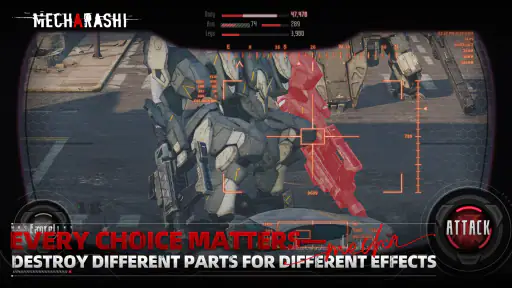
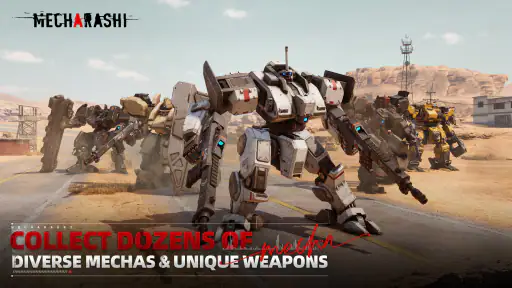
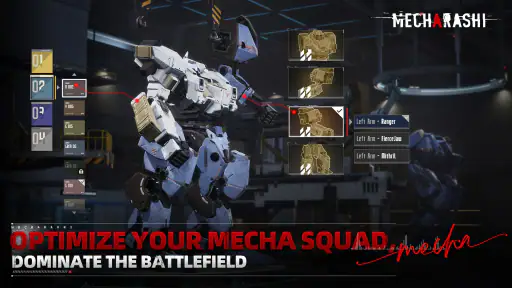
Analysis by Reviewed
Mecharashi is the kind of strategy game that asks me to think about position before damage. I came to it expecting a mecha-themed role-playing game, but what stayed with me was the way each move can change the value of the whole battlefield. A powerful unit is not automatically useful if it is exposed, blocked, or sent toward the wrong target. That focus gives the game a more deliberate rhythm than the usual mobile action title, and it is the main reason I would recommend trying it.
Developed by HK TEN TREE LIMITED, this free strategy game combines mecha presentation with turn-based decision-making and role-playing progression. It is aimed at Teen players, supports devices running Android 6.0 or later, and is currently at version 1.8.2. The game has built a 4.6 average from roughly 23 thousand ratings, with more than 500 thousand installs, which suggests that its slower, tactical style has found a substantial audience.
Why positioning matters more than simply attacking
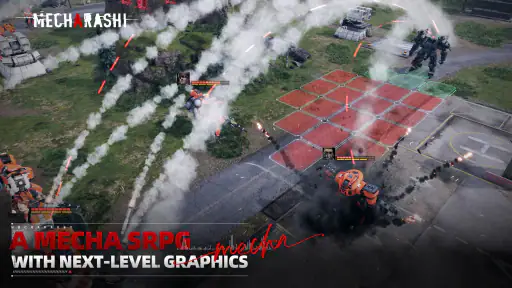
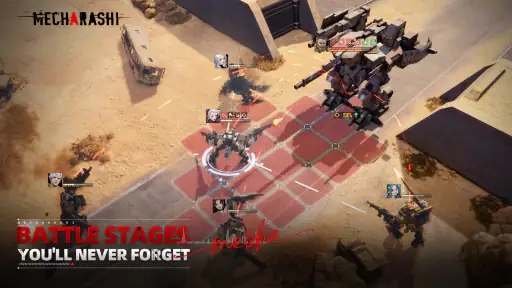
The most important capability in Mecharashi is its tactical control over space. I do not see the battlefield as a flat menu of enemies to eliminate. I see lanes, cover-like opportunities, approach angles, vulnerable sides, and moments when moving one machine a short distance is more valuable than firing immediately. That changes the usual mobile strategy habit of tapping the strongest available attack and waiting for the next turn.
This matters because mecha games naturally invite aggressive play. The machines look substantial, and the presentation encourages me to imagine every unit as a centerpiece. In practice, the game rewards restraint. A machine that advances too far can become the only target in range. Another that stays behind may appear inactive but can protect an approach or finish an enemy weakened by someone else. The best turn is often the one that improves the next turn rather than producing the largest number right now.
I found this especially useful when several enemies could be reached at once. Instead of asking only which target has the lowest health, I ask which elimination will open a route, remove pressure from a weaker ally, or prevent an enemy from controlling the next exchange. This is a small change in thinking, but it makes battles feel more like puzzles than routine encounters.
Reading the board before choosing a target
My most reliable habit is to spend a moment examining the entire field before selecting an action. I look at enemy positions, available movement, the distance between allied machines, and whether a forward unit will still have support after it attacks. This is more valuable than memorizing a single favorite attack because the correct choice changes with every encounter.
A useful approach is to divide the battle into three questions. First, which enemy can create the greatest problem on its next turn? Second, which allied machine is in danger of being isolated? Third, does attacking now improve the formation or pull it apart? These questions help me avoid wasting a strong move on an enemy that was already harmless while a more dangerous unit prepares to act.
The game also benefits players who enjoy planning several actions ahead without requiring them to play at a frantic pace. I can consider an opening move, predict the likely response, and then decide whether the next turn should be defensive or aggressive. That makes it a good fit for short sessions when I want concentrated decision-making rather than constant tapping.
How the role-playing layer changes the decisions
The role-playing structure gives the tactical battles a longer memory. A choice is not isolated to one encounter because I am also thinking about the machines and progression I want to develop over time. That creates a trade-off between building a broadly useful group and leaning into a more specialized approach.
I prefer to think of progression as a way to support a plan, not as a replacement for one. Improving a unit does not remove the need to place it correctly. A stronger machine can still be surrounded, and a less impressive machine can still be valuable when it occupies the right position. This is where the game separates itself from simpler strategy titles that allow upgrades to solve most problems automatically.
For new players, my advice is to avoid treating every upgrade as equally urgent. Before spending resources, I would first identify which machines I actually use together and what each one contributes. A group with overlapping strengths may look impressive but struggle when an encounter demands protection, reach, or controlled movement. Building a team around complementary jobs is more useful than chasing the most attractive individual option.
What playing it feels like in everyday use
In practice, Mecharashi works best when I have enough attention to make a few considered choices. It is not the game I open when I want to play with one hand while doing something else. Even when a battle begins simply, the consequences of a careless move can make the following turns harder. The game asks me to stay mentally present, especially once several machines and enemies are competing for the same space.
A realistic use case is a short evening session after work or study. I can play a battle, stop to consider my next development choice, and return later without feeling that I missed a real-time event. That pause-friendly quality is one of its strongest everyday advantages. It gives the game a thoughtful pace without making it feel like a spreadsheet.
At the same time, I would not describe every moment as effortless. The combination of strategic combat and progression can make the early learning period feel dense. Players who prefer immediate action may wonder why the game does not simply let them charge forward. The answer is that the tension comes from resisting that impulse, but the game may need patience before that becomes enjoyable.
A practical battle routine that helped me
I get better results by using a repeatable routine rather than improvising every turn. I begin by checking which machine is most exposed, then I identify the enemy whose next action could disrupt the formation. After that, I move the unit that can improve the group’s shape, even if it does not attack. Only then do I commit to damage.
Another useful habit is leaving an escape route for a forward machine. It is tempting to place a durable mecha directly in front of an enemy, but that can turn a strong unit into a stationary target. I prefer advancing far enough to threaten the enemy while keeping a route back toward support. This makes the front line less dramatic, but it is more dependable across several turns.
I also try not to judge a battle by the first exchange. If my opening attack is modest but leaves the group organized, I consider that a success. The game rewards the player who preserves options. A flashy attack that removes one enemy but strands a valuable unit can be worse than a quiet repositioning move that keeps several responses available.
Where the graphics help and where they do not
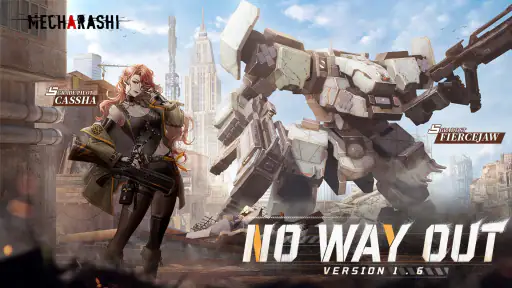
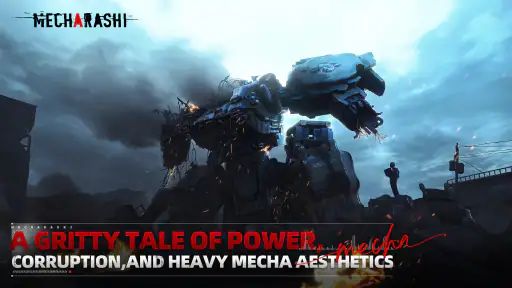
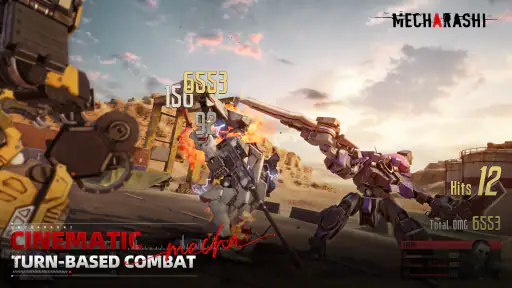
The mecha presentation gives the tactical choices more weight. Machines feel like distinct pieces rather than anonymous icons, and the visual style makes it easier for me to stay engaged with a battle that unfolds methodically. The presentation supports the fantasy of commanding a mechanical squad without turning the game into a purely visual showcase.
Still, attractive visuals do not remove the need to inspect the board carefully. I would not play this expecting an action game built around reflexes or continuous movement. Its appeal comes from combining a strong mechanical theme with deliberate strategy. If the mecha setting is only a cosmetic preference and you mainly want fast combat, a more direct action game will probably suit you better.
The best scenario for playing Mecharashi
The game is at its best when I want a focused challenge that can be approached at my own pace. It fits a player who enjoys asking why a battle went wrong and adjusting the next attempt. The most satisfying moments come after I recognize that a defeat was caused by a formation mistake rather than bad luck, then solve the same kind of pressure with better spacing.
It is also a good match for people who like strategy games with a clear theme. The mecha setting gives the decisions an identity: protecting a machine feels different from moving a generic soldier, and choosing a route for a large mechanical unit feels more memorable than selecting an abstract token. That connection between theme and tactics helps the systems feel purposeful.
For someone who normally plays casual puzzle games, I would suggest approaching it in small sessions. There is no need to understand every long-term decision immediately. Learn how movement affects safety, then learn how your group works together, and only afterward worry about optimizing progression. This order keeps the early experience manageable and prevents the menus from becoming more important than the battles.
When a different strategy game is a better choice
I would point a player toward a faster alternative if they want immediate feedback, short reflex challenges, or battles that can be won mainly through rapid tapping. Mecharashi is not built around that kind of satisfaction. It asks for planning, and a player who dislikes pauses between decisions may find its pace too measured.
I would also be cautious recommending it to someone who wants a completely relaxed experience. A free strategy RPG can be easy to start but still demand attention once the encounters become more involved. The Teen content rating is worth keeping in mind for families choosing games for younger players, and the presence of in-app purchases means I would discuss spending expectations before handing it to a child.
On the other hand, players who have grown tired of mobile strategy games where upgrading a favorite unit solves every problem may appreciate this one. Its central lesson is that development helps, but it does not replace positioning. That gives losses more instructional value and makes successful turns feel earned.
Trade-offs, spending, and long-term appeal
The price of entry is simple: the game is free to play. Optional purchases range from $0.99 to $99.99 per item, so I would approach the store carefully and decide in advance whether I am comfortable spending. The important question for me is not whether purchases exist, but whether I can enjoy the tactical layer without allowing the purchase options to become the main focus.
My practical advice is to play long enough to understand which machines and strategies I genuinely enjoy before buying anything. Early enthusiasm can lead to spending on a unit that looks powerful but does not fit the way I like to play. Because positioning and team balance matter, the most expensive-looking option is not automatically the best answer to every battle.
The broader trade-off is between depth and convenience. The same systems that make a careful victory satisfying can make a quick session feel demanding. I cannot always rely on autopilot thinking, and I need to remember how my formation will look after an attack. For me, that is a strength when I am in the mood for strategy, but a limitation when I only have a few distracted minutes.
Three habits that improve the experience
- Plan the retreat before the advance. Before moving a front-line machine forward, I check whether another unit can support it or whether it will be trapped after attacking. This prevents many avoidable losses.
- Use weak attacks to improve the next turn. If a full attack would damage the formation, I prefer repositioning or a safer action that keeps several allies available. Preserving options is often more valuable than maximizing immediate damage.
- Build around jobs, not appearances. I choose machines for the roles they perform together rather than collecting units simply because one looks stronger. A balanced group handles unexpected pressure better than a collection of similar attackers.
These habits are not complicated, but they reveal the game’s real character. Mecharashi is less about finding one unbeatable move and more about maintaining a position from which several good moves remain possible. That is why I find its battles more replayable than a sequence of obvious upgrades.
Who gets the most from this game
I think the strongest audience is players who enjoy turn-based strategy, mechanical themes, and gradual improvement through observation. If you like reviewing a failed battle, noticing that one move caused the problem, and trying again with a different formation, you will probably find a lot to appreciate here.
It is also suitable for players who want a strategy RPG that can be approached in measured sessions rather than demanding constant real-time attention. The game gives me room to think, and that makes it easier to enjoy when I am playing for concentration instead of simple distraction.
I would skip it if your priority is speed, minimal menus, or a game that never punishes an impulsive attack. I would also skip it if you dislike managing a developing group and making choices that may matter beyond one battle. Those are not minor details; they are central to the experience.
For everyone else, my recommendation is to give the opening battles a fair chance and judge the game after learning its positioning rhythm. The first impression may be that it is another mecha title with attractive presentation, but its real appeal is quieter. It teaches me to value formation, timing, and future options over immediate spectacle.
After spending time with it, I see Mecharashi as a thoughtful free strategy RPG rather than a quick-action game wearing a mecha costume. HK TEN TREE LIMITED has built its identity around decisions that become meaningful when I consider the whole battlefield. The free entry point makes it easy to test, while the Teen rating and optional purchases are reasons to set sensible expectations.
My final recommendation is clear: try it if you want mecha battles where smart positioning matters more than frantic input. It will not satisfy every mobile player, but for someone who enjoys careful turns, team roles, and the satisfaction of correcting a tactical mistake, it offers a distinctive experience. I would start slowly, spend cautiously, and focus first on learning how each move changes the space around the machines. That is where the game becomes most rewarding.
Pros
- Deep tactical combat rewards careful positioning and turn planning.
- Large roster of customizable mechs supports varied team compositions.
- Detailed equipment systems allow meaningful build experimentation.
- Strong visual design gives battles and machines a distinctive identity.
- Story-driven missions add context beyond the usual strategy encounters.
Cons
- Battles can feel lengthy
- especially during repeated mission farming.
- Many upgrade systems may overwhelm newcomers at first.
- Progression can become grind-heavy when improving several mechs.
- Some content may be restricted by stamina
- timers
- or limited resources.
- The game may require substantial storage and perform poorly on older devices.
- Category
- Strategy
- Version
- 1.8.2