Lost Lands 4
- 1.40K
- 4.7
- Installs
- 1.00M
- Price
- Free

Screenshots
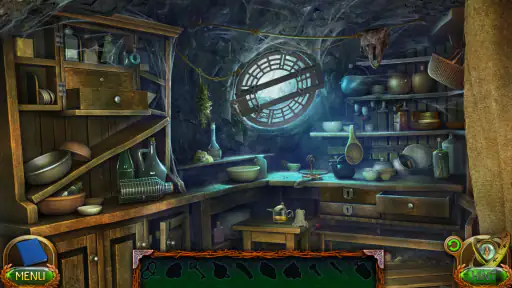
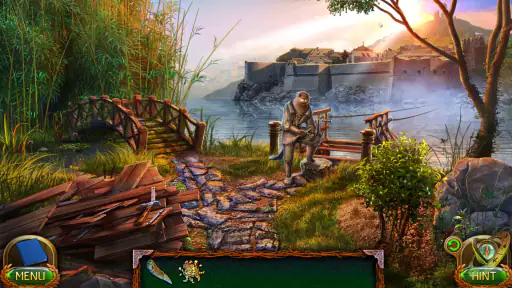
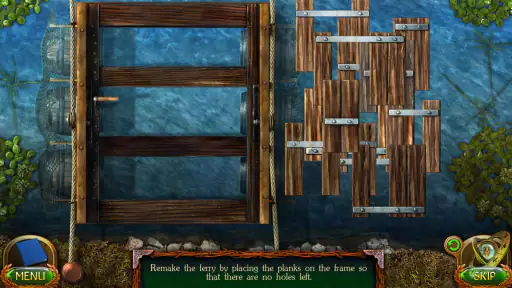
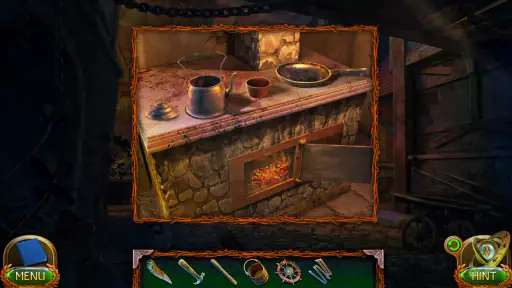
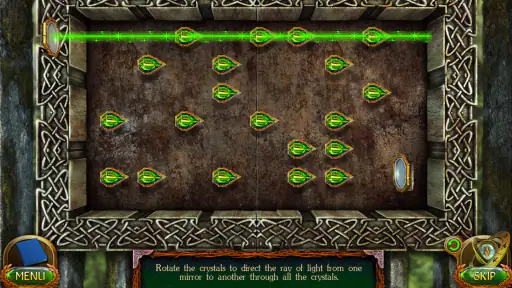
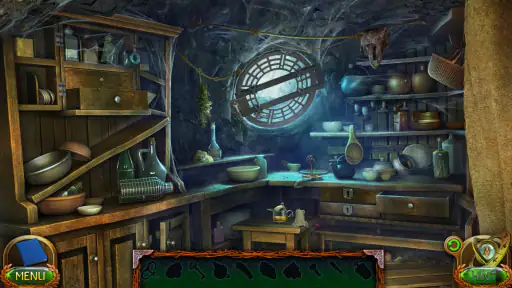
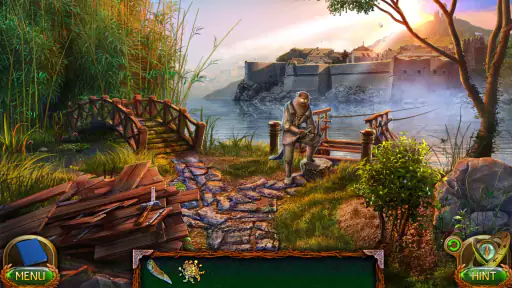
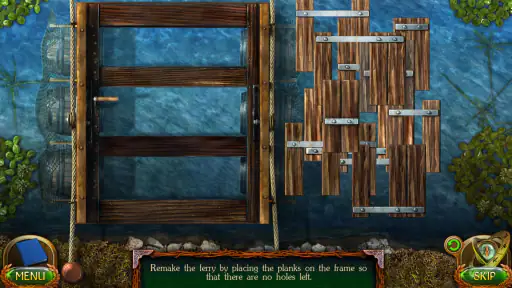
Analysis by Reviewed
I approached Lost Lands 4 as a decision rather than a quick download: is this the right adventure game for the kind of player who enjoys following a story, examining locations, and working through puzzles at a steady pace? After spending time with it, my answer is yes for players who like a focused, atmospheric mystery, but with an important qualification. This is not the best choice if you want constant action, competitive play, or a game that tells you exactly what to do every few seconds.
Developed by FIVE-BN GAMES, this free adventure game places you in a journey built around helping a captain and protecting a much larger world. The premise gives the experience a clear direction without reducing it to a simple rescue mission. I found myself paying attention to the surroundings, connecting small clues, and deciding whether an apparently decorative object might matter later. That sense of observation is the main reason I kept playing.
The game is available for players aged Everyone 10+, runs on Android versions from 7.1 onward, and has reached over a million installs. Its average rating sits at 4.7 from around 70 thousand ratings, which matches my overall impression: it is a polished, well-liked entry in the hidden-object and puzzle-adventure space, although its slower rhythm will not suit everyone.
What I would consider before choosing it
My first decision criterion is patience. Lost Lands 4 rewards players who are happy to revisit a location mentally, inspect the scene carefully, and try an item in more than one context. It is not designed around reflexes. You can play it when you want to relax, but “relaxing” does not mean effortless; some puzzles expect you to remember visual details and understand how separate discoveries fit together.
The second criterion is your preferred kind of story. The captain and the danger facing the world provide the central motivation, but the narrative works best when you enjoy uncovering information through exploration rather than waiting for long cinematic sequences. I liked the feeling of piecing the situation together from the environment. If you prefer a heavily dialogue-driven adventure with constant character interaction, you may find the presentation more restrained than expected.
I would also think about how you normally play on a phone. This is a game for short sessions as well as longer ones, but progress feels more satisfying when I have enough uninterrupted time to remember what I was doing. During a typical evening, I might explore a new area, solve one puzzle, and stop after reaching a natural point. On a crowded commute, however, interruptions made it easier to forget which object I had been saving for a particular task.
One practical point is the business model. The game itself is free, while optional in-app purchases range from $0.99 to $14.99 per item. I did not treat that as a reason to dismiss it, but it does affect how I recommend approaching the game: begin without spending, learn whether the slower investigation style works for you, and only consider an optional purchase if you already know you intend to continue.
How the exploration actually feels
The strongest part of the experience is the relationship between scenery and problem solving. Locations are not merely backdrops between story scenes. I had to look at them as collections of possible clues, tools, and connections. A small detail can become meaningful later, so rushing through a screen is usually less effective than making a deliberate visual scan before moving on.
That leads to a useful habit: when I enter a new area, I first inspect everything that can be interacted with, then I mentally group discoveries by purpose. I separate objects that seem immediately useful from items that look like they belong to a mechanism, a locked container, or a later sequence. This simple approach reduces random tapping and makes the puzzle structure easier to follow.
The game also benefits from keeping track of unfinished business. When I reached a barrier I could not solve, I tried to remember its appearance rather than repeatedly returning to it without a new clue. Later discoveries often changed the meaning of an earlier location. That is one of the less obvious strengths here: the world feels more coherent when you treat it as a connected investigation instead of a row of isolated scenes.
At the same time, this design can create friction. If you miss a small interaction, the next step may feel less like a clever deduction and more like a search. I occasionally revisited areas simply because I suspected I had overlooked something. Players who enjoy the satisfaction of noticing a subtle clue will see that as part of the appeal; players who want a clear objective marker may experience it as unnecessary wandering.
Puzzles, pacing, and the value of playing slowly
The puzzles are most enjoyable when I approached them as practical problems inside the world. Instead of tapping every object immediately, I asked what a discovered item might logically affect. That mindset made the solutions feel more earned. My best sessions were the ones in which I stopped trying to force progress and returned to the evidence already in front of me.
A helpful technique is to pause after collecting several objects and review the whole situation before using anything. Using an item at the first possible opportunity can be tempting, but waiting often reveals a more sensible connection. I also recommend taking a mental note of unusual symbols, repeated shapes, and incomplete mechanisms. Those details are easy to dismiss in the moment and useful later.
The pacing is deliberately measured. There are stretches of searching, followed by a puzzle or discovery that gives the story momentum again. I appreciated that rhythm because it made progress feel like exploration rather than a checklist. Still, anyone expecting a new dramatic event every few minutes should adjust their expectations. The game asks you to enjoy the process between major developments.
This is where the age rating of Everyone 10+ feels relevant to the overall tone. The adventure can carry a sense of danger and urgency, but it remains approachable rather than aggressively frightening. I would recommend it to younger players who already enjoy reading clues and solving puzzles, especially if they are comfortable playing independently. For very young children, the reasoning required may be more of a hurdle than the content itself.
Where this game wins over familiar alternatives
Compared with action-adventure games, Lost Lands 4 wins through attention rather than speed. There is no need to master rapid controls or compete against another player. I could focus on the atmosphere, the order of discoveries, and the satisfaction of solving a problem at my own pace. That makes it a good choice for an evening when I want involvement without pressure.
Compared with purely casual hidden-object games, it offers a stronger sense of purpose. The objects I examined were tied to a broader journey, so searching did not feel completely detached from the story. The captain’s situation and the threat to the world give the investigation a reason to continue, even when the immediate task is simply finding a way through one location.
It also has an advantage over many short puzzle apps because it encourages continuity. I was not just solving unrelated brainteasers; I was building an understanding of a setting. That makes the experience more memorable for me, particularly when a previously confusing detail becomes useful. If you like games that ask you to remember context, this is a meaningful benefit.
Another strength is how well it supports a low-pressure solo routine. I can play with sound on or off, take breaks, and return when I feel ready to investigate again. The game does not depend on a group of friends being available, and it does not require a competitive schedule. For someone who wants a personal story-driven activity on a phone, that independence is valuable.
Where another type of game may fit better
I would point action fans toward a different category. If your ideal mobile session involves combat, rapid movement, constant rewards, or a visible sense of mechanical mastery, the careful searching here may feel too passive. The game’s challenge comes from interpretation and memory, not from improving reaction time.
I would also hesitate to recommend it to players who dislike backtracking. Revisiting a place with new information can be satisfying, but it can also feel inefficient if you prefer every level to move forward in a straight line. A more linear puzzle game may be a better fit when you want each solved challenge to unlock the next screen without asking you to reconsider earlier areas.
Players who mainly want social features should look elsewhere as well. This is a personal adventure, and its appeal comes from your own attention to the clues. It is not the kind of game I would choose when I want teamwork, chat, leaderboards, or a shared objective with friends. Those are not flaws in the design, but they are important mismatches for the wrong audience.
Finally, players who dislike optional purchases in free games may prefer a paid adventure with a simpler purchase decision. The free entry point is useful because it lets you test the style, but the presence of items priced from $0.99 through $14.99 means I would still check the purchase controls before handing the phone to a child. My recommendation is to treat the optional spending as a boundary to manage, not as part of the core reason to play.
What changes if you move from another adventure game
The cost of switching is mostly mental rather than technical. If you are coming from an action title, you will need to replace quick reactions with observation. I found that the transition became easier once I stopped looking for a constant stream of objectives and started treating each location as a small investigation. The first sessions may feel slower, but the rhythm becomes natural if you enjoy noticing patterns.
If you are moving from a simple hidden-object game, the adjustment goes in the other direction. You will need to remember more context and think about how discoveries connect. I recommend playing with a small personal rule: do not use an item just because it can be used. First ask what role it appears to have in the larger situation. That makes the puzzles less random and helps preserve the satisfaction of solving them.
Returning after a break is manageable, but I found it helpful to stop at a clear point rather than closing the game in the middle of a confusing search. Before leaving, I mentally review the current objective and the most unusual item I have found. That tiny routine saves time when I come back, especially after a busy day.
The current version is 2.0.2.1597.191, and the Android requirement begins at 7.1, so compatibility is reasonably broad for supported devices. I would still install it on the device where I expect to play most often rather than moving between phones, because continuity matters more in an investigation-focused game than in a quick arcade session.
My recommendation for different kinds of players
I recommend Lost Lands 4 to anyone who enjoys atmospheric mobile adventures, visual clues, and puzzles that reward careful thought. It is especially suitable for solo players who want a story to follow without committing to competitive play. The free starting point makes it easy to test, and the strong average rating reflects why this style has found a substantial audience.
My most practical advice is to play with patience, inspect scenes before tapping randomly, and remember unresolved details. If you get stuck, step away briefly instead of immediately assuming the puzzle is unfair. A short break often helps me see an object or connection I was ignoring. That approach is more effective here than treating every obstacle as something to brute-force.
I would skip it if you need fast action, social competition, or a completely linear path. I would also choose another game if optional purchases are a deal-breaker for you, even though the game can be tried free. The important distinction is that this is not a universal recommendation; it is a strong recommendation for a particular mood and play style.
After weighing those trade-offs, I see it as a worthwhile adventure for a quiet afternoon, a relaxed evening, or a solo break when I want to feel curious rather than hurried. FIVE-BN GAMES has built an experience around the pleasure of looking closely and making connections. If you enjoy solving a mystery at your own pace, this is a free game I would confidently suggest trying before choosing a more action-heavy alternative.
Pros
- Atmospheric visuals and sound design create an immersive fantasy setting.
- Puzzles offer satisfying variety without relying heavily on random guessing.
- The map makes revisiting locations and tracking objectives convenient.
- Hidden-object scenes include helpful hints when you get stuck.
- The story provides plenty of exploration beyond the main quest.
Cons
- Some puzzles lack clear clues and may require trial and error.
- The opening section can feel slow before the main adventure develops.
- Certain interactions are easy to miss because active areas are subtle.
- The free trial is limited
- with the full adventure requiring payment.
- Backtracking between locations can become repetitive during later chapters.

- Category
- Adventure
- Version
- 2.0.2.1597.191