Left to Survive: Survival Game
- 17.36K
- 4.5
- Installs
- 50.00M
- Price
- Free

Screenshots
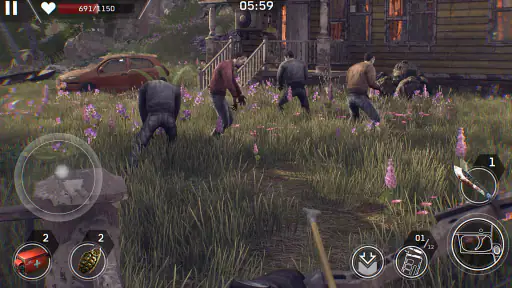
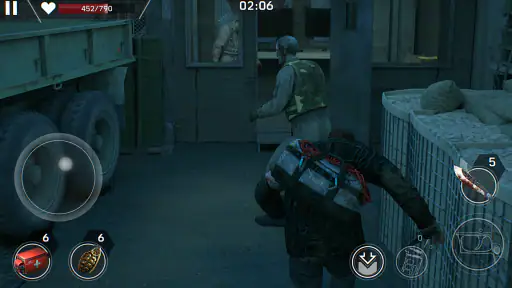
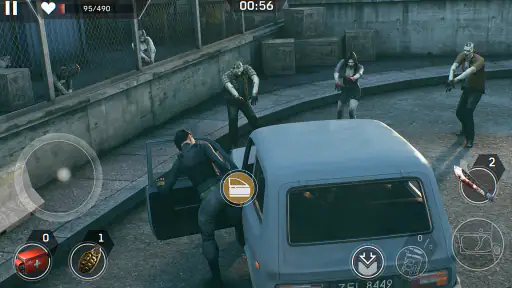
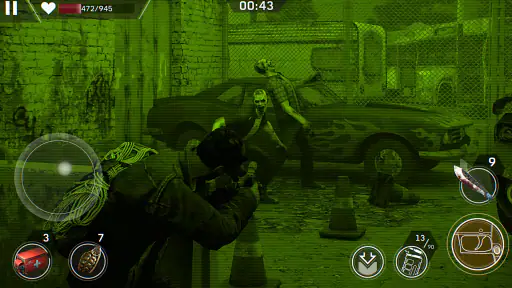
Analysis by Reviewed
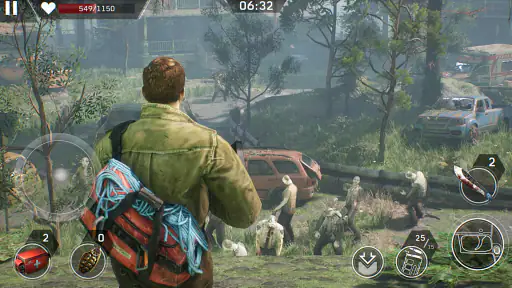
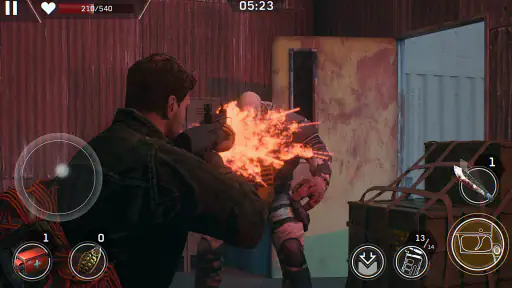
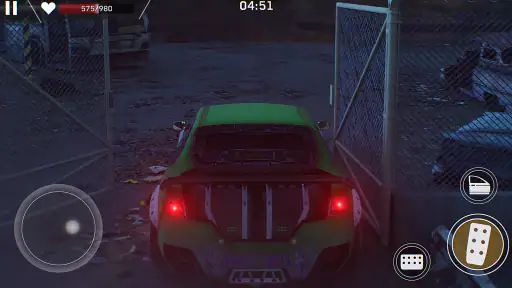
Left to Survive: Survival Game is the kind of mobile action game I open when I want immediate zombie-shooting rather than a slow, thoughtful survival simulator. After spending time with it, my main impression is clear: it works best as a compact, mission-driven shooter with survival flavor, not as a fully open-ended apocalypse sandbox. The appeal comes from its quick battles, third-person perspective, dramatic undead encounters, and the constant feeling that the next upgrade may make the next run easier.
That focus makes it easy to recommend to someone who enjoys short action sessions on Android or iOS. I can play a mission during a break, stop without needing a long setup, and return later with a clear sense of progression. At the same time, the free-to-play structure and mature presentation mean it is not ideal for everyone. Players looking for a relaxed game, a completely offline experience, or a progression system untouched by purchases should approach it cautiously.
What the shooting experience feels like in practice
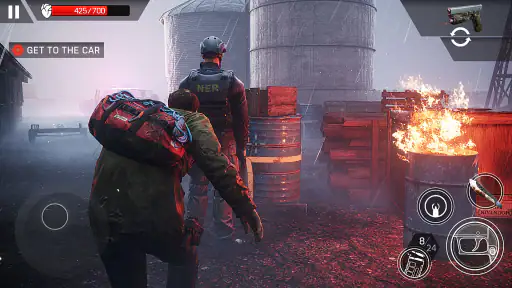
The strongest part of Left to Survive is its directness. The game places me in a tense zombie scenario and gives me a simple job: survive the attack, control the space around me, and eliminate threats before they overwhelm the position. The third-person viewpoint makes aiming feel more personal than in a top-down shooter, while the apocalyptic setting gives every encounter a sense of urgency.
I particularly like how the game encourages me to think about positioning instead of treating every fight as a button-mashing exercise. Zombies may be numerous, but the real pressure comes from deciding where to stand, when to expose myself, and which target deserves attention first. A player who fires without considering the battlefield can quickly lose control. Even when the basic objective is familiar, that small layer of decision-making keeps the missions from feeling completely automatic.
The action is also well suited to touch controls. Mobile shooters can become frustrating when aiming requires too much precision, but this game is built around fast reactions and readable targets rather than demanding console-level accuracy. I still need to pay attention, especially when several enemies approach from different directions, yet the controls do not make me feel as though I am fighting the phone more than the undead.
One useful habit is to avoid spending every resource as soon as it becomes available. I found it more satisfying to treat upgrades as preparation for a difficult stretch rather than as a constant impulse purchase. Improving the wrong part of my arsenal can make progress feel slower, while saving for a meaningful improvement gives a much clearer payoff during missions. That is an important distinction for anyone who wants to play without turning every obstacle into a reason to spend.
The game’s presentation supports the action without trying to become a serious horror experience. It leans toward dramatic combat, recognizable zombie danger, and a mature post-apocalyptic atmosphere. The age rating of Mature 17+ is therefore worth taking seriously. I would not choose it as a family-friendly action game, and parents should not assume that a mobile format makes the content suitable for younger players.
Why the mission structure keeps me returning
Short, objective-focused sessions are the most practical reason to keep this game installed. I can approach it differently depending on the time I have. With only a few minutes, I can complete a quick piece of progress. With a longer evening, I can work through several missions and think more carefully about upgrades, equipment, and the next challenge.
This flexibility matters because the game does not require me to commit to a long uninterrupted campaign every time I play. I can use it as a break-time shooter, a commute companion when I have a stable connection, or a more focused evening game when I want repeated action. That makes it more convenient than many console-style survival games, which often need a larger time investment before a session feels worthwhile.
A realistic everyday example would be a player who has ten minutes before an appointment. I would not start a large exploration game in that situation, but Left to Survive gives me a better chance of fitting in a meaningful action session. I can enter a mission, concentrate on survival, and leave with progress made. The trade-off is that the game’s broader progression may tempt me to continue longer than planned, particularly when a new objective or upgrade is close.
Another useful approach is to separate “practice” sessions from “progress” sessions. I prefer using easier encounters to get comfortable with aiming and movement, then saving stronger equipment for missions where the difficulty genuinely demands it. This prevents the common free-to-play mistake of exhausting valuable resources simply because I wanted to finish one stage immediately.
Where the game is more than a basic zombie shooter
Left to Survive benefits from combining action missions with longer-term survival progression. The shooting gives me an immediate reason to play, while the improvement loop gives those missions a purpose beyond simply clearing another group of enemies. I am not only asking whether I can survive the current encounter; I am also considering whether the reward will help me handle the next one more efficiently.
That structure creates a useful tension. Stronger equipment can reduce frustration, but earning or managing progress carefully makes victories feel more personal. I enjoy games where preparation matters, and this one gives me enough of that feeling to make repeated sessions worthwhile. It is not a detailed survival simulation with unlimited freedom, but it does provide a clear connection between combat performance and future readiness.
The multiplayer element also broadens the experience beyond solitary zombie missions. For players who enjoy testing their shooting skills against other people, that competitive side can add a different kind of pressure. A mission against computer-controlled threats rewards survival habits, while a player-versus-player encounter asks for faster reactions and better tactical judgment. I would not recommend treating both modes exactly the same; skills that work against predictable undead enemies may not be enough against a human opponent.
My practical advice is to learn the feel of the controls and the rhythm of combat before taking the competitive side too seriously. Entering multiplayer while still adjusting to aiming can make losses feel unfair when the real problem is unfamiliarity. Once the movement and shooting become comfortable, the competitive mode has a better chance of feeling like a test of decisions rather than a confusing interruption.
The progression is enjoyable, but the free-to-play pressure is real
The game is free to download, which makes trying it easy, and its large audience reflects that accessibility. It has an average rating of 4.5 from around 654 thousand ratings, with more than 50 million installs. Those figures suggest that the basic combination of zombie action and mobile progression has connected with a very broad audience, although popularity alone does not remove the game’s individual trade-offs.
The main friction comes from in-app purchases, which range from $0.99 to $369.99 per item. That range is not a minor detail for me. A player can begin without paying, but the presence of expensive purchase options changes how I evaluate progression. I want to know whether I am making a tactical decision or simply being encouraged to solve a difficulty spike with money.
My experience with this kind of structure is that patience becomes part of the strategy. If a mission feels too difficult, I do not immediately assume that I need a purchase. I first check whether my equipment is suitable, whether I am wasting attacks, and whether my positioning is creating unnecessary damage. Taking that pause is useful because it distinguishes a genuine skill problem from a progression problem.
There is also a psychological cost to frequent upgrade prompts. Even when I am enjoying the shooting, reminders about faster progress can make the game feel less like a self-contained action experience and more like a store surrounding the action. Players who dislike that atmosphere may lose interest before the combat has a fair chance to win them over.
For that reason, I would set a personal spending limit before playing. The game is much easier to enjoy when I decide in advance whether I am playing entirely free or allowing a small, controlled budget. Without that boundary, a series of inexpensive-looking choices can become difficult to evaluate, especially when I am close to completing a mission or improving a favorite weapon.
How it compares with other mobile action choices
Compared with a traditional endless runner, Left to Survive asks more from me than reflexive lane changes. I need to aim, manage threats, and think about preparation. Compared with a large open-world survival game, however, it is more structured and less focused on unrestricted exploration, crafting freedom, or emergent wandering. That difference is central to choosing it.
I would pick this game over a slower survival title when I want the satisfaction of shooting zombies quickly and seeing progress in manageable steps. I would choose a more open survival alternative when I want to build a base at my own pace, explore a large environment, or create my own objectives. Neither approach is automatically better; they serve different moods.
It also differs from a pure competitive shooter. The zombie setting and progression give it a stronger solo identity, while multiplayer adds another layer rather than defining the entire experience. Someone who wants perfectly balanced competitive matches may prefer a game designed exclusively around player-versus-player combat. Someone who wants a mixture of campaign-style action and competition may find the blend more appealing.
The game’s identity is therefore easiest to understand as a guided action experience with survival themes. It is not trying to replace every type of zombie game on mobile. Its strength is that it gives me a clear target, a reason to improve, and enough variety between solo survival pressure and competitive play to avoid feeling completely one-dimensional.
Who should play it, and who should skip it
I think Left to Survive is a strong fit for players who enjoy zombie fiction, third-person shooting, short missions, and visible character or equipment progression. It is especially suitable for someone who wants a mobile action game that can be played in brief sessions but still offers a longer-term reason to return. Fans of dramatic apocalypse settings will probably understand its appeal quickly.
It is also a reasonable choice for players who like learning through repetition. The first attempt at a difficult encounter may be messy, but a second attempt can feel better once I understand the enemy pressure and stop wasting opportunities. That loop—observe, adjust, upgrade, retry—is where the game delivers its most satisfying moments.
I would be more hesitant to recommend it to someone who wants a single-purchase game with no commercial interruptions. The in-app purchase range makes the free-to-play model impossible to ignore. I would also steer away players who dislike mature zombie violence, competitive pressure, or games that expect regular attention to progression.
People with limited storage or an unreliable connection should also think about the practical experience before committing to it. A visually active action game can be demanding on a phone, and a shooter is much less enjoyable when technical conditions interfere with aiming or timing. I would test it on the intended device before investing money or becoming attached to a long progression plan.
For younger players, the Mature 17+ rating is another clear reason to choose something else. The game’s subject matter and presentation are aimed at adults, not children looking for a harmless cartoon shooter. That is not a criticism of the design; it is simply an important audience boundary.
Details worth knowing before installing
The game comes from MY.GAMES HOLDINGS LTD and was released on Jul 24, 2018. Its current version is 8.6.0, and it requires at least OS 9. Those details matter because compatibility is not only about whether a game appears in an app store. I would still check the operating system and available space on the device I plan to use, especially if it is older.
The headline cost is free, but I would treat that as an invitation to try rather than a promise of a completely cost-free experience. The best way to approach it is to play several sessions before deciding whether the combat and progression justify any optional spending. That gives me enough time to see whether I enjoy the core loop or merely like the first impression.
I would also recommend turning the game into a deliberate routine instead of opening it whenever a progress prompt appears. Playing at set times helps me judge whether the missions are genuinely fun or whether I am returning only because the upgrade system is asking for attention. That small change makes the experience feel more controlled.
One final practical tip is to treat every difficult stage as information. If I fail because I expose myself too long, I need better movement and timing. If I fail because my equipment is clearly behind the challenge, I need a progression plan. If I cannot tell which problem I am facing, spending money is premature. This mindset makes the game less frustrating and improves the value of every session.
My final verdict
Left to Survive: Survival Game succeeds because it understands the pleasure of a fast, readable zombie firefight. I enjoy the way it turns short mobile sessions into small tests of aim, positioning, and preparation, while the wider progression gives me a reason to return. The combination of solo action and multiplayer competition makes it more substantial than a disposable shooter, and the mature apocalypse setting gives the battles a consistent identity.
Its weaknesses are just as clear. The free-to-play economy can affect how progression feels, and players who dislike purchase pressure may find the surrounding structure more tiring than the combat is rewarding. It also will not satisfy someone searching for a fully open survival world or a purely competitive shooter with no campaign-style layer.
My recommendation is therefore specific: try it if you want accessible mobile zombie action with a persistent upgrade loop, and decide early how much patience or money you are willing to invest. Skip it if you want a calm, family-friendly, one-time-purchase experience. For the right player, it is an entertaining action game that fits neatly into everyday play, provided the player stays in control of the progression rather than letting the progression control the player.
Pros
- Fast-paced third-person shooting with responsive controls.
- Base building adds useful progression beyond combat missions.
- Varied weapons and equipment help customize your play style.
- Zombie hordes and boss fights provide exciting action moments.
- Playable without a constant internet connection in some modes.
Cons
- Energy limits can interrupt longer play sessions.
- Upgrades and construction timers may feel slow without spending.
- Random loot can make obtaining specific gear frustrating.
- Touch controls may feel imprecise during intense firefights.
- Storage and inventory management become restrictive over time.
- Category
- Action
- Version
- 8.6.0