Last Human: Final Stand
- 4.00
- 3.2
- Installs
- 10.00K
- Price
- Free
Screenshots
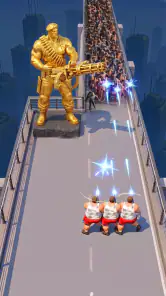
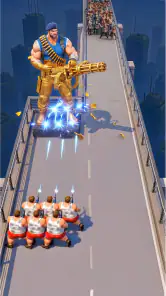
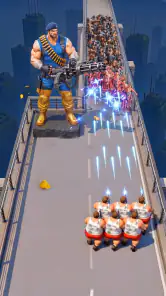
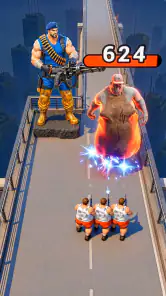
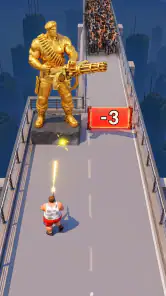
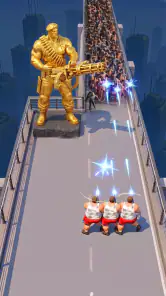
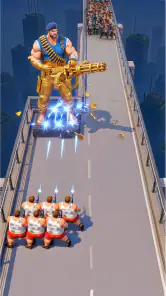
Analysis by Reviewed
Last Human: Final Stand is a free strategy game from Iterflor Pte Ltd built around a simple survival fantasy: you are trying to remain alive while the world is overrun by zombies. I approached it expecting a mixture of shooting and defensive decision-making, and the strongest part of the concept is that it aims at both instincts at once. You want the immediate satisfaction of dealing with threats, but you also need to think about how to use limited opportunities before the next danger arrives.
That combination makes it more interesting than a straightforward zombie shooter, although it also creates a higher burden on the game to explain its systems clearly. A player who enjoys planning, adapting and making imperfect choices may find a good time here. Someone looking for a polished, instantly readable action game may feel less comfortable. After spending time with it, my view is that this is best treated as a cautious free-to-play strategy experiment rather than an automatic recommendation for every zombie fan.
How the last-stand idea translates into play
The game’s identity sits between zombie shooting and survival strategy. That matters because the two genres ask different things from the player. Shooting games reward quick reactions and direct control, while strategy games reward preparation and patience. Last Human: Final Stand tries to make those attitudes coexist, so a good session is not only about surviving the immediate attack. It is also about thinking one step ahead and avoiding decisions that leave you exposed later.
I found that premise more appealing when I played with a deliberate rhythm. Rushing into every encounter can make the experience feel like a basic action game, while pausing to consider the wider situation gives the strategic layer more importance. My practical advice is to resist treating every threat as a reason to spend everything immediately. In a last-stand scenario, preserving options can be more valuable than winning one moment in the most dramatic way possible.
The store summary presents the game as a final fight for survival, but that message is broad rather than a detailed explanation of the experience. The useful question is whether you enjoy making decisions under pressure. If you do, the zombie setting gives those decisions an accessible purpose. If you prefer a campaign with a strong story, carefully staged missions or a purely reflex-based challenge, the central appeal may not be enough on its own.
A good fit for short, focused sessions
I can see this working well in an everyday situation where you have a little time to concentrate but do not want to commit to a long console-style session. For example, I would play it during a break at home, complete a focused stretch of survival play, then stop before fatigue turns every decision into a rushed one. The strategy angle benefits from attention, so it is not the sort of game I would recommend playing while distracted by messages or another video.
That short-session use case also reveals a trade-off. A quick game can be convenient, but it may leave you wanting a stronger sense of long-term purpose if the available decisions do not keep developing. Players should therefore judge the experience by how much they enjoy the moment-to-moment survival puzzle, not simply by the promise of a zombie apocalypse. The setting is familiar; the value has to come from how the game makes you respond to it.
What the free entry point really means
Last Human: Final Stand is free to download, which makes trying it relatively easy. The game is marked for Teen audiences, so parents and younger players should take that age guidance seriously when deciding whether it is appropriate. The free entry point is useful for curious players who want to test the controls and overall pacing before spending anything.
There are in-app purchases ranging from $0.99 to $99.99 per item. That is the most important spending context to understand before starting. The range covers inexpensive optional purchases as well as a much more substantial top end, so I would not approach the game casually with a payment method ready and no personal limit. My recommendation is to play first, decide whether the core loop is genuinely enjoyable, and only then consider whether any purchase improves your experience enough to justify it.
I would also separate enjoyment from progress pressure. A purchase can make a difficult stretch feel easier, but that does not automatically make the game more satisfying. If you enjoy solving problems with the tools already available, paying to remove the friction may reduce the part you find interesting. On the other hand, a player with limited time may see convenience differently. The right choice depends on whether you value challenge, speed or simply access to more of the experience.
Progress, pressure and the cost of mistakes
The most engaging way to approach this game is to treat each decision as part of a chain. A choice that feels efficient now may create a weaker position later, while a conservative move can preserve flexibility. That is where the strategy label earns its place. The game is not at its best when I play it as a sequence of isolated attacks; it is more compelling when I think about the consequences of spending, positioning and timing.
A useful personal rule is to identify what I am trying to protect before reacting to a threat. If the immediate danger is not the only concern, then the safest-looking move may not be the best one. This mindset is especially helpful for players who normally rely on fast action. Instead of asking only, “Can I defeat this?” I would ask, “What will this leave me able to do afterward?” That small change makes the experience feel more strategic without requiring complicated terminology.
The pressure can also work against the game. Survival mechanics become tiring when every setback feels like a demand to repeat the same process without learning anything meaningful. I would pay attention to how often failure teaches me a new approach. If I can understand why a run went wrong and adjust my plan, the pressure feels fair. If the outcome seems tied mainly to waiting, repeating or spending, the same pressure becomes a reason to step away.
Three habits that improve the experience
- Keep a reserve: do not use every useful option simply because it is available. A reserve gives you room to respond when a later threat is more serious.
- Separate panic from priority: the most visible zombie or urgent-looking problem may not be the one that matters most to your survival plan. Look at the wider position before committing.
- Review the cause of failure: after a bad run, change one part of your approach instead of changing everything at once. That makes it easier to tell whether your decision actually helped.
These are not magic solutions, but they make the strategy layer easier to appreciate. They also give the game a more thoughtful use case than simply tapping through encounters. I especially recommend the reserve habit for anyone who is tempted by immediate rewards. In a survival game, the value of an option often increases when the situation becomes worse, not when it first appears.
The current version is 2.50.5, and the minimum operating system requirement is Android 7.1. That makes the game accessible to people using older Android devices, at least from a software-version perspective. Accessibility does not guarantee a smooth experience on every phone, though, so I would still pay attention to how comfortably the controls and visuals run on your device before committing to long sessions.
Where spending can affect the feeling of progress
Because the purchase range reaches from small items to much larger ones, I think the game should be approached with a clear spending boundary. I would personally set that boundary before playing rather than making the decision during a frustrating loss. Emotional purchases are especially risky in a survival game because the design naturally puts the player in moments where an immediate advantage feels attractive.
The fairest way to judge the experience is not to assume that every purchase is harmful, nor to assume that every purchase is harmless. Instead, ask whether the free route remains enjoyable and whether buying something changes the challenge in a way you actually want. A small convenience may be reasonable for one player and pointless for another. A larger purchase deserves much more caution, particularly if it is being considered only because progress has suddenly become uncomfortable.
I also would not confuse the existence of purchases with proof that the game is unfair. The confirmed purchase information tells me the spending range, but it does not establish how each item affects play. That distinction is important. I can responsibly advise restraint and transparency-minded testing, but I should not claim that the game automatically sells power or blocks progress without clear evidence from the actual experience.
Fairness, competition and what I would watch closely
Competitive fairness is difficult to judge from the zombie theme alone. A game can include pressure, purchases and survival progression without necessarily becoming unfair. The real issue is whether players are asked to compete using comparable tools, or whether payment can create an advantage that overwhelms planning and skill. I would be careful here because the available store facts do not explain the structure of competition or the exact role of purchased items.
My practical recommendation is to distinguish between personal progression and player-versus-player comparison. If you are mainly surviving against the game itself, purchases may affect your pace or convenience without directly deciding another person’s result. If the game places players in rankings, contests or other competitive situations, the fairness question becomes much more important. In that case, I would spend time learning the free experience before deciding whether the environment feels comfortable.
This is also where the game may not be the right choice for you. Players who want a strictly skill-based competitive strategy game should prefer a title with clearly explained rules around paid advantages. Players who are happy with a personal survival challenge may be more tolerant of optional spending, provided the core decisions remain meaningful. I would not recommend Last Human: Final Stand as a blind choice for someone whose main priority is competitive balance.
There is a useful middle ground for cautious players: play without spending, note what causes losses, and see whether better decision-making changes the result. That test does not answer every question, but it reveals whether the strategic layer has enough depth to hold your attention. If every problem feels solved only by acquiring something, I would stop rather than chase the next purchase. If careful planning consistently helps, the free experience has more integrity for me.
The rating and audience signal
The game currently has a 3.2 average from around 76 ratings, with four written reviews. I would read that as a reason to approach it with curiosity rather than certainty. It is not a strong enough signal for me to promise a universally polished experience, but it also is not a reason to dismiss the game without trying it. The relatively small amount of feedback means my own first session would matter more than a quick glance at the number.
It has passed 10K installs, which suggests that there is already some interest in the concept without making it feel like an established mainstream hit. That scale reinforces my cautious recommendation: try the free version, form your own view of the controls and pressure, and avoid spending until the game has earned your confidence. A smaller player footprint can be appealing if you enjoy discovering less familiar titles, but it may matter to anyone seeking a large, highly active community.
The Teen content rating is another reason to think about audience before installing. The zombie premise is not aimed at very young children, and I would not present it as a family-friendly strategy game simply because the controls may be easy to understand. For adult players and older teenagers who enjoy darker survival themes, the setting should be more natural. For parents, the rating deserves more attention than the free price.
What remains important to verify before committing
There are several questions I would keep in mind while testing the game. How quickly does the strategic system become more interesting? Do new situations ask for genuinely different decisions, or do they mainly increase pressure? Does the free route feel complete enough for a player who never buys anything? These are not minor details; they determine whether the title is a satisfying strategy game or simply a short-lived zombie distraction.
I would also watch how clearly the game communicates consequences. A strategy title should help me understand why a choice succeeded or failed. If the interface makes an outcome feel mysterious, I have less ability to improve through skill. This is a particularly important test for a game that combines shooting and survival because action can hide the strategic mistake underneath visual noise.
Another practical question is whether the game suits your preferred control rhythm. Some players want constant movement and immediate reactions, while others enjoy planning between bursts of danger. Last Human: Final Stand is more appealing to the second group, especially when the player deliberately creates time to think. If you want an uncomplicated shooter that lets you switch off your brain, I would choose a more direct alternative instead.
Compared with a traditional zombie shooter, this game’s advantage is the possibility of making survival feel like a series of connected decisions rather than a simple target routine. Compared with a dedicated strategy game, its advantage is the immediate accessibility of the zombie setting and action pressure. Its weakness against both alternatives is that it has to satisfy two audiences at once. Players seeking deep planning may find the action layer distracting, while action fans may find the strategic pauses restrictive.
That comparison helps clarify who should skip it. I would skip it if I wanted a story-first zombie adventure, a fully transparent competitive strategy system, or a premium experience with no purchase pressure. I would also skip it if I knew I was likely to spend impulsively whenever a run went badly. I would try it if I enjoyed survival themes, liked thinking under pressure and was comfortable treating the free version as a test rather than a promise.
My trust verdict after weighing the trade-offs
My final impression is cautiously positive. Last Human: Final Stand has a useful central tension: immediate zombie danger versus the need to preserve a longer-term survival plan. That gives it more personality than a generic action game, and the strategy angle rewards players who slow down enough to learn from their mistakes. The free price makes experimentation sensible, while the Teen rating clearly places it in a more mature audience than a family strategy title.
At the same time, I would not ignore the spending range or the modest rating signal. Purchases from $0.99 to $99.99 per item mean I would play with a firm budget and never buy during frustration. I would also judge the game by the quality of its free decision-making, not by the promise that a purchase might make progress easier. The best test is whether planning still feels rewarding before you spend anything.
Iterflor Pte Ltd has chosen a familiar setting, but the combination of shooting and survival strategy gives the game a specific audience. It is for players who enjoy making imperfect choices while danger keeps moving, not for people who want either a pure reflex shooter or a deeply competitive strategy simulator. I would recommend giving it a careful, no-spend trial, especially if you like zombie games but are tired of playing them as simple target galleries.
In the end, Last Human: Final Stand earns a place on my try-first list rather than my automatic-install list. Its strongest moments come from managing pressure thoughtfully, and its biggest risk is that spending or repetition could overshadow that decision-making. If the free experience keeps teaching you something new, it can be a worthwhile survival strategy game. If it makes you feel that progress is mainly a matter of paying to remove obstacles, I would move on to a clearer alternative.
Pros
- Simple controls make the survival gameplay easy to pick up.
- Base upgrades provide a clear sense of progression.
- Short missions suit quick mobile gaming sessions.
- Different weapons encourage varied combat strategies.
- Post-apocalyptic visuals create a fitting survival atmosphere.
Cons
- Energy or time limits may interrupt longer play sessions.
- Enemy encounters can become repetitive after extended play.
- Some upgrades may require substantial resource grinding.
- The interface can feel crowded on smaller phone screens.
- Performance may vary on older Android and iOS devices.
- Category
- Strategy
- Version
- 2.50.5