Last Beacon: Survival
- 519.00
- 4.3
- Installs
- 1.00M
- Price
- Free

Screenshots


Analysis by Reviewed
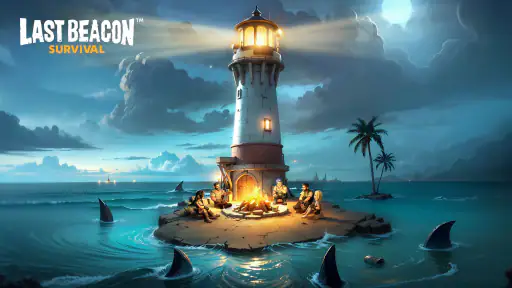
I went into Last Beacon: Survival expecting a strategy game about making sensible choices under pressure, and that is the right way to approach it. Its central fantasy is rebuilding human life on the ocean, but the appeal is less about a dramatic story than about turning a precarious situation into something that can keep going. You act, see whether your decisions have helped, and look for the next improvement. That simple rhythm gives the game a clear reason to invite another short session.
A useful way to judge the first few moves
When I try a game like this, I look for whether the opening teaches me to think about consequences, rather than simply asking me to tap through options. A helpful test is to choose a goal before acting: make the settlement more secure, prepare for conflict, or support the next stage of growth. That gives even an early session a practical shape and makes it easier to decide whether the game’s decision-making suits you.
Starting with a fragile plan
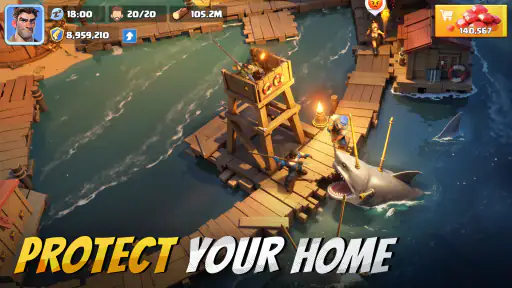
The first useful question is not “How quickly can I expand?” but “What will make my next move possible?” In a survival strategy game, building and fighting pull attention in different directions: investment in a stronger base can support future progress, while immediate threats make it tempting to spend attention on defense. I found the premise most engaging when I treated each choice as part of a chain rather than as an isolated upgrade.
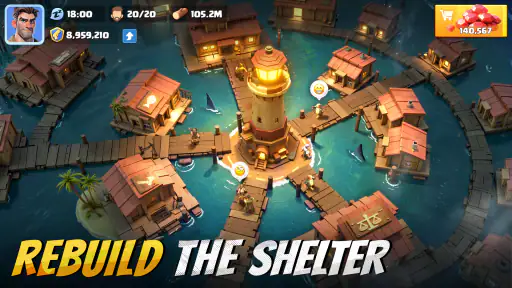
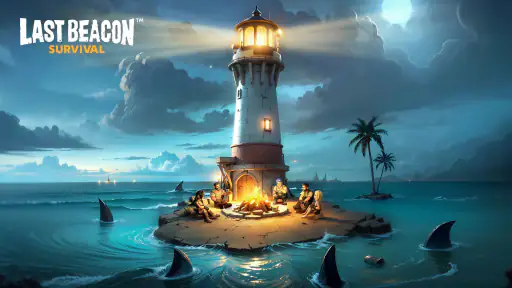
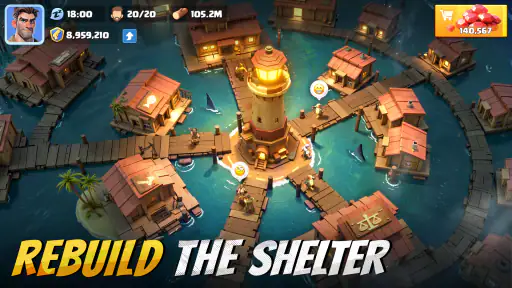
That approach also makes the ocean setting matter. A settlement surrounded by water feels more exposed than a conventional land-based kingdom, so rebuilding reads as a practical problem, not just an excuse to collect structures. The game’s description promises survival, construction, and combat; the most satisfying way to connect those ideas is to ask how each action helps the settlement endure the next challenge.
Last Beacon: Survival is a free strategy game from YG Technology FZ-LLC. It is rated Everyone 10+, and its current version is 1.5.2. That makes it an easy game to try if you enjoy planning around a settlement and a threatened world, though its in-app purchases range from $0.99 to $299.99 per item. I would go in ready to enjoy the free core experience without treating purchases as a necessary shortcut.
Make each action earn its place
One practical habit is to pause before committing to a new project and identify the bottleneck it is meant to solve. If the settlement needs to hold up better, building for resilience is more coherent than adding something unrelated simply because it is available. If the immediate problem is conflict, diverting all attention to long-term construction may leave the present situation unresolved. Thinking in terms of bottlenecks makes the strategy feel more deliberate.
This is also a useful way to avoid the familiar strategy-game trap of expanding for its own sake. Bigger is not automatically safer if each addition competes for attention or leaves the central survival problem untouched. I prefer a compact plan in which every move has a reason: stabilize, prepare, then grow. That may sound cautious, but it makes victories feel earned and losses easier to understand.
You May Like

Clash of Clans Is Won Between the Battles

Android Auto Makes the Case for Quieter Car Software

MobiOffice: Transforming Mobile Productivity with Seamless Integration

EA SPORTS FC™ Mobile Soccer: Redefining Mobile Sports Gaming

How Microsoft OneDrive Became a Mobile Productivity Giant

How Google Translate Breaks Language Barriers Effortlessly
The game is a better fit for players who enjoy weighing priorities than for anyone seeking a pure action game. The fighting is part of the premise, but the broader appeal comes from deciding how to build toward a more secure future. If you mainly want fast reflex challenges or a story-led adventure with a fixed sequence of scenes, this strategic focus may feel slower than you want.
Practical planning for an everyday session
Suppose you have a few minutes free while waiting for an appointment. Rather than opening the game and making several unrelated changes, decide on one question to answer: is the settlement’s current weakness more urgent than its next growth step? Make the decision that addresses it, then pause and see what the outcome suggests. This turns a spare moment into a useful check-in instead of a hurried burst of tapping.
That approach is also helpful if you are playing alongside other daily activities. You do not need to treat every visit as a major push forward; a smaller goal can be enough to keep your reasoning clear. If you find yourself unsure what to do next, that may be a cue to stop and return later with fresh attention, rather than making a purchase or committing to an upgrade just to feel busy.
How the rhythm keeps a session moving
Action, feedback, and the next decision
The loop works when an action leads to feedback that changes what you should do next. A construction choice should make the settlement feel better prepared; a confrontation should reveal whether your current priorities are enough. Rather than treating every result as a simple win or loss, I find it more useful to ask what the outcome says about the plan. That turns setbacks into information and keeps decision-making at the center.
A small but valuable strategy is to make one meaningful change at a time when you can. If you change several priorities together, it becomes harder to tell which one improved the situation—or which one created a new weakness. A focused adjustment gives the next stretch of play a clearer purpose. It also helps prevent the restless cycle of tapping through every available option without learning much from the result.
Another sensible workflow is to decide on a stopping point before you begin: finish a particular improvement, resolve a pressing threat, or reach a moment when the next decision can wait. Strategy games can make “one more thing” feel endless. Giving a session a modest goal makes the game easier to fit around everyday life and reduces the temptation to spend just to accelerate progress.
For example, if I had a short break between other tasks, I would use it to check the settlement’s immediate needs and make one considered adjustment, rather than starting with the vague intention to play until everything looked perfect. That is a better match for a game built around successive decisions than trying to force a long, uninterrupted run into an ordinary day. The exact time a session takes can vary, but a clear personal stopping rule is useful either way.
Why rewards matter—and when they do not
The reward in this kind of loop is not only gaining something new. It is seeing a fragile plan become more capable, then facing a fresh problem with more options than before. That gradual shift gives rebuilding its emotional hook: the world begins in a state that calls for survival, while each sound decision helps make further progress feel plausible. I find that more compelling than collecting upgrades without a visible purpose.
Still, progress can lose its punch if the player stops connecting improvements to outcomes. If a new step feels like a chore, I would return to the basic question of what current weakness it addresses. If the answer is unclear, it may be time to hold off and reassess rather than keep advancing automatically. This is a useful distinction between a game that rewards planning and one that merely encourages constant activity.
The purchase range deserves a measured look. The game costs nothing to start, but individual in-app purchases can reach $299.99. That is a wide range, so I would set a spending limit before playing and avoid treating a purchase as the default answer to a difficult stretch. For players who prefer a clearly fixed upfront price and no optional spending decisions, a premium strategy game may be a more comfortable alternative.
Choosing the right kind of strategy game
The comparison with other strategy games comes down to what you want your decisions to be about. If you enjoy a familiar focus on territory or battles above all else, a title built around those elements may give you a more direct fit. Here, the rebuilding premise asks you to connect survival, construction, and fighting rather than treating one of them as the whole point. That combination is appealing when you like balancing competing priorities, but it can feel less focused if you want combat tactics to dominate every session.
It is also worth separating “free to start” from “free of spending pressure.” The game has a free entry point, but optional purchases create a choice that a fixed-price game avoids. I would decide in advance whether you are comfortable with that model. If you prefer to pay once and never weigh optional purchases, choosing a premium alternative is not a failure to give this game a chance; it is simply a better match for how you want to play.
Resetting without losing the thread
A reset in the session does not have to mean abandoning the overall plan. It can simply mean stepping back, deciding what matters next, and returning with a narrower goal. When the current approach stalls, repeating it with more urgency is rarely a thoughtful response. I would instead look for the specific pressure point—survival, construction, or combat—and make the next session about addressing that one issue.
This is where the game’s premise can support a satisfying sense of continuation. The ocean settlement gives every new decision a common purpose: keep the effort to rebuild moving forward. But that purpose can also make the game feel demanding if you want a relaxed experience with no pressure to plan. It suits players who enjoy returning to a developing challenge; it is less suited to someone who wants each session to feel fully self-contained.
Compared with more conventional strategy games focused mainly on territory, armies, or abstract resource optimization, this one foregrounds the survival-and-reconstruction idea. That gives it a more precarious mood than a straightforward empire-building alternative. On the other hand, players who want deep tactical battles above all else may be happier with a strategy title built around combat decisions rather than the combined task of surviving, building, and fighting.
On Android, the minimum operating system requirement is 6.0, so it is worth checking that before installing. The game has a 4.3 average from around 13,000 ratings, with more than 1 million installs. Those figures suggest a substantial audience, but they do not tell me whether its particular balance of construction and combat will suit you; the best test is whether you enjoy making measured choices and learning from their results.
Who should keep coming back
I would recommend Last Beacon: Survival to someone who likes a clear strategic premise, prefers progress built from a series of choices, and is happy to think about what a settlement needs before acting. It can work well as a game to revisit in manageable bursts, especially if you set a goal for each sitting and keep optional spending within a limit you chose in advance.
I would skip it if I wanted a tightly scripted campaign, a purely reflex-driven fight, or a strategy game with no in-app purchase decisions. It may also frustrate players who dislike balancing immediate danger against longer-term development. Those trade-offs are central to the appeal, not incidental details to ignore.
For me, the loop is strongest when a decision produces a visible consequence, that consequence gives a clear reason for the next move, and I can stop before planning turns into aimless repetition. The ocean setting gives the rebuilding goal its own character, while the strategy focus makes patience more useful than frantic expansion. If that kind of thoughtful, repeatable challenge sounds good, the free entry point makes it reasonable to try—just bring a plan, and decide for yourself how much time and spending you want to give it.
Last Beacon: Survival Frequently Asked Questions
What is Last Beacon: Survival about?
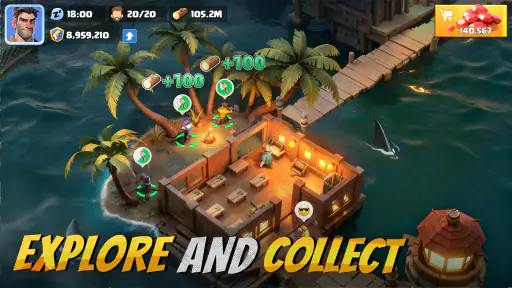
Last Beacon: Survival is a survival game centered on facing danger in a hostile world and trying to stay alive. Players can expect to manage essential resources, explore their surroundings, and make choices that affect their progress. The exact story, available activities, and gameplay systems may vary by version, so check the game’s store listing and in-game descriptions for the latest details before downloading.
Is Last Beacon: Survival free to download, and does it include purchases?
The game may be offered as a free download, but that does not necessarily mean every feature or item is free. Survival games commonly include optional purchases, such as resources, upgrades, or other conveniences, and availability can differ by platform or region. Review the current App Store or Google Play listing for pricing and in-app purchase information, and check your device’s purchase settings if you want to avoid unexpected charges.
Can I play Last Beacon: Survival offline?
Offline access depends on how the game handles saving, progression, and any online features. Some survival games allow limited play without an internet connection, while others require connectivity for login, updates, events, or synchronization. The store page may specify whether a connection is required, but it is sensible to launch the game while online first and check its requirements before relying on it for travel or other situations without internet.
Which devices are compatible with Last Beacon: Survival?
Compatibility depends on the current version, your operating system, and the hardware requirements set by the developer. Before installing, check the game’s listing in the relevant app store for supported Android or iOS versions and available device information. Also make sure your phone or tablet has enough free storage, since games can download additional files after installation and may need extra space for updates.
Does Last Beacon: Survival contain ads or require an account?
Whether the game displays advertisements or asks you to create or connect an account can depend on its current version and platform. An account may be needed for features such as cloud saves, multiplayer, or syncing progress, while ads may appear as optional rewards or during play. Check the store listing’s privacy and data details, then review the prompts shown when you first open the game before sharing personal information.
Pros
- Scavenging for supplies gives each expedition a clear purpose.
- The survival theme creates a tense
- engaging atmosphere.
- Shelter-building adds a useful layer of strategy.
- Exploration rewards players who plan around limited resources.
- A good fit for fans of post-apocalyptic survival games.
Cons
- Managing several resources can feel demanding for newcomers.
- Progress may slow when essential supplies are hard to find.
- Repeated scavenging can become routine over longer sessions.
- Survival systems may be less appealing to casual players.
- The bleak setting offers little variety for players seeking a lighter tone.

- Category
- Strategy
- Version
- 1.5.2