Knife Master: Challenge Game
- 15.00
- 4.9
- Installs
- 10.00K
- Price
- Free

Screenshots


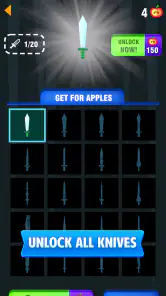

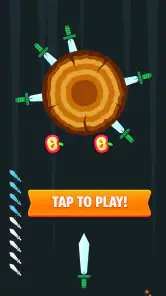
Analysis by Reviewed
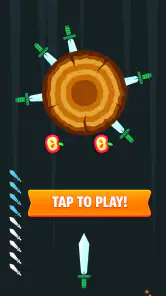
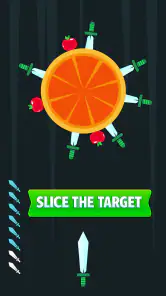
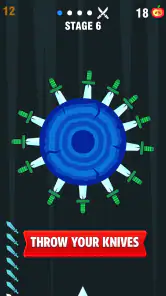
I spent time with Knife Master: Challenge Game as a quick-play arcade title, and its appeal is easy to understand within the first few attempts: the controls are immediate, the objective is clear, and every successful throw gives you a small reason to try again. You aim knives at rotating logs, avoid hitting existing blades, smash through targets, and work toward boss encounters. It is the kind of game I can open for a short break without needing to remember a complicated story or learn a large control system.
That simplicity is also the main thing to consider before downloading it. This is not an adventure game with a deep narrative, a large world, or a long list of character systems. It belongs firmly in the arcade game space, where timing, concentration, and repeated attempts matter more than exploration. I found it most enjoyable when I treated each round as a focused little challenge rather than expecting a broad progression experience.
How the first goals create a useful rhythm
The early objective is wonderfully direct: throw knives into a log without colliding with blades already stuck in it. That gives the opening moments a clean learning curve. I did not have to study instructions for long, because the target itself explains what I need to do. A throw that looks safe can still fail if I release at the wrong moment, so the game quickly turns a simple action into a timing exercise.
Breaking logs gives the opening play a satisfying sense of completion. I could see what I was working toward during a round, and the presence of bosses adds a larger target beyond simply surviving one throw after another. The important point is that the game does not need a complicated mission structure to establish a goal. The next successful sequence, the next broken log, and the next major encounter are enough to keep a short session moving.
I recommend playing with the sound and visual action in mind rather than tapping as quickly as possible. The safest approach is to watch the rotation for a moment, identify an open section, and then throw with purpose. This is one of the first useful habits the game encourages. Random tapping may work against an uncomplicated pattern, but it becomes much less reliable once the available spaces become harder to read.
A realistic use case is a five-minute wait at a bus stop or a short pause between tasks. I can play a few attempts, stop after a mistake, and return later without feeling lost. That makes the early goals more practical than progression systems that require a long uninterrupted session. At the same time, players who prefer a calm game may find the repeated failure-and-retry pattern more stressful than relaxing.
What progress feels like during ordinary play
The strongest progress signal is not a large collection of menus; it is the change in how carefully I approach each throw. At first, I mainly react to the moving log. After several attempts, I start planning around the gaps, watching the timing of the rotation, and saving a little patience for the final throws. That shift from reaction to anticipation is where the arcade design earns its place.
Bosses also help mark progress because they give the session a recognizable destination. Reaching one feels different from simply completing another ordinary target. I like that distinction: regular stages build my rhythm, while the boss acts as a check on whether I have actually learned to control it. The game’s central loop remains easy to understand, but the larger encounters give it more shape than a completely endless score chase would have.
One practical tip is to avoid treating every open space as an invitation to throw immediately. I had better results when I waited for a predictable opening instead of forcing a knife into a narrow gap. That may sound obvious, but the pressure to act quickly is exactly what causes careless collisions. In this game, a short pause can be more valuable than a fast reaction.
Another useful habit is to separate progress from pride. If a throw fails, restarting immediately can be tempting, but taking a second to identify why it failed makes the next attempt more useful. Was the gap smaller than it appeared? Did I release during the rotation instead of before it? Was I trying to finish too quickly? Thinking through that mistake turns repetition into practice rather than simple frustration.
The game’s rating of 4.9 from around 166 ratings suggests that its straightforward style has connected strongly with the people who have tried it. I would still treat that figure as a sign of appeal rather than proof that every player will enjoy it. Arcade games divide audiences sharply: players who like compact timing challenges may become very attached, while people looking for story, customization, or broad exploration may find the loop too narrow.
Where the difficulty starts asking for more attention
The difficulty works best when it makes me reconsider timing instead of merely demanding faster fingers. A rotating log with fewer comfortable openings changes the mental task. I am no longer just identifying a gap; I am deciding whether the current gap is safe enough and whether waiting will create a better one. That is a fair kind of challenge because it rewards observation rather than luck alone.
There is also a trade-off in the game’s minimal control design. Simple controls allow anyone to begin immediately, but they leave little room for correcting a bad decision after the throw starts. If I misread the target, there is usually no elaborate recovery strategy to save the attempt. The result feels clean when I succeed, though it can feel abrupt when a mistake ends a promising run.
I found the best way to handle harder sections was to slow down mentally, even when the target’s movement made me feel rushed. The game may encourage quick decisions, but it does not necessarily reward panic. I watched the rotation for a complete cycle when necessary, then committed to a gap I understood. This approach is especially useful for players who normally tap rapidly through mobile arcade games and then blame the controls for avoidable collisions.
The boss encounters are important to the pacing because they prevent the experience from feeling like a series of identical logs. They promise a more meaningful test of the same core skill. I would not describe the game as a deep boss-focused action title, but these encounters give the ordinary throws a purpose. They also create a natural point at which to stop for the day or try again with a clearer plan.
At the same time, the challenge can become repetitive for players who need constant novelty. The game’s foundation remains knife throwing, log breaking, and boss progression. If you want platforming, puzzles with several possible solutions, or a changing cast of mechanics, this will probably feel limited. A more expansive arcade alternative would be a better choice for someone who wants several distinct modes rather than one polished central action.
How well the pacing encourages another attempt
The retention pressure comes from the short distance between failure and another try. I do not have to rebuild a complicated setup before testing a different approach. That makes mistakes feel actionable: I can immediately apply what I learned about the rotation or my release timing. In my experience, this is the most convincing reason to continue playing.
There is a fine line here. Fast retries are motivating when I believe improvement is within reach, but they can become tiring when several failures feel identical. The game works best when I actively change my approach between attempts. If I repeat the same rushed throw, the loop loses its value. If I wait, observe, and choose a different opening, the next round feels like a genuine experiment.
For that reason, I would use it in short sessions rather than forcing a long marathon. After a few failed attempts, my attention starts to narrow, and that makes a timing game less enjoyable. Closing it and returning later is not a weakness; it is a sensible way to preserve the challenge. The compact format supports that habit because I can resume the idea of improving without committing an entire evening.
The free price makes experimenting with it easy, especially for families or casual players who want an accessible arcade download. Its Everyone age rating also places it among games that are broadly approachable. I would still choose another title for a child who dislikes repeated failure, because the simple presentation does not remove the possibility of frustration. Accessibility of the controls and emotional comfort with retry-based play are different things.
With over 10K installs, it has reached a modest but meaningful audience for a focused arcade release. I see that as consistent with its role: it is easy to understand, easy to sample, and aimed at people who enjoy a compact challenge. It does not need a huge time commitment to show what it is, which is helpful when deciding whether the loop suits you.
Who should choose it, and who should skip it
I would recommend Knife Master to someone who enjoys timing games with a clear objective and quick restarts. It is a good fit for players who like improving through observation, especially those who enjoy the small satisfaction of turning a failed attempt into a successful sequence. It also suits people who want an arcade game that can be played in brief bursts rather than one that demands a long campaign.
I would be more cautious recommending it to players who need a strong story, character development, or a large collection of unlockable activities. The game’s identity is concentrated around throwing knives, breaking logs, and reaching bosses. That focus is a strength when you want clarity, but it becomes a limitation if variety is your main reason for playing mobile games.
It is also not the best option for someone who prefers completely predictable progress. Timing games naturally ask for repeated attempts, and success depends on reading the moment correctly. Players who dislike losing because of a small misjudgment may prefer a puzzle game with unlimited retries and slower decision-making. Conversely, anyone who finds satisfaction in mastering a narrow mechanic may appreciate how little gets in the way.
Compared with the usual endless-tap arcade alternatives, this game feels more deliberate because the log’s rotation turns each throw into a decision. Compared with larger action games, it is far less demanding in terms of controls and time. That middle position is its clearest identity: more focused than a mindless tapper, but much lighter than a full action campaign.
What the current release means for new players
Blastproof Games is the developer behind the title, and the current version is 2.0.22. The game supports Android 7.1 and later, which makes it available to people using older compatible devices as well as newer phones. For a game built around quick visual timing, I would still pay attention to how comfortably the target is displayed on your own screen, since reading narrow openings is central to the experience.
The free entry point is useful because the game’s appeal is highly personal. I can understand the loop almost immediately, but enjoying repeated attempts depends on whether I like this kind of pressure. Rather than assuming it will provide a broad arcade collection, I would approach it as one specific challenge that I can test without a purchase commitment.
The release date is Jul 27, 2026, and that places the game in a relatively current context for anyone checking its availability. I would focus less on the date itself and more on whether the present version delivers the type of session I want: quick, focused, and based on timing. The version information is reassuring for someone who wants to know what build they are installing, but the more important decision remains whether the central loop matches personal taste.
One final practical suggestion is to decide in advance what success means for your session. If the goal is simply to relax, stop after a few attempts and avoid turning every failure into a personal contest. If the goal is improvement, pay attention to the exact moment your throw goes wrong and adjust only one thing at a time. That makes the game feel more like skill practice and less like random repetition.
My verdict on the progression and long-term appeal
Knife Master: Challenge Game succeeds because its goals are visible, its progress is easy to feel, and its difficulty asks for better timing rather than complicated preparation. Logs provide the regular rhythm, bosses provide milestones, and quick retries keep improvement close at hand. I especially like the way the game can turn a spare few minutes into a focused exercise in patience.
Its limits are just as clear. The central action does not offer the breadth of a larger arcade package, and repeated failures may wear down players who want constant rewards or a more forgiving pace. I would not install it expecting a deep progression system or a long-form adventure. I would install it because I wanted a clean knife-throwing challenge that gets to the point quickly.
My recommendation is therefore specific: choose it if you enjoy watching patterns, waiting for an opening, and trying again with a better plan. Skip it if you need narrative, extensive variety, or a game that rarely punishes a mistimed action. For the right player, the focused loop is the reward, and the route from ordinary logs to bosses gives that loop enough structure to remain engaging beyond the first few throws.
After playing it, I see it as a strong small-scale arcade option rather than an all-purpose mobile game. Its high average rating and growing audience reflect a clear, appealing idea, but the real test is whether repeated timing challenges feel satisfying to you. If they do, this free game is easy to recommend for short sessions and gradual mastery. If they do not, no amount of extra attempts will turn its narrow focus into the broader experience you are looking for.
Pros
- Simple controls make it easy to start playing immediately.
- Short rounds are ideal for quick breaks or casual sessions.
- Increasing difficulty keeps the challenge engaging over time.
- Accurate timing provides a satisfying sense of achievement.
- The game works well for players who enjoy skill-based challenges.
Cons
- Gameplay can feel repetitive after extended sessions.
- Later challenges may become frustrating for some players.
- Mistimed throws can feel unforgiving
- especially on harder levels.
- Progress may seem slow without consistent practice.
- Frequent interruptions could reduce the overall flow of play.

- Category
- Arcade
- Version
- 2.0.22