Frontier City
- 30.00
- 4.4
- Installs
- 10.00K
- Price
- Free

Screenshots
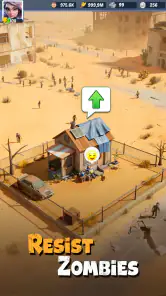
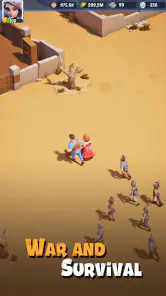
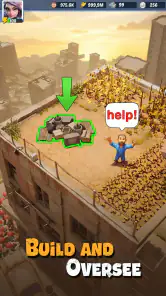
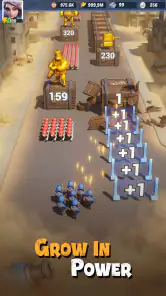
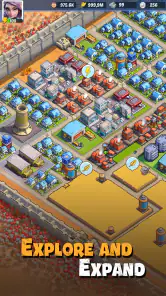

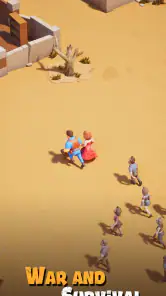
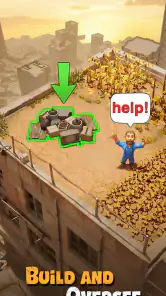
Analysis by Reviewed
Frontier City caught my attention because its central idea is easy to understand but harder to manage: build a city while a sea of zombies keeps applying pressure. I have played it as a strategy game rather than treating it like a simple zombie-themed city builder, and that distinction matters. The appeal is not only placing buildings or watching a settlement grow. It is deciding what deserves scarce attention when safety, expansion, and long-term development are constantly competing.
That focus gives CamelStudio’s game a more practical personality than many casual strategy titles. I found myself thinking less about creating a perfect-looking town and more about whether a new construction choice would make the settlement stronger or simply create another responsibility. If you enjoy planning around threats instead of building without interruption, this is the part of Frontier City that deserves your attention.
Building a city when every decision has a cost
The verified store summary presents a city-building experience surrounded by zombies, but the useful way to understand it is as a pressure-management game. The city is not an isolated project. Every improvement has to make sense within a dangerous environment, and the best decision is often the one that keeps future options open rather than the one that produces the fastest visible growth.
In my experience, the zombie setting changes how I judge progress. In a peaceful builder, I can usually prioritize appearance, income, or expansion in whatever order feels satisfying. Here, I naturally look for a safer sequence. I want the settlement to become more capable before I stretch it too far, because uncontrolled growth can leave a city looking developed while still feeling vulnerable.
This is the verified capability that shapes the entire experience: Frontier City makes city growth a response to an ongoing threat. That sounds straightforward, yet it affects the rhythm of play. Construction is not merely a reward for waiting. It becomes part of a larger decision about timing, readiness, and whether the next step helps the city survive or only makes it busier.
The game belongs to the strategy category, and I think that label is more useful here than calling it just a zombie game. The zombies provide the pressure, but the player’s real work is prioritization. If you normally enjoy arranging buildings, upgrading a settlement, and making gradual plans, you will probably understand the appeal quickly. If you want constant direct combat with little interest in development, this may feel slower than expected.
Why the central idea works better than the theme alone
Zombie imagery is common in mobile games, so the theme by itself would not be enough to keep me interested. What makes this concept worthwhile is the way the threat gives ordinary construction choices a reason to matter. A building is not just another item to place. Expansion is not just a larger number on the screen. Each decision contributes to the city’s ability to continue operating under pressure.
I also like that this structure creates room for different kinds of players. A cautious player can focus on making a dependable core settlement before reaching outward. A more adventurous player can test how much growth is possible before the city becomes difficult to manage. Neither approach needs to be treated as the only correct style, because the enjoyment comes from seeing how your priorities affect the next problem.
That said, the concept does not automatically make every moment exciting. Some sessions are likely to feel more like preparation than crisis, especially when you are arranging your next steps instead of reacting to an immediate threat. I consider that a fair trade for a strategy game built around planning, but players expecting nonstop action should know what they are choosing.
How I approach the city in everyday play
When I open Frontier City for a short session, I do not begin by asking what I can build immediately. I first look at the city as a system. What is already working? Which improvement would remove the biggest weakness? Am I expanding because the settlement is ready, or because I am impatient to see a larger map? That quick check prevents me from making progress that looks impressive but creates problems later.
A useful habit is to separate urgent decisions from attractive decisions. An urgent decision protects the city’s ability to function. An attractive decision may offer faster growth or a more satisfying visual change, but it can wait if the settlement is under strain. This sounds like basic strategy, yet the zombie pressure makes the difference easier to feel. I often get more value from one well-timed improvement than from several hurried choices.
Another practical approach is to treat expansion as a commitment. Reaching farther into the surrounding area may create new opportunities, but it also means the city has more ground and more needs to manage. I would rather expand after reviewing the settlement’s current balance than push outward simply because the next space is available. That mindset is one of the game’s less obvious lessons: growth is useful only when the city can support it.
For a player who has only a few minutes, I recommend choosing one clear objective before starting. It might be strengthening the settlement’s current position, preparing for the next stage of growth, or correcting an inefficient layout. A focused session feels more rewarding than tapping through unrelated tasks. It also makes it easier to notice whether a decision genuinely improved the city.
A realistic short-session routine
Imagine playing during a lunch break. I would begin by checking the current state of the settlement, identify the most exposed or inefficient part of the city, and then make one improvement that supports stability. I would avoid starting a large expansion unless the existing city already felt prepared. Before closing the game, I would set up the next sensible objective rather than spending the final moments making random changes.
This routine works because it respects the game’s strategic pace. It does not require a long uninterrupted session to feel meaningful, but it does ask for attention. Frontier City is a better fit for someone who enjoys making a few deliberate decisions than for someone who wants to play with the sound off while automatically collecting rewards.
The same routine also reveals a trade-off. Short sessions are convenient, but they can make the city feel like a sequence of small responsibilities if you never settle in for a longer planning period. I found that alternating quick check-ins with more thoughtful sessions gave the game a better rhythm. The short visits maintain progress; the longer ones are where the larger strategy becomes satisfying.
The strongest scenario: cautious growth under pressure
The game is at its best when I am trying to grow a settlement without losing control of it. That scenario brings all of the main decisions together. I have a reason to build, a reason to delay, and a reason to examine the consequences of each choice. The city feels most interesting when development is possible but never completely comfortable.
This makes Frontier City especially suitable for players who like defensive planning. You do not need to be the most aggressive person in the room to enjoy it. In fact, a careful player may get more satisfaction from creating a reliable foundation and expanding at the right moment than from constantly taking risks.
It is also a good choice for people who enjoy seeing a plan develop over several sessions. The pleasure is not limited to one dramatic event. It comes from remembering why you made a certain choice, returning later, and seeing whether that decision gave the city more room to grow. That continuity gives the settlement a sense of personal ownership, even though the core activity remains structured strategy play.
One non-obvious strength is that the zombie threat gives you a way to evaluate your own habits. If I rush, I can see how much pressure that creates. If I wait too long, I may miss an opportunity to improve the city. The game turns my preferred style into something visible. It is not simply asking whether I can make progress; it is showing whether my idea of progress is actually sustainable.
For families, the Teen content rating is worth considering before installing. The setting and threat may suit older players who enjoy strategy, but it is not something I would automatically choose for a young child simply because the game involves city construction. For adults and teenagers who like a darker atmosphere around their planning, the tone is a more natural match.
Where the experience asks for patience
Frontier City’s main strength is also its main limitation. Because the game is built around city development under zombie pressure, players who want immediate action may find the pace restrained. The strategic decisions matter more than constant spectacle, and that means some moments are about evaluating options rather than receiving instant excitement.
I also think the game requires a willingness to accept imperfect outcomes. A cautious plan can still leave you with new problems, and expansion will not always feel clean or efficient. That is part of the appeal for me, but players who prefer highly predictable progression may find the pressure frustrating. The game is more enjoyable when you treat setbacks as information about your planning rather than as interruptions to a flawless build.
The free entry point is helpful, especially for anyone unsure whether this particular mix of city building and zombie survival will hold their interest. At the same time, in-app purchases range from $0.99 to $99.99 per item, so I would approach spending carefully. I would first decide whether the core loop is enjoyable without purchases, then set a personal limit before buying anything. A strategy game can lose some of its satisfaction if every difficult moment immediately feels like a reason to spend.
That price range also creates an important trade-off for different types of players. Someone who enjoys slow, self-directed progress may be perfectly comfortable playing for free and treating advancement as a long-term project. Someone who dislikes waiting or wants to accelerate every obstacle may feel more pressure to purchase. My advice is to protect the part of the experience you actually enjoy: if planning is the attraction, do not rush through every stage simply to reach the next one.
Another limitation is that the game’s appeal depends heavily on your tolerance for repeated strategic review. You need to keep reassessing the city rather than assuming one successful pattern will solve everything. That can be rewarding, but it is not effortless entertainment. Players looking for a simple decoration game or a purely reflex-based zombie title should choose a different kind of experience.
How it compares with familiar strategy alternatives
Compared with a traditional city builder, Frontier City has a stronger sense of urgency because the settlement exists in a hostile environment. A conventional builder may be better if your priority is relaxed design, decoration, and uninterrupted expansion. I would choose that kind of game when I want to create a town at my own pace without constantly considering survival.
Compared with a direct-action zombie game, CamelStudio’s title gives more weight to preparation and development. A combat-focused alternative will probably be better for someone who wants quick reactions, character control, and immediate encounters. Frontier City is the better choice when the interesting question is not only how to defeat a threat, but how to create a settlement capable of dealing with pressure over time.
It also differs from strategy games that are mainly about short competitive matches. Here, I get more value from the evolving condition of the city than from winning one isolated round. If you like long-form planning and gradual improvement, that can be a strength. If you need a clear beginning and end in every session, the open-ended city focus may feel less immediately rewarding.
Who will get the most from Frontier City?
I would recommend Frontier City to players who enjoy making trade-offs, watching a settlement develop, and adjusting plans when a threat changes the situation. It is particularly suited to someone who likes strategy games that can be checked in short sessions but also reward longer periods of thought. The free price makes it easy to try, and the 4.4 average from over three hundred ratings suggests that the concept has connected with a meaningful group of players.
The game has passed ten thousand installs, which gives it a modest but real player presence. I would not treat that figure as a guarantee of personal enjoyment, but it does make the game feel like a genuine option rather than an entirely untested curiosity. The current version is 0.8.579, and it requires Android 8.0 or later, so compatibility is worth checking before you plan around it.
I would skip it if your ideal zombie game is mostly combat, if you dislike slow development, or if you want a city builder with no threat-driven pressure. I would also be cautious if you tend to make impulse purchases in free-to-play games, since the available in-app purchase range reaches from small amounts to $99.99 per item. The game is more appealing when you can enjoy its planning loop without feeling pushed to accelerate it.
For me, the best reason to install it is not the zombie theme alone. It is the way that theme changes the meaning of construction. I am constantly deciding whether the next improvement protects the city, expands its possibilities, or simply satisfies my urge to keep building. That tension gives the game its identity.
Frontier City works when you want your city builder to ask difficult questions instead of letting every plan succeed automatically. It is free to start, developed by CamelStudio, rated Teen, and categorized as a strategy game, but those facts matter less than the moment-to-moment choice between safety and ambition. I recommend it to patient planners who enjoy building a settlement one considered decision at a time. For everyone else, especially players seeking nonstop zombie action or completely relaxed construction, another genre variation will likely be a better match.
Pros
- Large open-world map with plenty of areas to explore
- Wide selection of vehicles and equipment to unlock
- Varied missions help keep gameplay from feeling repetitive
- Simple controls make it accessible for casual players
- Offline play is useful when you have no internet connection
Cons
- Some missions can become repetitive after extended play
- Graphics look dated on newer phones and tablets
- Vehicle controls may feel imprecise at times
- Progress can require considerable time or repeated tasks
- Ads or in-app purchases may interrupt the overall experience

- Category
- Strategy
- Version
- 0.8.579