Age of Origins
- 26.42K
- 4.1
- Installs
- 50.00M
- Price
- Free

Screenshots
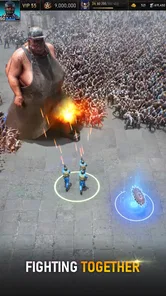
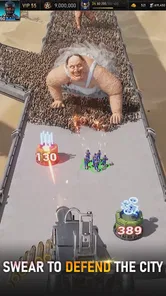
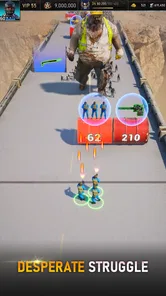



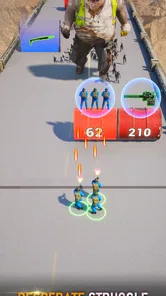
Analysis by Reviewed
I approach Age of Origins as a game for people who enjoy returning to a growing base and making small strategic choices over time, rather than finishing a match in one sitting. Its zombie setting supplies the pressure, but the lasting appeal is the routine of building, preparing defenses, and deciding where limited resources should go. If you want a quick game with a clear endpoint, this may feel like more of a commitment than you want.
A practical rhythm for building and returning
My most useful habit is to settle on one priority before getting drawn into every available task. If I am focused on strengthening the city, I try to keep resource use and troop training aligned with that goal instead of scattering attention across upgrades. That simple discipline makes progress easier to understand: when I return, I can see what I was working toward and choose the next step rather than clicking around without a plan.
That approach also suits ordinary play. A short check-in between other tasks can be used to review the city and queue up the next sensible action; a longer session is better for weighing defense, development, and alliance activity together. I would not treat every moment away from the game as a problem to solve. The experience is more satisfying when I accept that a strategy game develops in stages, rather than expecting every visit to produce a dramatic breakthrough.
Settings, spending, and the pace you choose
Before settling into a routine, I would check the available settings and make the controls comfortable for the way I play. The useful point is not to hunt for secret advantages, but to reduce small interruptions: know where the options are, make sure the interface feels manageable on your device, and take a moment to understand any prompts before confirming an action. A calmer setup helps when several city and strategy decisions compete for attention.
The game is free to play, with optional in-app purchases listed from $0.99 to $394.99 per item. That broad range is worth keeping in mind if you are sensitive to spending pressure. I would decide on a personal budget before browsing offers, rather than letting a moment of impatience set the pace. You can approach it without paying, but that means being comfortable with gradual progress and resisting the idea that every delay needs a purchase to fix it.
There is also a social trade-off. Alliances can make shared objectives more engaging, but they are a better fit if you enjoy communicating and coordinating with other players. If you prefer a self-contained strategy game, the alliance layer may feel like an obligation rather than a benefit. I would join for cooperation, not simply because I assume it is required to enjoy the core building decisions.
First Impressions and Gameplay
The moment you launch Age of Origins, you’re thrown into a post-apocalyptic world crawling with zombies. Yeah, I know, zombies might seem a bit overdone, but trust me, this game brings a fresh twist to the genre. You’re not just surviving; you’re building, strategizing, and leading your own army. The graphics are surprisingly crisp for a mobile game, and the interface is pretty intuitive. I didn’t find myself fumbling around trying to figure out how to do basic tasks, which is always a good sign.
More From Our News Desk

 Gmail
Gmail in a Busy Inbox: Who Benefits Most?
From first account to crowded workday, Gmail earns its place through dependable search and flexible sorting—but its best fit depends on how much inbox maintenance you can tolerate.

 Prime Video
Switching to Prime Video: What Changes in Your Viewing Routine
Prime Video can make a compelling second home for streaming, but switching means learning a different catalog, rental layer, and route from browsing to playback.

 Universal TV Remote Control
 Works Best as a Reliable Backup
A phone remote earns its place through quick setup and reliable habits. Here is how to get more from Universal TV Remote Control—and where its limits show.

 Weather - By Xiaomi
Weather by Xiaomi Review: Clear at a Glance, Less Clear Up Close
Xiaomi’s weather app makes everyday forecasts quick to scan, but its calm surface can leave useful details and recovery paths harder to find than they should be.

 X
X Under Pressure: Can It Recover When Posting Goes Wrong?
A resilience-focused review of X, examining setup, mistaken posts, interruptions, weak connections, and the gaps that matter when recovery needs to be dependable.

 Clash of Clans
 Is Won Between the Battles
Its raids are quick; its community is a long-term project of coordination, teaching, rivalry, and shared responsibility—with all the friction that entails.
Latest News



Building and Strategy Mechanics
Strategy games can often feel like they’re just about resource management, but here you actually need a solid plan. You’re tasked with building a city from the ruins while defending it from zombie hordes. It’s not just about putting up walls; you’ve got to think about where to allocate resources, how to train your troops, and which technologies to develop first. I found myself getting lost for hours, tweaking my city’s layout and optimizing my defenses. It’s these kinds of details that make the game a winner for me.
Community and Alliances
Another aspect that kept me glued was the social element. You can form alliances with other players, and these aren’t just for show. Working together with real people to tackle massive threats or compete in events adds a layer of depth to the game. There’s nothing quite like the thrill of coordinating with teammates to take down a particularly tough zombie boss. Plus, the chat feature is pretty robust, making it easy to communicate strategies in real-time.
The In-Game Economy
Now, let’s talk about the in-game purchases. Like most free-to-play games, Age of Origins has its share of microtransactions. While you can definitely enjoy the game without spending a dime, there are moments where you feel the pinch of needing more resources. However, the developers have done a decent job balancing this. You’re not constantly bombarded with ads or prompts to buy stuff, so it doesn’t feel intrusive.
How it fits among strategy games
Compared with a compact turn-based strategy game, this one asks for more ongoing attention: your city and army are part of a continuing project, and alliances add a human element that a solo puzzle or skirmish usually lacks. That can be its strength if you like a world that keeps moving between sessions. It is also the reason I would steer someone toward a self-contained tactical game if they want short, decisive rounds and no social coordination.
For a realistic routine, I might check in during a lunch break, pick one city goal, and leave the rest for later rather than trying to optimize everything on a small screen at once. In the evening, I could spend more time comparing priorities or talking with alliance members. The key is to keep the game’s ongoing demands in proportion to the time I actually want to give it; otherwise, a hobby can start to feel like a checklist.
Who will enjoy the long game
CamelStudio’s strategy game has an average rating of 4.1 from around 540,000 ratings, and it has passed 50 million installs. It is rated Teen, first released on September 21, 2018, and its current version is 1.3.773, with Android 7.0 as the minimum operating system. Those details place it as an established mobile option, but they do not change the practical question: do you enjoy planning, gradual development, and interaction with other players?
I would recommend it to someone who likes building a base, revisiting a plan, and coordinating with an alliance when the group side is appealing. I would skip it if I mainly wanted a story-led campaign that wraps up neatly, a purely offline-feeling experience, or a strategy game that asks for nothing between brief matches. The zombie theme is the setting; the real commitment is the ongoing management.
What I would keep in mind before settling in
One useful way to judge whether the pace suits you is to play without treating every available upgrade as urgent. Pick a development target, notice which resources it consumes, and let that inform your next decisions. This makes the economy easier to follow and helps separate a genuine bottleneck from the simple impatience that can make optional purchases tempting. It is a repeatable habit, not a shortcut to instant progress.
Age of Origins is free, and its optional purchases range from $0.99 to $394.99 per item. The game has 26,000 reviews, and CamelStudio is the developer. I would keep those purchase options in perspective: the choice to spend is yours, but a patient approach is the better test of whether the underlying strategy is enjoyable for you.
Overall, my experience with Age of Origins has been pretty positive. It’s rare to find a game that combines strategy, community, and storytelling in such a seamless package on mobile. If you’re into games where every decision counts and you love the thrill of battle, give this one a try. You might just find yourself as engrossed as I did!
Make each return purposeful
A practical way to avoid aimless tapping is to give each visit a simple beginning and end. I first check what I intended to develop, then look at whether anything has changed enough to alter that plan. Before leaving, I choose the next action I can reasonably take. This turns a series of short sessions into a coherent strategy, instead of a pile of disconnected upgrades. It is especially useful when I only have a few minutes and do not want to start a larger decision I cannot finish.
I also try to distinguish between a task that supports my current direction and one that is merely available. A tempting upgrade can still be a poor choice if it drains resources I need for a more important goal. The trade-off is that focused play can feel less exciting than chasing every new prompt, but it gives me a clearer sense of why the city is developing the way it is. For a management-heavy game, that clarity is part of the enjoyment.
Small habits that save attention
When I am deciding what to do next, I look at the whole chain rather than just the immediate button: what the action costs, what it helps, and what it leaves me able to do afterward. That quick check can prevent me from committing resources impulsively and then discovering that my original plan has stalled. It is not a hidden mechanic or a special shortcut; it is simply a more deliberate way to handle the choices the game puts in front of me.
On a phone, it also helps to keep sessions focused. I would avoid trying to read alliance chat, compare several development options, and manage the city all at once if I am playing in a noisy or rushed moment. I get more from the game when I separate those jobs: a brief visit for routine city decisions, and a calmer one when I want to think through cooperation or longer-term priorities. That pattern makes the interface feel less crowded without pretending the game has less going on.
When the social layer helps—and when it does not
An alliance is most valuable to me when I want the game to feel like a shared project, not when I am joining out of fear that everyone else is progressing faster. Communication can add context to decisions and make group play more memorable, but it also asks me to pay attention to other people’s timing and plans. If I want to play entirely on my own schedule, that coordination can be friction rather than a bonus.
For someone unsure about the commitment, I would treat the social side as a preference to test gradually. Notice whether checking in with teammates makes the experience more motivating or starts to feel like another obligation. The answer matters more than the zombie theme: a player who likes solo planning may still enjoy the city-building, while someone who wants lively cooperation may find the alliance dimension is what keeps the longer progression engaging.
Who should choose a different kind of game
I would not pick this as my first choice for a commute with unreliable attention, a quick distraction between messages, or a session that must end cleanly after one self-contained round. Its appeal rests on returning to a developing city, so people who dislike ongoing goals may find the structure tiring. A turn-based tactics game is a better fit when I want every session to have a defined finish; a quieter offline strategy game is preferable if I do not want the social world to influence my routine.
It is also worth being honest about the spending model. The game can be approached for free, but a player who dislikes seeing optional purchases at all, or who finds waiting especially frustrating, may be happier with a paid game that has a more contained progression loop. I would set limits before playing rather than relying on willpower at the exact moment a resource shortage interrupts a goal. That is a sensible boundary for any free-to-play strategy game, and particularly useful here because development is meant to unfold over time.
A final test of fit
For me, the strongest reason to stay is the combination of city planning and a world that gives those decisions a sense of purpose. I enjoy being able to return, reassess, and make a small adjustment that fits a broader plan. The weaker fit is equally clear: if I want a concise campaign, little ongoing management, or no expectation of coordinating with other players, the same structure can become a chore.
My recommendation is to approach it patiently: choose a development goal, keep spending decisions deliberate, and see whether the rhythm of returning feels satisfying rather than demanding. CamelStudio’s game is a substantial option in mobile strategy, with a 4.1 average and more than 50 million installs, but broad popularity does not settle whether its particular pace suits you. If you like a persistent city project in a zombie setting, it is worth trying; if you want self-contained matches, I would choose a different style of strategy game.
Age of Origins Frequently Asked Questions
Who developed Age of Origins, and what type of game is it?
Age of Origins is a strategy game developed by CamelStudio. Its zombie-apocalypse premise shapes the way you build shelters and make plans for survival, giving the experience a clear direction from the start. If you are deciding whether to install it, expect a game focused on long-term planning and development rather than a brief, self-contained puzzle session.
How much space does Age of Origins need, and will it work on my device?
Age of Origins runs on Android devices using version 7.0 or later. Before installing, it is sensible to check that your device has enough available storage and that its software is up to date, since mobile games can need room for installation and later updates. If you use an iPhone or iPad, check the compatibility details shown in its app store.
Is Age of Origins suitable for players who are new to strategy games?
Age of Origins is a strategy game built around developing a city, preparing forces, and making choices about how to expand and defend. Those familiar with strategy games may recognize the mix of building and military planning, while newcomers can approach it as a gradual learning experience. Its zombie-apocalypse setting gives the progression a clear theme, and players can take time to get comfortable with its systems.
What kind of setting and objective does Age of Origins offer?
Age of Origins takes place in a zombie doom, where establishing shelters and leading the world are central to its premise. The game frames city development and military decisions around surviving in that setting, rather than presenting a standalone puzzle or action experience. If you enjoy strategy games with a survival theme and a longer-term goal of building strength, this premise gives the different activities a shared purpose.
What is Age of Origins and what can I expect from the gameplay?
Age of Origins is a strategy mobile game where players build and expand their own cities, train armies, and engage in epic battles against both AI-controlled zombies and human players. The game combines elements of city-building and military strategy, offering a rich and immersive experience with various missions, alliances, and events that keep the gameplay engaging and dynamic.
Pros
- Engaging real-time strategy gameplay.
- High-quality graphics and animations.
- Regular updates with new content.
- Strong community and support.
- Multiplayer alliances and battles.
Cons
- Requires stable internet connection.
- In-game purchases can be costly.
- Complex mechanics for beginners.
- Consumes significant device storage.
- Ads can be intrusive at times.