Daddy Long Legs
- 65.41K
- 4.4
- Installs
- 10.00M
- Price
- Free

Screenshots







Analysis by Reviewed
I first reach for Daddy Long Legs when I have a few spare minutes and want something that asks for attention without asking me to learn a complicated set of rules. Its appeal is easy to understand: guide a long-legged character through an awkward walk, misjudge a step, and watch the whole attempt turn into a fall. The joke and the challenge are tied together, which gives each short run a bit of personality. It can be satisfying to improve, but the same demanding rhythm can make repeated failures feel tiring if I keep going after the fun has faded.
Where this arcade game fits into a day
A realistic use is a brief break while waiting for a bus or between other tasks. One attempt can become several because a fall makes you want to correct your timing, but I’d set it aside when you need a game that pauses at meaningful checkpoints or offers a calmer pace. A useful personal rule is to focus on the next step rather than chasing a personal best immediately; that keeps the challenge from turning into a string of impatient taps.
That short-session strength is also a limitation. This is not the game I would choose when I want a story to follow, a sequence of varied stages, or a sense that I have completed a substantial chapter. Its hook is the repeated effort to manage one awkward movement pattern. If you enjoy small skill tests, that narrow focus can be refreshing. If you need a new objective every few minutes, the loop may feel samey before long.
I also think it suits people who are comfortable laughing at their own mistakes. A fall is not just a setback here; it is part of the experience, and the charm depends on not taking every failed attempt personally. When I notice myself tapping harder or rushing because I want to beat a previous result, I get less enjoyment out of it. Taking a breath and treating the next attempt as practice is a better fit for the game’s pace.
What the purchase details do—and don’t—tell me
The game is free to download, with optional in-app purchases listed from $1.17 to $99.99 per item. That range is worth noticing before handing a device to a child, but it does not tell me what each purchase contains or whether any particular item changes play. I wouldn’t assume that spending is necessary, nor would I promise that every cosmetic reward is available without it. If you’re deciding whether to pay, check the purchase details on your device and make that choice based on what is actually offered there.
Set Snail’s arcade game has a 4.4 average from around 531,000 ratings, and it has passed 10 million installs. It is free, rated for Everyone, and its current version is 4.0.4; the game first appeared on September 14, 2014, and requires Android 5.1 or later. Those details make it easy to understand its broad appeal, but they don’t settle whether its repetitive, timing-led play suits you. For a quick, hands-on challenge, I’d choose it over a more elaborate arcade game; for varied stages or richer long-term goals, I’d look elsewhere.
How its challenge compares with other arcade choices
Compared with arcade games that rely on fast reactions, streams of obstacles, or several different objectives, this one puts more emphasis on controlling a single clumsy motion. That makes it easier to pick up than a game with a large move set, but it does not necessarily make it easier to master. I would choose it when I want a compact timing challenge; I would choose a more varied arcade game when I want changing situations to keep my attention moving from one task to another.
More From Our News Desk

 Gmail
Gmail in a Busy Inbox: Who Benefits Most?
From first account to crowded workday, Gmail earns its place through dependable search and flexible sorting—but its best fit depends on how much inbox maintenance you can tolerate.

 Prime Video
Switching to Prime Video: What Changes in Your Viewing Routine
Prime Video can make a compelling second home for streaming, but switching means learning a different catalog, rental layer, and route from browsing to playback.

 Universal TV Remote Control
 Works Best as a Reliable Backup
A phone remote earns its place through quick setup and reliable habits. Here is how to get more from Universal TV Remote Control—and where its limits show.

 Weather - By Xiaomi
Weather by Xiaomi Review: Clear at a Glance, Less Clear Up Close
Xiaomi’s weather app makes everyday forecasts quick to scan, but its calm surface can leave useful details and recovery paths harder to find than they should be.

 X
X Under Pressure: Can It Recover When Posting Goes Wrong?
A resilience-focused review of X, examining setup, mistaken posts, interruptions, weak connections, and the gaps that matter when recovery needs to be dependable.

 Clash of Clans
 Is Won Between the Battles
Its raids are quick; its community is a long-term project of coordination, teaching, rivalry, and shared responsibility—with all the friction that entails.
Latest News



That difference affects how I judge a good session. In a level-based game, I might measure progress by reaching a new stage. Here, I find it more useful to notice whether I can keep a steadier rhythm or recover my focus after a stumble. A personal best can be satisfying, but it is not the only reason to play. If you need visible milestones to feel that your time was worthwhile, this style may not reward you in the way you expect.
It is also a poor substitute for a calm waiting-room distraction if you dislike games that demand repeated concentration. The controls may be simple, but the timing makes casual, inattentive tapping unreliable. I would not choose it while trying to read a message or hold a conversation at the same time, because splitting attention can turn the repeated falls from funny to irritating. For a low-effort background game, a slower puzzle or an idle-style title may suit you better.
The Quirky Challenge Begins
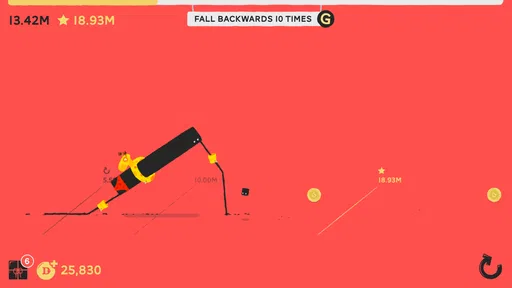
So, here’s the deal with Daddy Long Legs. You get to control a cute, albeit clumsy creature that’s trying to master the art of walking on impossibly long legs. Sounds simple, right? Well, not quite. The first time you open the app, you might think, “Oh, I’ve got this in the bag.” But trust me, within seconds, you’ll be eating those words. The game’s physics-based mechanics are both hilariously awkward and surprisingly challenging.
Gameplay Experience
What’s really cool about this game is its simplicity. The controls are straightforward—just tap the screen to make your character take a step. But here’s the kicker: timing is everything. If you’re off by a millisecond, down you go! And that’s where the game gets you. It’s all about finding the rhythm and getting into the groove of those long-legged strides. It’s frustratingly addictive, and every fall just makes you want to try again.
My practical tip is to pay attention to the pace of your own inputs instead of reacting to every wobble with another tap. When I rush to correct a movement, I tend to lose the sense of timing that the game asks for. Letting an attempt play out, then adjusting on the next one, can make practice feel more deliberate. This is a small but useful distinction: the game encourages retries, but retries are more rewarding when each one teaches you something rather than simply repeating the same hurried response.
That approach also helps answer whether the game is suitable for a quick break. It can be, provided you are happy to give it focused attention for a short spell. It is less convenient when you need to stop at an exact moment or when interruptions are frequent, because the pleasure comes from trying to establish a rhythm. I would treat it as a compact activity to pick up when there is a little room to concentrate, not as something that can always run unnoticed in the background.
Visually, the game has this charming minimalistic design. The characters are adorable, and the backgrounds are simple yet engaging. Each tumble and fall is animated in a way that makes you chuckle, even when you’re just a bit annoyed that you didn’t make it further than last time.
Keep Walking, Keep Unlocking
One of the delightful aspects of Daddy Long Legs is the array of costumes you can unlock. Who wouldn’t want to see their long-legged buddy dressed as a pirate or a superhero? The more you play, the more outfits you can collect, adding a fun layer of customization to the game. It’s these little rewards that keep you coming back for more, attempting to beat your high score while looking stylish.
Cosmetic rewards change how a run feels without changing the basic reason to play: getting a little farther with careful timing. I see that as a useful trade-off. If collecting outfits gives you a light goal between attempts, it can make repetition feel less bare. If you are looking for upgrades that transform the controls or open up a substantially different style of play, costumes are not a replacement for those kinds of systems. Their value is in adding a personal touch, not in solving the central challenge.
Moreover, the game doesn’t pressure you with in-app purchases. Sure, there are some, but you can enjoy the full experience without spending a dime. It’s a refreshing break from the usual freemium model that many apps follow nowadays.
On spending, I would keep the distinction between what is confirmed and what is unknown. The game is free to download and offers in-app purchases, but the listed price range alone cannot tell me which items are available to a particular player, what they contain, or whether they affect progression. I would not buy anything on the assumption that it makes walking easier or guarantees a better run. If a purchase matters to you, review its exact description and price at the point of purchase, and use the device’s purchase controls if a child will be playing.
Fairness, patience, and practical limits
For me, the core appeal appears to rest on timing rather than on spending: the challenge is learning how to manage those long-legged steps. That makes it a reasonable choice if you want a free arcade game to try without committing to a paid download. Still, I would avoid making a stronger promise about competitive fairness or paid advantages without knowing precisely what each purchase does. The sensible decision is to enjoy the basic challenge on its own terms and treat any optional item as a separate choice, not as a required ticket to progress.
Parents may appreciate that the game is rated Everyone, but an age rating does not answer every practical question about a child’s use. Since in-app purchases are offered, I would check the device’s purchase settings before handing it over, especially if the child can confirm transactions. That is a general precaution tied to the presence of purchases, not a claim about a particular prompt or purchase flow in the game. The same check is useful for anyone who shares a device or payment method.
There are a few things a new player may reasonably wonder about: whether the game needs internet access, whether progress carries between devices, or whether purchases can be restored after changing phones. I would not make assumptions about any of those details. If one matters to your decision, check the current app and device information before relying on it. What I can judge from the play itself is the central trade-off: the controls are easy to understand, but the repeated timing challenge asks for patience.
Final Thoughts
In conclusion, Daddy Long Legs is a game that’s all about patience, precision, and a good sense of humor. It’s the perfect pick-me-up when you need a quick gaming fix, and it offers endless entertainment with its quirky mechanics and charming visuals. Whether you’re a seasoned gamer or just looking for something fun to pass the time, this game is a fantastic choice.
My recommendation is strongest for someone who likes practising a small skill and can enjoy a run even when it ends quickly. I would steer away a player who wants a campaign, a wide range of modes, or a reliably relaxing experience; those expectations do not match the appeal of its awkward, demanding walk. The free entry point makes it easy to try, while the purchase range is a reason to make deliberate choices rather than assume every optional item is necessary.
So, if you’re ready to embrace the challenge and maybe stumble a bit along the way, give Daddy Long Legs a try. Who knows, you might just find yourself addicted to the long-legged antics and cheering every time you beat your record. Happy walking!
Daddy Long Legs Frequently Asked Questions
Is Daddy Long Legs easy to learn for someone new to arcade games?
The basic idea is straightforward: guide the character’s long legs through a walking challenge. Getting consistent results takes more practice, though, because the unusual movement depends on careful timing and coordination. That makes it approachable for a first try while still giving players a reason to keep returning and improve their control.
Does Daddy Long Legs have a lot of content, or is it best for short play sessions?
Daddy Long Legs is centered on a simple arcade challenge rather than a story-driven campaign. Its walking gameplay is suited to brief attempts, with the appeal coming from trying to stay upright and improve how far you get. Players who prefer a light game they can pick up for a quick session may find that format a good fit.
Is Daddy Long Legs suitable for children?
Daddy Long Legs has an Everyone content rating, and its straightforward arcade premise is accessible to a broad audience. Parents may still want to review the game and its optional purchases together with younger players, especially if the device allows purchases through the app. The game’s unusual walking challenge can also be a simple, casual activity to try together.
What kind of game is Daddy Long Legs?
Daddy Long Legs is an arcade game built around an unusual walking challenge. Its store summary describes it as simple yet weirdly rewarding, and that captures the appeal: the action is easy to understand, but controlling the character takes patience and timing. It suits players looking for a light, quirky game rather than a complex story-driven experience.
Who developed Daddy Long Legs, and is it suitable for all ages?
Daddy Long Legs was developed by Set Snail and has an Everyone content rating. Its offbeat character and straightforward arcade premise make it accessible to a broad audience. Parents may still want to review the game and its optional purchases together with younger players, especially if the device allows purchases through the app.
Pros
- Simple yet addictive gameplay.
- Charming and quirky art style.
- Free to play with optional purchases.
- Suitable for all ages.
- Encourages problem-solving skills.
Cons
- Can be frustratingly difficult.
- Limited variety in gameplay.
- Ads can be intrusive.
- Requires internet for full features.
- In-app purchases can be pricey.