Cards, Universe & Everything
- 7.71K
- 4.4
- Installs
- 1.00M
- Price
- Free

Screenshots
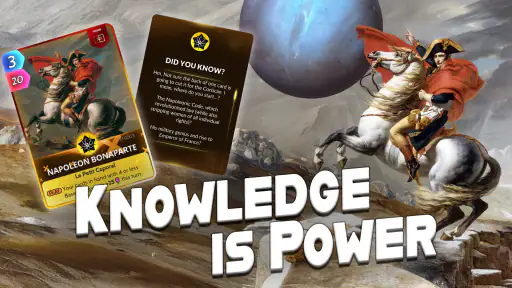
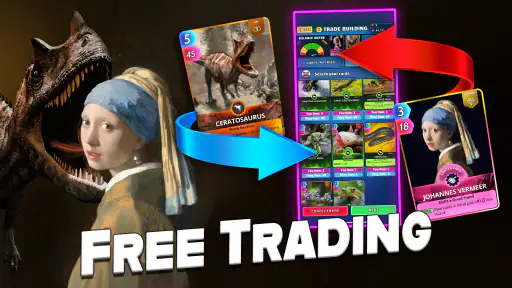

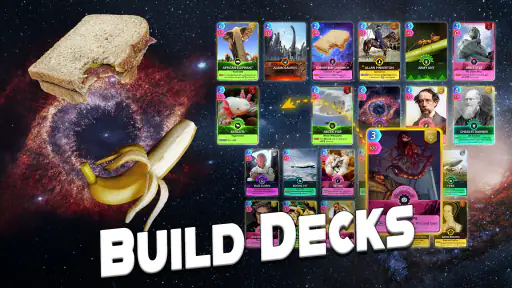

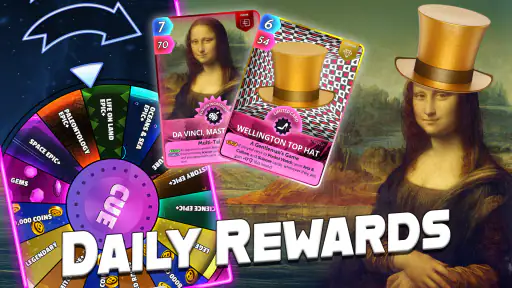
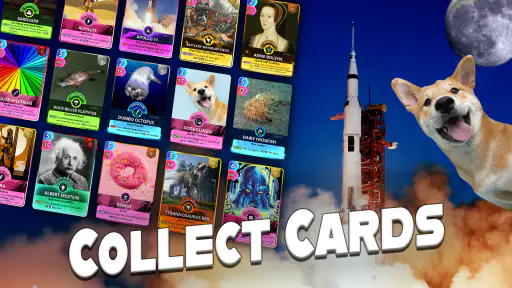
Analysis by Reviewed
I approached Cards, Universe & Everything expecting a light trivia game, but it quickly showed me a more competitive side. Developed by Avid Games, this free strategy game turns general knowledge into card-based battles. The basic appeal is easy to understand: answer questions, build a stronger collection, and make better decisions during matches. What makes it interesting is the way knowledge and planning share the spotlight. Knowing an answer helps, but choosing when and how to use what you have can matter just as much.
That combination makes it a good fit for players who enjoy trivia but want more structure than a simple quiz. I can play a quick session when I have a few spare minutes, yet there is enough room for longer-term thinking when I start paying attention to my collection and the way battles unfold. It is available free of charge, aimed at Everyone, and works on Android devices running version 7.0 or later. The current version is 2.11.49, so it is presented as an actively maintained game rather than an abandoned experiment.
How the card battles turn trivia into strategy
The first thing I noticed is that this is not simply a question-and-answer app with a decorative card theme. The cards give the trivia a tactical frame. Instead of treating every question as an isolated test, I have to think about the broader match: what I can answer confidently, where my collection is strong, and whether a risky choice is worth making. That extra layer gives the game more personality than a standard trivia alternative.
The title’s focus on the universe and everything around it also sets an appropriately broad tone. This is the sort of game that can appeal to someone who enjoys jumping between subjects rather than specializing in one narrow field. I like that breadth because it keeps the experience from becoming predictable. At the same time, it means no player will feel equally comfortable with every challenge. A strong general knowledge base helps, but gaps are unavoidable, and the card strategy becomes more important when a question lands outside my comfort zone.
That balance is central to the experience. If I answer correctly but make poor decisions around my cards, I can still struggle. If I am not certain about an answer, I may need to compensate with more careful play rather than simply guessing repeatedly. This creates a useful distinction between being knowledgeable and being good at the game. The strongest sessions are not always the ones where I know the most; they are the ones where I manage uncertainty without letting one mistake ruin the whole match.
What progression feels like in everyday play
For a normal weekday scenario, I can imagine opening it during a commute, a lunch break, or while waiting for an appointment. A short session gives me a clear activity without demanding the kind of uninterrupted attention expected by a long strategy game. I can test myself, make a few decisions, and stop before it takes over the entire day. That makes it easier to return to than games built around lengthy campaigns or complicated real-time battles.
The more important question is what happens after the novelty wears off. The card structure gives repeated matches a reason to feel different, because the challenge is not only recalling information. I also have to consider how my available cards affect my options and how much confidence I have in a particular answer. This is where the game can become more involving than a conventional trivia app, especially for players who enjoy improving through small decisions rather than chasing a single high score.
There is also a psychological pressure that comes with collection-based progression. When I see a stronger option or feel that my current setup is holding me back, the temptation is to keep playing longer or spend money. That pressure is not automatically unfair, but it is something I would keep in mind before recommending the game to someone who dislikes systems that encourage constant improvement. A relaxed player can enjoy the questions; a competitive player may feel pulled toward optimizing every part of the experience.
Where spending enters the decision
The game itself is free, which makes trying it straightforward. It includes optional in-app purchases ranging from $0.49 to $199.99 per item. That is a very wide range, and it changes how I evaluate the experience. The low entry cost is friendly to curious players, but the highest purchase level is significant enough that I would advise setting a personal limit before getting deeply invested.
I do not treat the existence of purchases as proof that the game is exploitative. The more useful question is whether I can enjoy the core loop without paying. In my experience, that depends on what I want from it. If I am happy to play at my own pace and accept that progress may be slower, the free starting point is appealing. If I want to compete as efficiently as possible or dislike waiting for improvement, the purchase structure may feel more prominent.
The practical tip I would give a new player is simple: play long enough to understand whether the trivia and card decisions are enjoyable before buying anything. Do not spend merely because an early match exposes a weakness. First identify whether the problem is a lack of knowledge, a poor tactical choice, or simply an unfamiliar collection. That distinction matters, because spending cannot replace learning how the battles work.
Fairness depends on what kind of player you are
Fairness here is not only about whether two people know the same facts. It is also about how much collection strength and progression influence the outcome. A player who enjoys building gradually may see the system as a satisfying long-term challenge. Someone who wants every match to depend almost entirely on instant knowledge may prefer a traditional quiz game instead.
I would describe the competitive balance as something to approach carefully rather than automatically praise. Trivia introduces uncertainty because a question can favor one person’s background over another’s. Cards add another variable. That can make victories feel more layered, but it can also make losses harder to interpret. When I lose, I may wonder whether I answered poorly, made a bad tactical decision, or simply faced a stronger setup. Players who need very transparent competitive feedback might find that frustrating.
On the other hand, the mixture is exactly why the game stands apart from ordinary trivia apps. A pure quiz usually rewards speed and recall above everything else. A conventional strategy game generally does not test general knowledge at all. This title sits between those categories. It is a better choice than a basic quiz for someone who wants collection and decision-making, while a dedicated strategy game may be better for someone who wants deep planning without the unpredictability of questions.
My advice is to judge fairness by your preferred goal. For casual play, the variety can feel refreshing and the free access lowers the risk of trying it. For serious competition, I would pay closer attention to how comfortable I am with uneven knowledge, collection-based advantages, and the presence of optional purchases. Those factors do not make the game unsuitable, but they do mean it is not a perfectly neutral trivia test.
Useful habits that improve the experience
One useful habit is to separate confidence from excitement. A familiar-looking question can still invite a careless answer, especially when I am trying to move quickly. I get better results when I pause briefly and ask myself whether I truly know the answer or am reacting to a word that merely looks familiar. That small delay is more valuable than treating every turn as a race.
A second habit is to study my own mistakes rather than only celebrating correct answers. If I repeatedly miss a subject, I can recognize that weakness and avoid making the same tactical assumptions around it. The game becomes more interesting when I use wrong answers as information about how I should play, not as a reason to blame bad luck. This is one of the less obvious strengths of combining trivia with cards: mistakes can teach both knowledge and strategy.
A third trade-off involves collection improvement. It is tempting to chase the strongest-looking option immediately, but a setup that appears powerful may not suit the way I make decisions. I prefer to learn which situations cause me trouble before trying to optimize. That approach is slower, yet it reduces the chance of spending money or time on changes that do not address the real problem.
I would also recommend treating short sessions as a feature rather than trying to force a marathon. The game works well when I want a compact mental challenge. Longer play can be enjoyable, but repeated questions, pressure to progress, or frustration after a losing streak can change the mood. Stopping after a few focused matches helps preserve the fun and makes it easier to return later with a clearer head.
Questions worth considering before installing
One natural question is whether this is suitable for younger players. Its content rating is Everyone, so it is positioned for a broad audience. Even so, the strategic and purchase elements are worth discussing with children, particularly if the device allows in-app buying. The age rating makes the game accessible, but it does not remove the need for sensible spending boundaries.
Another question is whether an internet connection or a particular account setup is required. I would check the current device-store and in-game requirements before planning to use it somewhere with unreliable connectivity. That is especially relevant if the main reason for installing is to play while traveling. The game is easy to approach as a mobile title, but a player should confirm practical device behavior rather than assume every feature works in every situation.
People also often want to know whether they need to pay to have a worthwhile experience. My answer is that payment is not necessary to discover the game’s appeal, but competitive ambition can make the purchase system more noticeable. Start free, learn the battle rhythm, and decide afterward whether faster progress is genuinely worth the cost. That approach protects the casual player from turning a quick trivia session into an unplanned expense.
Finally, I would ask whether the game rewards knowledge alone. It does not feel that simple. General knowledge gives me a foundation, but card choices, timing, and comfort with uncertainty shape the result. If I want a pure test of recall, another trivia app may be cleaner. If I want trivia with a layer of collection-driven strategy, this is the more distinctive option.
Who will enjoy it, and who should skip it
I would recommend it to players who like quiz questions but quickly lose interest when every round follows the same format. It is also a good match for people who enjoy gradual improvement, card-based decisions, and the satisfaction of turning a weakness into a better result. The broad subject range makes it suitable for mixed groups of friends and family, especially when everyone enjoys different areas of knowledge.
I would be more cautious recommending it to someone who dislikes in-app purchases on principle, even when the game can be started for free. The available purchase range reaches from small optional items to a much larger single-item price, and that alone may be enough to make the experience uncomfortable for some players. I would also point pure strategy fans toward a game with more direct control and less question-based uncertainty, while trivia purists may prefer an app where cards and progression do not influence the contest.
The audience size suggests that the concept has found a substantial mobile following: it has passed one million installs, with an average rating of 4.4 from around fifty-three thousand ratings and roughly seven thousand seven hundred written reviews. Those figures do not guarantee that every player will enjoy the same balance, but they do indicate that the hybrid format is not an unusually narrow idea.
My trust verdict after weighing the trade-offs
My overall impression is positive, with an important qualification. The best reason to install Cards, Universe & Everything is the combination of trivia knowledge and tactical card play, not the promise of a pure quiz or a deep traditional strategy campaign. That middle ground gives it a recognizable identity and makes short sessions more engaging than a basic question list.
I also appreciate that the free entry point lets me test the core experience before committing money. Still, the purchase range means I would play with a budget in mind, especially if I were competitive or prone to chasing faster progress. The game is more trustworthy as a casual, self-paced hobby than as something I would approach without limits while trying to stay at the top of a competitive environment.
Avid Games has made a game that can reward both quick knowledge and thoughtful decisions. Its weaknesses come from that same design: outcomes may feel less transparent than in a pure quiz, and collection pressure may not suit everyone. If those trade-offs sound acceptable, I think it is worth trying. If you want a completely even trivia contest or a strategy game free from purchase pressure, another option will probably fit better.
For me, the final verdict is that Cards, Universe & Everything is a worthwhile free strategy game for curious players who want their general knowledge to matter without making it the only skill on display. I would install it, begin without spending, learn how progression affects my matches, and keep purchases strictly optional. That gives the game room to be enjoyable on its own terms while keeping its competitive and financial pressures in perspective.
Pros
- Creative card-based gameplay with plenty of room for experimentation.
- Easy-to-learn mechanics make it approachable for new players.
- Humorous writing and quirky themes give matches plenty of personality.
- Deckbuilding choices encourage different strategies and play styles.
- Runs are generally quick
- making it suitable for short gaming sessions.
Cons
- Random card draws can sometimes make outcomes feel overly luck-dependent.
- The amount of text may be challenging to read on smaller phone screens.
- Some strategies are more effective than others without careful balancing.
- Learning card interactions takes time
- especially for players new to deckbuilders.
- Replay value may decrease once you have explored most available card combinations.

- Category
- Strategy
- Version
- 2.11.49