Calm Mahjong Tile Match Puzzle
- 44.00
- 4.8
- Installs
- 50.00K
- Price
- Free
Screenshots






Analysis by Reviewed
I approached Calm Mahjong Tile Match Puzzle expecting a simple way to pass a few quiet minutes, and that is exactly where it works best. This is a free board game from Calm & Relaxing Games that turns Mahjong-style tile matching into a gentle, low-pressure routine. Instead of asking me to react quickly or compete against other players, it puts the focus on spotting available pairs, clearing the layout, and keeping my attention on one small decision at a time.
That makes it an easy recommendation for someone who wants a calmer puzzle on an Android phone. I can play while taking a break, before bed, or during a commute without needing to learn a complicated ruleset. At the same time, it is not a complete replacement for a deep strategy board game. Its appeal comes from repetition, visual focus, and a relaxed pace rather than a large competitive system or a long-term campaign.
How the everyday Mahjong workflow feels
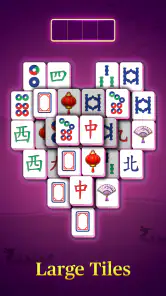
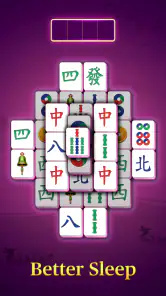
The basic loop is familiar: I scan the arrangement, identify matching tiles that can be selected, remove them, and look again at the spaces that open up. The important habit is not to tap the first pair I notice automatically. I get better results when I pause for a moment and check which tiles are supporting others or hiding useful matches. Even in a peaceful game, the order of removal can decide whether the board stays comfortable or becomes difficult to read.
For a short session, I usually begin with a broad scan rather than concentrating on one corner. I look for exposed tiles, pairs that appear in several places, and pieces that seem likely to reveal more of the layout. This gives me a rough plan without turning the game into a stressful calculation exercise. If I am playing only to unwind, I accept a slower pace and treat the scan itself as part of the relaxation.
A practical everyday scenario is a ten-minute break after work. I can open the game, complete a few straightforward matches, and stop without feeling that I have abandoned a team, missed a timed event, or interrupted a story. That makes it more convenient than many modern mobile games, which often depend on daily rewards, energy systems, or constant notifications to keep me engaged. Here, the value is in the small, self-contained puzzle session.
The board-game format also makes it suitable for people who prefer quiet concentration over rapid tapping. I would suggest it to a new puzzle player, an older relative who wants an approachable matching game, or anyone who enjoys sorting visual patterns. The Everyone age rating supports that broad audience, although the amount of visual detail can still influence how comfortable the game feels for different players.
One useful workflow is to separate solving from relaxing. When I want to improve, I slow down and think about consequences before every move. When I want to rest my mind, I stop chasing the perfect sequence and simply make clear, safe matches. The same board can serve both purposes, but I get a better experience when I decide which mode I am in before starting.
More From Our News Desk

Weather by Xiaomi Review: Clear at a Glance, Less Clear Up Close

X Under Pressure: Can It Recover When Posting Goes Wrong?

Clash of Clans Is Won Between the Battles

Android Auto Makes the Case for Quieter Car Software

MobiOffice: Transforming Mobile Productivity with Seamless Integration

EA SPORTS FC™ Mobile Soccer: Redefining Mobile Sports Gaming
What I check before making a move
My first check is visibility. I look for tiles that are fully available instead of immediately hunting for a particular symbol. Then I compare possible pairs and ask which choice is likely to expose something underneath. This small pause prevents a common mistake: removing an easy pair that was also the only useful route to the middle of the arrangement.
My second check is flexibility. If I see several available pairs, I prefer the one that leaves more options afterward. A match that opens a broad area is often more valuable than one that merely looks convenient. This is not a complicated formula, and I do not need to memorize tile patterns. It is simply a way to avoid narrowing the board too early.
My third check is the endgame. When the layout becomes sparse, I stop playing on autopilot. A nearly cleared board can still become awkward if the remaining tiles are split across different areas or if I have removed the wrong supporting pieces earlier. Saving a pair for later can be sensible when it keeps another route open.
These habits are especially useful because the game’s relaxing presentation may encourage casual tapping. Calm presentation is welcome, but it should not be confused with a board that solves itself. I still need to observe the layout. The best balance is to keep the pace unhurried while making each selection deliberately.
Settings and phone habits that improve comfort
Before settling into longer sessions, I check the phone’s own display and sound controls as well as any options the game presents. I prefer a brightness level that makes tile symbols distinct without making the screen harsh. If the game’s audio feels distracting in a quiet room, I lower it or use the phone silently. These are simple adjustments, but they matter more in a visual matching game than they might in a game driven by music or dialogue.
I also keep the device orientation and grip consistent. Holding the phone steadily makes it easier to compare tiles across the board, especially when the layout contains similar-looking designs. Rather than switching between one-handed and two-handed play, I use whichever position gives me the clearest view. This is a small accessibility advantage of a turn-based board format: I can take my time and reposition the device without losing a live round.
Notifications are another practical consideration. I prefer to silence unrelated alerts during a puzzle because an interruption can make me forget which tiles I had already evaluated. The game is a good fit for short breaks, but the calm experience improves when the phone is not constantly pulling my attention elsewhere. I would not call this a special feature of the app; it is simply a repeatable habit that makes this particular style of play more enjoyable.
On older compatible phones, I would also close demanding background apps before playing if the device feels sluggish. The minimum operating system is Android 7.1, so the game is positioned for a broad range of Android devices rather than only the newest models. Still, general phone condition affects touch response, scrolling, and screen readability. A clean, stable device makes careful matching feel much better than a crowded one.
The current version is 3.8, which is useful context when deciding whether the game fits a particular phone. I would keep the app updated through the normal store process, but I would not expect an update number by itself to transform the core experience. The main question is whether I enjoy the relaxed tile-clearing loop, not whether the version label sounds impressive.
Patterns that help me solve boards more efficiently
The fastest improvement comes from learning to scan in layers. I begin with the topmost and most exposed pieces, then check the edges, and finally inspect the central area as new gaps appear. This prevents me from repeatedly searching the whole board after every move. I am not memorizing a fixed route; I am reducing visual clutter by using the same inspection order each time.
I also compare pairs by their effect on the next scan. Suppose two matches are both legal. If one removes tiles from a crowded section and the other leaves that section blocked, I usually choose the crowded-section match. The goal is to create clearer information. Once more of the board is visible, later decisions become easier and I am less likely to waste a move because I overlooked a hidden option.
Another useful pattern is to avoid spending all obvious pairs immediately. When a pair is easy to find but does not open anything important, I may leave it available while I explore other moves. This creates a little flexibility. It is particularly helpful when several matching symbols are spread through the layout and I need to decide which copy should be removed first.
I find that experienced play is less about speed than about reducing reversals. A rushed player taps, discovers that the choice was unhelpful, and then spends extra time recovering. A patient player spends a few seconds comparing alternatives and often clears the board with less mental effort overall. That trade-off suits the game’s calm identity: efficiency comes from better observation, not frantic input.
For a repeatable routine, I use three passes. The first pass identifies safe pairs. The second looks for moves that expose new areas. The third checks whether a tempting match would remove an important future option. This method is simple enough for casual sessions but gives the game more depth than random matching. It also helps me notice whether I am genuinely improving or merely getting lucky with an easy arrangement.
When I make a mistake, I try not to restart mentally and become frustrated. I review the last few choices and identify the type of error: overlooking an exposed pair, choosing a match that blocked the board, or failing to compare the remaining options. That turns an unsuccessful attempt into useful practice. The game is at its best when I treat each layout as a visual exercise rather than a test of perfection.
Where the relaxing design has limits
The same simplicity that makes the game approachable can limit its appeal for players who want a broad Mahjong simulation. Someone looking for traditional rule variations, competitive tables, detailed scoring, or a social community may prefer a more feature-heavy board game. This experience is centered on tile matching and calm concentration, so it should not be judged as a full replacement for every form of Mahjong.
I would also skip it if I need constant novelty. Repeatedly finding pairs can be soothing, but players who depend on changing objectives, character progression, or dramatic challenges may find the loop too narrow after extended sessions. I enjoy it in short bursts more than as my only mobile game. Its strength is dependable simplicity, not an endless stream of surprises.
The free price makes trying it easy, but in-app purchases range from $0.99 to $24.99 per item. That does not automatically make the game poor value, yet it is worth remembering before buying anything. I would first decide whether the basic play experience already gives me enough relaxation. For this kind of puzzle, purchases should be considered optional convenience rather than a reason to install it.
The rating is a strong 4.8 average from around 3.7 thousand ratings, and the game has passed 50 thousand installs. Those figures suggest that its straightforward approach is connecting with a meaningful audience, but they do not change the personal fit question. A highly rated calm puzzle can still feel repetitive to someone who wants competition, while a modest session player may find it exactly right.
There is also a subtle attention trade-off. Although the game is marketed around calm and brain training, any matching puzzle can become tiring if I stare at similar symbols for too long. I take a break when the board stops looking clear. Longer play is not automatically better practice; once concentration drops, I make poorer choices and the relaxing quality disappears.
Because the age rating is Everyone, I see it as broadly approachable, but younger players may still need guidance about in-app purchases on a shared device. Adults who lend a phone to children should use their normal device safeguards. That is a sensible precaution for any free game with optional paid items, and it helps keep the experience aligned with its simple, family-friendly character.
Who should install it and who should choose something else
I would recommend this game to people who want a quiet board puzzle with an uncomplicated entry point. It suits a short morning reset, a screen break that still requires gentle focus, or a wind-down routine when a competitive game would feel too demanding. It is also a useful choice for players who like visual organization and prefer to control the pace themselves.
I would be more cautious recommending it to someone who expects a deep strategic system. Traditional Mahjong apps, online match games, and larger puzzle collections may offer more variety, stronger progression, or clearer competitive goals. Those alternatives are better when the player wants to compare scores, learn several rule sets, or feel constant advancement.
Compared with a standard match-three game, this title feels more deliberate because the board is about recognizing available pairs rather than rapidly creating chains. Compared with solitaire, it offers a similar quiet, turn-based rhythm but uses visual tile relationships instead of cards and suits. Compared with a word puzzle, it asks for spatial attention rather than language knowledge. Those differences make it a particularly accessible option when I want concentration without reading-heavy tasks.
The developer, Calm & Relaxing Games, keeps the identity focused rather than trying to turn the app into an all-purpose entertainment hub. I appreciate that clarity. I know what kind of session I am opening: a compact matching board, not a social platform or a demanding strategy campaign. That focused purpose is a real advantage for users who dislike clutter.
My verdict after building a repeatable routine
After using the same habits consistently, I find Calm Mahjong Tile Match Puzzle most satisfying when I treat it as a mindful puzzle rather than a race. I scan before tapping, prioritize moves that reveal space, protect future options, and stop when my attention becomes tired. These choices make the basic game feel more thoughtful without inventing complexity that is not there.
My strongest recommendation is to begin with short sessions and decide whether the visual rhythm genuinely relaxes you. If it does, the free entry point and broad Android compatibility make it easy to keep as a dependable break-time game. If you need multiplayer competition, substantial progression, or many different rules, I would choose another board title instead.
Overall, this is a focused and approachable game with a clear purpose. Its 4.8 average and growing audience match my impression that the simple format works for many players, while the optional purchases and repetitive core deserve an honest look before committing to longer play. For me, the best reason to keep it installed is not the promise of endless content. It is the reliable pause it creates: open the board, slow down, make a few careful matches, and put the phone away feeling a little more settled.
If that kind of small, controlled routine sounds useful, Calm Mahjong Tile Match Puzzle is worth trying. I would approach it as a calm daily puzzle with modest ambitions, and within those limits, it delivers a pleasant experience that is easy to understand, easy to pause, and rewarding enough to revisit.
Calm Mahjong Tile Match Puzzle Frequently Asked Questions
What does the age rating mean for Calm Mahjong Tile Match Puzzle?
Calm Mahjong Tile Match Puzzle is rated Everyone, so its content is intended to be suitable for a broad audience. Its focus is on matching tiles and clearing puzzle boards, rather than competitive or mature themes. Parents can still review the game and its purchase options before letting a child play, and device-level purchase controls can help prevent accidental spending.
What is Calm Mahjong Tile Match Puzzle?
Calm Mahjong Tile Match Puzzle is a relaxing tile-matching game inspired by traditional Mahjong solitaire. Instead of competing against other players, you clear the board by finding and matching identical tiles. The game is designed for short or extended sessions, combining simple controls, colorful tile layouts, and a slower-paced atmosphere that can appeal to players who enjoy casual puzzles and stress-free gameplay.
How do you play Calm Mahjong Tile Match Puzzle?
To play, look for two matching tiles that can be selected according to the board’s rules, then tap them to remove them from the layout. Your objective is to clear every tile before running out of possible moves. Careful observation is important because removing one pair can reveal or block other tiles. Planning ahead usually works better than selecting matches randomly.
Is Calm Mahjong Tile Match Puzzle suitable for beginners?
Yes, the game is generally accessible to beginners because its main mechanic is easy to understand: identify matching tiles and remove them from the board. The calm presentation and straightforward touch controls make it approachable even for people who have never played Mahjong solitaire before. However, later layouts may require more concentration, patience, and strategic thinking.
Does Calm Mahjong Tile Match Puzzle require an internet connection?
The basic tile-matching experience may be playable without a constant internet connection, which is useful when traveling or playing in areas with limited service. Nevertheless, some features can depend on connectivity, including advertisements, rewarded hints, cloud-related functions, updates, or promotional content. Availability may also vary by device and app version, so checking the store description is recommended.
Pros
- Relaxing gameplay suited to short
- stress-free sessions.
- Simple tile-matching rules make it easy for beginners to learn.
- Gradually harder layouts provide a satisfying sense of progress.
- Offline play is useful when traveling or without a stable connection.
- Calm visuals and gentle presentation create a soothing atmosphere.
Cons
- Some levels may feel repetitive after extended play sessions.
- Later puzzles can become difficult without careful planning.
- Hints or extra moves may be limited unless earned or purchased.
- Ads can interrupt the flow in the free version.
- Players seeking competitive multiplayer may find it too solitary.
- Category
- Board
- Version
- 3.8