Brain Test X: Hard Challenge
- 183.00
- 4.8
- Installs
- 1.00M
- Price
- Free
Screenshots
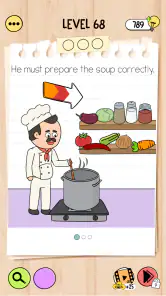
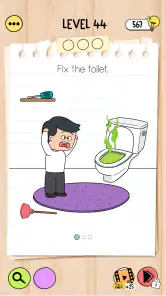
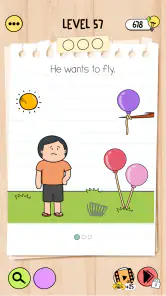
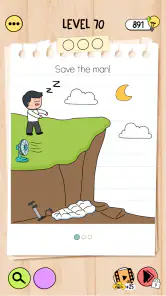
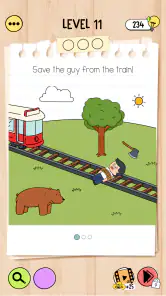
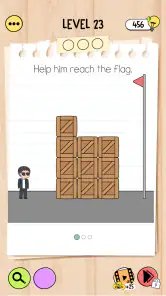
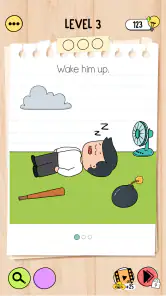
Analysis by Reviewed
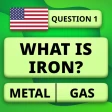
I enjoy trivia games most when they make me pause before tapping, and Brain Test X: Hard Challenge is aimed squarely at that kind of player. It is a free puzzle game from Unico Studio, built around brain teasers that reward noticing what a question is really asking rather than simply recalling facts. My impression is that it works best as a short, focused diversion: a few puzzles during a break, with enough trickiness to make an easy-looking answer feel less obvious.
How a typical puzzle session feels
Start with the wording, not the first answer
The useful habit here is to read each puzzle twice before acting. Brain Test X is presented as a challenge for your brain, and the appeal of this style of trivia is that the apparent question may not be the whole puzzle. I try to identify what the game is asking, what it is merely showing, and whether I am assuming a rule that was never stated. That small pause is often more productive than tapping quickly at the most familiar-looking choice.
For a practical routine, I give a puzzle one deliberate attempt, then change my interpretation if it fails. Rather than repeating the same tap, I look for an overlooked word, a detail in the scene, or an assumption I brought from ordinary quiz games. This makes the experience feel less like a race through facts and more like a sequence of compact reasoning problems. It is also a good way to keep a tricky question from turning into random tapping.
That approach suits brief sessions particularly well. If I have a few minutes between errands, I can focus on one puzzle at a time without needing to settle in for a long campaign. It is easy to recommend to someone who likes playful mental challenges but does not want a formal study tool. If, on the other hand, you want a structured course in general knowledge or a competitive quiz with a clear scoring focus, this is a different kind of experience.
A repeatable way to avoid getting stuck
When a puzzle resists, I use a simple reset: restate the task in plain language, separate what I can see from what I am guessing, and test one new idea. This is more useful than trying several similar answers in a row. It also helps me notice when I am reading a familiar phrase too quickly. The game’s central pleasure depends on that moment of reconsideration, so slowing down can make it more satisfying rather than less.
A realistic use case is a short break at home or while waiting for someone. I would play a handful of puzzles, stop if I felt myself tapping without thinking, and return later with a fresher perspective. That pause matters: the puzzles are meant to provoke a rethink, and frustration can flatten that effect. I would not choose it when I need uninterrupted concentration for a long stretch or when I am looking for a calm, passive game to play while doing something else.
What to check before settling into a routine
Before making Brain Test X a regular pick, I would check the device’s available controls and settings rather than assume that every puzzle app handles play the same way. The verified version is 1.2.6, and it requires Android 7.0 or later. Those details are practical starting points if you are installing on an older phone. I would also look at the current in-game options on my own device, since menus and available controls can vary by version and platform.
The game is free to download, with in-app purchases listed from $0.99 to $24.99 per item. That makes it sensible to decide your comfort level before playing: if you prefer not to spend inside games, keep that boundary clear and treat optional purchases as a separate choice, not a requirement for enjoying a puzzle. I would not assume that a purchase is necessary to solve a particular challenge; instead, I would first take a break, reread the prompt, and try a genuinely different interpretation.
For families, the content rating is Everyone, which makes the game broadly accessible by age classification. Still, I would let younger players try the puzzle style with an adult nearby if they find confusing wording frustrating. A child who enjoys playful problem-solving may have fun explaining their reasoning aloud; a child who expects every question to have a direct, literal answer may need a little help understanding that the trick is often in the interpretation.
Small habits that make solving more enjoyable
One of the best habits is to say the puzzle aloud in your own words. That can expose the hidden assumption you are making: perhaps you have converted a playful prompt into a conventional trivia question, or overlooked a distinction between what is shown and what is requested. I also avoid changing several things at once. If I test one new interpretation at a time, I can tell whether I have actually learned something from the previous attempt.
Another useful pattern is to take a short mental reset instead of searching for an answer immediately. Look away for a moment, then return and inspect the prompt as if it were new. This is not a special game feature; it is simply a practical way to break fixation. The format rewards flexible thinking, and a fresh look can be more valuable than a long stretch of increasingly impatient guesses.
I would also make sessions intentional. If I have only a minute, I play one puzzle and stop; if I have more time, I continue while I am still enjoying the challenge. That keeps the game from becoming a reflexive tapping exercise. Experienced players can build consistency through a repeatable approach—read carefully, form one hypothesis, test it, then revise—without needing to rush or rely on imagined shortcuts.
Where it differs from ordinary trivia
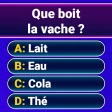
Compared with standard trivia apps, Brain Test X leans toward lateral thinking rather than a broad test of remembered facts. A conventional quiz is often the better choice if you want clear subject areas, a straightforward right-or-wrong knowledge check, or practice recalling information. Here, the more useful question is often not “What do I know?” but “What am I overlooking?” That distinction gives the game its personality, while also making it a poor fit for anyone who dislikes trick questions.
It is also different from word puzzles that mainly ask you to build vocabulary or solve a fixed grid. The satisfaction here comes from challenging your first reading of a prompt. That can be refreshing if you have played many conventional quizzes, but it can feel arbitrary if you prefer rules that are fully explicit from the start. My advice is to try it with a curious mindset: treat a surprising puzzle as an invitation to reconsider, not as a test of how fast you can guess.
The game has an average rating of 4.8 from around 65 thousand ratings, and it has over one million installs. Those figures suggest broad interest, but they cannot tell you whether its particular style will suit you. I would use them as context, not as a substitute for trying a few puzzles and seeing whether the wordplay and misdirection feel entertaining or irritating.
Limits that matter after the novelty wears off
The main limitation is inherent to tricky-puzzle design: if you expect every prompt to behave literally, the game may feel unfair. The same twist that makes one puzzle memorable can make another feel like a guess if you cannot see the intended angle. I recommend giving each challenge a thoughtful second look, but not spending so long on one that the game stops being fun. Some players will prefer a conventional trivia app precisely because its questions feel more transparent.
Another trade-off is that this is not the right pick for every kind of mental workout. If your goal is systematic practice in a particular subject, a topic-based quiz will give you a clearer path. If you want a quiet game that asks little of your attention, Brain Test X may demand more focus than you want in that moment. And if you strongly dislike in-app purchase options in free games, the listed purchase range is worth knowing before you install, even if you plan to play without spending.
Brain Test X: Hard Challenge was released on February 12, 2026, and its Everyone rating makes it accessible to a wide audience. I would recommend it to players who enjoy questioning their assumptions, families who like talking through playful puzzles, and anyone looking for short bursts of lateral thinking. I would steer away friends who want a serious knowledge quiz or get annoyed when the obvious answer is not the intended one.
My verdict on building puzzle-solving mastery
For me, the best way to get more from this game is not to chase speed. It is to build a dependable solving rhythm: read the wording carefully, identify the assumption behind your first answer, try one alternative, and pause when frustration starts to take over. That routine is useful beyond the game, and it keeps the puzzles feeling like thought experiments instead of tapping contests.
My recommendation is to try it if you enjoy clever, sometimes mischievous brain teasers and can laugh when your first interpretation misses the point. The free entry makes it easy to sample, while the purchase options are a reason to keep your spending choices deliberate. Unico Studio has made a trivia game for people who like being surprised by their own assumptions; when that sounds appealing, Brain Test X is a worthwhile pick for a short break. If you want transparent questions, subject-based learning, or predictable rules, a traditional quiz will likely serve you better.
Brain Test X: Hard Challenge Frequently Asked Questions
What is Brain Test X: Hard Challenge?
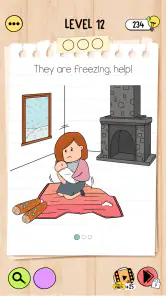
Brain Test X: Hard Challenge is a puzzle game built around short riddles, visual clues, and unexpected solutions. Instead of relying only on standard logic, many challenges encourage you to inspect the screen, interpret wording carefully, and try unconventional actions. The game is designed for players who enjoy brain teasers and playful surprises, though the difficulty and puzzle variety can differ from one level to the next.
Is Brain Test X: Hard Challenge free to download and play?
The game may be available to download without an upfront purchase, but free-to-play apps can include advertisements, optional in-app purchases, or other limits. Those details may vary by platform, region, and version, so check the Google Play Store or Apple App Store listing before installing. Review the listed purchases and permissions as well, especially if you plan to let a child play.
Does Brain Test X: Hard Challenge work offline?
Some puzzle games let you play levels without an internet connection, while ads, hints, updates, or other features may still require one. The exact offline support for Brain Test X: Hard Challenge can depend on the current version and device. If you expect to play while travelling or away from Wi-Fi, install the game and test a level offline before relying on it.
Is Brain Test X: Hard Challenge suitable for children?
Its puzzle-focused format may appeal to children, families, and casual players, but suitability depends on the child and the content in the current release. Check the age rating and store description for your region, and consider whether advertising or optional purchases are appropriate. Younger players may also benefit from adult guidance when a puzzle is confusing or when the app displays external promotions.
What should I check before downloading Brain Test X: Hard Challenge?
Before installing, confirm that the app is the intended title by checking its developer, screenshots, description, and recent reviews in the official app store. Make sure your device meets the listed requirements and has enough storage, then review the privacy information, permissions, ads, and in-app purchases. Store listings and features can change, so use the current page for the most reliable details.
Pros
- Quick puzzles make it easy to play in short sessions.
- Unexpected solutions encourage creative thinking.
- Simple touch controls are easy to learn.
- A broad range of challenges keeps the gameplay varied.
- Hints can help when a puzzle becomes difficult.
Cons
- Some answers rely on wordplay or trick logic rather than deduction.
- Repeated mistakes may make progress feel trial-and-error based.
- Hints can reduce the satisfaction of solving puzzles unaided.
- Ads may interrupt the flow between challenges.
- The difficulty can vary sharply from one puzzle to the next.
- Category
- Trivia
- Version
- 1.2.6