Bola Capture
- 4.00
- 3.8
- Installs
- 50.00K
- Price
- Free

Screenshots
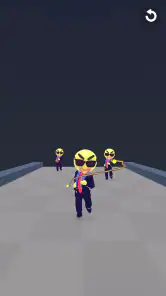
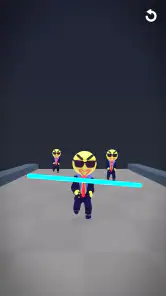

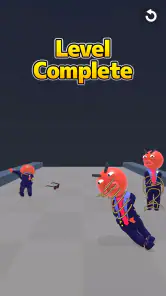
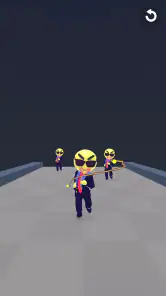
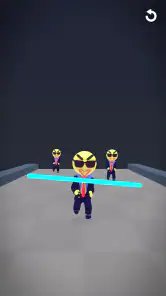

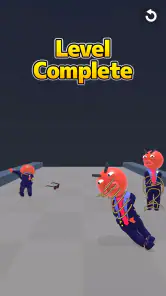
Analysis by Reviewed
I found Bola Capture most interesting as a quick shared-device action game rather than something I would plan an entire evening around. The idea is easy to understand: you control the aim, send a bola across the screen, and try to catch every ragdoll in the scene. That simple interaction makes it a natural choice when someone nearby wants to try a game without learning a long control scheme first.
In my experience, the appeal comes from the small decisions between each throw. You are not simply tapping until the screen clears. You need to judge the angle, notice how the targets are arranged, and decide whether a direct attempt is better than setting up a more useful path. The game belongs firmly in the action game space, but its relaxed-looking presentation hides a little precision challenge.
KAYAC Inc. keeps the central concept focused. That is helpful for a game designed to be picked up quickly, especially on a phone that several people in a household use. It is free to play, carries a Teen content rating, and requires Android 6.0 or later. Those details make it fairly approachable from a device-compatibility point of view, while the age label is still worth taking seriously when deciding whether younger children should play without an adult nearby.
How Bola Capture Works on a Shared Phone
A good five-minute game for passing around
The clearest everyday use case is a short break with another person. Imagine waiting for food, sitting on a train, or sharing a phone at home while one person wants to play and the other wants to watch. One player can make a few attempts, hand over the device, and let the next person try to improve the result. Because the main action is based on dragging and flinging, a new player can understand the basic interaction almost immediately.
That simplicity also creates a friendly form of competition. One person may prefer a bold throw that tries to catch several ragdolls at once, while another may take more time to line up a safer shot. Watching someone else play is useful because the outcome of a throw is visible and easy to discuss. You can point out a better angle, suggest aiming around an obstacle, or simply react when a carefully prepared attempt goes wrong.
I would not treat it like a traditional multiplayer game, though. The shared experience is based on taking turns and coordinating around one device, not on assuming that several people are connected to the same session. That distinction matters in a household: it is suitable for informal handoffs, but it should not be chosen by someone specifically looking for online competition, live team play, or a persistent group account.
Why the basic control deserves more attention than it first appears
Dragging to aim feels familiar, but the fling is where the game asks for judgment. A rushed gesture can send the bola in a direction that looks close but misses the useful target. I found it better to pause before moving, identify the ragdolls that are hardest to reach, and then plan the throw around them rather than focusing only on the nearest character.
A practical technique is to think in terms of coverage instead of individual targets. If several ragdolls are grouped together, a throw that reaches the edge of the group may be more valuable than one aimed at the center. This is not a feature claim or a hidden mode; it is simply the kind of tactical reading that makes the one-touch premise more satisfying. The game gives the player a reason to look at the whole screen before acting.
Another useful habit is to avoid treating every failed attempt as a control problem. Sometimes the angle is fine but the chosen target is poor. When playing on a shared phone, I would encourage a new player to make one deliberate attempt, observe what happened, and adjust one thing at a time. That keeps the experience from becoming random flinging and makes the game easier to explain to someone who has never played it before.
Setting boundaries before handing over the device
Shared-device play works best when the household agrees on a few simple boundaries. I would decide who is currently playing, whether people are taking turns after each attempt or after a longer stretch, and whether the phone needs to remain available for calls or other tasks. These are ordinary household arrangements, but they matter more with a game built around quick retries because “just one more try” can easily extend a short break.
I would also avoid handing over the phone while another person is using it for something important. Bola Capture is easy to start, but that does not make the device itself disposable. If the phone belongs to a parent, partner, or shared family space, the player should know when to stop and return it. The game is a good fit for casual coordination precisely because the session can be paused between attempts, not because it should take priority over the device owner.
There is another boundary worth keeping in mind: the game should not be used as a reason to share personal accounts or unlock access to unrelated areas of a phone. A child can watch an adult play without needing access to messages, photos, payment screens, or other applications. Since the experience is naturally suited to passing a device around, I prefer a clear handoff where the owner stays present and takes the phone back after the turn.
Coordination makes the simple gameplay more enjoyable
With two or three people, the best conversations are usually about planning rather than scorekeeping. One person can describe the target they think should be handled first, while the player decides whether that advice makes sense from the current angle. This gives spectators something meaningful to do and helps younger or less experienced players learn how to read the scene without turning the session into a lecture.
I found that short verbal instructions work better than several people giving directions at once. “Try the far-left ragdoll” is more useful than a stream of competing suggestions. If the player wants to experiment, the group should let them do so. The fun comes from seeing whether a chosen line works, not from having the observer control every movement.
For a household with different skill levels, rotating roles can help. The experienced player can make the first attempt and explain the reasoning, then the newer player can try a similar angle. After that, switch to a completely different approach. This keeps the game from becoming a demonstration where one person always holds the phone and everyone else only watches.
The trade-off is that the game’s social value depends on the people around it. If nobody wants to watch or take turns, the shared-device advantage disappears. In that situation, a conventional solo action game with deeper progression may be a better choice, because it gives one player more long-term structure instead of relying on conversation and quick handoffs.
Age context and trust in the home
The Teen content rating should shape how I introduce this game to younger family members. The rating does not automatically tell me that every moment will be unsuitable for every child, but it does mean I would not assume that the game belongs in unsupervised child use. An adult who knows the child can make the better judgment, especially when the device is shared and the child may move between the game and other phone functions.
Trust is also about behavior around the device. I would show a child how to aim and fling, explain when the turn ends, and make it clear that the phone stays in the agreed playing area. That is more useful than presenting the game as a reward with no limits. Since the central mechanic is straightforward, an adult can remain involved without needing to understand a complicated menu system.
For teenagers and adults, the age context is less of a concern than the style of play. Someone who enjoys light physics-like aiming and repeated attempts may find the game pleasantly immediate. Someone who dislikes trial and error, ragdoll presentation, or games that ask for careful gestures may lose patience quickly. I would let the player try it for a short session before deciding whether it deserves space on a regularly used device.
Households should also remember that a store rating is not a substitute for supervision. It is one piece of context, while the child’s maturity, the family’s rules, and the way the device is shared matter just as much. I would keep the owner nearby during early sessions and avoid presenting the game as a private activity on a phone that contains sensitive personal information.
Where it stands beside familiar action alternatives
Compared with a platform game, Bola Capture asks for less memorization and less continuous movement. You are not learning a large map or managing a character through several buttons. That makes it easier to explain and better suited to a short turn. The cost is that players looking for exploration, story, character development, or a substantial progression system may find the focused format too narrow.
Compared with a physics puzzle, it is more immediate and action-oriented. The fling gives each attempt a physical sense of commitment, while the ragdolls provide clear targets. However, people who prefer slow, methodical puzzle solving may want more time to manipulate a scene or revise a plan before acting. Here, the satisfaction comes from making a good throw, not from building a large solution over many steps.
It also differs from competitive action games that rely on online matches. There is no reason to choose this title if your main goal is to play against friends who are using their own phones at the same time. Its strength is the opposite: the screen becomes a small shared activity, and the people nearby can discuss each attempt without needing a networked lobby or matching system.
That comparison helped me place the game correctly. I see it as a compact action diversion with a useful pass-and-play quality. It can complement a larger game library, but I would not expect it to replace a deeper action title for someone who wants long sessions, detailed progression, or a broad range of modes.
What the current release suggests for practical use
The game is currently at version 0.0.5, so I approach it as an early, focused experience rather than a finished-feeling platform with years of accumulated depth. That does not prevent it from being enjoyable. In fact, a small concept can be an advantage when the goal is to fill a few spare minutes. Still, I would keep expectations measured and judge it mainly on whether the core throw-and-capture loop remains fun.
Its average rating is 3.8 from around forty ratings, with a small number of written reviews. I read that as a modest early signal rather than a definitive verdict. The game has passed the initial discovery stage, but there is not enough public reaction here for me to treat the rating as a complete picture of long-term satisfaction. My own recommendation is therefore based more on the specific play style than on the number alone.
There are over fifty thousand installs, which suggests that the concept has reached a meaningful group of players without making it feel like a universally familiar title. For a household deciding whether to try it, that is enough to justify a quick test, but not a reason to assume it will suit everyone. The free price lowers the commitment, particularly when several people want to sample it on the same device.
Because the version is early, I would be careful about making it the only game available for a long trip or a shared event. A small action loop can feel fresh at first and repetitive later, especially for players who quickly master the aiming pattern. I would keep an alternative activity ready rather than expecting every member of the household to remain interested for an extended session.
Who should try it, and who should skip it
I recommend giving it a chance if you want a free mobile action game that can be explained in one sentence and played in short turns. It suits people who enjoy aiming, judging angles, and learning from failed attempts. It is particularly convenient when a phone is being passed between friends or family members and nobody wants to create accounts, study a tutorial, or commit to a long match.
I would also suggest it for players who enjoy watching other people solve a small challenge. The ragdoll targets make the result easy to follow from beside the player, so a spectator can participate through suggestions and reactions. That makes it more socially useful than many solo games that become invisible once the screen is in someone else’s hands.
I would skip it if you are searching for a rich campaign, online multiplayer, a large upgrade system, or a reliable long-session game. It is also a poor match for someone who finds gesture precision frustrating. The central control is the entire point, so there is no advantage in choosing it if you would rather use virtual buttons, automatic attacks, or a slower puzzle interface.
For younger children, I would not install it on a shared device and walk away simply because the controls look simple. The Teen rating calls for adult judgment, and the household should decide when and how the game is used. A supervised turn can be perfectly reasonable for the right child, while unrestricted access may not be appropriate for every family.
My household verdict
I see Bola Capture as a small but well-defined idea that works best when treated honestly. It is not a replacement for a full action adventure or a networked competitive game. Its value is in the quick decision before each fling, the satisfaction of catching several ragdolls with a thoughtful line, and the way a nearby friend or family member can understand what is happening immediately.
For shared use, I would keep the rules simple: agree on turns, keep the owner present, protect access to the rest of the phone, and remember the Teen age context. Those steps make the game easier to enjoy without pretending that a shared screen automatically creates a complete multiplayer experience.
The free price makes trying it low-risk, and the Android compatibility beginning with version 6.0 means it can fit a wide range of older devices. I would download it for short breaks, casual handoffs, and friendly angle-planning sessions. I would not choose it as the main game for a long journey or for anyone demanding deep progression.
My final recommendation is cautiously positive: try it when you want a quick, tactile challenge that works well with people sitting beside you. Just keep the expectations proportional to its focused design. If the first few throws make you want to adjust your aim and try again, it has done its job. If you are already looking for more systems, more story, or more ways to play, another action game will probably serve you better.
Pros
- Quickly captures and organizes football match highlights.
- Simple interface makes recording moments easy for new users.
- Useful tools for reviewing and sharing captured plays.
- Helps create a personal archive of memorable match moments.
- Works well for fans who want content centered on football.
Cons
- Video quality may depend heavily on your phone’s camera and storage.
- Long recordings can consume considerable battery and device space.
- Some features may require a stable internet connection.
- Editing options may feel limited for advanced content creators.
- Availability and features can vary between Android and iOS versions.

- Category
- Action
- Version
- 0.0.5