Blaze of Battle
- 10.95K
- 3.7
- Installs
- 1.00M
- Price
- Free

Screenshots

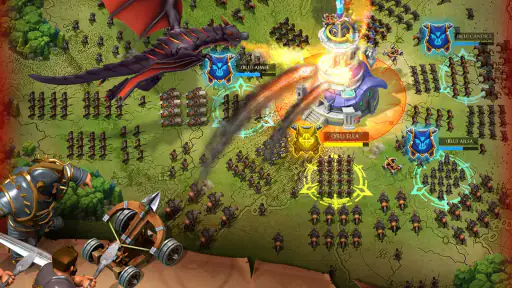
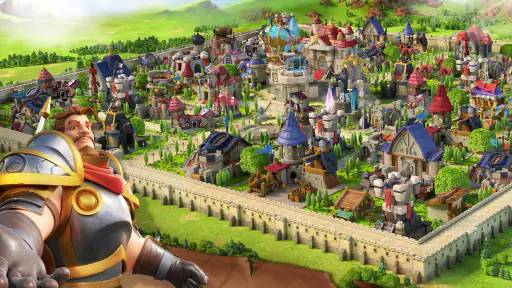
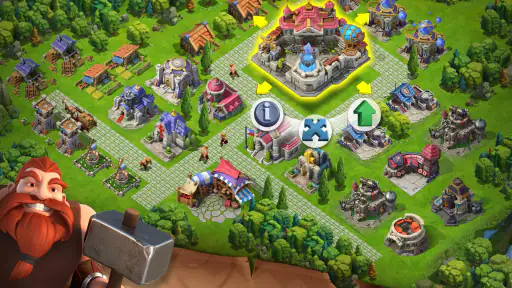
Analysis by Reviewed
I spent time with Blaze of Battle as a mobile strategy game, and my first impression was that it asks for more attention than a quick, disposable game usually does. The central appeal is the feeling of building something over time, preparing an army, and making choices that matter beyond a single match. That makes it a better fit for players who enjoy planning and gradual progress than for anyone looking for a short arcade session.
The game comes from Leyi Classic Games and is free to start. It has been available since June 17, 2016, and its current version is 9.1.3. That long presence helps explain why it feels designed around an ongoing world rather than a one-off campaign. There is a large player base around it, with more than a million installs, although its average rating sits at 3.7 from roughly eighty thousand ratings. I read that combination as a useful warning: plenty of people are willing to try it, but the experience will not suit everyone.
How Blaze of Battle feels in regular play
A strategy game that rewards patience more than reflexes
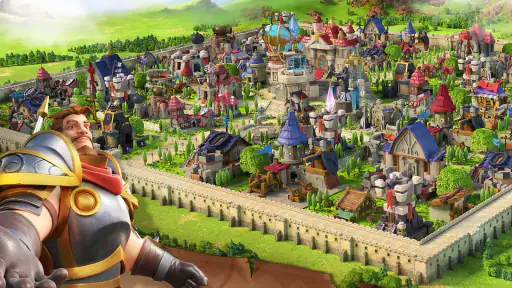
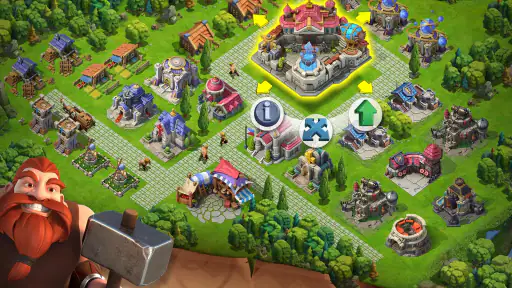
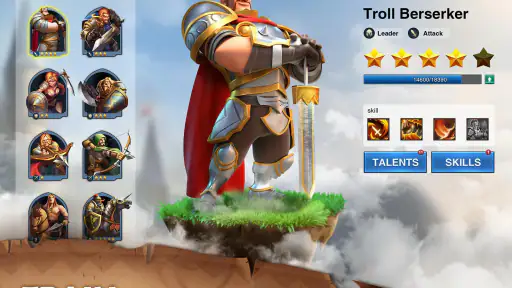
The basic rhythm is easy to understand. I work on an empire, prepare troops, and decide when it makes sense to commit those troops to battle. That loop gives the game its identity. Rather than demanding constant quick reactions, it encourages me to think about timing, priorities, and whether a stronger position is worth waiting for.
That slower pace can be a strength when I have a few spare minutes throughout the day. I can check progress, make a decision, and return later without needing the same uninterrupted concentration required by a real-time action game. It also makes the game suitable for players who like seeing a plan develop gradually instead of starting from zero every time they open an app.
At the same time, the long-term structure can feel demanding. Progress in an empire-building game is rarely satisfying if I treat every action as a race. The better approach is to decide what I am trying to improve before spending resources. A common mistake is to upgrade whatever becomes available first, then discover that the army, economy, or defensive position no longer supports the same plan.
My most useful habit was to pause before beginning a major improvement and ask what problem it solves. If the goal was stronger attacks, I focused on preparation that supported that goal. If I expected to be away from the game, I preferred choices that made the account less dependent on immediate attention. This sounds simple, but it prevents the unfocused spending that can make mobile strategy games feel slow.
What to expect from speed and responsiveness
Blaze of Battle is not the kind of game I would judge by how quickly it launches into an action sequence. Its perceived speed comes more from how much progress I can make during a visit and how clearly the game communicates what is happening. When the next useful decision is obvious, the experience feels efficient. When several systems compete for attention, the same session can feel much heavier.
I found it most comfortable when approached in short, deliberate checks rather than constant tapping. That style reduces the sense of waiting because each visit has a purpose: review the empire, prepare the next step, and leave. Players who dislike timers, gradual development, or returning to a game repeatedly may find the pace frustrating, even if the battles themselves are appealing.
There is also a practical difference between speed and progress. A fast session is not necessarily a productive one. Spending premium currency or rushing a task may make an action finish sooner, but it can also reduce the value of careful planning. I would recommend deciding in advance which moments genuinely deserve acceleration and which can simply run in the background while I do something else.
Where the game becomes demanding
The heavier moments arrive when several decisions overlap: improving the empire, preparing troops, and considering a battle at the same time. This is where the game stops feeling like a simple check-in and starts asking for a real priority order. I enjoy that pressure when I have enough time to think, but it is less pleasant when I am playing in a hurry.
Large strategic decisions also create a different kind of workload from action games. The phone may not be doing anything visually dramatic, yet I still feel mentally busy because a poor decision can affect the next several visits. That is one reason I would not recommend opening the game during a moment when I need a completely effortless distraction.
A useful workflow is to separate preparation from commitment. I first review what I have available, then decide what the immediate objective is, and only after that begin an attack or spend scarce resources. This avoids the familiar mobile-game problem of making a quick choice because a button is visible, rather than because it supports the plan.
A realistic everyday scenario
Imagine checking the game during a lunch break. I might have enough time to inspect the empire and set up the next task, but not enough time to study every possible consequence. In that situation, I would avoid starting an important battle unless I already understood the objective. A short visit is better used for preparation than for a rushed commitment.
Later, at home, I could return with more time and review the situation properly. That two-step routine suits the game well: brief sessions for maintenance and longer sessions for decisions that deserve attention. It also reduces the temptation to spend just to remove a moment of inconvenience.
For someone who plays on a commute or between appointments, this structure can be convenient. For someone who wants every session to deliver a complete, self-contained challenge, it may feel unfinished. The game is built around continuity, so its best moments depend on the relationship between visits rather than one isolated round.
Stability and the question of reliability
The game’s age and continued version history suggest an established product rather than a brand-new experiment. In my experience, that matters because mature games often have a more settled flow and fewer surprises in their basic structure. Still, a long-running mobile game can also feel layered, especially when it has accumulated systems and expectations over time.
I would describe reliability here in practical terms: the game makes the most sense when I treat it as a connected service that expects regular access. A stable connection and enough patience are important to the overall experience, particularly when the value comes from ongoing progress and interaction with a wider player community. I would not choose it for a trip where I know I will be offline or where interruptions could make a strategic decision awkward.
Recovery is another consideration. If I leave after setting up a plan, returning later is more natural than trying to complete everything in one sitting. That makes the game forgiving of ordinary interruptions, but only up to a point. Walking away in the middle of an important decision is different from simply closing the app after arranging the next step.
My advice is to finish the thinking before leaving, even if the visible action will take time. Establish the objective, check what the decision costs, and make sure the next visit has a clear purpose. This habit improves the feeling of continuity and prevents the game from becoming a series of confused catch-up sessions.
Resource demands and device expectations
The minimum operating-system requirement is Android 6.0, which makes the game accessible to a broad range of Android devices. That does not mean every phone will deliver the same experience. Older hardware may be more comfortable with shorter sessions, while newer devices are likely to handle extended play with less friction. I would still avoid assuming that a low minimum requirement guarantees identical performance everywhere.
Strategy games can be deceptively demanding because players tend to leave them open longer than they expect. A short check may feel light, but repeated visits, larger empire decisions, and extended time in the app can make battery use and heat more noticeable on an older phone. I did not find that the game’s appeal depends on flashy action; its resource cost is more likely to be felt through session length and repeated engagement.
If the phone is older or already short on free space, I would keep expectations modest and close other demanding apps before a longer session. That is not a criticism unique to this title, but it is especially relevant here because the game encourages returning often. A device that feels fine for a quick check may feel less comfortable after a longer planning session.
Players on iOS should also pay attention to the requirements shown for their particular device before installing. The game is presented as a mobile title, but operating-system compatibility and performance can vary by hardware generation. I would not choose a device solely because the game is free; the more important question is whether that device remains comfortable during repeated, connected sessions.
Free entry, optional spending, and decision pressure
The game costs nothing to begin, which makes it easy to test whether the empire-building loop suits me. However, in-app purchases range from $0.99 to $299.99 per item. That is a very wide range, and it changes how I evaluate the free experience. I can start without paying, but I need to be disciplined about distinguishing a genuine strategic need from a moment designed to make waiting feel uncomfortable.
My strongest recommendation is to set a personal spending boundary before playing. Do not make that decision after a disappointing battle or when a long wait is blocking a goal. The best way to judge the game is to play within a fixed limit, use the free progression first, and see whether the planning remains enjoyable without regularly speeding things up.
This is also where the game differs from a traditional offline strategy title. In a self-contained campaign, the challenge is usually fixed and the purchase decision is separate from the next move. Here, the ongoing structure can make convenience spending feel connected to progress. Players who prefer a single upfront purchase, a fully offline campaign, or a strategy game without optional acceleration may be happier with a different type of title.
How it compares with other strategy choices
Compared with a turn-based strategy game, Blaze of Battle feels less neatly contained. A turn-based title gives me time to finish a defined scenario and usually makes the consequences of a move easier to isolate. This game is better for someone who enjoys maintaining a developing empire and returning to the same world over time.
Compared with a fast competitive battle game, it is less about reflexes and more about preparation. I would choose this game when I want a longer strategic arc, not when I want a match that begins and ends quickly. Players who enjoy immediate action may find the empire-building layer too slow, while players who like planning may appreciate having more to consider between battles.
It also differs from a purely offline city builder. The store positioning emphasizes battling alongside a very large player community, so the social and competitive context is part of the attraction. That can make progress feel more meaningful, but it can also make the game less relaxing than building privately at my own pace.
The right alternative depends on what I want from strategy. For compact sessions with a clear finish, I would look elsewhere. For a persistent empire that rewards regular attention, this game is a more natural choice. Neither approach is automatically better; they serve different moods and different amounts of available time.
Who should play, and who should skip it
I think Blaze of Battle is best for patient players who enjoy planning several steps ahead, checking a developing account, and making choices that have consequences beyond one battle. It can work well for someone who likes a mobile game to remain part of a daily routine rather than something completed in one weekend.
I would be more cautious recommending it to anyone who dislikes waiting, connected progression, or optional purchases. It is also not my first suggestion for a young child: the content rating is Teen, so families should consider that age guidance before installing. The game’s strategic structure may be suitable for older players, but suitability is not only about whether the controls are easy.
Players with limited time can still enjoy it, provided they accept that short sessions are mainly for checking and preparation. If every visit must feel complete, the design may disappoint. Likewise, people using an older device should try it with realistic expectations about longer sessions, heat, battery use, and the general comfort of repeated play.
My final performance verdict
After weighing the pace, the mental workload, and the practical demands of returning regularly, I see Blaze of Battle as a committed strategy game rather than a lightweight time filler. Its strongest quality is the sense of continuity: the empire, army, and future decisions are connected, so careful planning feels worthwhile.
Its weakest point is the same structure. The game can ask for patience and attention at moments when I only want a quick distraction. The broad in-app purchase range also means I would approach it with a clear budget and avoid treating every delay as a problem that needs money to solve.
The 3.7 average from around eighty thousand ratings reflects that mixed appeal. I would not read it as a reason to dismiss the game, but I would take it as a reminder that the long-term format is a matter of taste. I enjoyed it more when I played deliberately, kept a specific objective in mind, and accepted that not every visit would produce a dramatic result.
My recommendation is straightforward: try it if you want a persistent mobile empire, strategic preparation, and battles that fit into a longer plan. Skip it if you want instant action, a self-contained campaign, or a completely purchase-free experience. For the right player, the best way to enjoy Blaze of Battle is to manage the pace instead of letting the game manage it for you.
With its Teen rating, free starting point, Android 6.0 minimum, and mature release history, it is easy to test on a compatible device. I would give it a fair trial without spending, learn how the routine fits my day, and then decide whether the ongoing strategy is genuinely enjoyable. That approach gives the game room to show its strengths without allowing its slower moments or optional spending to define the entire experience.
Pros
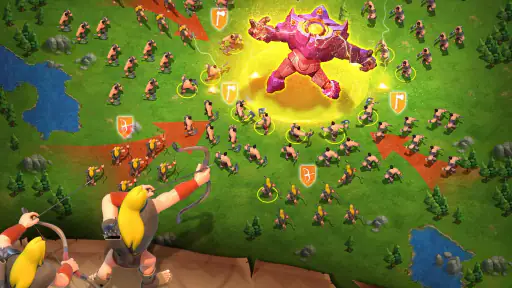
- Real-time strategy battles create a strong sense of urgency.
- Alliance features encourage cooperation and coordinated attacks.
- Base upgrades provide clear long-term progression goals.
- The fantasy setting gives the game a distinctive visual identity.
- Frequent events add variety beyond the standard building cycle.
Cons
- Progress can feel slow without spending on premium resources.
- Large power gaps may make some multiplayer battles feel unfair.
- The interface can become crowded with menus and notifications.
- Resource gathering requires regular check-ins to stay competitive.
- Combat outcomes depend heavily on army strength and upgrades.

- Category
- Strategy
- Version
- 9.1.3