Blasphemous
- 94.00
- 4.4
- Installs
- 10.00K
- Price
- $7.99

Screenshots
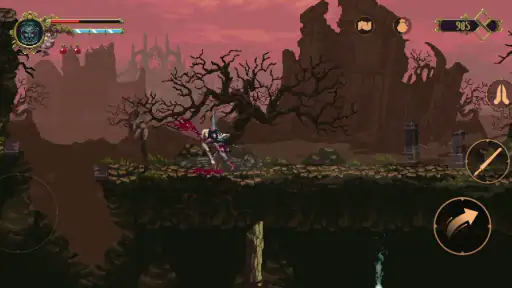
Analysis by Reviewed
Before I decide whether a difficult action game belongs on my phone, I ask two practical questions: do I want to pay upfront, and do I actually enjoy being tested? Blasphemous is a paid action-platformer from The Game Kitchen, set in the bleak world of Cvstodia. Its appeal is not convenience or instant comfort; it is the combination of demanding combat, careful exploration, and a setting that stays with me after I stop playing. I would recommend it to a friend who likes working through a challenge, but not to someone looking for an easy game to fill a few distracted minutes.
What the purchase gets you—and who it suits
This is a paid game, listed at $7.99, rather than a free download built around optional spending. I find that a useful distinction when deciding whether to try it: the purchase price is clear, while the game’s challenge and presentation are the main reasons to consider it. It carries a Mature 17+ rating, so its grim imagery and violent tone make it a poor fit for younger players or anyone who prefers lighter subject matter.
For the spending decision, the important point is simple: the known price is for a paid game, not an invitation to compare a free starting point with later purchases. I would still check that the game suits my taste before buying, because a clear upfront cost does not make a demanding game a safe choice for everyone. The Mature 17+ rating is especially relevant if I am choosing something for a shared family device or a younger player.
It’s best suited to players who enjoy learning enemy patterns and can accept setbacks without expecting every attempt to move the story forward. If I wanted a breezy platformer or a forgiving action game for a tired evening, I’d choose something else. But when I have time to focus, a difficult encounter can make a short session feel satisfying even if I don’t reach a new area.
I would also think about what I want from a paid mobile game. If I value atmosphere, deliberate combat, and a world I can explore at my own pace, this is a more convincing fit than a casual game built around quick rewards. If my priority is low-pressure play while multitasking, I would spend elsewhere. That distinction matters more here than trying to judge value by how quickly I can finish it.
Progress, pressure, and the value of a patient run
The game’s difficulty changes how I approach exploration. I try to pay attention to the shape of an encounter rather than rush in repeating the same attack; noticing when to pause, dodge, or take a safer opening makes failure more useful. A practical routine is to treat a new stretch as a scouting run: learn what threatens me, then make a more deliberate attempt once I understand the pressure points.
That scouting mindset is useful because a failed attempt need not be a total waste. I can come away knowing which threat deserves attention first, where I need to slow down, or whether my usual habit of charging forward is making things worse. I would avoid turning every setback into a reason to restart immediately; a brief pause to think through what happened can make the next try more controlled. This is a small change in approach, but it can keep difficulty from feeling like blind repetition.
More From Our News Desk

Weather by Xiaomi Review: Clear at a Glance, Less Clear Up Close

X Under Pressure: Can It Recover When Posting Goes Wrong?

Clash of Clans Is Won Between the Battles

Android Auto Makes the Case for Quieter Car Software

MobiOffice: Transforming Mobile Productivity with Seamless Integration

EA SPORTS FC™ Mobile Soccer: Redefining Mobile Sports Gaming
That approach also helps on an ordinary day. If I have only a little time before bed, I can focus on one nearby challenge instead of expecting to make major progress. The trade-off is that interruptions can be frustrating when I’m concentrating on precise combat. I’d save it for a commute or waiting room only if I could play without frequent distractions; otherwise, a less demanding game is a better companion.
In practice, I would treat a short session as a chance to learn one thing rather than as a promise to clear a whole stretch. That makes it easier to put the game down without feeling that I have wasted the evening. It also helps me choose the right moment to play: a quiet break at home suits its concentration demands better than a stop-start session in which I keep looking away from the screen.
Fairness, alternatives, and what to expect
Compared with many action-platformers that emphasize quick momentum or frequent reassurance, this one asks for patience and close attention. Its harshness is part of its identity, but it also means a mistake can feel costly rather than playful. Players who enjoy the deliberate tension of Souls-inspired combat may find that appealing; anyone who wants a gentle learning curve should look for a more forgiving alternative.
That comparison is about the feel of play, not a promise that every action game in the same broad family works alike. A faster platformer may be better when I want movement and momentum to carry a session. A gentler adventure may suit me when I want exploration without repeated combat pressure. Here, I would choose it specifically for the tension of studying a dangerous encounter and gradually becoming more deliberate, not because I expect it to make difficult play effortless.
The upgrade options are presented as ways to shape a playstyle, but I wouldn’t assume that choosing an aggressive or cautious approach removes the need to learn the encounters. Think of customization as support for your preferred rhythm, not a shortcut past the game’s demands. The game has a 4.4 average from around 1,900 ratings, and it has reached over 10,000 installs; those figures suggest a real audience, but they don’t tell me whether its severity will suit a particular player.
For a fair purchase decision, I would separate what is known from what is personal. The price is $7.99, and the game is a single paid purchase in the sense that it is not presented as a free download with optional spending. I would not infer a wider monetization policy or make promises about additional costs beyond that purchase context. Whether the game feels worth the price comes down to my tolerance for challenge and how much I value its atmosphere and combat.
The Alluring World of Cvstodia
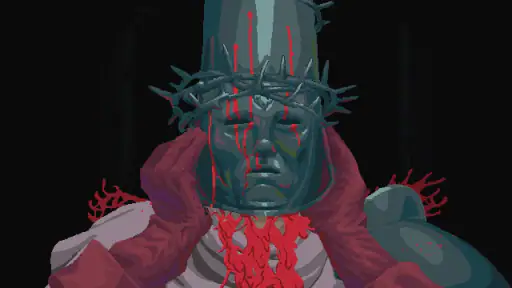
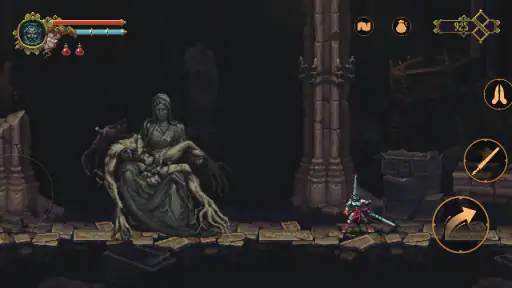
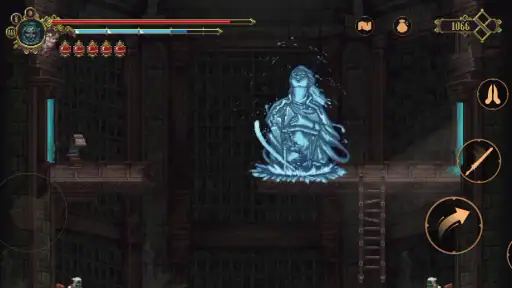
From the moment you step into the world of Cvstodia, you’re greeted with an enchanting yet haunting atmosphere. The game’s art style is something to behold. It’s rich, detailed, and captures the essence of a dark, religious medieval setting. As I traversed through the different levels, I couldn’t help but appreciate the amount of detail put into the game’s environments. Each area feels distinct, offering new challenges and enemies to overcome.
That distinct visual identity gives exploration a purpose beyond moving from one fight to the next. I found myself paying attention to the surroundings because their design helps make Cvstodia feel like a connected, unsettling place rather than a sequence of interchangeable stages. If I enjoy dark fantasy art and religious symbolism, the atmosphere is a strong reason to keep going; if those themes feel oppressive, the same visual commitment may make the experience tiring rather than immersive.
Gameplay That Keeps You on Your Toes
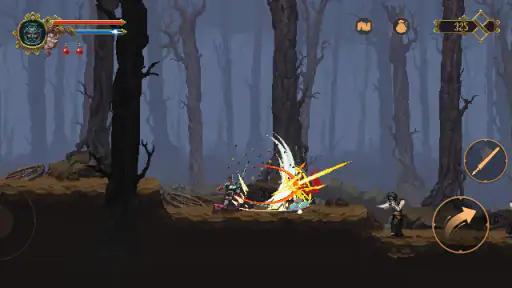
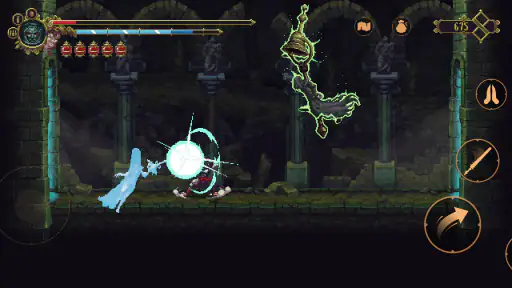
Blasphemous is not just about its looks; its gameplay is where it truly shines. The game is brutally challenging, reminiscent of the Souls series, but with its own unique twist. I found myself constantly on edge, timing my attacks and dodges to perfection. Combat is fluid, and every encounter feels like a dance of death. The game doesn’t hold your hand, and every mistake is a lesson learned the hard way.
One useful habit is to resist treating every enemy as a target to dispatch as quickly as possible. When I slow down enough to notice how an encounter unfolds, I can choose a safer opening instead of committing to a reckless attack. That deliberate rhythm is part of the appeal, but it is also why the game can feel unforgiving when I am tired or distracted. I would not expect it to play like a casual platformer just because it is on a phone.
One of the standout features is the game’s upgrade system. As you progress, you’re rewarded with various abilities and enhancements that allow you to tailor your playstyle. Whether you prefer a more aggressive approach or a cautious one, Blasphemous gives you the tools to play your way.
I see those choices as a way to make my preferred approach more comfortable, not as a way to avoid learning the basics of a fight. If an encounter keeps going badly, changing my timing and paying closer attention should come before expecting an upgrade to solve everything. That is a useful expectation to set early: progression can support patience, but it does not replace it.
Storytelling Through Symbolism
Blasphemous doesn’t spoon-feed you its story. Instead, it uses symbolism and environmental storytelling to convey its narrative. As someone who loves piecing together lore, I found this approach refreshing. The game is rife with religious imagery and themes of penance and salvation. It’s a narrative that invites interpretation and discussion, which is something I always appreciate in a game.
This makes it a better fit for players who enjoy sitting with a story rather than waiting for every detail to be explained. I do not need to interpret every image correctly to appreciate the mood, but I do need to be comfortable with some uncertainty. If I want a direct, dialogue-heavy plot with clear explanations at every turn, I would look for a different kind of action game. Here, the mystery is part of the atmosphere, not a puzzle the game promises to solve for me in plain terms.
The characters you meet along the way are memorable, each with their own stories and motivations. It’s these interactions that flesh out the world and add depth to the overarching plot. I found myself genuinely invested in the fate of Cvstodia and its inhabitants.
Availability and a candid verdict
The game was released on December 2, 2024, and its current version is 1.2.0, with a minimum OS requirement of 7.1. I’d check that my device meets the requirement before paying, then consider whether I have the patience for a demanding action-platformer. The release details and version help with that basic decision, but they don’t answer every practical question a buyer might have.
A minimum operating-system requirement is only one part of deciding whether a mobile game will feel good to play. I would also consider whether I can comfortably focus on precise movement and combat on my own device, then use the opening playtime to judge whether the controls suit me. If they do not, persistence may not fix the problem; a game designed around less exact timing would be the better choice. That is a personal comfort check, not a reason to assume the experience will be identical across devices.
For instance, I can’t judge from those purchase facts whether a particular phone’s controls will feel comfortable to me, or how well the game will suit my own screen and play habits. Those are worth weighing before committing, especially because precise timing is central to the experience. I’d also avoid buying it for someone who dislikes bleak imagery, or for a player who wants an easy story-led game that can be finished without mastering difficult fights.
The audience figures offer some context without serving as a guarantee: the game has 94 written reviews as well as its broader rating total. I treat that as a sign that other players have shared opinions, not as proof that the controls, difficulty, or tone will match my preferences. Reading impressions from people who enjoy similarly demanding action games is more useful than relying on popularity alone.
In conclusion, Blasphemous is not just a game; it’s an experience. It challenges you, intrigues you, and rewards you in ways that few games do. If you’re looking for a game that offers both a visual and gameplay feast, then Blasphemous should definitely be on your radar. Just remember, patience is key, and every death is a step closer to mastery.
My trust verdict is positive but specific: the price is a straightforward paid purchase, and the game’s appeal is easy to understand if you want tense combat, symbolic storytelling, and a richly unsettling setting. I’d recommend it to a friend who enjoys retrying difficult encounters and exploring a dark world at their own pace. I wouldn’t recommend it blindly to someone seeking relaxed mobile play; for them, a lighter platformer would be a safer choice.
In the end, I would buy it when I am in the mood to concentrate and accept a slow, sometimes difficult path through Cvstodia. I would skip it if I mainly want quick wins, a cheerful tone, or a story that explains itself plainly. That is the most useful way I can frame the purchase: the game has a clear identity, but whether that identity feels rewarding depends on the kind of challenge I want from a mobile action game.
Blasphemous Frequently Asked Questions
Can I play Blasphemous offline?
Blasphemous is a single-player action-platformer centered on exploring Cvstodia, fighting enemies, and uncovering the world’s secrets. Its solo structure makes it suited to players looking for an individual campaign rather than online matches or cooperative sessions. If you prefer challenging combat and atmospheric exploration, the game’s core experience is built around progressing through the adventure on your own.
How much does Blasphemous cost, and what Android version does it require?
Blasphemous costs $7.99, so it is a paid game rather than a free download. Before purchasing, check that your Android device runs version 7.1 or later. The game is a dark action-platformer, and its challenging combat and mature content are worth considering alongside the price. Make sure the device you plan to use meets the minimum operating-system requirement before you buy.
What is Blasphemous and what are its main features?
Blasphemous is a dark and challenging action platformer game that combines fast-paced, skilled combat with a deep and evocative narrative. Set in the nightmarish land of Cvstodia, players control The Penitent One, a silent knight on a quest to uncover the truth behind their curse. The game features non-linear levels, brutal boss fights, and a rich, immersive world filled with lore and secrets to discover.
Is Blasphemous suitable for all ages?
Blasphemous is rated M for Mature, meaning it is not suitable for children. The game contains intense violence, blood and gore, and mature themes that are intended for players aged 17 and older. Parents should be aware of the game's content and its dark, somber atmosphere before allowing younger players to engage with it.
What platforms is Blasphemous available on?
Blasphemous is available on multiple platforms, including PlayStation, Xbox, Nintendo Switch, and PC. The game can be purchased and downloaded via digital storefronts like Steam for PC, PlayStation Store, Xbox Live, and Nintendo eShop, offering gamers a variety of ways to access this captivating experience across different devices.
Pros
- Stunning pixel art graphics.
- Deep and engaging storyline.
- Challenging gameplay for hardcore gamers.
- Atmospheric soundtrack enhances immersion.
- Variety of unique bosses to battle.
Cons
- Difficult learning curve for beginners.
- Some controls feel slightly unresponsive.
- Limited save points can frustrate players.
- Occasional bugs and glitches.
- Backtracking can be tedious.
- Category
- Action
- Version
- 1.2.0