Best Guess Live
- 624.00
- 4.7
- Installs
- 100.00K
- Price
- Free

Screenshots








Analysis by Reviewed
Best Guess Live caught my attention because it turns a very small idea into a daily habit: solve a riddle, make a guess, and see whether your reading of the clue matches the intended answer. I spent time with it as a casual trivia game rather than treating it like a serious quiz platform, and that distinction matters. It is not trying to replace a large question bank or a long multiplayer session. Its appeal comes from the compact challenge and the little mental pause it creates in an otherwise ordinary day.
The game is made by Netflix, Inc. and is free to play. It sits in the trivia category, carries a Mature 17+ rating, and has attracted a 4.7 average from around 4.6 thousand ratings. Those figures suggest that the basic format is landing well with its audience, but they do not tell the whole story. The real question is whether a daily riddle is enough to keep you coming back. In my experience, the answer depends heavily on whether you enjoy interpretation and wordplay more than rapid-fire fact recall.
A Small Daily Challenge With a Distinct Personality
My first impression was that Best Guess Live feels deliberately focused. The store summary describes daily riddles, and that is the right way to approach it: one compact mental exercise rather than an endless catalogue of things to tap through. The short description, “Best Guess Live,” points toward immediacy, but the experience works best when I slow down for a moment and consider the wording instead of rushing toward the first answer that comes to mind.
That pacing gives the game a different character from conventional trivia apps. Many alternatives reward speed, broad general knowledge, or repeated practice with familiar categories. Here, the challenge is often in understanding how a clue is framed. A player can know plenty of facts and still miss because the riddle depends on a sideways interpretation. Conversely, someone who is good at noticing language patterns can do well without being a walking encyclopedia.
I also like that the daily structure gives the game a natural stopping point. It is easier to fit into a commute, a coffee break, or the few minutes before bed than a quiz that keeps presenting another round. That restraint is one of its strongest design choices. It makes the game feel like a small ritual rather than another service competing for a large part of my attention.
There is also a trade-off. If you want a substantial session, a wide selection of subjects, or a progression system that constantly gives you new goals, this compact format may feel thin. Best Guess Live asks you to appreciate the individual riddle. When the clue clicks, that focus is satisfying. When it does not, the limited scope gives you less else to do.
How the visual language supports the riddles
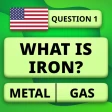
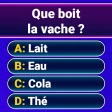
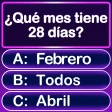
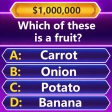
The most successful part of the presentation is its sense of concentration. The game’s setting and visual direction serve the central act of guessing instead of overwhelming it with unrelated decoration. That matters in a riddle game because the screen needs to leave room for thought. A crowded interface would make the experience feel like a standard quiz, while a cleaner presentation helps the clue feel like the main event.
I read the visual language as playful without becoming childish. That is a useful balance for a game with a Mature 17+ content rating. The age label is important for parents and younger players deciding whether it is appropriate, but it should not be confused with the tone of every individual riddle. Adults who want a light brain teaser can find the format approachable, while anyone shopping specifically for a family-friendly game should check the rating before installing it.
The setting also helps create a sense of occasion around a very short interaction. A daily puzzle can easily feel like a plain text prompt, but a coherent visual frame makes it feel more like entering a small show. I found that useful because it encourages me to treat the challenge as a complete moment: read, think, commit, and move on. The art direction is not merely decoration; it gives the daily routine a recognizable identity.
One practical tip is to avoid judging the game only by the first few seconds of presentation. Its value is not in a huge world or elaborate character design. The visual work is there to support the mood of a live riddle challenge. If you expect an adventure game with extensive environments, you will be looking for depth in the wrong place. If you want a clear, themed space for a short mental contest, the restraint makes more sense.
Sound, timing, and the feeling of a live moment
Sound and rhythm are especially important in a game built around anticipation. A riddle needs a little space before the answer, and the audio presentation helps shape that pause. The experience feels more coherent when the sound design supports the idea that I am participating in a moment rather than simply filling in a form. The difference is subtle, but it affects whether the daily challenge feels memorable enough to revisit.
I would describe the rhythm as controlled rather than frantic. That makes Best Guess Live a better fit for players who enjoy thinking through a clue than for people who want constant rapid input. The game’s tension comes from uncertainty: I may recognize the subject but still need to decide which interpretation the wording expects. A faster tempo could make that process feel arbitrary, whereas the measured approach gives the guess some weight.
This is also where the title’s “Live” identity can shape expectations. I would not approach it expecting the same kind of ongoing action as a real-time competitive game. The live feeling is more about immediacy and shared occasion than about complicated physical gameplay. That distinction is useful before downloading, especially if you are choosing between this and a conventional trivia app built around rapid rounds.
For an everyday use case, I can see myself opening it during a short break when I want something more engaging than scrolling but less demanding than a full game. I would read the clue once, resist searching for an answer immediately, and give myself a moment to form a guess. That habit preserves the point of the game. Looking up every possible interpretation would remove the small satisfaction that comes from solving it yourself.
Why the mechanics fit the mood
The mechanics and presentation work because neither one tries to become more complicated than the riddle itself. The central loop is easy to understand: face the daily challenge, interpret the clue, and make the best guess you can. That simplicity lowers the entry barrier. I do not need to learn a large ruleset before I can enjoy the game, and a friend can understand what I am doing almost immediately.
The interesting mechanical tension comes from commitment. With ordinary search, I can keep gathering information until uncertainty disappears. With a riddle, I eventually have to choose an interpretation. That makes the game a small exercise in confidence as well as knowledge. My useful strategy is to identify the literal reading first, then look for the unusual wording that may point toward a second meaning. I find that more reliable than throwing out the most obvious answer immediately.
Another tip is to separate difficulty from unfamiliarity. A clue can feel hard because I do not recognize its subject, but it can also be hard because I am overthinking a simple phrase. Before deciding that a riddle is unfair, I reread it once with the punctuation and wording in mind. That second pass often changes what I think the game is asking. This is the kind of small workflow that makes the experience more rewarding than simply guessing repeatedly.
The format also suits shared play in an informal way. I can imagine sending the day’s challenge to a friend verbally or discussing possible answers without turning the session into a formal competition. That is a strength for people who enjoy comparing interpretations. However, players who need a deep head-to-head system, extensive rankings, or a long-term competitive ladder may prefer a more traditional trivia product. Best Guess Live’s mechanics are intentionally narrower.
Its free price removes the biggest practical barrier to trying it. The current version is 1.8.4, and the minimum operating system requirement is 10, so device compatibility is worth checking before installation. The game has passed the hundred-thousand-install mark, which gives it a meaningful player base without making it feel like an unavoidable mainstream title. I would still treat the download decision as a question of taste: free access is useful, but it does not change whether daily riddles are the kind of repetition you enjoy.
Who will enjoy it, and who should choose something else
I would recommend Best Guess Live to people who like wordplay, lateral thinking, and short routines. It is particularly suitable for someone who wants a game that can be completed in a small pocket of time without committing to a campaign. It can also work well for friends who enjoy debating the meaning of a clue, because the conversation around a guess can be almost as entertaining as the answer.
I would be more cautious recommending it to players who want broad trivia coverage. If your favorite quiz games ask dozens of questions across history, science, sport, entertainment, and geography, this may feel too concentrated. It is also not the best choice for someone who measures enjoyment by unlocks, character development, collection systems, or long sessions. The game’s identity is built around the daily riddle, and adding too many secondary systems would probably weaken that identity.
The Mature 17+ rating is another reason to make a deliberate choice rather than handing it to a younger player automatically. Adults should consider the rating alongside their own expectations about tone and subject matter. For a family game night, I would choose a title with a clearly suitable age rating instead of assuming that a riddle format is automatically appropriate for everyone.
Compared with ordinary trivia alternatives, this game’s advantage is focus. A large quiz app gives me more volume and often more categories, but it can also turn into a routine of tapping through questions without thinking deeply about any one of them. Best Guess Live offers less breadth in exchange for a stronger sense of a single daily event. Compared with word games, it emphasizes interpretation rather than spelling, pattern matching, or building a vocabulary through repeated letter play. Neither approach is universally better; they serve different moods.
What I would change in my own routine
If I were introducing the game to a friend, I would suggest treating it as a deliberate five-minute break rather than an app to leave open all day. Read the riddle without immediately searching, form one answer, and only then consider whether an alternative interpretation fits better. This preserves the game’s central tension and prevents the experience from becoming a disposable guess.
I would also keep a mental note of why I missed a clue. Was the answer hidden in a phrase I read too literally? Did I assume the subject before understanding the wording? Did I overcomplicate something direct? That kind of reflection turns each daily challenge into a small improvement in reading and reasoning. It is a more useful habit than simply celebrating correct answers.
For group use, I would present the clue before discussing possible answers. Once one person announces a theory, everyone else can be pulled toward it, and the conversation becomes less interesting. Giving each player a quiet moment first makes the reveal more satisfying and shows whether the riddle supports multiple plausible readings. This is a simple way to get more social value from a game that does not need elaborate multiplayer mechanics to start a discussion.
The main limitation remains the narrow amount of activity. On a day when I want a longer session, the game cannot substitute for a full trivia library or a more substantial puzzle collection. That is not a flaw in the core idea, but it does mean I would keep another game available for extended play. Best Guess Live works best as a focused companion, not as the only game on my device.
My atmosphere verdict
Best Guess Live succeeds because its art direction, sound, setting, and pacing all point toward the same experience: a compact riddle presented as a small live occasion. The mechanics stay visible underneath that mood, which is important. The atmosphere never needs to pretend that this is a large adventure or a sprawling quiz platform. Its personality comes from making one challenge feel worth noticing.
I like the discipline of that design. The game respects the player’s time, gives the daily puzzle room to breathe, and rewards a different skill from ordinary fact-based trivia. Its free entry and strong 4.7 average make it easy to try, while the established audience of over one hundred thousand installs suggests that the format has found people who enjoy it. Still, the Mature 17+ rating and focused structure mean it is not a universal recommendation.
My honest recommendation is to try it if you want a thoughtful daily riddle with a coherent mood, not an endless quiz marathon. I would choose it for a short break, a conversation starter, or a quiet test of how I interpret language. I would skip it when I want extensive categories, sustained competition, or a game designed around long progression. Within its narrow goal, though, Best Guess Live feels considered rather than bare: it turns a simple guess into a small, well-shaped moment.
That is why I would keep it installed. I do not expect every daily riddle to become a memorable puzzle, and I would not use it as my only trivia game. But when I want a brief challenge that asks me to think before I tap, Best Guess Live offers a clear identity and a pleasant sense of occasion. For the right player, that modest scope is not a weakness; it is the reason the game fits so neatly into everyday life.
Pros
- Live quiz format makes each round feel engaging and unpredictable.
- Simple questions are easy to understand for casual players.
- Short sessions fit well into quick breaks or daily play.
- Competing with other players adds extra excitement and motivation.
- The game can help improve general knowledge in a fun way.
Cons
- Some questions may feel too easy for experienced trivia fans.
- Results can depend heavily on timing and internet connection.
- Repeated question topics may reduce long-term variety.
- Live rounds may not suit players who prefer relaxed
- offline games.
- A busy schedule can make it easy to miss available rounds.

- Category
- Trivia
- Version
- 1.8.4