Base Commander
- 66.00
- 4.8
- Installs
- 500.00K
- Price
- Free

Screenshots
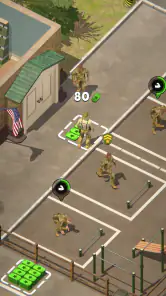
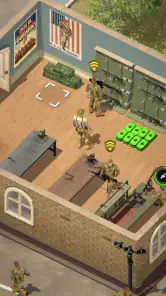
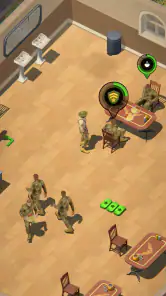
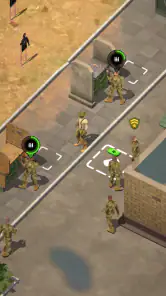

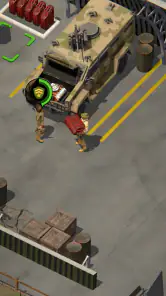
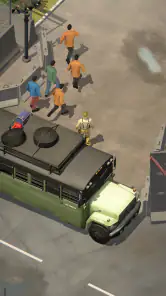

Analysis by Reviewed
I judge an idle arcade game by a simple standard: do brief visits feel worthwhile, and does the central loop give me a reason to come back? Base Commander asks you to run an army base, train, and head into clashes. That premise may appeal if you like seeing an operation develop while making occasional decisions, but it is a different fit from a tactical game that expects constant, precise control.
Choosing the right kind of arcade game
Before installing, I’d ask myself what I want from a quick game. If I have a few spare minutes and enjoy incremental progress, an idle arcade title can fit neatly into the day. If I want every moment to depend on quick reactions, or I’m looking for a long campaign with deliberate control over each encounter, I would look elsewhere. The distinction matters: a game can be easy to pick up without offering the kind of involvement every player wants.
With this one, I’d use the training-and-clash premise as the deciding test. Does the thought of tending an army base sound more appealing than repeating a single reflex challenge? If so, the management angle gives your visits a purpose beyond simply passing time. If not, a conventional action arcade game may provide a more immediate payoff. I would not install it expecting it to become a deep strategy campaign; I’d approach it as a lighter way to check in on a growing operation.
What to expect from the idle loop
The appeal of this format is that it can fit around ordinary breaks. I can imagine checking in while waiting for coffee, making a quick decision about the base, then putting the game aside instead of committing to a full campaign session. The useful test is whether those small returns feel like progress to you; idle play can be convenient, but it may feel too hands-off if you prefer to control each encounter from start to finish.
One practical way to approach it is to keep each visit focused: decide what you want to improve, make that choice, and leave rather than tapping without a plan. That helps the game stay a light arcade habit instead of turning into a chore. I would also pay attention to whether you enjoy the rhythm of training and clashing itself. If that central loop does not hold your interest, extra time in an idle game is unlikely to fix it.
Who is likely to enjoy it
I’d point casual players toward it if they want an army-base theme without the time commitment of a long, real-time strategy session. It may also work for someone who enjoys incremental progress and can tolerate a game that asks for attention in short bursts. On the other hand, players seeking a deep campaign, detailed unit control, or a strongly social experience should compare it with games designed specifically around those priorities before settling in.
For a realistic routine, think of opening the game during a short lunch break, making one considered adjustment, and closing it before the break ends. That is a better fit than expecting it to serve as a long-form tactical challenge. A small but useful habit is to notice what you changed on each visit; if you cannot tell whether your choices are making the base more satisfying to manage, that is a sign the game’s incremental pace may not be for you.
More From Our News Desk

Clash of Clans Is Won Between the Battles

Android Auto Makes the Case for Quieter Car Software

MobiOffice: Transforming Mobile Productivity with Seamless Integration

EA SPORTS FC™ Mobile Soccer: Redefining Mobile Sports Gaming

How Microsoft OneDrive Became a Mobile Productivity Giant

How Google Translate Breaks Language Barriers Effortlessly
It also helps to set a personal boundary around optional spending. The game is free to download, with in-app purchases listed at $6.99 per item, so I’d try the basic loop first and only consider paying if you already know what you want from the experience. That keeps the decision tied to your own enjoyment rather than the temptation to spend simply because progress feels gradual.
Where the base-management approach wins
Against the usual arcade alternatives, the army-base premise offers a different kind of appeal from a game focused on one quick reflex test. I like that it gives a short visit a small decision to revolve around: training, tending the operation, or moving toward a clash. That framing can make a few minutes feel more purposeful than simply replaying the same brief challenge. The trade-off is that anyone craving immediate action may find management less exciting than a fast, hands-on arcade game.
There is also a useful distinction between an idle game and a full strategy title. The former is often easier to fit between everyday tasks, while the latter is a better choice when you want detailed planning and control to occupy your attention. I’d treat Base Commander as a middle ground in theme rather than assume it delivers the depth of a large strategy campaign. If the satisfaction for you comes from making each tactical move yourself, that middle ground may feel like a compromise rather than a benefit.
How I would test it in everyday play
My first few visits would be deliberately short. I’d make one change, take note of what I hoped it would accomplish, then return later and see whether the base feels more engaging to manage. This simple before-and-after check is more useful than tapping through every available prompt without thinking. It helps answer a practical question: do I enjoy the decisions, or am I only responding to the prospect of progress?
I’d also avoid making a purchase decision during a moment when I feel impatient. Since each listed in-app purchase costs $6.99, it makes sense to learn whether the regular loop holds my attention before spending. If I find myself opening the game because I genuinely want to guide the base, that is a stronger reason to consider an optional purchase than feeling that progress is taking too long. The free starting point makes that trial straightforward.
For someone with an unpredictable schedule, short sessions can be a plus, but they are not automatically a promise that every visit will feel rewarding. Some players want a clear task they can finish in a single sitting; an idle-style rhythm may instead ask them to value gradual development. If I had only a few minutes and wanted a definite beginning and ending, I’d choose a compact arcade challenge. If I wanted to check in on an ongoing project, this premise would be more tempting.
Where another game may fit better
Players who prefer direct control should look toward action games or tactical strategy titles, depending on whether they care more about reflexes or deliberate decisions. A reflex-focused game puts the immediate moment first; a detailed tactics game rewards planning each encounter. Base Commander’s appeal is the blend of a base to run and clashes to reach, so it is not the obvious pick if either of those alternatives is your main priority.
I would also be cautious if social play is the deciding factor. It can be enjoyable to share a game with others, but I would first decide whether the core routine works for me without relying on a competitive scene or group activity. Someone who wants multiplayer interaction to be the central experience should compare dedicated social or competitive games instead. That is not a knock on this game; it is simply a matter of choosing based on what you expect to do most often.
Likewise, players who want a strong narrative reason to keep going may prefer a story-led adventure. The base-and-clash idea gives this game a clear theme, but I would not choose it on the assumption that it will provide a long plot or character-driven campaign. Matching expectations to the kind of game in front of you is the easiest way to avoid mistaking a light, ongoing loop for a more involved experience.
Building Your Own Space Empire
From the get-go, Base Commander throws you right into the thick of it, asking you to make crucial decisions about your base. I loved how the game doesn't hold your hand too much, allowing for a more genuine sense of achievement when your base starts thriving. The interface is intuitive, allowing even a newbie space commander to get the hang of things pretty quickly.
Strategic Gameplay at Its Core
The core of the game is its strategy. You have to balance resources, manage your workforce, and keep a keen eye on potential threats. It’s like playing chess, but with way cooler pieces! The game offers enough complexity to keep you on your toes but not so much that it becomes overwhelming. I found myself constantly planning my next move, trying to outsmart both AI opponents and my own resource limitations.
Compared with the usual arcade alternatives, the base-management angle gives this one a longer horizon than a game built around a single quick reflex challenge. That can be a welcome change when I want more to think about than timing one more tap. The trade-off is that players looking for immediate, high-speed action may find the management side slows the pace. I’d choose it for a relaxed progress loop, not as a substitute for a precision-focused arcade game.
Graphics and Soundtrack
Visually, the game is a treat. The developers have done an excellent job in crafting a visually pleasing universe that feels both expansive and detailed. The graphics are crisp, and the animations run smoothly on both Android and iOS platforms. And let's not forget the soundtrack – it's just the right mix of ambient space vibes and tension-building tracks that keep you immersed in your mission.
For someone deciding whether to install, the practical details are straightforward: it is a free arcade game from Supercent, Inc., rated for Everyone, with a 4.8 average from around 9,300 ratings and over 500,000 installs. It was released on May 1, 2024, and version 3.0.0 requires Android 7.0 or later. Those figures suggest a well-established audience, though popularity alone cannot tell you whether the pace suits your taste.
Community and Multiplayer Aspects
If you’re someone who enjoys the social aspect of gaming, you’ll appreciate the multiplayer features. The community is active, with plenty of opportunities to team up or compete against other players. It adds a layer of unpredictability and excitement to the game, making each session feel fresh and engaging.
That social angle is a reason to consider it over a strictly solo idle game, but it should not be the only reason to install. I’d first check whether the base loop is enjoyable on its own, then treat interaction with other players as a bonus. If your main priority is a carefully balanced competitive scene or a game centered on direct player-versus-player tactics, a dedicated multiplayer strategy title may be a better match.
One question I’d settle early is whether I enjoy the base routine when I am playing alone, rather than counting on other players to keep every session interesting. That gives me a clearer basis for deciding whether the social side is a welcome extra or an essential part of my interest. It also helps separate a game I genuinely want to return to from one I only open when friends are around.
Cost, commitment, and switching to another game
Because the game is free to start, trying it does not require a decision to make it your main arcade game. The real cost is attention: even a short-session format can become a habit, and a gradual loop may not be satisfying if you would rather finish a challenge and move on. I’d give it a few visits, then ask whether I’m looking forward to the next one or merely checking in out of routine.
Switching is simple in terms of your own expectations: decide what you want from your next game, rather than judging every title by the same standard. If you leave because the base management feels too passive, a hands-on action game is likely a better direction. If you leave because you want more planning and control, look for a strategy title built around those choices. There is little value in forcing an idle arcade game to serve a purpose it was not designed to meet.
My practical recommendation is to keep the first stretch low-pressure. Try the free experience, avoid buying anything until you know what you enjoy, and notice whether training and clashes make the base interesting to revisit. That approach answers the main questions most players have: whether sessions suit their schedule, whether the pace feels active enough, and whether the game earns any extra time or money.
In conclusion, Base Commander is a stellar app for anyone looking to dive into a strategy game that’s both challenging and rewarding. Whether you're a seasoned gamer or a casual player looking for a new obsession, this game is worth checking out. So, strap in, Commander, and get ready to conquer the stars!
My recommendation
My recommendation is to try it if you like the idea of tending an army base in short sessions and are comfortable with an idle arcade pace. Give the core routine a few visits before deciding whether it earns a place on your home screen, and keep your spending optional. If you want tight manual control, a long narrative campaign, or competition as the main event, choose a game built around that instead. For everyone else, its approachable premise makes it an easy one to sample.
Base Commander Frequently Asked Questions
Is Base Commander suitable for children?
Base Commander is an arcade game rated for Everyone, making it suitable for a broad audience. Its military-base theme may appeal to players who enjoy building an army and taking part in battles, while the rating indicates content intended for general audiences. Parents can still review the game themselves and decide whether its style and gameplay are a good fit for their child.
Who develops Base Commander, and is it available on Android and iOS?
Base Commander is developed by Supercent, Inc. It is a mobile game, and the Android version requires Android 7.0 or later. The game is free to download, so you can check its store page on your device to confirm availability and compatibility before installing. Its arcade classification and army-base theme make it easy to identify when browsing mobile games.
What is Base Commander and how does it work?
Base Commander is a strategic mobile game where players are tasked with building and managing a military base. The game involves resource management, strategic planning, and tactical combat. Players must construct buildings, train troops, and engage in battles against other players or AI-controlled enemies. The goal is to expand your base, strengthen your forces, and dominate the battlefield.
Is Base Commander free to play, or does it require in-app purchases?
Base Commander is free to download and play, but it does offer in-app purchases. These purchases can enhance gameplay by providing additional resources, speeding up construction times, or unlocking special features. While you can enjoy the game without spending money, investing in some purchases might accelerate your progress and improve your gaming experience.
What are the minimum device requirements for installing Base Commander?
To install Base Commander, your device needs to meet certain specifications. For Android users, a minimum of Android 7.0 is required. Additionally, the game requires a stable internet connection and sufficient storage space. It's advisable to have a device with a decent processor to ensure smooth gameplay.
Pros
- Intuitive user interface for easy navigation.
- Wide range of base customization options.
- Regular updates with new features.
- Multiplayer mode for interactive gameplay.
- Low battery consumption during use.
Cons
- Requires constant internet connection.
- Occasional in-app purchase prompts.
- Limited offline gameplay options.
- High storage space requirement.
- Some features are locked behind paywalls.
- Category
- Arcade
- Version
- 3.0.0













