Backpack Hero: Merge Weapon
- 146.00
- 4.4
- Installs
- 500.00K
- Price
- Free

Screenshots

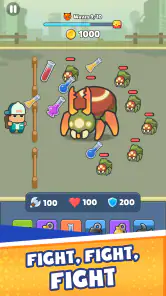
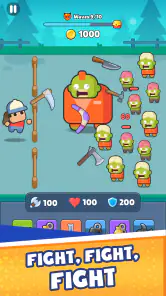
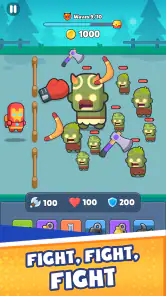
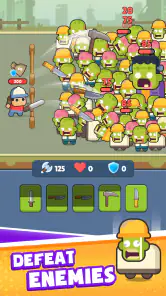
Analysis by Reviewed
What stands out to me about Backpack Hero: Merge Weapon is how much its appeal depends on taking time to look at a crowded backpack and decide what deserves space. That makes it a different kind of mobile strategy game from one built around rapid reactions: the central pleasure is planning, combining, and adjusting. If you enjoy puzzles that let you pause and think, that focus can make a short break feel satisfying. If you want constant action or a story-led adventure, the item-management loop may feel narrow.
Readability and navigation in a busy backpack
The game’s main idea is easy to understand: collect weapons and items, then merge them to improve your options. The interface is described through a drag-and-drop approach, which gives the central interaction a familiar feel. Still, an inventory game asks you to inspect small objects and compare possibilities, so the experience is naturally more demanding than a simple tap-to-play game. I’d take a moment with each new item rather than moving things quickly; a deliberate choice is more useful here than speed.
For a first session, I’d treat experimentation as the goal instead of trying to build a perfect setup immediately. Notice which combinations seem promising, and use the results to guide later choices. That habit makes the game easier to learn without assuming that every item has an obvious best use. It also helps answer a practical question: is this a good fit if you have only a few minutes? It can be, provided you’re happy to spend those minutes sorting and thinking rather than reaching a dramatic conclusion every time you open it.
Making the backpack work for you
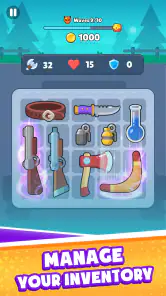
Diving into Backpack Hero: Merge Weapon, the first thing that strikes you is the vibrant and engaging interface. The game doesn’t waste any time thrusting you into the action. Your backpack is your world, and every item you pick up has the potential to transform your gameplay. The core mechanic revolves around merging weapons and items, which is both simple and addictively satisfying. Imagine combining that rusty sword you found with a mystical gem to create a powerful blade that can slice through enemies like butter. It's these little victories that keep you coming back for more.
Gameplay mechanics: easy to grasp, hard to master
The gameplay in Backpack Hero is straightforward yet deceptively deep. You start off with a modest inventory, but as you progress, you’ll find yourself constantly strategizing on the best ways to merge items. It’s like Tetris but with weapons and gear! The joy of stumbling across a rare item and figuring out the best way to incorporate it into your arsenal is immensely satisfying. The game encourages experimentation, and more often than not, thinking outside the box reaps great rewards.
That experimentation also creates a useful trade-off: a combination that looks powerful is not automatically the most practical choice if it leaves you with fewer flexible options. I’d compare alternatives before committing, especially when your bag is getting crowded. This is one reason I see the game working well for players who enjoy inventory puzzles more than conventional strategy games, where the focus may be on commanding units or managing a wider battlefield. Here, decisions stay close to the objects in your pack, so the challenge feels personal and compact.
A realistic way to fit it into a day is to open it during a quiet commute or while waiting for an appointment, when you can give the inventory a little attention. I wouldn’t recommend trying to make careful choices while distracted by conversation or rushing between tasks: sorting and merging reward focus. For younger players, the Everyone rating makes the game broadly approachable, though parents should remember that optional in-app purchases are available. The game is free to start, with purchases listed from $0.99 to $99.99 per item, so it’s sensible to check purchase settings before handing a device to a child.
More From Our News Desk

Weather by Xiaomi Review: Clear at a Glance, Less Clear Up Close

X Under Pressure: Can It Recover When Posting Goes Wrong?

Clash of Clans Is Won Between the Battles

Android Auto Makes the Case for Quieter Car Software

MobiOffice: Transforming Mobile Productivity with Seamless Integration

EA SPORTS FC™ Mobile Soccer: Redefining Mobile Sports Gaming
There are also practical reasons someone might prefer another game. If you dislike repeatedly examining items, or want a strategy title where progress comes mainly from fast decisions, this backpack-centered structure may not hold your attention. Likewise, players who need clearly adjustable visual or control options should check how it feels on their own device before settling in; I wouldn’t assume that a simple interface removes every possible barrier. The strongest fit is someone comfortable with close visual attention and deliberate item handling, not necessarily someone looking for complex controls.
Another aspect I love about this game is its accessibility. Whether you’re a casual gamer looking for something to pass the time or a hardcore strategist wanting to optimize every move, Backpack Hero has something for everyone. The intuitive drag-and-drop interface makes it easy to learn, but the depth of strategy involved keeps it endlessly engaging.
Visuals, sound, and sensory comfort
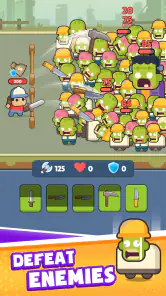
Visually, the game is a delight. The art style is colorful and whimsical, which perfectly complements the quirky nature of the gameplay. The weapons and items are creatively designed, each with their unique flair. It's like a cartoon world where your imagination is the only limit. The background score and sound effects enhance the experience, immersing you fully into this vibrant universe. Every clang of metal and magical chime adds to the overall thrill of merging and battling your way through challenges.
Because the presentation uses color and sound to make its world lively, I’d judge it in the context where you actually plan to play. A bright screen and audible effects may be welcome at home, but can be less comfortable in a dim room, a shared space, or a noisy journey. If you’re sensitive to busy visuals or sound, try a brief session first and see whether the look and audio suit you. That small test is more helpful than assuming a cheerful art style will feel comfortable for everyone.
For a strategy game, the key accessibility question is not only whether its controls are easy to pick up, but whether you can comfortably inspect and move items over time. Dragging can be less convenient for some players than tapping, and close visual comparison can be tiring. I’d avoid long sessions if the repeated sorting starts to strain your attention, and take breaks rather than treating every decision as something to optimize. That’s a personal-use suggestion, not a claim that the game offers specific accessibility settings.
Where it fits in an everyday routine
The backpack format makes this a better match for a calm pause than for a moment when you have to watch the clock. While waiting for a ride, for example, you could spend a little time looking over the objects you have and considering possible combinations. If you’re interrupted, the natural stopping point is often the decision you’re considering, rather than a fast sequence of inputs. I’d still avoid opening it when you need to stay alert to your surroundings or when the screen is difficult to see.
That distinction matters for players who use games in different settings. A commute may be convenient if you’re seated and have enough space to handle the device, but a crowded, bumpy trip makes careful dragging less appealing. At home, you can take your time and give the visual details more attention. I’d think of it as a game for small pockets of focused downtime, not as something that automatically suits every short wait.
It can also work for someone who enjoys sharing a puzzle-like decision with a friend or family member: one person can suggest which items to combine while the other handles the screen. That is simply a way to enjoy the choices together, not a special multiplayer feature. If you prefer a game that supports direct group play, this is not the same kind of social experience.
How it compares with other strategy games
Compared with strategy games centered on a map, squads, or rapid combat, this one keeps the decision-making close to the inventory. That narrower focus is its clearest identity. You don’t need to enjoy commanding a large battlefield to find a planning challenge here; you do need to enjoy evaluating objects and making room for them. Players who want strategic choices without a sprawling interface may find that appealing, while fans of tactical positioning may miss the broader scope.
It also differs from casual merging games that emphasize combining matching objects as a quick, repeated action. Here, the merge idea is tied to how you think about your gear and available space, so the interesting question is not only what can be combined but what that choice means for the rest of your setup. My advice is to consider both the immediate improvement and the options you’ll have afterward. That extra thought is the rewarding part for some players and unnecessary friction for others.
If you’re choosing between this and a conventional puzzle game, ask yourself whether you want the objects to feel like equipment or simply pieces in a pattern. The equipment framing gives each decision a practical flavor, even when you’re experimenting. If you would rather solve a clean board puzzle with no ongoing inventory to manage, a standard match or logic game will probably feel more direct.
Practical details and a careful first try
On Android, the game is free and is rated for Everyone. It was released on September 13, 2024, and version 2.2.2 requires Android 7.0 or later. It comes from iKame Games - Zego Studio and has a 4.4 average from around 9,300 ratings, with over 500,000 installs. Those figures suggest an established audience, but they don’t tell you whether its particular inventory rhythm will suit you; the best test is whether you enjoy making small, connected decisions.
The first thing I’d check is not whether I can make the strongest-looking merge, but whether I understand what I’m trading away by making it. Try comparing a couple of possible arrangements before committing, and notice whether the process feels satisfying or fiddly. That gives you a more useful sense of fit than rushing through the early decisions. If you’re playing on a smaller screen or have difficulty with precise dragging, give the controls a short trial before investing much time.
For parents considering it for a child, the age rating is one part of the decision, not the whole story. Since optional purchases are offered, it’s worth reviewing the device’s purchase controls together before play. For adults, the free entry point makes it easy to sample the basic appeal, while the listed purchase range is a reason to make a deliberate choice rather than tapping through prompts without checking.
My most useful tip is to think in terms of options, not just immediate power. When deciding whether to merge, consider what flexibility you give up by combining items, and make room for experiments rather than chasing a supposedly perfect arrangement. That mindset suits the game’s core loop and keeps a stumble from feeling like wasted effort. The trade-off is that players who want clear, predictable progress may find experimentation less appealing than a more linear game.
In conclusion, Backpack Hero: Merge Weapon is a game that skillfully balances simplicity with depth. It’s an absolute treat for anyone who loves strategy and creativity. The merging mechanic is fresh and exciting, offering endless possibilities for crafting and combat. If you're looking for a game that will keep you entertained and challenged, look no further. So, gear up, start merging, and unleash your inner hero!
Who I’d recommend it to—and who may want something else
I’d recommend it to players who like organizing, comparing, and testing combinations, especially if they want a strategy game whose decisions happen right inside an inventory. It also suits someone who enjoys a playful visual style and doesn’t mind learning through trial and error. If you prefer real-time battles, broad tactical maps, or a game that asks little visual attention, I’d choose a different kind of strategy title instead.
My inclusive verdict is positive but specific: the core interaction is approachable, while the repeated dragging, item inspection, and colorful presentation may not work equally well for every ability or setting. Try a short session on the device you plan to use, see whether the controls and visuals feel comfortable, and decide from there. If sorting gear sounds like a relaxing puzzle rather than a chore, this is an easy free game to sample; if it feels tiring, there’s no reason to force the fit.
Backpack Hero: Merge Weapon Frequently Asked Questions
Is Backpack Hero: Merge Weapon free to download, and does it include purchases?
Backpack Hero: Merge Weapon is free to download, so you can try its strategy gameplay without paying upfront. It also offers optional in-app purchases, ranging from $0.99 to $99.99 per item. These purchases may appeal to players who want to buy items or upgrades, but they are separate from the initial download. If children use the device, consider reviewing purchase settings before they play.
What kind of game is Backpack Hero: Merge Weapon?
Backpack Hero: Merge Weapon is a strategy game built around the idea of turning your backpack into a weapon of mass adventure. Its central appeal is planning how to organize and combine weapons, then using that preparation as you face opponents. The backpack is more than storage: how you manage its contents is tied directly to your progress, making decisions about equipment an important part of play.
What is the primary objective in Backpack Hero: Merge Weapon?
In Backpack Hero: Merge Weapon, the primary objective is to strategically arrange and merge weapons in your backpack to enhance their power. Players must navigate through various levels, battling enemies using the upgraded weapons, and ultimately defeat powerful bosses. This requires tactical planning and efficient resource management to succeed.
How does the merging mechanic work in the game?
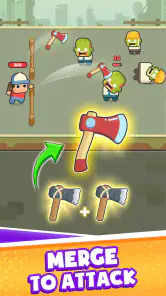
The merging mechanic in Backpack Hero is a core feature where players combine similar weapons to create more powerful versions. By dragging and dropping weapons onto each other in the backpack, players can enhance their attack power and unlock new abilities. This mechanic is crucial for progressing through tougher levels and defeating stronger enemies.
Is Backpack Hero: Merge Weapon suitable for all ages?
Backpack Hero: Merge Weapon is designed to be accessible for a wide range of ages and carries an Everyone content rating. Its gameplay involves strategic thinking and puzzle-solving, which can be enjoyable for both younger and older audiences. However, parents might want to review the game’s content, as it involves combat scenarios, to ensure it's appropriate for their children.
Pros
- Innovative merge mechanics.
- Engaging strategic gameplay.
- Unique weapon crafting system.
- Visually appealing graphics.
- Challenging levels.
Cons
- Limited free content.
- In-app purchases necessary.
- Occasional game crashes.
- Repetitive gameplay elements.
- Steep learning curve.
- Category
- Strategy
- Version
- 2.2.2