Aura Bubbles
- 321.00
- 4.2
- Installs
- 10.00M
- Price
- Free
Screenshots
Analysis by Reviewed
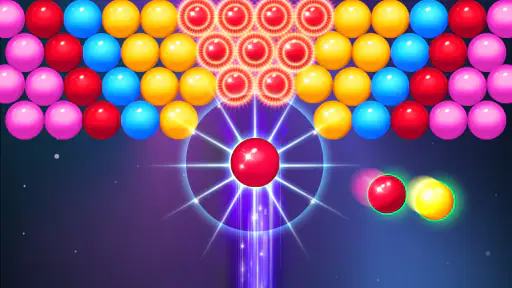
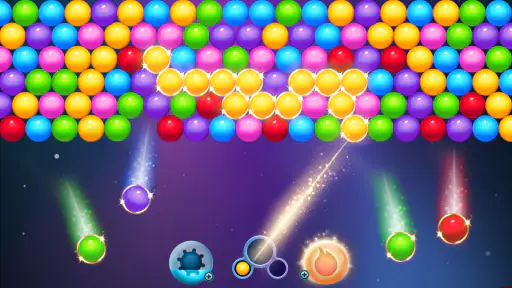
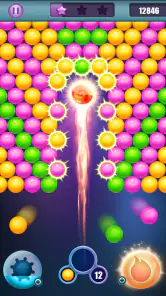
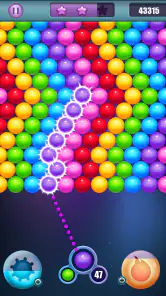
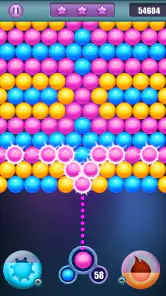
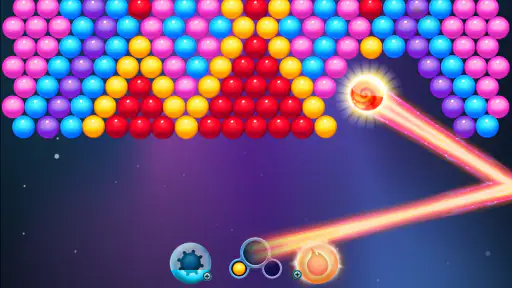
I came away from Aura Bubbles thinking less about it as a traditional arcade challenge and more as a compact way to turn a few spare minutes into a focused aiming exercise. Its central appeal is simple: you pop colorful aura bubbles and send balls through space-themed stages. That idea sounds familiar, but the real question is whether the presentation and rhythm make those actions satisfying enough to keep returning to. In my experience, they do—provided you enjoy relaxed, repeatable puzzle-arcade play rather than a demanding action game.
The game is made by Blast 2 Fun Games and is free to start on Android. It is rated for Everyone, so it is an approachable choice for families and younger players as well as adults looking for something uncomplicated. The store shows a 4.2 average from around 34 thousand ratings, with more than 10 million installs, which gives a useful sense of its reach without changing the more important point: this is a very easy game to understand, but getting consistently good at its stages takes a little more thought than the first tap suggests.
Why the bubble-and-ball mechanic works
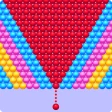
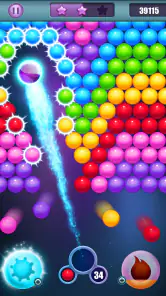
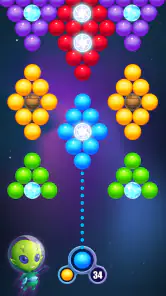
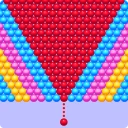
The verified capability that defines the experience is the ability to pop aura bubbles while blasting balls through space levels. I like this focus because it keeps the game readable. You are not learning a large collection of characters, menus, or complicated rules before you can enjoy a round. The visual goal is immediate, and the arcade category is a natural fit for that short learning curve.
What makes the mechanic useful in practice is the combination of aiming and release timing. A careless shot may still feel active, but a deliberate one feels much better because you are trying to make each ball do more work. Instead of treating every bubble as an isolated target, I found myself looking for a path that could clear several obstacles or create a more efficient sequence. That small change in attention is where the game moves beyond simple tapping.
The space setting also helps the action feel less ordinary. It gives the stages a sense of movement and distance, even though the underlying interaction remains straightforward. I would not call it a deep arcade simulation, and it does not need to be. Its strength is that the theme makes a familiar bubble-popping format feel lighter and more playful than a plain board of colored pieces.
For someone deciding whether to install it, the important distinction is this: Aura Bubbles is best understood as a casual precision game, not as a fast reflex test. If you want constant explosions, complicated upgrades, or competitive pressure, this may feel too gentle. If you prefer a game that lets you concentrate on one shot, see the result, and try again without a long explanation, the core capability is well chosen.
What I pay attention to during a level
My first instinct was to fire as soon as I saw an obvious bubble. That worked for the opening moments, but it was not always the smartest approach. I got better results by pausing briefly and considering the angle before releasing a ball. The pause is valuable because the best target is not necessarily the closest one. A shot that reaches a more useful cluster can be worth more than an easy hit that leaves awkward pieces behind.
This is one of the less obvious strengths of the design. The game looks suitable for children and casual players, yet it gives careful players a reason to slow down. You can play it absent-mindedly, but you can also create a small personal challenge: clear a stage with fewer wasted shots, avoid making a difficult section harder, or choose a route that keeps the board manageable. Those goals are not required to understand the game, but they make repeated attempts more rewarding.
I also found that the visual simplicity helps when playing in short sessions. There is less mental overhead than in a typical strategy title. I do not need to remember a character build or a long quest chain. I can open the game, understand the immediate objective, and start working on the next shot. That makes it an especially natural fit for a short break, a commute, or the few minutes before an appointment.
How the shooting rhythm feels in everyday play
In a realistic everyday scenario, I would use Aura Bubbles while waiting for food or sitting in a waiting room. I could play one stage with sound muted, stop without losing an hour to a larger campaign, and return later when I had another short gap. The game’s appeal in that situation is not that it transforms the whole day; it gives the spare time a clear activity without demanding a major commitment.
That same rhythm can make the game a useful choice for a younger player who wants something more interactive than watching a video. The Everyone rating supports that broad accessibility, although I would still recommend that adults check how the player responds to optional purchases. A free download is convenient, but the presence of in-app items means the safest family setup is to use the device’s purchase controls and explain that progress does not require tapping every offer.
For adults, the casual structure works best when you want a mental reset rather than a serious test. I found the aiming gives my attention something specific to do, while the short-stage format avoids the pressure of joining a match or keeping up with other players. It is a small distinction, but it matters: this is a game I can use to unwind, not one I need to schedule time around.
Small techniques that make the mechanic more satisfying
The first useful habit is to avoid firing immediately after every successful pop. I recommend taking a moment to inspect what the previous shot changed. A cleared bubble can open a better line, and the next target may become more valuable once the board shifts. This makes the game feel less like a sequence of taps and more like a chain of connected decisions.
The second is to treat difficult shots as a planning problem rather than a reason to rush. When a direct route looks poor, I try to think about what the ball can reach after its first contact. Bounces and angles are more important than raw speed in those moments. Even without adding complicated controls, that way of playing creates a satisfying difference between an accidental hit and a purposeful one.
The third is to use repetition intelligently. If a stage goes badly, replaying it immediately can be useful, but only if I change something specific: the first target, the order of shots, or the amount of time spent aiming. Repeating the same action and expecting a different result becomes frustrating quickly. Repeating with a small adjustment turns the attempt into practice.
These habits are also why I would not judge the game solely by its first few minutes. The opening interaction is easy, but the enjoyment grows when you start looking for efficiency. Players who never want to repeat a stage may see the simplicity as limited. Players who enjoy improving a familiar action can find more texture than the store summary suggests.
Where it fits among casual arcade alternatives
Compared with a conventional match-three game, Aura Bubbles places more emphasis on aim and timing than on swapping pieces into combinations. Compared with a fast endless runner, it is calmer and more deliberate; you are not mainly reacting to a constantly moving environment. Compared with a large physics puzzle, it is easier to pick up and less intimidating, though it does not offer the same sense of experimentation that comes from a broad toolbox.
That comparison helps clarify who should choose it. I would recommend it to someone who likes the satisfaction of clearing visual targets but wants a space-themed shooting angle instead of a purely tile-based board. I would suggest a match-three alternative to a player who prefers planning several moves ahead with a stable grid. I would suggest an action arcade game to someone who needs speed, danger, and constant pressure. Aura Bubbles occupies the middle ground: active enough to hold attention, gentle enough for casual play.
The trade-off is depth. The focused mechanic is also the boundary of the experience. You should not install it expecting a story-driven adventure, a large multiplayer community, or a complex long-term strategy system. Its value comes from polishing one repeated interaction rather than surrounding it with many different systems. For me, that is a positive when I want a clean break, but it can feel narrow during a long session.
Free access and the practical cost of continuing
The game is free, which makes trying it low-risk. However, optional purchases range from $0.99 to $104.99 per item. That wide range is worth taking seriously, especially on a shared family device. I would install it comfortably for a quick test, but I would also review the device’s purchase authentication before handing it to a child. The free entry point is attractive; the sensible way to use it is to decide in advance whether you want to spend anything at all.
For me, the best approach is to treat purchases as optional convenience rather than part of the reason to play. The core bubble-popping and ball-blasting idea is what determines whether the game is enjoyable. If that basic loop does not hold your attention, buying an item is unlikely to solve the problem. If you already enjoy the loop, you can decide separately whether any optional purchase is worth it, instead of letting a prompt determine your session.
There is also a time trade-off. Short rounds are convenient, but repeated attempts can become surprisingly absorbing because each failed shot feels close to improvement. I appreciate that quality, yet I would not describe the game as ideal for someone trying to avoid all repetitive play. Its structure encourages “one more try,” especially when you believe a better angle would have changed the result.
Device compatibility and what to expect from the current release
The current version is 9.3, and the game can run on Android devices using version 5.0 or later. That broad compatibility is helpful for people with older phones who do not want to replace a device just to play a casual title. I would still judge the experience on the actual phone or tablet in hand, because screen size and touch responsiveness matter more here than they would in a menu-heavy game.
A larger display can make aiming more comfortable, particularly if you are trying to line up a precise shot. On a smaller phone, the controls remain approachable, but visual elements may feel more compact during a busy stage. This is not a reason to avoid the game; it is simply a reminder that the same mechanic can feel relaxed on one device and slightly fiddly on another.
The developer, Blast 2 Fun Games, has kept the identity focused on the bubble-and-space concept rather than presenting it as a broad arcade collection. That consistency is useful for deciding quickly whether it belongs on your device. You are choosing a specific style of casual play, not a package of unrelated mini-games.
Who gets the most from it—and who should skip it
The strongest audience is made up of players who enjoy visual feedback, simple controls, and gradual improvement. It works for a quick personal break, for a family-friendly game that can be understood quickly, and for anyone who likes aiming more than memorizing elaborate rules. The Everyone rating makes its audience broad, while the free price makes experimentation easy.
I would also recommend it to players who find large mobile games exhausting. There is no need to learn a complicated economy before deciding whether you like the basic play. You can judge the experience directly through the act of aiming, firing, and clearing bubbles. That immediate test is one of its practical advantages over more elaborate arcade games that take longer to reveal their real loop.
I would skip it if your priority is a substantial campaign, a competitive ranking system, or a constantly changing set of mechanics. I would also look elsewhere if you dislike replaying levels to improve a shot. The game’s pleasure depends on returning to the same kind of interaction and finding better decisions inside it. That is satisfying for a patient casual player, but repetitive for someone who needs frequent novelty.
My recommendation after spending time with the game
Aura Bubbles succeeds because it understands the value of a narrow idea. Popping bubbles and directing balls through space stages is not a revolutionary concept, but it is accessible, easy to revisit, and more thoughtful when played with attention. I especially like the way a short pause before firing can change the experience from random tapping into light tactical play.
Its limitations are equally clear. The focused design will not satisfy players searching for deep progression, high-speed action, or a large variety of game modes. The optional purchase range also means families should manage spending carefully, even though the game itself is free to begin. Those are not minor details; they define the situations in which the game feels right.
My final view is that this is a good recommendation for a relaxed arcade session, particularly when you want something you can understand immediately and put down without ceremony. Start with the free experience, play slowly enough to notice how each shot changes the next opportunity, and decide based on that core feeling. If careful aiming and small improvements are enough to keep you interested, this compact space-bubble game earns a place in your casual rotation.
Pros
- Calming bubble-popping sessions are easy to start and stop.
- Minimal controls make it accessible for casual players.
- Soft visual effects create a relaxing atmosphere.
- Works well for short breaks or winding down before sleep.
- Simple gameplay suits users who prefer low-pressure experiences.
Cons
- The repetitive gameplay may become dull after extended sessions.
- Limited challenge can disappoint players seeking deeper mechanics.
- Some visual effects may feel distracting in quiet environments.
- Progression and replay value may be relatively limited.
- Performance can vary on older phones or lower-end devices.
- Category
- Arcade
- Version
- 9.3