Ape Warforts
- 340.00
- 4.5
- Installs
- 100.00K
- Price
- Free

Screenshots
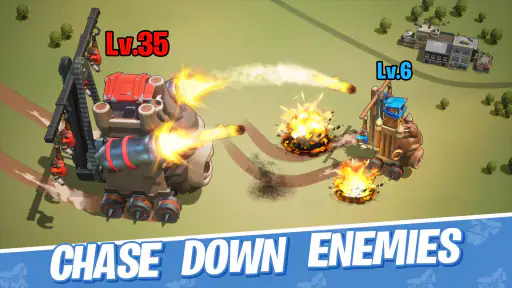
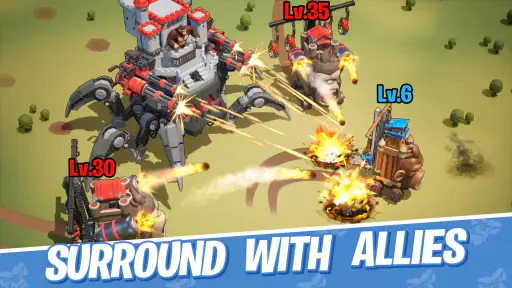
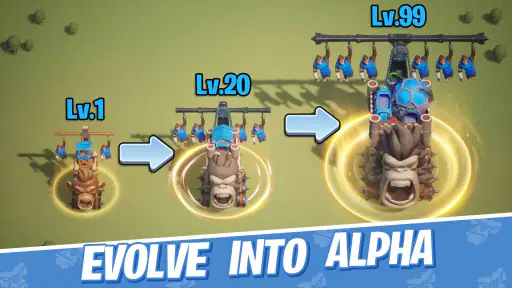
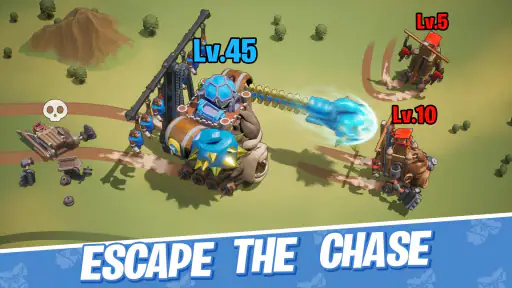
Analysis by Reviewed
I went into Ape Warforts expecting a straightforward strategy game built around a memorable idea: apes defending and attacking mobile fortresses in a world where the battlefield itself does not feel fixed. That central theme gives the game more personality than many anonymous base-building titles, and it is the reason I kept paying attention during my first sessions. The presentation is easy to understand, while the strategic framing encourages me to think about timing, preparation, and whether a stronger position is worth pursuing.
Developed by Tap4fun Trident Limited, this free strategy game is aimed at players who enjoy gradual progress rather than a single short campaign. It is available to an Everyone audience, and the current version is 0.91.0 for devices running Android 8.0 or later. The game has attracted over 100 thousand installs and holds a 4.5 average from around 7.4 thousand ratings, which suggests that its basic concept is connecting with a sizeable early audience.
How the first goals shape the opening hours
The opening works best when I treat it as a learning period instead of rushing toward the biggest possible fortress. The moving-fortress concept naturally creates a useful first question: should I focus on making my own position stronger, or should I prepare to challenge someone else? Even when the immediate objectives are simple, that choice gives the early game a little direction.
I found it helpful to set small personal goals between the game's larger prompts. Rather than trying to improve everything at once, I would concentrate on making one meaningful improvement, checking what it changed, and then deciding whether the next step should support defense or expansion. This approach makes the early progression feel less like tapping through a checklist and more like building a plan.
That matters because strategy games can become tiring when their first stage is only a sequence of obvious instructions. Ape Warforts has a stronger identity when I connect each early action to the larger idea of commanding a fortress that can move through a dangerous world. The setting gives ordinary preparation a reason to exist, even when the mechanical reward is modest.
New players should resist the temptation to spend every available resource immediately. In my experience, keeping a reserve is more useful than making a collection of small upgrades without a clear purpose. A reserve gives me room to respond when the next challenge asks for a different kind of preparation, and it also reduces the frustration of reaching a promising objective with nothing available to support it.
One practical routine worked particularly well for me: I would begin a session by checking the nearest improvement I could complete, then look at the next meaningful obstacle before committing resources. That second step is easy to skip, but it prevents short-term upgrades from quietly delaying a more important unlock. This is one of the game's less obvious lessons: progress feels better when I plan one step ahead instead of reacting to every prompt.
More From Our News Desk

Weather by Xiaomi Review: Clear at a Glance, Less Clear Up Close

X Under Pressure: Can It Recover When Posting Goes Wrong?

Clash of Clans Is Won Between the Battles

Android Auto Makes the Case for Quieter Car Software

MobiOffice: Transforming Mobile Productivity with Seamless Integration

EA SPORTS FC™ Mobile Soccer: Redefining Mobile Sports Gaming
Progress feels clearest when improvements have a purpose
The most satisfying progress is not simply seeing a larger number or a new item appear. It is noticing that an earlier weakness has become less troublesome. When I improved with a specific challenge in mind, the game felt more strategic. When I upgraded without knowing why, the same process felt closer to maintenance.
That distinction will matter to experienced strategy players. Someone who enjoys optimizing a route through upgrades may appreciate the need to prioritize, while a casual player may prefer to follow the visible objectives and learn through repetition. I would recommend the latter approach during the first session, but after that I would start choosing improvements based on the type of opposition or obstacle I expect next.
The game also benefits from the visual clarity of its premise. A moving fortress is easier to remember than a standard settlement because the setting suggests an ongoing journey. I found that this made progress feel more like preparing for the next stage of a campaign than simply filling a collection of meters. The theme does not replace depth, but it gives the progression a recognizable shape.
There is a trade-off here. Players looking for immediate tactical variety may find the early phase restrained, especially if they prefer games that introduce many systems at once. Ape Warforts appears more comfortable with gradual development. It asks me to stay with the central loop long enough to understand how preparation affects the next decision.
Reading the difficulty curve without wasting resources
The challenge is most enjoyable when I treat difficulty as information. If an encounter or objective exposes a weakness, I do not see that as a reason to repeat the same attempt immediately. I use it to decide what needs attention first. That mindset turns a setback into a planning tool and makes the next attempt feel earned.
My strongest advice is to avoid measuring success only by whether the latest challenge can be cleared right away. A better question is whether the attempt revealed something useful. If the answer is yes, the loss has still moved the account forward mentally, even before the next upgrade is complete. This is especially important for players who are used to fast action games and may initially find the strategy pacing slow.
The moving-fortress theme also makes positioning and timing feel more important conceptually than they would in a conventional static base game. I found myself thinking about when to commit to a goal rather than assuming that every available target should be pursued. That creates a small but meaningful layer of restraint: a stronger opportunity is not automatically the right opportunity if it leaves the rest of the fortress underprepared.
Players should expect the difficulty to test patience more than reflexes. This is not the right choice if you want every session to deliver rapid combat, constant unlocking, or a clean victory streak. It suits people who are comfortable stepping away, returning later, and using the intervening time to reconsider priorities.
Another useful habit is to separate experimentation from serious attempts. When I am testing whether a plan can work, I avoid spending everything needed for a more important goal. Once I understand the shape of the challenge, I can commit with more confidence. That simple separation protects resources and makes the game's slower rhythm feel deliberate instead of wasteful.
Where the pacing encourages return visits
Ape Warforts is built around the kind of progression that can encourage regular check-ins. The attraction is not merely the next battle; it is the feeling that the fortress is gradually becoming better prepared for whatever comes after it. I enjoyed returning when I had a clear reason to do so, such as completing a planned improvement or testing a revised approach.
That pacing can work well for people who play in short sessions during a commute, a break, or the end of the day. I could make a decision, leave the game, and return with a more focused objective instead of needing a long uninterrupted block of time. The game is easier to appreciate when I accept that progress may be incremental.
However, the same structure can create retention pressure. Free strategy games often make the player aware of what could be improved next, and that awareness can turn into a constant urge to check in. I recommend setting a personal stopping point. For example, I might finish one planned improvement and stop rather than continuing to chase every available task. This keeps the game from taking over the rhythm of the day.
The presence of in-app purchases ranging from $0.99 to $99.99 per item is also relevant to how I approach progression. I would begin as a free player and learn the basic loop before spending anything. That is not only financially sensible; it also helps reveal whether the game's pacing suits me on its own. A purchase may make progress feel faster, but it cannot solve the more important question of whether I enjoy making strategic choices.
For parents, the Everyone content rating makes the game broadly approachable, but free-to-play habits still deserve attention. I would use device purchase controls and agree on a spending limit before handing the game to a child. The age label describes the content audience, not whether every purchase decision is automatically appropriate for every household.
The game is also less suitable for anyone who dislikes waiting, gradual improvement, or resource decisions. If I want a strategy experience that gives me a complete, self-contained campaign with a fixed ending, I would look toward a premium alternative instead. Ape Warforts is more appealing when I want an evolving routine built around repeated preparation.
How it compares with familiar strategy alternatives
Compared with a traditional city-builder, Ape Warforts has a more focused identity because the fortress is not just a place to decorate or expand. The mobile setting suggests movement and confrontation, which makes the world feel more active. A conventional base game may offer broader construction options, but this game is easier to remember because its central image is so distinctive.
Compared with a fast competitive strategy title, it feels more approachable at the beginning. I am not required to rely on quick reactions to enjoy the early decisions. The trade-off is that players seeking immediate player-versus-player intensity may find the pace too measured. Its appeal is in preparing intelligently, not in turning every minute into an emergency.
It also differs from a purely casual puzzle game. The ape-and-fortress setting gives the experience a longer progression arc, and that means choices can matter beyond a single round. The downside is that the game asks for more patience and attention than a title designed for a quick, disposable session.
In practical terms, I would choose Ape Warforts over a generic strategy game when atmosphere and a clear central premise matter to me. I would choose a different option if I wanted deep, fully transparent systems from the first minute, a campaign with a definite conclusion, or a game that avoids purchase prompts altogether. The right comparison is not simply which game has more features; it is which pacing I am willing to live with.
Who will get the most from the moving-fortress idea
This is a good fit for players who like watching a plan develop over several sessions. It suits someone who enjoys deciding what to improve first, learning from a failed attempt, and returning with a better-prepared fortress. The theme is also friendly enough for newcomers who may find more complicated strategy games intimidating.
I would be more cautious recommending it to players who need constant novelty. If the satisfaction comes mainly from rapid unlocks, dramatic match conclusions, or direct control over every second of a battle, this may feel too restrained. It is also not my first recommendation for someone who wants a premium game with no free-to-play considerations.
A realistic everyday use case is a short evening session after work or school. I can check the current objective, make one deliberate improvement, review the next challenge, and stop before the session becomes aimless. That pattern gives the game a comfortable place in a daily routine without requiring me to treat it like a second job.
My verdict on goals, challenge, and long-term pacing
After spending time with it, I think Ape Warforts succeeds when I play it as a patient strategy journey rather than a rapid-fire action game. Its strongest feature is the combination of a memorable moving-fortress setting and a progression loop that rewards planning. The early goals give beginners a route into the game, while the later decisions become more interesting when I stop treating every upgrade as equally valuable.
The experience is not frictionless. The gradual pace will test players who want immediate rewards, and the free-to-play structure means I would keep a close eye on spending rather than purchasing impulsively. Some sessions can feel less exciting when I have no clear strategic decision to make, so I prefer returning with a specific objective instead of opening the game automatically.
Still, the overall progression has enough shape to keep me interested. I like that the fortress is more than a backdrop: it gives the game a reason to connect preparation, movement, and challenge. The best results came from conserving resources, studying setbacks, and choosing improvements that solved a real problem rather than simply making the account look stronger.
For a free strategy game, it offers a distinctive starting point and a manageable way to build a longer routine. I would recommend it to a friend who enjoys gradual goals, themed worlds, and thoughtful decisions in short sessions. I would skip it for someone who wants a finished premium campaign or nonstop action. For everyone in between, Ape Warforts is worth trying free first, with patience and a clear spending boundary.
Tap4fun Trident Limited has created a game whose identity is easy to recognize, and that gives its progression a better chance of staying memorable. It may not satisfy every strategy preference, but when I let the pace work on its own terms, the moving fortress becomes a useful framework for learning, adapting, and deciding when the next advance is genuinely worth making.
Ape Warforts Frequently Asked Questions
Who developed Ape Warforts, and what kind of game is it?
Ape Warforts is a strategy game developed by Tap4fun Trident Limited. Its central idea is captured by the invitation to conquer moving fortresses in an ape-themed world, giving the game a focus on planning and conflict rather than a simple, linear action experience. If you enjoy strategy games built around managing a base and making decisions about battles, its premise may appeal to you.
What is Ape Warforts and how does the gameplay work?
Ape Warforts is a strategy game focused on building a fortified base, training units, gathering resources, and fighting opposing forces in a war-themed setting. From the first sessions, the main gameplay loop combines base management with tactical battles and progression upgrades. Players need to decide how to spend resources, which defenses to improve, and when to attack, making planning more important than simply tapping through missions.
Is Ape Warforts free to download and play?
Ape Warforts is free to download and play without an upfront purchase, but players should expect optional in-app purchases, priced from $0.99 to $99.99 per item. These may provide resources, speed up construction or upgrades, or unlock other convenience features. It is possible to make progress through regular play, although some timers and resource limitations can make purchases attractive. Parents should also review device payment settings before allowing children to play.
Does Ape Warforts require an internet connection?
An internet connection may be necessary for important parts of Ape Warforts, especially account synchronization, online events, competitive battles, advertisements, and communication with the game servers. Some basic sections might load without a stable connection, but the experience is designed around connected play. For the most reliable performance and to avoid lost progress, it is best to play while connected to a dependable Wi-Fi or mobile data network.
Is Ape Warforts suitable for children?
Ape Warforts is rated Everyone, but parents should consider its combat themes, competitive mechanics, advertisements, and optional purchases before installation. The game can encourage frequent check-ins through timers, rewards, and events, which may not suit every child. Age ratings can differ between Android and iOS, so families should check the current store listing and activate parental controls for purchases and playtime.
Pros
- Simple controls make the game easy to learn on mobile devices.
- Base upgrades provide a steady sense of progression.
- Short battles fit well into quick gaming sessions.
- Different ape units add variety to combat strategies.
- The colorful art style gives the game a playful atmosphere.
Cons
- Progress can feel slow without frequent play or resource spending.
- Repeated battles may become predictable after extended sessions.
- Some upgrades require significant amounts of in-game resources.
- The interface can feel crowded on smaller phone screens.
- An internet connection may be required for several game features.
- Category
- Strategy
- Version
- 0.91.0