Woodber - Classic Number Game
- 4.96K
- 4.6
- Installs
- 10.00M
- Price
- Free
Screenshots
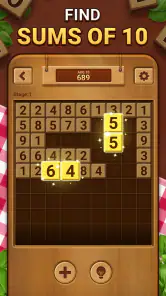
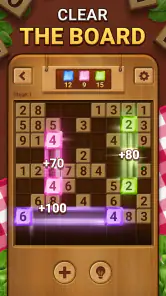



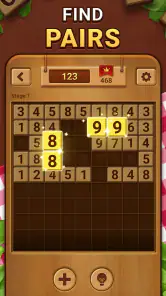
Analysis by Reviewed
I usually get the most out of number games when I can pick one up for a few minutes without needing to learn a complicated routine. Woodber - Classic Number Game is aimed at that sort of break: it presents number-puzzle play in a board-game style, with a wooden look that feels quieter than a flashy arcade game. I’d consider it when I want a small logic challenge, though it helps to know what kind of puzzle experience I’m choosing.
Where the first friction can appear
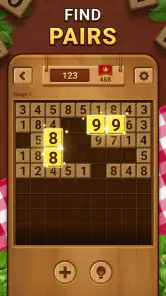
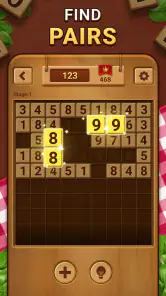
The familiar board-game presentation may make the rules seem instantly obvious, but number puzzles still ask you to pay attention to the permitted matches and the state of the board. If a move you expect to work does not, I’d pause and check the numbers and their positions rather than tapping faster. A small mismatch in how you read the board can make a straightforward puzzle feel unfair.
This is a better fit for someone who enjoys reasoning through a board than for someone who wants a number quiz with rapid questions and immediate answers. I also wouldn’t treat a difficult puzzle as proof that I need to improve my IQ: it’s a game, and a stuck moment can simply mean I need to look at the available choices with fresh eyes.
Setup checks before settling in
Woodber is free to start, with optional in-app purchases priced from $1.99 to $9.99 per item. I’d check the purchase prompt carefully if a younger player is using the device, even though the game’s content rating is Everyone. The game is made by LIHUHU PTE. LTD.; its current version is 2.7.7, and it requires Android 7.0 or later. Those details are useful to check before troubleshooting an installation or an unexpected store prompt.
If the game seems slow or fails to open, I’d first close and reopen it, then check whether the device and app are up to date and whether the device has a stable connection if the part I’m using needs one. I would avoid assuming that every pause is a puzzle problem. A fresh launch can help distinguish a temporary app hiccup from a move that simply needs another look.
Making a short session work
For me, this kind of board puzzle works best when I decide what sort of break I have before opening it. If I have only a minute or two, I can look over the board and consider a move without expecting to finish. If I have a longer quiet spell, I can give the puzzle the attention it asks for. That small adjustment matters: the game’s relaxed pace is a strength, but it can also make a quick check of the phone stretch longer than planned.
A realistic use case is waiting in a clinic or sitting on a train with a few stops to go. I’d start a session only when I can look at the screen comfortably, then pause at a natural point if my attention needs to shift. A board-based puzzle is less suitable than a simple word or audio game when I need to keep my eyes on what is happening around me. This is not a criticism of the game; it is just the practical difference between a visual logic activity and something that can be followed without watching the screen.
More From Our News Desk

Clash of Clans Is Won Between the Battles

Android Auto Makes the Case for Quieter Car Software

MobiOffice: Transforming Mobile Productivity with Seamless Integration

EA SPORTS FC™ Mobile Soccer: Redefining Mobile Sports Gaming

How Microsoft OneDrive Became a Mobile Productivity Giant

How Google Translate Breaks Language Barriers Effortlessly
One useful approach is to treat the board as a small planning exercise instead of a race to make any legal move. Before tapping, I look for choices that seem to preserve several possible next steps. If I take the first tempting match every time, I may make the board harder to read even when that move is valid. This habit does not guarantee a solution, but it gives me a clearer reason for each choice and makes a stuck point easier to understand.
Gameplay that Hooks You In
Once you dive into Woodber - Classic Number Game, you’re instantly greeted by its intuitive interface. The game cleverly combines the best of number puzzles with a sleek wooden aesthetic that gives it a warm, inviting feel. As you play, it challenges you to think strategically, solving number sequences to progress. It’s one of those games where you think, "I'll just play for 5 minutes," but then an hour flies by!
Designed for All Ages
What’s great about Woodber is its universal appeal. Whether you’re a child learning numbers or an adult wanting to test your cognitive skills, it fits perfectly. The levels start off easy, allowing new players to get a feel for the game mechanics, but they gradually increase in difficulty. This ensures that even seasoned number game veterans will find the later stages challenging enough to keep them engaged.
In practice, I’d describe that broad appeal more cautiously: the simple premise can invite different ages to try it, but enjoying it still depends on liking this particular style of number reasoning. A child who wants a guided lesson may need an activity that explains concepts step by step, while an adult who wants a demanding mathematical challenge may want more formal puzzles. Woodber’s appeal is the approachable board format, not a promise that it replaces teaching or training.
The Perfect Blend of Challenge and Relaxation
What makes Woodber stand out is its ability to balance challenge with relaxation. The gentle background music and smooth animations make for a calming experience, even when you’re scratching your head over a tricky puzzle. It’s not just about beating levels; it’s about enjoying the journey.
Moreover, the game doesn’t pressure you with time limits. You can take as long as you need to complete a puzzle, making it perfect for unwinding after a long day. It's like yoga for your brain!
That slower tempo is especially welcome if timed games make me rush and overlook details. It gives me room to inspect a position, reconsider a choice, and return to the board without having to react instantly. The trade-off is that a player who gets motivation from a ticking clock, rapid scoring, or head-to-head pressure may find this style too gentle. I would choose it for a quieter moment, not as a substitute for a fast competitive game.
Why You’ll Keep Coming Back
One of the reasons I keep returning to Woodber is its replayability. With new puzzles updated regularly, there’s always something fresh to tackle. Plus, the game includes daily challenges that offer rewards and keep things interesting. Every time you think you’ve mastered it, a new challenge appears, urging you to dive back in.
In addition to the regular gameplay, Woodber has leaderboards that allow you to compete with friends or other players worldwide. It adds a fun, competitive edge to your puzzle-solving experience. Who doesn’t like a bit of friendly competition?
I’d keep those social and challenge elements in perspective. They can give a familiar puzzle routine a reason to feel different from one visit to the next, but they are not the main reason I’d recommend the game. If I prefer solitary play, I can focus on the board itself; if I enjoy comparing progress, the competitive layer may add motivation. I wouldn’t choose it primarily as a social game, since the core activity remains a personal exercise in studying numbers and deciding what to do next.
When the game may not be the cause
If a puzzle feels stalled, I find it useful to separate two problems: a move that is not valid under the game’s rules, and a screen or app that is not responding as expected. I’d test a deliberate tap and give the board a moment to react before repeating it. Repeated taps can make it harder to tell whether the first action registered. If the whole app is unresponsive, restarting it is a more sensible first step than repeatedly trying the same move.
For a brief everyday session, I might open it while waiting for a drink or during a quiet commute, play at a comfortable pace, and stop when I reach a natural break in the puzzle. That makes the no-timer feel useful rather than turning a short pause into a promise to finish every board. If I’m interrupted, I’d check what the game shows when I return instead of assuming that progress has been saved in a particular way.
When something behaves oddly, I’d also avoid changing several things at once. I would first note whether the issue affects one move or the whole screen, then close and reopen the game if it appears frozen. If it happens again, checking for an app update and restarting the device are straightforward next steps. For a purchase-related question, I’d keep the purchase confirmation and use the relevant store’s support route rather than trying random taps inside a puzzle. These checks are ordinary troubleshooting, not evidence that the game itself is at fault.
How it compares with other number games
Compared with quick arithmetic games, Woodber puts more emphasis on looking across a board and planning a move than on answering a stream of timed questions. Compared with traditional number-grid puzzles, its warmer presentation and more immediate interaction may feel less formal. That trade-off is central: players who like visual, hands-on logic may prefer it, while people who want strict pencil-and-paper deduction or a timed score chase may be happier elsewhere.
The game has attracted an average rating of 4.6 from around 230,000 ratings and has been installed over 10 million times. Those figures suggest it has found a broad audience, but they don’t tell me whether its particular puzzle rhythm will suit you. I’d judge it by whether you enjoy studying the board and making considered choices, not by its popularity alone.
Among the usual alternatives, I’d pick a conventional Sudoku-style game when I want a structured grid and a familiar set of deduction rules, and an arithmetic quiz when I want short questions with immediate answers. Woodber sits between those moods: the board invites visual scanning, while the number logic asks for deliberate choices. That makes it a useful change of pace for someone who likes puzzles but is tired of filling cells or racing through sums. It is less compelling if I want a long-form story, elaborate strategy, or a lesson that explains each mathematical step.
There is also a practical difference in how I’d use it compared with a paper puzzle. A phone makes it easy to bring a board along and interact directly, which suits small gaps in the day. Paper is still better if I want to sketch possibilities, mark notes freely, or avoid looking at a screen. I wouldn’t claim one format is universally better; the right choice depends on whether convenience or freedom to annotate matters more in that moment.
Practical verdict
What’s great about Woodber is its universal appeal. Whether you’re a child learning numbers or an adult wanting to test your cognitive skills, it fits perfectly. The levels start off easy, allowing new players to get a feel for the game mechanics, but they gradually increase in difficulty. This ensures that even seasoned number game veterans will find the later stages challenging enough to keep them engaged.
One useful habit is to scan the whole board before committing to a move, rather than focusing only on the first pair that looks promising. That gives me a better chance of spotting a choice that opens up more options, and it also helps when a puzzle seems to have slowed down. I’d treat a daily challenge as an optional change of pace, not an obligation; it is most enjoyable when I have enough attention to think rather than tapping through it between distractions.
For someone deciding whether to install it, I’d ask one simple question: do you enjoy looking at a board and weighing choices, or do you prefer a puzzle that tells you exactly what to solve next? If the first description sounds like you, its easy-to-pick-up format is appealing. If you mainly want a lesson, extensive written explanations, or a highly varied collection of different puzzle types, I’d look for a game built around those priorities instead.
Woodber is free to download and is rated for Everyone. Its release date is October 7, 2022, and it has around 5,000 written reviews. I’d recommend it to people who want a calm, board-based number puzzle and are happy to work through a problem at their own pace. I’d skip it if I mainly want fast action, a structured math lesson, or a highly competitive game built around constant pressure.
Final Thoughts
In conclusion, Woodber - Classic Number Game is more than just a simple number puzzle game. It’s a beautifully crafted experience that entertains and educates. Whether you're looking to kill time or sharpen your mind, this app delivers on all fronts. It's a game that you'll find yourself recommending to others, as it offers something for everyone, regardless of age or skill level.
So, if you haven’t already, give Woodber a try. It might just become your next mobile gaming obsession!
Woodber - Classic Number Game Frequently Asked Questions
What kind of gameplay can I expect from Woodber - Classic Number Game?
Woodber is a board-style number game built around logic and matching. Its store summary describes number matching, cross math, and a wooden block puzzle, so it brings together several familiar puzzle ideas. It may suit players who like taking time to consider number combinations and plan their next move rather than focusing on fast action.
Can I play Woodber in short sessions, or does it require a long time commitment?
Woodber is centered on number and logic puzzles, which makes it a natural option to pick up when you want a focused game session. You can approach a puzzle at your own pace, whether you have time for a brief break or feel like spending longer thinking through possible matches. The main appeal is the mental challenge, not a lengthy story or action sequence.
Who developed Woodber - Classic Number Game?
Woodber - Classic Number Game is a board game developed by LIHUHU PTE. LTD. It combines number-based logic with a wooden puzzle style, making it a fit for players who enjoy working through a focused challenge at their own pace. If you are choosing a game based on its creator or genre, those details give you a quick sense of what to expect before installing it.
What is Woodber - Classic Number Game about?
Woodber - Classic Number Game is a mobile application designed to challenge your numerical and strategic skills. The game offers a classic number puzzle experience, where players are tasked with arranging numbers in a specific order or pattern. It's perfect for those who enjoy problem-solving and want to exercise their brains in a fun and engaging way.
Is Woodber - Classic Number Game free to download and play?
Yes, Woodber - Classic Number Game is free to download and play. However, it may offer in-app purchases or ads to enhance the gaming experience or to unlock additional features. Players can enjoy the core game without spending any money, making it accessible to everyone.
Pros
- Simple and intuitive gameplay.
- Helps improve mathematical skills.
- Visually appealing interface.
- Offers challenging levels.
- No internet connection required.
Cons
- Limited to single-player mode.
- Ads can be intrusive at times.
- No daily challenges available.
- Lacks social media integration.
- Limited customization options.
- Category
- Board
- Version
- 2.7.7